Quick Verdict: Still the Benchmark Luxury EV Sedan
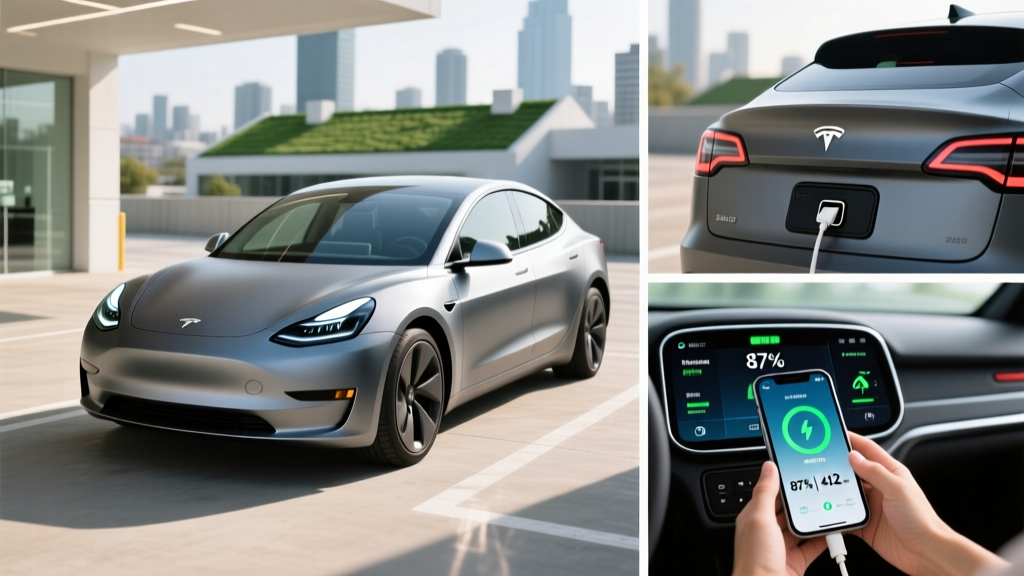
The Tesla Model S remains one of the most capable electric sedans on the market in 2026, combining class-leading range, access to the Supercharger network, and blistering performance in Plaid trim. But at a starting MSRP above $74,000, buyers need to know exactly what they're getting — and what they're not. This review goes inside the Tesla Model S with exact specs, real-world range data, charging curves, and ownership economics to help you decide if it's the right luxury EV for your garage.
| Spec | Long Range AWD | Plaid (Tri-Motor AWD) |
|---|---|---|
| EPA Range | 402 miles | 396 miles |
| Battery (usable) | ~100 kWh, NMC | ~100 kWh, NMC |
| Peak DC Fast Charge | 250 kW | 250 kW |
| 10–80% Charge Time | ~27 min | ~27 min |
| Level 2 Home Charging | 11.5 kW (~34 mi/hr) | 11.5 kW (~34 mi/hr) |
| 0–60 mph | 3.1 seconds | 1.99 seconds |
| Horsepower | 670 hp | 1,020 hp |
| Drivetrain | Dual-Motor AWD | Tri-Motor AWD |
| MPGe (combined) | 120 MPGe | 116 MPGe |
| kWh/100 mi | 28 kWh | 29 kWh |
| Base MSRP | $74,990 | $89,990 |
| Battery Warranty | 8 yr / 150,000 mi | 8 yr / 150,000 mi |
Range & Efficiency: EPA Numbers vs. Reality
The 2026 Model S Long Range carries an EPA-estimated 402 miles of range — one of the highest figures of any production EV sold in the U.S. The Plaid variant drops slightly to 396 miles due to its tri-motor powertrain's higher energy consumption. According to fueleconomy.gov, the Long Range achieves 120 MPGe combined (28 kWh/100 mi), while the Plaid returns 116 MPGe (29 kWh/100 mi).
EPA Sticker: 402 mi (Long Range) / 396 mi (Plaid)
Highway (70–80 mph, moderate weather): Expect ~320–350 miles. Aerodynamic drag at sustained highway speeds reduces efficiency by 15–20% versus the EPA combined cycle.
Cold Weather (below 32°F): Expect ~260–300 miles. Lithium-ion NMC chemistry loses efficiency in cold temperatures, and cabin heating draws significant energy. The Model S heat pump helps, but range loss of 25–35% in sub-freezing conditions is typical.
City / Mixed Driving (moderate climate): 370–400 miles — close to the EPA estimate thanks to regenerative braking recapturing energy in stop-and-go traffic.
The ~100 kWh usable battery pack uses nickel-manganese-cobalt (NMC) chemistry, chosen for its high energy density — critical for achieving 400+ miles in a sedan form factor. NMC packs typically show slightly faster long-term degradation than LFP (lithium iron phosphate) batteries, but Tesla's thermal management system has proven effective at minimizing capacity loss. Most high-mileage Model S owners report 5–10% degradation over the first 100,000 miles.
Charging: Speed, Connectors & Home Setup
Tesla's proprietary North American Charging Standard (NACS) connector is now the industry standard, with Ford, GM, Rivian, and others adopting it. The Model S charges natively on the Tesla Supercharger network — still the most reliable and expansive DC fast-charging network in the U.S., with over 6,000 stations and 30,000+ stalls as of early 2026.
| Charging Level | Power | Speed | Use Case |
|---|---|---|---|
| Level 1 (120V outlet) | ~1.4 kW | ~4 mi/hr | Emergency / trickle top-up |
| Level 2 (240V, 48A Wall Connector) | 11.5 kW | ~34 mi/hr | Daily home charging (full overnight) |
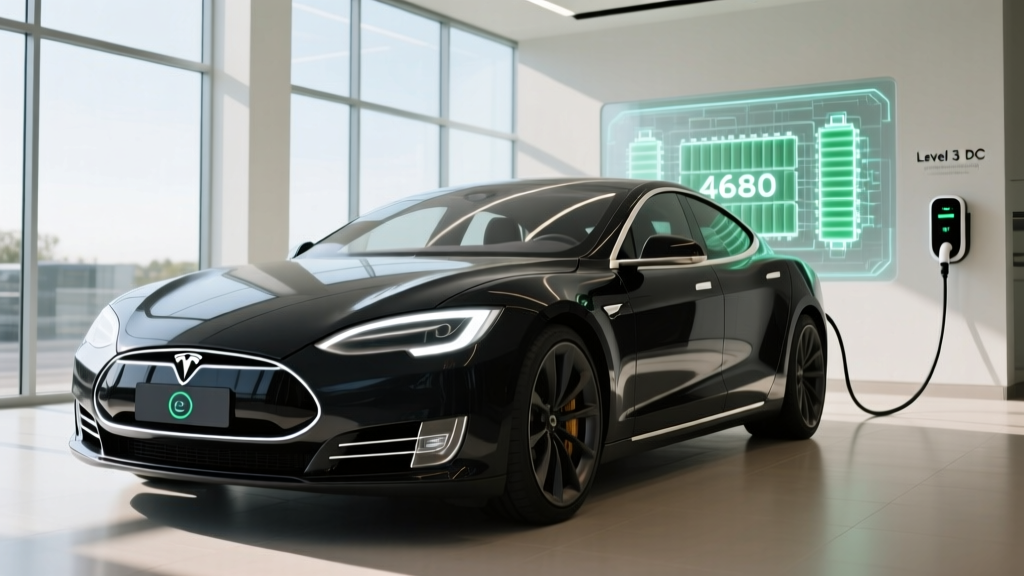
| DC Fast Charge (Supercharger V3/V4) | 250 kW peak | ~200 mi in 15 min | Road trips; 10–80% in ~27 min |
Understanding the charge curve: The 250 kW peak rate applies only between roughly 10–30% state of charge (SoC). Above 50%, the rate tapers significantly — by 80% SoC, you're typically charging at 60–80 kW. This is why Tesla (and most EV makers) quote 10–80% times rather than 0–100%. Charging from 80–100% at a DC fast charger is painfully slow and generally not worth the time; save the final 20% for home Level 2 charging overnight.
Home charging setup: The Tesla Wall Connector ($420) on a 60A circuit delivers the full 11.5 kW (48A continuous). A full charge from 10% to 100% takes roughly 9 hours — ideal for overnight charging. Most Model S owners with home Level 2 charging report rarely, if ever, visiting a public charger except on road trips. Installation costs for a 240V/60A circuit typically range from $800–$2,000 depending on panel proximity and whether your electrical panel needs an upgrade to 200A service.
Performance: Dual-Motor vs. Plaid Tri-Motor
The Model S Long Range's dual-motor all-wheel-drive powertrain produces 670 horsepower and hits 0–60 mph in 3.1 seconds — faster than most sports cars and more than adequate for any real-world driving scenario. The Plaid's tri-motor setup (one front, two rear) generates 1,020 horsepower and a claimed 1.99-second 0–60 time, making it one of the quickest production cars ever built, regardless of powertrain type.
On the road, the difference between 3.1 and 1.99 seconds is academic. What matters more is the instant torque delivery, confident highway merging, and the Plaid's track capability (Tesla offers a carbon-ceramic brake package for repeated high-speed stops). Both trims feature adaptive air suspension that adjusts ride height for efficiency at highway speeds or clearance on rough roads.
The Model S uses a single-speed reduction gear — no multi-speed transmission — which means seamless, uninterrupted acceleration with zero shift shock. Regenerative braking is adjustable via the touchscreen, though Tesla removed the user-selectable "Low" regen option in recent years, defaulting to a strong one-pedal driving experience that most owners prefer after a brief adjustment period.
Interior, Tech & Driver Assistance
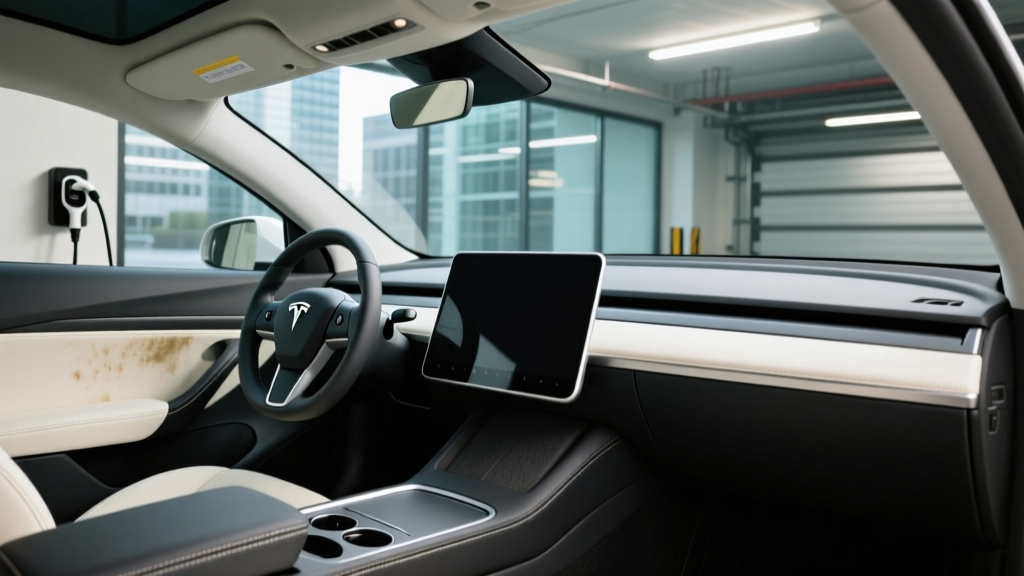
Step inside the Tesla Model S and the minimalist cabin centers on a 17-inch landscape-oriented touchscreen that controls virtually every vehicle function — climate, navigation, media, vehicle settings, and even the glovebox. A secondary 8-inch rear touchscreen provides rear-seat passengers with climate controls and entertainment. The instrument cluster is a compact 12.3-inch display behind the yoke (or optional round steering wheel — Tesla reinstated the round wheel option after significant customer feedback).
Infotainment highlights:
- Native streaming (Spotify, Apple Music, Tidal) without requiring phone pairing
- Full web browser, Netflix, YouTube, and gaming (including Cyberpunk 2077 via the AMD Ryzen-based infotainment processor)
- Over-the-air (OTA) software updates that regularly add features and improve performance
- No Apple CarPlay or Android Auto — Tesla's proprietary system is the only option
Cargo and passenger space: The Model S offers 28 cubic feet of cargo volume behind the rear seats (71 cu ft with seats folded), plus a 5.3 cu ft front trunk (frunk). Rear legroom measures 35.4 inches — adequate for adults on shorter trips but tighter than a BMW i7 or Mercedes EQS. The panoramic glass roof creates an airy cabin but lacks a retractable sunshade, which can cause heat buildup in summer months.
Tesla's Autopilot (standard) and Full Self-Driving Supervised ($8,000 option or $99/month subscription) are SAE Level 2 driver-assistance systems. They provide adaptive cruise control, lane centering, and automatic lane changes — but the driver must remain fully attentive with hands on the wheel (or torque applied to the yoke) at all times. FSD Supervised does NOT make the Model S a self-driving car. Only Level 4 services like Waymo operate without a human driver in geofenced areas. Tesla's camera-only vision system (no LiDAR or radar) remains polarizing, and FSD's real-world performance varies significantly by road type and conditions.
Pricing, Tax Credits & Ownership Costs
The 2026 Model S lineup is straightforward — two trims with minimal options:
| Trim | Base MSRP | Destination | As-Tested (typical) | §30D Tax Credit |
|---|---|---|---|---|
| Long Range AWD | $74,990 | $1,390 | $76,380 | Not eligible (MSRP exceeds $55,000 sedan cap) |
| Plaid Tri-Motor AWD | $89,990 | $1,390 | $98,380 (w/ FSD) | Not eligible (MSRP exceeds $55,000 sedan cap) |
Federal tax credit reality: Under IRS §30D clean vehicle rules, the Model S does not qualify for the federal EV tax credit. The credit has an MSRP cap of $55,000 for sedans — and both Model S trims exceed this threshold significantly. Additionally, the buyer's adjusted gross income must not exceed $150,000 (single) / $300,000 (joint), and the battery must meet critical-mineral and battery-component sourcing requirements. Even if the price cap didn't apply, the Model S's battery sourcing has historically been a barrier. Consult a tax professional for your specific eligibility.
5-Year Ownership Cost Estimate (Long Range, 15,000 mi/yr):
- Electricity (home charging, $0.14/kWh avg): ~$5,880 total (28 kWh/100 mi × 75,000 mi × $0.14)
- Gas equivalent (30 MPG sedan at $3.50/gal): ~$8,750 total — saving ~$2,870 over 5 years on fuel
- Insurance: $2,800–$3,600/year (Model S insurance premiums are among the highest of any EV due to repair costs and performance classification)
- Maintenance: Minimal — no oil changes, brake pads last longer due to regen. Budget ~$400/year for cabin air filters, wiper fluid, and tire rotations
- Tires: Expect $1,200–$1,800 every 25,000–35,000 miles (high-performance tires wear faster, especially on the heavy Plaid)
How It Compares: Model S vs. Key Rivals
The luxury EV sedan segment has grown considerably. Here's how the Model S stacks up against its closest competitors:
| Spec | Tesla Model S LR | BMW i7 eDrive50 | Mercedes EQS 450+ | Lucid Air Pure |
|---|---|---|---|---|
| EPA Range | 402 mi | 318 mi | 352 mi | 419 mi |
| Base MSRP | $74,990 | $99,295 | $104,400 | $69,900 |
| 0–60 mph | 3.1 sec | 5.5 sec | 5.9 sec | 3.8 sec |
| Rear Legroom | 35.4 in | 42.8 in | 41.7 in | 37.4 in |
| Max DC Charge | 250 kW | 195 kW | 200 kW | 220 kW |
| Charging Network | Supercharger (native) | NACS adapter / CCS | NACS adapter / CCS | NACS adapter / CCS |
| Battery Warranty | 8 yr / 150,000 mi | 8 yr / 100,000 mi | 10 yr / 155,000 mi | 8 yr / 100,000 mi |
The Model S wins on range-per-dollar, performance, and charging infrastructure. The Lucid Air Pure edges it out on pure range (419 mi) at a lower price, but Lucid's service center network is far smaller. The BMW i7 and Mercedes EQS offer significantly more rear-seat luxury and space — important if you're regularly chauffeuring adults — but cost $25,000–$30,000 more and offer less range.
- Class-leading 402-mile EPA range (Long Range)
- Native Supercharger access — the most reliable U.S. charging network
- 250 kW peak DC fast charging, 10–80% in ~27 minutes
- Sub-3.1 second 0–60 (Long Range) / 1.99 sec (Plaid)
- OTA updates continuously improve the vehicle post-purchase
- Strong 8-year/150,000-mile battery warranty
- Frunk + liftback cargo versatility (28 cu ft rear + 5.3 cu ft front)
- No federal tax credit eligibility (exceeds $55,000 sedan MSRP cap)
- Rear legroom (35.4 in) trails BMW i7 and Mercedes EQS significantly
- No Apple CarPlay / Android Auto support
- Panoramic glass roof lacks a sunshade — cabin heat in summer
- FSD Supervised remains Level 2 only; $8,000 option with variable real-world performance
- Insurance premiums are high relative to other luxury sedans
- Interior materials and build quality don't match German rivals at this price
Who Should Buy the Tesla Model S?
Choose the Model S Long Range if: You want maximum range for frequent road trips, value Supercharger network access, prefer a sporty driving experience, and don't need limousine-level rear-seat comfort. It's ideal for tech-forward commuters and road-trippers who drive 200+ miles regularly.
Choose the Model S Plaid if: You want hypercar-level acceleration in a practical 4-door sedan, plan occasional track use, and budget isn't a primary concern. The 1,020 hp tri-motor setup is engineering excess — thrilling but hard to justify on practicality alone.
Look elsewhere if: You prioritize rear-seat luxury (BMW i7, Mercedes EQS), want the absolute lowest price per mile of range (Lucid Air Pure), need a family SUV (Model X or Rivian R1S), or require federal tax credit eligibility (consider the Model 3, which may qualify depending on trim and sourcing).
Frequently Asked Questions
What is the real-world range of the 2026 Tesla Model S?
The EPA rates the Long Range at 402 miles and the Plaid at 396 miles. In real-world highway driving at 70–80 mph, expect 320–350 miles. In cold weather below freezing, range can drop to 260–300 miles. City and mixed driving in moderate temperatures will get you closest to the EPA figure, around 370–400 miles.
How fast does the Model S charge at home and on road trips?
At home on a 240V Level 2 Tesla Wall Connector (11.5 kW), the Model S adds roughly 34 miles of range per hour — a full overnight charge from 10% to 100% takes about 9 hours. On a Tesla Supercharger (250 kW peak DC), you'll go from 10% to 80% in approximately 27 minutes, adding about 200 miles in the first 15 minutes. Charging slows significantly above 80% SoC.
Does the Tesla Model S qualify for the federal EV tax credit?
No. Under IRS §30D rules, the federal clean vehicle credit has an MSRP cap of $55,000 for sedans. Both Model S trims ($74,990 and $89,990) exceed this cap. Even if pricing were lower, the buyer must also meet income limits ($150K single / $300K joint AGI) and the vehicle's battery must satisfy critical-mineral and component sourcing thresholds. Always verify current rules with a tax professional.
Is the Tesla Model S worth buying vs. the Lucid Air or BMW i7?
It depends on your priorities. The Model S offers the best combination of range, performance, and charging infrastructure for the price. The Lucid Air Pure provides slightly more range (419 mi) at a lower MSRP ($69,900) but has a far smaller service network. The BMW i7 costs $25,000+ more but delivers substantially more rear-seat space and traditional luxury. If Supercharger access and tech-forward ownership matter most, the Model S wins. If rear-seat comfort or luxury materials are paramount, look at the German alternatives.
What battery chemistry does the Model S use, and how long will it last?
The Model S uses NMC (nickel-manganese-cobalt) lithium-ion cells in a ~100 kWh usable pack. NMC offers high energy density, which is essential for 400+ mile range in a sedan. Tesla's battery warranty covers 8 years or 150,000 miles, whichever comes first, with a minimum 70% capacity retention threshold. Real-world data from high-mileage owners suggests 5–10% degradation over the first 100,000 miles — meaning most owners will retain 350+ miles of range well past the warranty period.
Is Tesla's Full Self-Driving (FSD) actually self-driving?
No. FSD Supervised is an SAE Level 2 driver-assistance system. It handles adaptive cruise control, lane centering, and automatic lane changes on highways and some city streets — but you must remain fully engaged and ready to take over at any moment. It is not a Level 4 autonomous system like Waymo's driverless robotaxi service. The $8,000 purchase price or $99/month subscription should be evaluated as a premium driver-assist feature, not a self-driving capability.
Sources: fueleconomy.gov (EPA range and efficiency data), Tesla Model S specifications, IRS §30D Clean Vehicle Credit rules.