Quick Verdict: Still the Benchmark Electric Sedan
The refreshed Tesla Model 3 (internally coded "Highland" and now in its second year on sale in the US) remains the reference point for compact electric sedans. With EPA range stretching to 363 miles on the Long Range AWD trim, a 250 kW peak DC fast-charge rate, and access to the most reliable charging network in North America, it sets a bar that the Hyundai Ioniq 6, BMW i4, and Polestar 2 are still chasing. But going inside the Tesla Model 3 in 2026 reveals real trade-offs: a minimalist cabin that frustrates some buyers, the loss of physical turn signals, and a suspension that, while improved, still favors firmness over plushness. For data-driven shoppers, this review breaks down every number that matters — range, charging curves, chemistry, pricing after the federal tax credit, and where the Model 3 wins or loses against its rivals.
Range, Battery, and Real-World Efficiency
Tesla offers the 2026 Model 3 in three trims, each with a different battery pack and chemistry. Understanding what's under the floor is essential before you buy.
| Trim | Drivetrain | Battery (usable kWh) | Chemistry | EPA Range | MPGe (combined) | kWh/100 mi |
|---|---|---|---|---|---|---|
| Standard Range RWD | Rear-wheel drive | ~57 kWh | LFP (CATL) | 272 mi | 132 MPGe | 25 |
| Long Range AWD | Dual-motor AWD | ~75 kWh | NMC (Panasonic) | 363 mi | 132 MPGe | 25 |
| Performance AWD | Dual-motor AWD | ~75 kWh | NMC (Panasonic) | 315 mi | 119 MPGe | 28 |
The EPA sticker on the Long Range AWD reads 363 miles, but plan for roughly 290–320 miles on a 70-mph highway run in mild weather. In cold conditions (below 32°F), expect a 20–30% reduction, dropping usable range to around 240–270 miles before you need a charger. The Standard Range RWD is more honest at 272 EPA / ~220–240 highway. The Model 3's heat pump helps, but physics still wins in January.
For context on the chemistry split: the Standard Range uses an LFP (lithium iron phosphate) pack. LFP is heavier and less energy-dense than NMC, which is why the Standard Range carries fewer miles despite similar exterior dimensions. The upside is longevity — LFP cells typically degrade more slowly and can be charged to 100% daily without the wear concerns of NMC. Tesla actually recommends periodic 100% charges on LFP to keep the BMS calibrated. The Long Range and Performance trims use NMC (nickel manganese cobalt) chemistry from Panasonic, optimized for energy density and cold-weather output. Source: fueleconomy.gov.
Charging Speed: DC Fast, Level 2, and the Supercharger Advantage
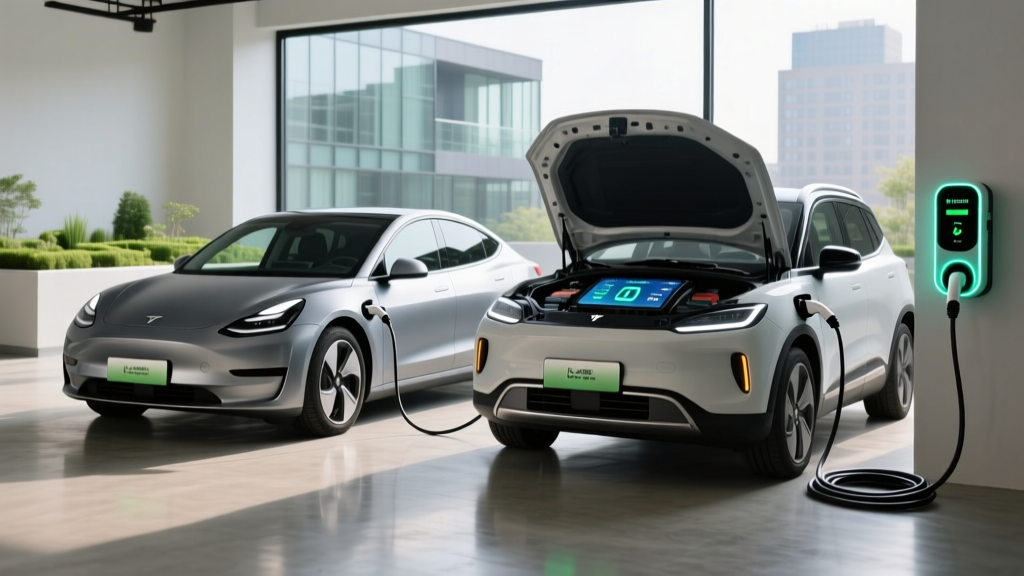
Charging is where the Model 3's ecosystem advantage becomes tangible. Tesla's Supercharger network now serves non-Tesla EVs at many stations, but Model 3 owners still benefit from native plug-and-charge integration and route preconditioning that warms the battery before you arrive.
| Charge Type | Standard Range RWD | Long Range AWD | Performance AWD |
|---|---|---|---|
| Peak DC Fast Charge | 170 kW | 250 kW | 250 kW |
| 10–80% DC Time | ~25 min | ~27 min | ~27 min |
| Level 2 (11.5 kW onboard) | ~30 mi/hr | ~44 mi/hr | ~44 mi/hr |
| Level 1 (120V, 12A) | ~3 mi/hr | ~4 mi/hr | ~4 mi/hr |
| Connector | NACS (native Tesla) | ||
A few notes on the charging curve: the 250 kW peak on Long Range and Performance trims is a peak, not a sustained rate. In real-world testing at a V3 Supercharger, the Long Range typically holds 200+ kW from 10% to roughly 40% SoC, then tapers progressively. Expect the 10–80% fill to average closer to 150–170 kW. That's still class-leading — the Hyundai Ioniq 6 peaks at 350 kW on 800V architecture but only at select chargers, while the BMW i4 eDrive40 tops out around 200 kW.
At home on a 48-amp Level 2 circuit (hardwired Wall Connector on a 60-amp breaker), the onboard 11.5 kW charger replenishes roughly 44 miles of range per hour on AWD trims. An overnight 10-hour session adds ~440 miles — more than enough to reset the Long Range pack from near-empty. Installation typically runs $800–$2,000 depending on panel proximity and whether a 200-amp service upgrade is needed.
Performance, Ride, and Drivetrain
| Trim | 0–60 mph | Horsepower | Torque (lb-ft) | Top Speed |
|---|---|---|---|---|
| Standard Range RWD | 5.8 sec | 271 hp | 317 | 125 mph |
| Long Range AWD | 4.2 sec | 346 hp | 389 | 125 mph |
| Performance AWD | 2.9 sec | 510 hp | 546 | 163 mph |
The Highland refresh addressed the original Model 3's most common complaint — ride quality. New frequency-selective dampers, additional acoustic glass, and revised bushings make the 2026 car noticeably quieter and more compliant over broken pavement. It's still firmer than a BMW i4, but the gap has closed substantially. The Performance trim adds adaptive dampers, a track mode, and staggered 19-inch wheels with summer rubber.
All trims use Tesla's dual-motor setup (AWD) or a single rear motor (RWD). Torque vectoring on AWD trims is brake-based, and the regen profile offers two modes — standard and low — rather than true one-pedal driving at low speeds. Most owners adapt quickly, but if you're coming from a Nissan Leaf or Chevy Bolt, expect a brief adjustment.
Inside the Cabin: Tech, Space, and the Minimalist Bet
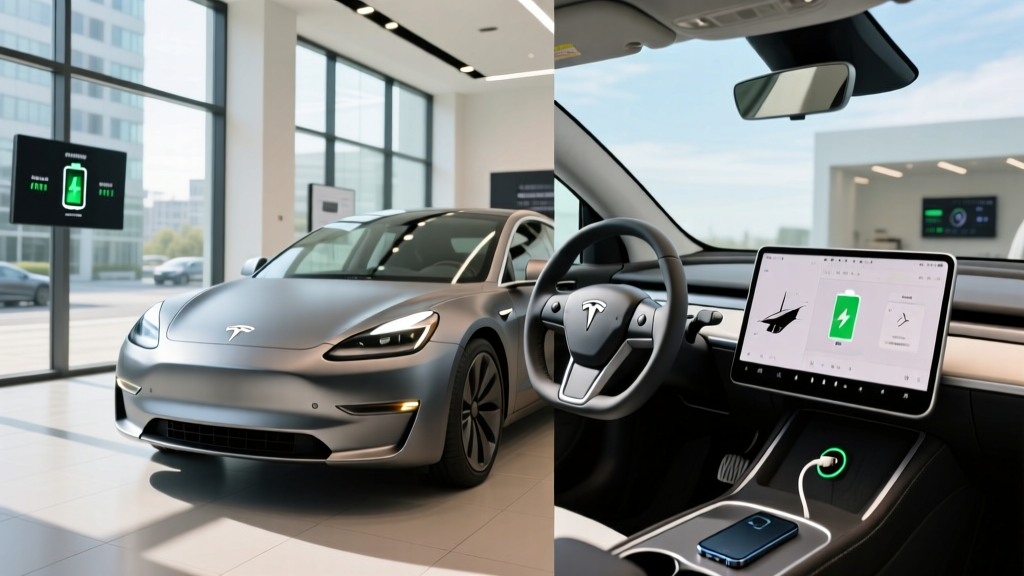
Going inside Tesla Model 3 in 2026 means confronting a cabin that has been stripped to its essence. The 15.4-inch center touchscreen handles nearly everything — climate, mirrors, glovebox, media, navigation, and vehicle settings. There is no instrument cluster. Speed and range live in the upper-left corner of the main display. Ventilated front seats, ambient lighting, and a rear 8-inch touchscreen for passengers are now standard on Long Range and Performance trims.
The most polarizing change carries over from the Highland launch: turn signals are now buttons on the steering wheel, supplemented by a capacitive strip on the wheel rim. A physical backup exists on the overhead console, but muscle memory takes 2–4 weeks to retrain. Most owners adapt; a vocal minority still hates it.
| Dimension | Measurement |
|---|---|
| Front legroom | 42.4 in |
| Rear legroom | 35.2 in |
| Front headroom | 40.3 in |
| Rear headroom | 37.8 in |
| Cargo (trunk) | 21.0 cu ft |
| Frunk (front trunk) | 3.1 cu ft |
| Total cargo | 24.1 cu ft |
Cargo volume trails the Hyundai Ioniq 6 (12.3 cu ft trunk but better-shaped) and Polestar 2 (14.4 cu ft + liftback). The Model 3's traditional sedan trunk opening limits what you can load compared to a hatchback. If you regularly haul bikes, dog crates, or furniture, the Model Y or a liftback rival is the better call.
ADAS: Autopilot, FSD Supervised, and SAE Level 2 Reality
Tesla Autopilot and FSD (Supervised) are Level 2 driver-assistance systems. The driver must remain engaged, hands on the wheel, eyes on the road. This is not self-driving. Only Waymo and Zoox robotaxi services currently operate at Level 4 in limited geofenced areas.
Autopilot (standard) includes adaptive cruise control, lane centering, and automatic emergency braking. FSD (Supervised), a $8,000 option or $99/month subscription in 2026, adds automated lane changes, traffic-light and stop-sign recognition, and city-street navigation. FSD has improved materially since 2024 — interventions per 1,000 miles have dropped substantially — but it still requires active supervision and will occasionally brake-check for phantom obstacles or misread construction zones. NHTSA continues to investigate Tesla's Autopilot engagement-monitoring system; check nhtsa.gov for current status.
Pricing, Tax Credits, and Total Cost
| Trim | Base MSRP | As-Tested (typical) | Federal §30D Credit | Effective Price |
|---|---|---|---|---|
| Standard Range RWD | $38,990 | $39,990 | Up to $7,500* | ~$32,490 |
| Long Range AWD | $45,990 | $48,490 | Up to $7,500* | ~$40,990 |
| Performance AWD | $52,990 | $55,990 | Up to $7,500* | ~$48,490 |
*Eligibility for the full $7,500 federal EV tax credit under IRS §30D depends on three conditions: (1) buyer AGI below $150k single / $300k joint, (2) MSRP under $55,000 for sedans, and (3) battery critical-mineral and component sourcing thresholds that tighten annually. As of 2026, the Model 3 Standard Range and Long Range typically qualify for the full $7,500 when ordered in eligible configurations; the Performance trim's MSRP exceeds the $55k sedan cap. The credit can be transferred to the dealer at point of sale as an instant discount. Confirm current rules with a tax professional — sourcing requirements shift year to year.
Tesla also offers the Model 3 through its lease program, where the leasing company may capture the credit and pass savings through as a reduced monthly payment. Insurance remains a cost factor: average annual premiums run $2,200–$2,800 depending on state and driving record, roughly 15–25% higher than a comparable Camry Hybrid.
Warranty, Longevity, and Ownership Costs
- Basic vehicle warranty: 4 years / 50,000 miles
- Battery & drive unit (Standard Range): 8 years / 100,000 miles, minimum 70% capacity retention
- Battery & drive unit (Long Range / Performance): 8 years / 120,000 miles, minimum 70% capacity retention
The 70% retention threshold is industry-standard, matching Hyundai, Ford, and BMW. Real-world degradation data from Tesla fleet telemetry and owner tracking (Teslanomics, Recurrent Auto) shows Model 3 NMC packs averaging roughly 8–12% capacity loss at 100,000 miles — well within warranty. LFP packs on the Standard Range appear to degrade even more slowly, though long-term 150k+ mile data is still maturing. Replacement cost out of warranty: $12,000–$16,000 for the pack alone, though failures before 150k miles are statistically rare.
Pros, Cons, and Who Should Buy
Pros
- Class-leading efficiency (25 kWh/100 mi) and real-world highway range
- Access to Tesla Supercharger network — most reliable DC network in the US
- Native NACS connector — no adapter needed at Tesla stalls
- Over-the-air updates continuously add features post-purchase
- Strong residual values relative to non-Tesla EVs
- LFP option on Standard Range for maximum battery longevity
Cons
- Turn-signal buttons on steering wheel require retraining
- Traditional trunk opening — less versatile than hatchback rivals
- FSD (Supervised) remains Level 2 despite the name
- Performance trim exceeds $55k MSRP cap, losing §30D credit
- Minimalist cabin polarizes; no physical climate buttons
- Rear visibility is compromised by thick C-pillars
- Commuter / single-driver household: Standard Range RWD — lowest cost, LFP longevity, 272 mi is plenty for 95% of commutes.
- Road-trip household, no second car: Long Range AWD — 363 mi EPA, Supercharger access, AWD for snow.
- Family with kids: Consider the Model Y instead — more cargo, easier car-seat installation, hatchback utility.
- Track-day enthusiast: Performance AWD — 2.9-sec 0–60, adaptive dampers, Track Mode. Accept the credit loss.
- Buyer prioritizing button-based ergonomics: Look at the Hyundai Ioniq 6 or BMW i4 — both retain physical controls.
Inside Tesla Model 3 vs. Key Competitors
| Spec | Tesla Model 3 LR AWD | Hyundai Ioniq 6 SEL AWD | BMW i4 eDrive40 | Polestar 2 LR DM |
|---|---|---|---|---|
| EPA Range | 363 mi | 316 mi | 307 mi | 276 mi |
| Peak DC kW | 250 kW | 350 kW | 205 kW | 205 kW |
| 0–60 mph | 4.2 sec | 5.1 sec | 5.5 sec | 4.1 sec |
| Base MSRP | $45,990 | $46,500 | $57,900 | $51,300 |
| Charging Network | Supercharger native | CCS → NACS adapter | CCS → NACS adapter | CCS → NACS adapter |
| Body Style | Sedan | Sedan (sloped) | Gran Coupe (liftback) | Fastback liftback |
The Model 3 Long Range wins on range-per-dollar and charging-network convenience. The Ioniq 6 charges faster on paper (350 kW on 800V), but only at high-power Electrify America stalls — and EA reliability still trails Tesla's. The BMW i4 offers a more traditional luxury interior and liftback utility but costs $12k more and gives up 56 miles of range. The Polestar 2 is the driver's choice for steering feel but trails on range and efficiency. Source: manufacturer spec sheets and IIHS.
Frequently Asked Questions
What is the real-world range of the 2026 Tesla Model 3?
Expect 290–320 highway miles on the Long Range AWD in mild weather, and roughly 220–240 on the Standard Range RWD. Subtract 20–30% in sustained sub-freezing temperatures. City driving with regen recovers more energy, so urban range often matches or exceeds the EPA sticker.
How fast does the Model 3 charge at home and on the road?
On a 250 kW V3 Supercharger, the Long Range and Performance trims add roughly 170 miles in 15 minutes (10–80% in ~27 min). At home on a 48-amp Level 2 Wall Connector, expect ~44 miles of range per hour, or a full overnight charge.
Does the 2026 Model 3 qualify for the $7,500 federal EV tax credit?
The Standard Range and Long Range trims typically qualify, provided the buyer meets IRS income caps ($150k single / $300k joint AGI) and the vehicle's battery sourcing meets 2026 critical-mineral thresholds. The Performance trim's MSRP exceeds the $55,000 sedan cap and does not qualify. Always verify current rules at irs.gov or with a tax professional.
Is the Model 3 worth buying vs. the Ioniq 6 or BMW i4?
Yes, if range-per-dollar and charging-network reliability are your top priorities. No, if you want a hatchback cargo area, physical buttons, or a more traditional luxury cabin. The Ioniq 6 charges faster at 800V stalls; the i4 offers a liftback and BMW build quality at a premium.
What are the biggest drawbacks of going inside the Tesla Model 3?
Steering-wheel turn-signal buttons take weeks to retrain, the trunk opening is small for a sedan, and FSD (Supervised) remains a Level 2 assist — not autonomous driving. Rear headroom is tight for passengers over 6 feet tall.
How long will the Model 3 battery last?
Tesla warranties the Long Range/Performance pack for 8 years / 120,000 miles at 70%+ capacity retention. Independent fleet data suggests 8–12% degradation at 100,000 miles is typical. LFP packs on the Standard Range show even slower fade. Out-of-warranty replacement runs $12,000–$16,000.