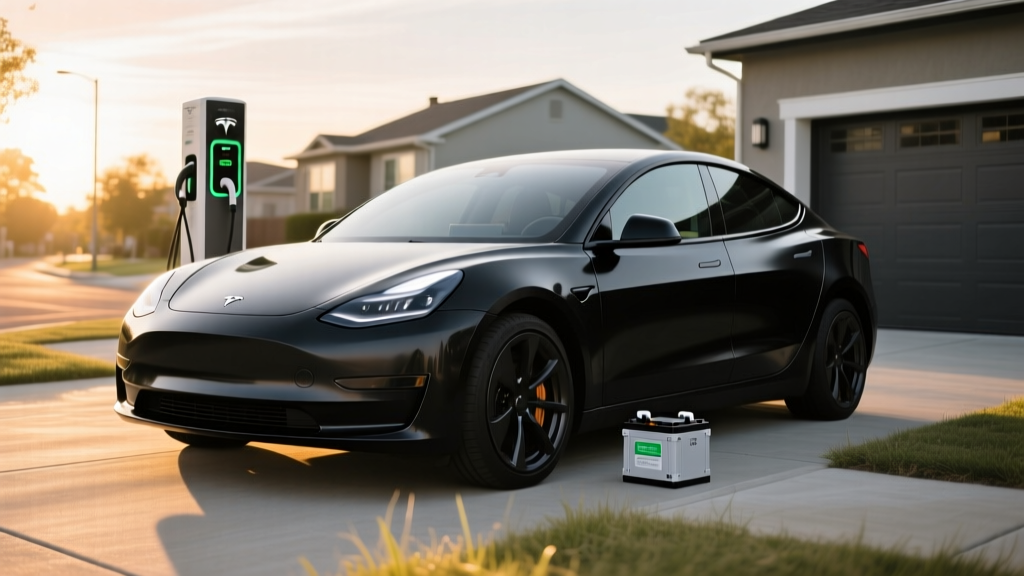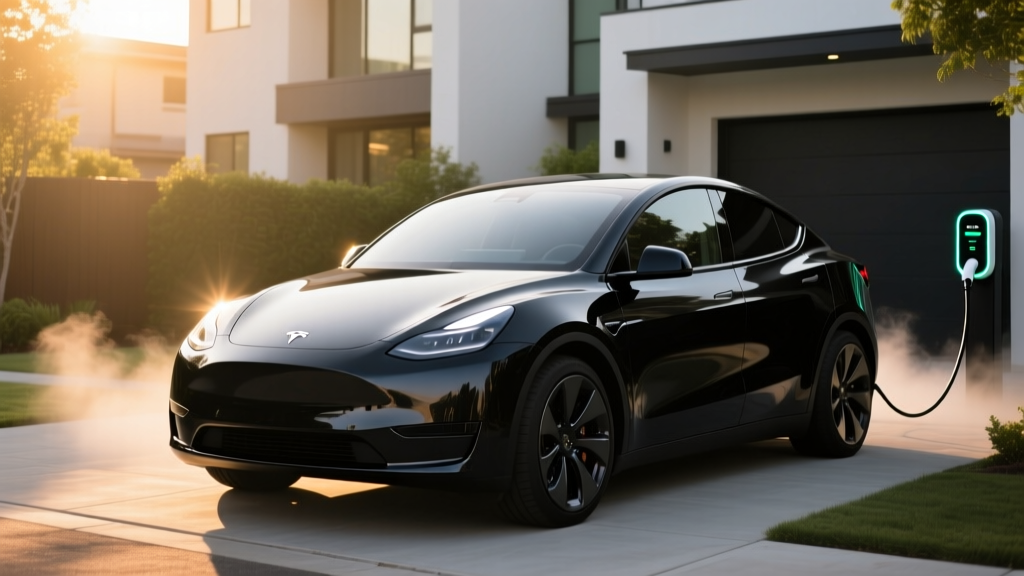
The Tesla Model 3 remains one of the most scrutinized electric sedans on the market, and for good reason. With the refreshed "Highland" platform now fully rolled out for the 2026 model year, Tesla has addressed many of the earlier cabin-quality complaints while pushing efficiency numbers that rival vehicles costing thousands more. But beyond the minimalist dashboard and the controversial steering-wheel-centric controls, what is it actually like to live with this car day to day?
This review takes you deep inside of Tesla Model 3 — covering the cabin materials, infotainment overhaul, real-world range, charging speeds, battery chemistry choices, and the total cost picture after federal incentives. If you're cross-shopping the Model 3 against the Hyundai Ioniq 6, BMW i4, or Polestar 2, the data below should clarify where Tesla still leads and where it falls short.
What's It Like Inside of Tesla Model 3?
Step inside the 2026 Model 3 and the first thing you notice is how much quieter the cabin is compared to pre-2024 versions. Tesla added acoustic glass all around, improved door seals, and applied additional sound-deadening material to the floor and firewall. At 70 mph on the highway, road noise is noticeably reduced — conversations no longer require raised voices, a genuine complaint with older Model 3s.
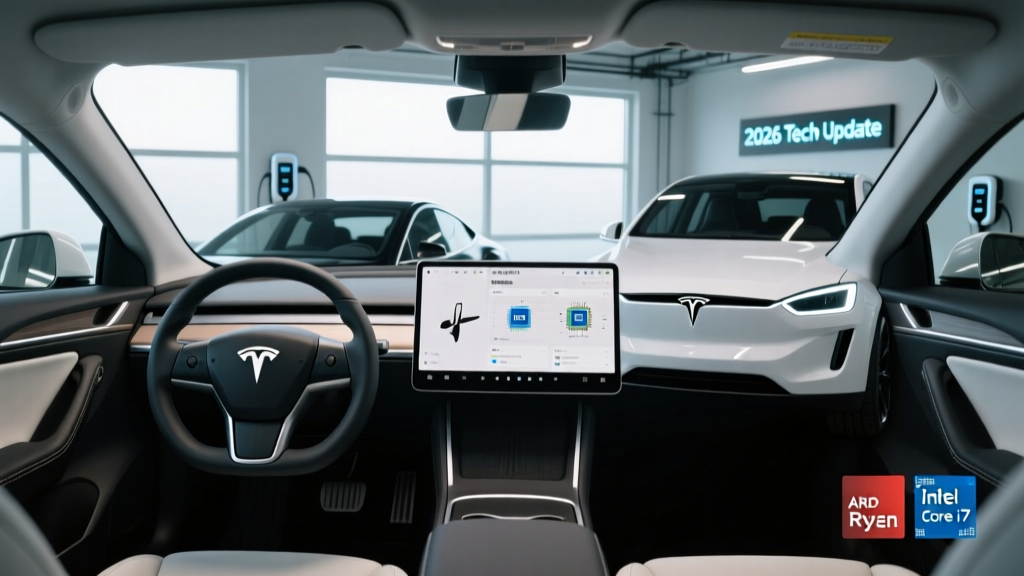
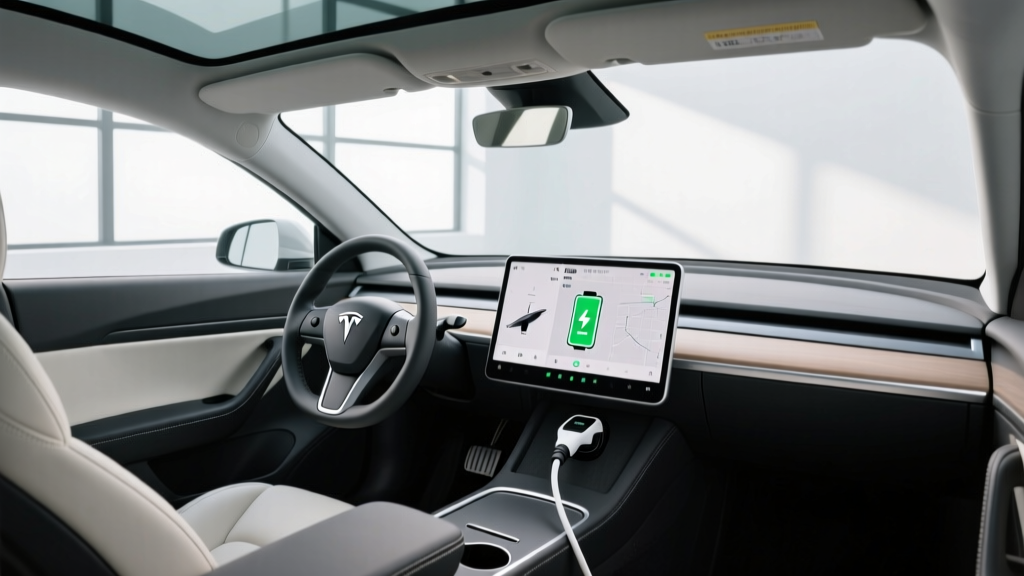
The dashboard is dominated by a 15.4-inch center touchscreen that handles virtually every vehicle function: climate, mirrors, glovebox, speedometer, navigation, media, and driver-assist settings. There is no separate instrument cluster behind the steering wheel. Your speed and gear selection are displayed in the upper-left corner of the main screen. This remains polarizing — some owners adapt within a week, others find it a persistent annoyance, particularly when a front passenger is watching video content on the same display.
For 2026, Tesla has added ventilated front seats across all trims, ambient lighting that wraps the full cabin perimeter, and a rear-seat 8-inch touchscreen for climate and media control. Material quality has stepped up: the dash uses a soft-touch textile and aluminum trim that feels genuinely premium, a meaningful upgrade from the hard plastics in 2022-and-earlier models.
Interior Dimensions and Cargo Space
| Dimension | Model 3 (2026) | Hyundai Ioniq 6 | BMW i4 |
|---|---|---|---|
| Front legroom | 42.7 in | 41.7 in | 41.5 in |
| Rear legroom | 35.2 in | 35.1 in | 33.5 in |
| Front headroom | 40.3 in | 39.4 in | 39.8 in |
| Rear headroom | 37.8 in | 37.1 in | 37.0 in |
| Cargo (rear trunk) | 21.0 cu ft | 12.3 cu ft | 16.6 cu ft |
| Frunk (front trunk) | 3.1 cu ft | — | — |
The Model 3's trunk is generous for a compact sedan, and the 60/40 split-folding rear seats expand utility for longer items. The frunk is small — enough for a charging cable bag or a soft duffel — but it exists, which competitors like the Ioniq 6 and i4 cannot match. Rear-seat headroom is tighter than a crossover, so taller passengers (6'2"+) will notice the sloping roofline on longer trips.
Range, Battery, and Efficiency: The Numbers That Matter
Model 3 Long Range AWD: EPA 341 miles (57 kWh usable, NMC battery)
Model 3 RWD: EPA 272 miles (~57 kWh usable, LFP battery)
Real-world expectations: In mixed driving at moderate temperatures (60–80°F), expect 300–320 miles from the Long Range and 240–260 from the RWD. At sustained highway speeds of 75–80 mph, subtract 10–15%. In freezing conditions (below 32°F), plan for 20–30% range reduction, especially on shorter trips where the cabin and battery must heat from cold. Preconditioning via the Tesla app before departure mitigates some of this loss.
Tesla offers two battery chemistries in the 2026 Model 3 lineup, and understanding the difference is critical before you buy:
| Attribute | LFP (RWD trim) | NMC (Long Range / Performance) |
|---|---|---|
| Chemistry | Lithium Iron Phosphate | Nickel Manganese Cobalt |
| Energy density | Lower | Higher |
| Cold-weather performance | More range loss | Better cold-weather retention |
| Charging recommendation | Can charge to 100% daily | Tesla recommends 80% daily, 100% for trips |
| Cycle life / longevity | Longer cycle life | Shorter cycle life but higher range per charge |
| Cobalt content | None | Contains cobalt |
The LFP battery in the RWD model is heavier and holds less total energy, but it tolerates daily 100% charging without accelerated degradation — a practical advantage for commuters who need every mile available each morning. The NMC pack in the Long Range delivers more range per charge but Tesla recommends keeping daily charge at 80%, effectively giving you ~273 usable miles for routine driving. Reserve 100% for road trips.
Efficiency is a Tesla strong suit. The Long Range AWD achieves an EPA-rated 132 MPGe combined (25 kWh/100 mi), while the RWD lands at 132 MPGe combined (25 kWh/100 mi) per fueleconomy.gov. These figures make the Model 3 one of the most efficient EVs in its class, translating directly to lower charging costs and more miles per kWh at public chargers.
Charging Speed: DC Fast Charging and Home Level 2
Charging speed is where Highland-platform Model 3s made meaningful gains. The 2026 Long Range AWD peaks at 250 kW on a V3 Supercharger or any compatible CCS/NACS DC fast charger, while the RWD with its LFP pack peaks at approximately 170 kW.
| Charging Method | Model 3 RWD (LFP) | Model 3 Long Range (NMC) |
|---|---|---|
| Max DC fast-charge rate | 170 kW peak | 250 kW peak |
| 10–80% DC fast charge | ~30 minutes | ~25 minutes |
| Level 2 home (11.5 kW / 48A) | ~44 mi/hr added | ~44 mi/hr added |
| Level 2 home (7.7 kW / 32A) | ~30 mi/hr added | ~30 mi/hr added |
| Level 1 (120V / 12A) | ~3 mi/hr added | ~3 mi/hr added |
A critical real-world note: peak kW is not sustained kW. The Long Range's 250 kW rate holds roughly from 10% to 30% State of Charge (SoC), then tapers progressively. From 50% to 80%, you're typically seeing 80–120 kW. This charge-curve taper is why the 10–80% time is a more honest metric than peak rate alone. On a road trip, plan your stops around the 10–80% window — charging above 80% slows dramatically and is rarely worth the wait unless you're at your destination overnight.
At home on a 48-amp Level 2 circuit (the most common dedicated home EV install), the onboard charger accepts up to 11.5 kW, adding roughly 44 miles of range per hour. A full charge from 10% to 100% takes approximately 6–7 hours, meaning overnight charging easily covers even a depleted battery. Tesla's Wall Connector ($420) is a solid choice, but any J1772/NACS-compatible Level 2 unit will work. For 2026, all new Model 3s ship with the NACS (North American Charging Standard) connector natively, granting access to the full Tesla Supercharger network without adapters. CCS adapters are available for non-Tesla networks, though most Electrify America and EVgo stations now offer NACS cables.
Performance and Drivetrain
| Spec | Model 3 RWD | Model 3 Long Range AWD | Model 3 Performance |
|---|---|---|---|
| Drivetrain | Rear-Wheel Drive | Dual-Motor AWD | Dual-Motor AWD |
| Horsepower | 271 hp | 346 hp | 510 hp |
| 0–60 mph | 5.8 sec | 4.2 sec | 2.9 sec |
| Top speed | 125 mph | 125 mph | 163 mph |
| EPA range | 272 mi | 341 mi | 315 mi |
Even the base RWD Model 3 is quick by any standard — 5.8 seconds to 60 mph outpaces most turbocharged gas sedans in the same price bracket. The Long Range AWD adds a front motor for all-weather traction and drops the 0–60 time to 4.2 seconds. The Performance trim is a genuine sports sedan competitor, rivaling the BMW M3 and Audi RS5 in straight-line acceleration at a fraction of the price, though with trade-offs in ride comfort and range.
Handling is sharp across all trims thanks to the low center of gravity and revised Highland suspension tuning, which softened the ride compared to pre-2024 models without sacrificing cornering composure. Regenerative braking remains strong and enables one-pedal driving in most conditions, though Tesla removed the user-adjustable regen setting — it's always on, always strong. New EV drivers typically adapt within a few days.
Pricing, Tax Credits, and Total Cost
| Trim | Base MSRP | Federal Tax Credit (§30D) | Effective Price |
|---|---|---|---|
| Model 3 RWD | $38,990 | Up to $7,500* | ~$31,490* |
| Model 3 Long Range AWD | $45,240 | Up to $7,500* | ~$37,740* |
| Model 3 Performance | $52,990 | Up to $7,500* | ~$45,490* |
*Federal tax credit eligibility depends on multiple factors under IRS §30D. See details below.
Does the 2026 Model 3 Qualify for the Federal EV Tax Credit?
The Tesla Model 3 is currently eligible for up to $7,500 in federal tax credits under IRS §30D, but qualification is not automatic. Key requirements include:
- MSRP cap: The vehicle must have an MSRP at or below $55,000 for sedans. The RWD and Long Range trims qualify; the Performance trim at $52,990 also clears this threshold as of early 2026 pricing.
- Buyer income cap: Modified adjusted gross income (MAGI) must not exceed $150,000 (single), $225,000 (head of household), or $300,000 (joint filing).
- Battery sourcing: A percentage of critical minerals and battery components must be sourced from the U.S. or free-trade-agreement countries. These thresholds increase annually. Tesla has shifted significant battery supply chain to qualify, but verify current-year compliance at fueleconomy.gov before purchasing.
- Point-of-sale transfer: As of 2024, you can transfer the credit to the dealer at purchase, reducing your out-of-pocket cost immediately rather than waiting to claim it on your tax return.
Always confirm eligibility with a tax professional and check the latest IRS guidance — sourcing requirements and qualifying VIN lists can shift mid-year.
Tech, Driver Assists, and Standout Features
The Model 3's technology stack remains a key draw. The 15.4-inch touchscreen runs Tesla's proprietary infotainment OS, which supports native navigation with real-time Supercharger routing, Spotify/Apple Music/Tidal integration, over-the-air software updates, and a surprisingly capable built-in web browser when parked. Wireless phone charging is standard, with two USB-C ports (up to 65W) in the front and two in the rear.
Driver assistance comes in three tiers:
All Tesla driver-assist features — including Basic Autopilot, Enhanced Autopilot, and Full Self-Driving (Supervised) — are SAE Level 2 systems. This means the driver must remain fully engaged, hands on or near the wheel, and eyes on the road at all times. The car does not drive itself. FSD (Supervised) can handle highway lane changes, navigate on-ramps to off-ramps, and manage some city intersections, but it requires constant supervision and can make errors. It is not a Level 4 autonomous system like Waymo's driverless robotaxi.
- Basic Autopilot (included): Traffic-aware cruise control and lane-centering on highways.
- Enhanced Autopilot ($6,000): Adds auto lane change, navigate on Autopilot, auto park, and Summon.
- Full Self-Driving Supervised ($8,000): Adds traffic light and stop sign recognition, city-street autosteer. Requires active driver supervision at all times.
Standout features unique to the Tesla ecosystem include the Supercharger network (now the largest and most reliable DC fast-charging network in North America), Sentry Mode (360° camera recording when parked), Dog Mode (maintains cabin climate for pets), and over-the-air updates that periodically add new features without a dealer visit.
Notable Drawbacks
- No Apple CarPlay or Android Auto — Tesla's native system is the only option.
- No physical buttons for climate, mirrors, or glovebox — everything runs through the touchscreen.
- Turn signals are on the steering wheel (no stalk), which some drivers find unintuitive, especially in roundabouts.
- Rear-seat headroom is limited for tall passengers due to the sloping roofline.
- Insurance costs tend to run 15–25% higher than comparable gas sedans due to repair costs and parts pricing.
- No heads-up display, a feature increasingly common in competitors at this price point.
Pros and Cons at a Glance
Pros
- Class-leading efficiency (132 MPGe combined)
- Access to Tesla Supercharger network
- Excellent range on Long Range trim (341 mi EPA)
- Strong acceleration even on base RWD trim
- Significantly improved cabin quietness and materials (Highland refresh)
- Over-the-air updates keep software current
- Eligible for up to $7,500 federal tax credit (income/sourcing dependent)
- Low running costs vs. gas competitors
Cons
- No Apple CarPlay or Android Auto
- All controls via touchscreen — no physical buttons
- Steering-wheel turn signals take adjustment
- Rear headroom tight for passengers over 6'2"
- FSD (Supervised) remains Level 2 — not self-driving, despite the name
- Insurance premiums higher than segment average
- LFP battery in RWD loses more range in cold weather
- Repair costs and wait times can be high after collisions
Who Should Buy the 2026 Tesla Model 3?
Best for:
- Commuters (20–80 miles round trip): The RWD's 272-mile EPA range and LFP battery (charge to 100% daily) make it ideal for predictable daily driving with overnight home charging.
- Road-trip enthusiasts: The Long Range AWD's 341-mile range and Supercharger network access make long-distance EV travel the least stressful in the segment.
- Tech-forward buyers: If you want seamless OTA updates, app-based preconditioning, and a tightly integrated software ecosystem, Tesla's stack is unmatched.
- Cold-climate drivers: The Long Range's NMC battery and standard heat pump provide better winter range retention than the LFD-equipped RWD.
Consider alternatives if:
- You need Apple CarPlay or Android Auto for your daily workflow.
- You frequently carry tall rear-seat passengers (consider a Model Y or Ioniq 5 instead).
- You want physical buttons and a traditional instrument cluster.
- You need towing capability (the Model 3 is not rated for towing in the U.S.).
Frequently Asked Questions
What is the real-world range of the 2026 Tesla Model 3?
The EPA rates the Long Range AWD at 341 miles and the RWD at 272 miles. In real-world mixed driving at moderate temperatures, expect 300–320 miles from the Long Range and 240–260 from the RWD. Sustained highway driving at 75+ mph reduces these figures by 10–15%, and freezing temperatures can cut range by 20–30% on short trips without preconditioning.
How fast does the Model 3 charge at home and on the road?
On a DC fast charger, the Long Range peaks at 250 kW (10–80% in ~25 minutes) and the RWD at 170 kW (~30 minutes). At home on a 48-amp Level 2 charger, both trims add about 44 miles of range per hour, fully recharging overnight in 6–7 hours.
How much does the 2026 Model 3 cost after tax credits?
The RWD starts at $38,990, the Long Range at $45,240, and the Performance at $52,990. If you qualify for the full $7,500 federal tax credit under §30D (income, MSRP, and battery-sourcing requirements apply), effective prices drop to approximately $31,490 / $37,740 / $45,490 respectively. Always verify current eligibility on IRS.gov and with a tax professional.
Is the Model 3 worth buying vs. the Hyundai Ioniq 6 or BMW i4?
The Model 3 wins on efficiency, Supercharger network access, and cargo space. The Ioniq 6 offers a more conventional interior layout, Apple CarPlay, and an 800V architecture for ultra-fast charging (though CCS adapter access is less seamless). The BMW i4 provides a more traditional luxury feel and physical controls but at a significantly higher price and with less range. For most buyers prioritizing range, charging infrastructure, and value, the Model 3 remains the strongest overall package.
Does the Model 3 qualify for the federal EV tax credit?
Yes, the 2026 Model 3 is eligible for up to $7,500 under §30D, provided you meet income caps ($150K single / $300K joint), the vehicle MSRP is at or below $55,000, and battery-sourcing requirements are met. The credit can be transferred to the dealer at point of sale. Check current eligibility at fueleconomy.gov before purchasing, as sourcing rules tighten annually.
What is the battery warranty on the 2026 Model 3?
Tesla covers the battery and drive unit for 8 years or 100,000 miles on the RWD, and 8 years or 120,000 miles on the Long Range and Performance trims — whichever comes first. The warranty guarantees the battery will retain at least 70% of its original capacity during the coverage period. The vehicle's basic limited warranty is 4 years or 50,000 miles.