The Short Answer on Infiniti's Electric Cars
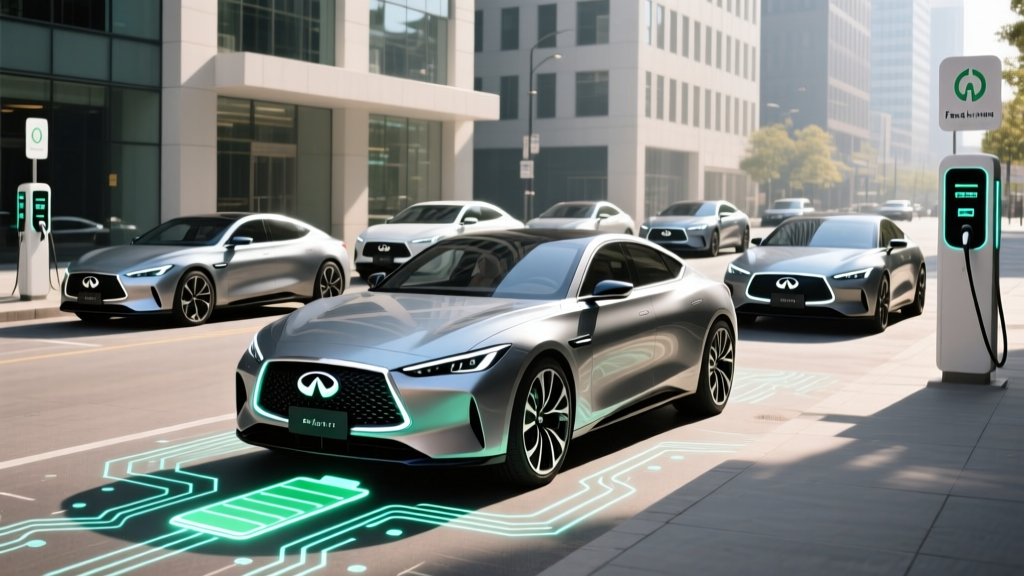
As of early 2026, Infiniti has not yet launched a production battery-electric vehicle for the U.S. market. The brand has announced two upcoming EVs — the QX65 EV (a midsize electric crossover coupe) and the QX80 EV (a full-size electric luxury SUV) — both built on the parent company Nissan's new EV platform. Neither is currently available for purchase, and Infiniti dealers do not have confirmed pricing, EPA range, or delivery dates. If you need an electric luxury SUV today, you'll need to look at competitors like the BMW iX, Genesis Electrified GV70, Cadillac Lyriq, or Tesla Model X. If you can wait, Infiniti's EVs are expected to arrive for the 2027 or 2028 model year, likely leveraging Nissan's solid-state battery roadmap and e-4ORCE dual-motor AWD technology.
Where Infiniti Stands in the EV Market Right Now
Infiniti is notably late to the luxury EV segment. While rivals have fielded multiple electric models — BMW offers the iX and i4, Mercedes has the EQE and EQS SUVs, Genesis has the Electrified GV70 and GV60, and Cadillac has the Lyriq and Optiq — Infiniti's showroom in 2026 remains entirely composed of gasoline and mild-hybrid vehicles. The current QX60, QX55, QX50, and QX80 all use internal combustion engines with no plug-in hybrid or battery-electric variants.
Parent company Nissan, however, is not a stranger to electrification. The Nissan Ariya (EPA range up to 304 miles, 87 kWh usable battery, starting around $39,590) shares the CMF-EV platform that will underpin Infiniti's first EVs. Nissan has also committed to launching multiple new EVs by 2030, with Infiniti positioned as the luxury EV arm of the alliance.
What We Know About the Upcoming Infiniti QX65 EV and QX80 EV
Both models have been confirmed in concept and teaser form, but Infiniti has not released final production specifications. Here's what's been announced or can be reasonably projected based on the Nissan platform and competitive positioning:
| Attribute | QX65 EV (Projected) | QX80 EV (Projected) |
|---|---|---|
| Segment | Midsize luxury crossover coupe | Full-size luxury SUV |
| Platform | Nissan CMF-EV (e-4ORCE AWD expected) | Next-gen Nissan EV platform (likely dedicated large-SUV) |
| Battery (est.) | 87–100 kWh usable (NMC) | 100–120 kWh usable |
| EPA Range (est.) | 280–320 miles | 280–350 miles |
| Peak DC Fast Charge | ~130–150 kW (est.) | ~150–200 kW (est.) |
| Drivetrain | Dual-motor AWD (e-4ORCE) | Dual-motor AWD |
| Expected Launch | 2027–2028 model year | 2028+ model year |
| Estimated Base MSRP | $55,000–$65,000 | $80,000–$95,000 |
Important caveat: These figures are projections based on the Ariya platform and competitive segment analysis. Infiniti has not confirmed any specs. Actual EPA range, battery chemistry, charge rates, and pricing may differ significantly at launch.
How an Infiniti EV Would Compare to Gas Infiniti Models
To understand the ownership shift an Infiniti EV would represent, let's compare the projected QX65 EV against the current gasoline QX55 (the closest existing model in Infiniti's lineup) and a representative competitor, the BMW iX xDrive50:
| Metric | Infiniti QX55 (2026, Gas) | Infiniti QX65 EV (Projected) | BMW iX xDrive50 (2026) |
|---|---|---|---|
| Powertrain | 2.0L turbo I-4, CVT | Dual-motor AWD (est.) | Dual-motor AWD |
| Horsepower | 268 hp | ~340–390 hp (est.) | 516 hp |
| 0–60 mph | ~6.3 sec | ~5.0–5.5 sec (est.) | 4.4 sec |
| EPA Range / MPG | 25 MPG combined | ~300 mi (est.) | 307 mi (EPA) |
| Energy Cost per Mile | ~$0.15/mi (at $3.50/gal) | ~$0.04–$0.06/mi (home L2) | ~$0.04–$0.06/mi (home L2) |
| Annual Fuel/Energy (12k mi) | ~$1,800 | ~$540–$720 | ~$540–$720 |
| Base MSRP | ~$48,000 | ~$55,000–$65,000 (est.) | $87,250 |
| Federal Tax Credit (§30D) | N/A | Up to $7,500 (if eligible) | Up to $7,500 (if eligible) |
The financial case for an Infiniti EV, once available, will hinge on the gap between the higher purchase price and the lower per-mile energy cost. At 12,000 miles per year, home-charging an EV typically saves $1,000–$1,300 annually over gasoline, based on the U.S. average electricity rate of ~$0.16/kWh and gasoline at ~$3.50/gallon. That payback can offset a $7,000–$10,000 price premium in roughly 5–8 years before factoring in reduced maintenance.
Real Costs of Owning an Infiniti EV: A Projected Breakdown
Based on segment norms and the Nissan Ariya as a proxy, here's what a 5-year ownership cost projection could look like for a ~$60,000 Infiniti QX65 EV versus the ~$48,000 gas QX55:
| Cost Category | QX65 EV (Projected) | QX55 (Gas, 2026) |
|---|---|---|
| Purchase Price (MSRP) | $60,000 | $48,000 |
| Federal Tax Credit (§30D) | –$7,500 (if eligible) | $0 |
| Net Purchase | $52,500 | $48,000 |
| Energy/Fuel (5 yrs, 60k mi) | $3,000–$3,600 | $9,000 |
| Maintenance (5 yrs) | $1,200–$1,800 | $3,500–$4,500 |
| Insurance (5 yrs, avg.) | $9,000–$11,000 | $7,500–$9,000 |
| Depreciation (est.) | $22,000–$26,000 | $18,000–$22,000 |
| Estimated 5-Yr Total | $87,700–$94,900 | $86,000–$92,500 |
Key takeaways from this projection:
- Energy savings are real but incremental. You save roughly $5,400–$6,000 on fuel over five years by charging at home.
- Maintenance is roughly halved. No oil changes, no spark plugs, fewer brake replacements (regenerative braking extends pad life). EVs typically cost $0.03–$0.04/mile to maintain vs. $0.06–$0.08/mile for ICE vehicles.
- Insurance is higher for EVs. Luxury EVs carry 15–25% higher premiums on average due to repair complexity and parts cost. Get a quote before purchasing.
- Depreciation is the wildcard. EV resale values have been volatile. Tesla's price cuts in 2023–2024 depressed used EV values across the segment. An Infiniti EV's residual value will depend heavily on brand perception and market conditions at trade-in time.
Federal Tax Credit Eligibility: What to Expect
Under current IRS §30D rules, a new Infiniti EV could qualify for up to $7,500 in federal tax credits — but only if it meets all of the following criteria:
- MSRP cap: SUVs must be priced at or below $80,000; sedans/coupes at or below $55,000.
- Buyer income cap: Modified adjusted gross income must not exceed $150,000 (single), $225,000 (head of household), or $300,000 (joint).
- Battery sourcing: A percentage of critical minerals and battery components must be sourced from the U.S. or free-trade-agreement countries. These thresholds increase annually — for 2026, 80% of critical minerals and 100% of battery components must qualify.
- Point-of-sale transfer: Eligible buyers can transfer the credit to the dealer at purchase, reducing the out-of-pocket cost immediately rather than waiting for tax filing.
- Final assembly: The vehicle must undergo final assembly in North America.
Will an Infiniti EV qualify? That depends entirely on where it's built and where its battery materials come from. Nissan builds the Ariya in Japan, which would disqualify it from §30D. If Infiniti manufactures its EVs at a U.S. plant (such as Nissan's Canton, Mississippi facility, which is being retooled for EV production), the vehicles would meet the assembly requirement. Battery sourcing compliance is less certain and will need to be confirmed at launch. Always verify eligibility at fueleconomy.gov before purchasing.
Common Misconceptions About Infiniti and EVs
| Myth | Fact |
|---|---|
| "Infiniti already sells an electric car." | As of 2026, Infiniti has zero production EVs on sale. The QX65 EV and QX80 EV are announced but not yet available. |
| "The Infiniti EV will use solid-state batteries." | Nissan has announced solid-state battery prototypes targeting 2028–2029 production, but the first Infiniti EVs will likely use conventional NMC lithium-ion cells. Solid-state may appear in later models. |
| "Infiniti EVs will charge at Tesla Superchargers." | The industry is shifting to NACS (Tesla's connector standard). Most new EVs launching from 2025 onward include NACS ports or adapters. Infiniti has not confirmed connector type, but NACS adoption is likely for the U.S. market. |
| "I'll save $7,500 on any Infiniti EV." | The §30D credit has strict MSRP, income, and battery-sourcing requirements. Not every buyer or every trim will qualify. |
| "An Infiniti EV will have 400+ miles of range." | Based on the CMF-EV platform (Ariya peaks at 304 miles EPA), expect 280–350 miles EPA for Infiniti's first EVs. 400+ mile EVs require larger or more energy-dense batteries not yet confirmed for these models. |
What First-Time EV Buyers Should Know Before Waiting for Infiniti
If you're considering an Infiniti EV but have never owned an electric vehicle, here are the practical realities that will shape your ownership experience:
Home Charging Is the Foundation
Over 80% of EV charging happens at home. You'll want a Level 2 (240V) home charger installed — typically a 48-amp unit on a 60-amp circuit, adding roughly 25–30 miles of range per hour of charging. Professional installation costs $500–$2,000 depending on your electrical panel capacity and the distance from panel to garage. If your home has a 100-amp service panel, you may need a $1,500–$3,000 panel upgrade to support a Level 2 charger alongside existing loads. Without home charging, EV ownership becomes significantly less convenient and more expensive (public DC fast charging costs $0.30–$0.50/kWh vs. ~$0.13–$0.18/kWh at home).
Real-World Range Is Less Than the EPA Sticker
EPA range estimates are calculated under controlled conditions. In real-world driving, expect:
- Highway driving at 70+ mph: 10–20% range reduction vs. EPA.
- Cold weather (below 32°F): 20–35% range loss, depending on whether the vehicle has a heat pump (which Infiniti's EVs will likely include, given the Ariya's thermal management system).
- DC fast charging taper: Peak charge rates (e.g., 150 kW) are sustained only from roughly 10–50% state of charge. Above 80%, charging slows dramatically to protect battery health. Plan for 10–80% charge times, not 0–100%.
Maintenance Is Minimal but Not Zero
EVs eliminate oil changes, transmission fluid, spark plugs, and exhaust system repairs. You'll still need tire rotations (EVs are heavier and wear tires faster — expect 25,000–35,000 miles per set vs. 40,000–50,000 for gas cars), cabin air filter replacement, brake fluid checks, and windshield washer fluid. The battery and drive unit are typically warranted for 8 years / 100,000 miles, covering defects and capacity loss below 70% of original capacity.
Should You Wait for Infiniti or Buy a Competitor Now?
Decision Framework: Wait for Infiniti EV or Buy Now?
Choose to wait for the Infiniti QX65 EV or QX80 EV if:
- You're a loyal Infiniti owner with an existing dealer relationship and don't need to replace your vehicle for 18–24 months.
- You value Infiniti's specific luxury aesthetic and dealer service experience over having the latest EV tech immediately.
- You want to see whether Nissan's solid-state battery timeline accelerates and whether Infiniti's EVs qualify for the full §30D credit.
Choose to buy a competitor EV now if:
- You need a vehicle within 6–12 months and can't wait for unconfirmed production dates.
- You want proven EPA range data, real-world charging performance, and established reliability records before spending $55,000–$90,000.
- You want to lock in the current §30D credit before potential legislative changes reduce or eliminate it. (Tax policy is subject to change — consult a tax professional.)
- You want access to the Tesla Supercharger network today (available to NACS-equipped vehicles from Ford, GM, Rivian, and others via adapter or native port).
Choose a plug-in hybrid (PHEV) as a bridge if:
- You don't have reliable home charging access yet.
- You frequently drive 300+ mile routes through areas with sparse charging infrastructure.
- You want to reduce fuel consumption without committing fully to battery-electric ownership.
Frequently Asked Questions
Does Infiniti sell an electric car in 2026?
No. As of early 2026, Infiniti has no production battery-electric vehicles available for purchase in the United States. The QX65 EV and QX80 EV have been announced but are not yet in production, with estimated arrival in the 2027–2028 model year timeframe.
Will the Infiniti EV qualify for the $7,500 federal tax credit?
It's too early to confirm. Eligibility under IRS §30D depends on final assembly location (must be in North America), battery component and critical mineral sourcing thresholds, MSRP caps ($80,000 for SUVs), and buyer income limits. Nissan's current Ariya is built in Japan and does not qualify. If Infiniti builds its EVs at Nissan's U.S. plants, the assembly requirement would be met, but battery sourcing remains unconfirmed.
What platform will Infiniti's electric cars use?
Infiniti's first EVs are expected to use Nissan's CMF-EV platform (the same architecture underpinning the Nissan Ariya) or a next-generation derivative for larger vehicles like the QX80 EV. The e-4ORCE dual-motor all-wheel-drive system is expected to be standard or available across the lineup.
How much will an Infiniti electric car cost?
Infiniti has not announced pricing. Based on competitive positioning against the BMW iX ($87,250+), Genesis Electrified GV70 ($66,450+), and Cadillac Lyriq ($58,590+), the QX65 EV will likely start in the $55,000–$65,000 range, while the QX80 EV could start at $80,000–$95,000 given the current QX80's $82,000+ starting price for gasoline models.
Should I buy a Nissan Ariya instead of waiting for Infiniti?
If you want a Nissan-alliance EV now, the Ariya is a strong option with up to 304 miles of EPA range, available e-4ORCE AWD, and a starting price around $39,590. However, it does not qualify for the federal §30D credit (Japan-built), and its interior, while well-appointed, is mainstream rather than luxury-grade. The Ariya is a practical EV, but it's not an Infiniti substitute in terms of materials, dealer experience, or brand positioning.
Will Infiniti EVs use Tesla's NACS charging connector?
Infiniti has not officially confirmed connector type. However, the broader industry — including Nissan — has signaled adoption of the NACS standard for North American models. It is likely that Infiniti's U.S.-market EVs will feature a native NACS port or ship with a CCS-to-NACS adapter for Supercharger access.