If you live in Illinois and are weighing an electric vehicle purchase, the incentive landscape is layered: a federal tax credit worth up to $7,500, the Illinois electric vehicle rebate program (officially the EV Rebate Program administered under the Climate and Equitable Jobs Act, or CEJA), and a patchwork of utility rebates from ComEd, Ameren, and municipal providers. Stacking these can knock $10,000 or more off an effective purchase price — but only if you meet the eligibility requirements, which are specific and sometimes unforgiving.
This guide breaks down exactly what's available to Illinois EV buyers in 2026, then runs the hard math on 5-year total cost of ownership (TCO): purchase price, fuel, maintenance, insurance, and depreciation. No cherry-picking — we include the higher insurance premiums and upfront costs alongside the fuel and maintenance savings.
The Illinois Electric Vehicle Rebate Program: What's Available
The Illinois EV Rebate Program was established under CEJA and administered by the Illinois Environmental Protection Agency (Illinois EPA). The program provides rebates for the purchase or lease of new and used electric vehicles. Here's how it breaks down as of the 2026 funding cycle:
- New EV purchase: Up to $4,000 rebate for battery electric vehicles (BEVs)
- Used EV purchase: Up to $1,500 rebate for qualifying pre-owned EVs
- Low-income applicants: Enhanced rebate tiers — potentially up to $6,000 for new EVs, depending on household income relative to the area median income
- Income targeting: Priority is given to environmental justice communities and lower-income households; higher-income applicants may receive reduced amounts or be waitlisted depending on funding availability
Utility Rebates in Illinois
Beyond the state program, Illinois utilities offer their own incentives that can stack with both the state rebate and federal credit:
- ComEd: Residential EV charging rebate programs (historically up to $1,000 for Level 2 charger installation in qualifying scenarios); off-peak charging rate programs that lower your per-kWh cost
- Ameren Illinois: Similar residential charging incentives and time-of-use (TOU) rate plans optimized for overnight EV charging
- Municipal utilities: Some — like Springfield's CWLP — have offered their own smaller rebates ($250-$500) for EV purchases or home charger installations
These utility programs change frequently. Confirm current offerings directly with your utility before relying on them in your purchase math.
Federal EV Tax Credit (§30D): The 2026 Rules
The federal IRS §30D Clean Vehicle Credit remains the single largest incentive available to most EV buyers — up to $7,500 for qualifying new vehicles and up to $4,000 (or 30% of sale price, whichever is lower) for qualifying used EVs. But eligibility is not automatic. Here's the 2026 checklist:
§30D New EV Credit Eligibility Checklist
- MSRP caps: Vans, SUVs, and pickups ≤ $80,000; sedans and other body styles ≤ $55,000
- Buyer income caps (modified AGI): $300,000 joint filers / $225,000 head of household / $150,000 individual
- Battery sourcing requirements: Critical minerals and battery components must meet escalating domestic/free-trade-partner percentages — this eliminates some models entirely
- Final assembly: Vehicle must be assembled in North America
- Point-of-sale transfer: As of 2024+, you can transfer the credit to the dealer at purchase, reducing your out-of-pocket cost immediately rather than waiting to claim it on your tax return
- One credit per VIN, one per taxpayer: You can claim the credit once per vehicle and are limited in how many you can claim per year
Which popular EVs qualify in 2026? Models like the Tesla Model Y (Long Range, starting ~$44,990), Ford F-150 Lightning (XLT trims under the $80K cap), Chevrolet Equinox EV (starting ~$33,600), and Hyundai Ioniq 5 (starting ~$42,500) have generally qualified — but battery-sourcing rules shift annually. Always verify on fueleconomy.gov before purchasing, as the IRS updates qualifying vehicle lists regularly.
5-Year Total Cost of Ownership: EV vs. Gas Car in Illinois
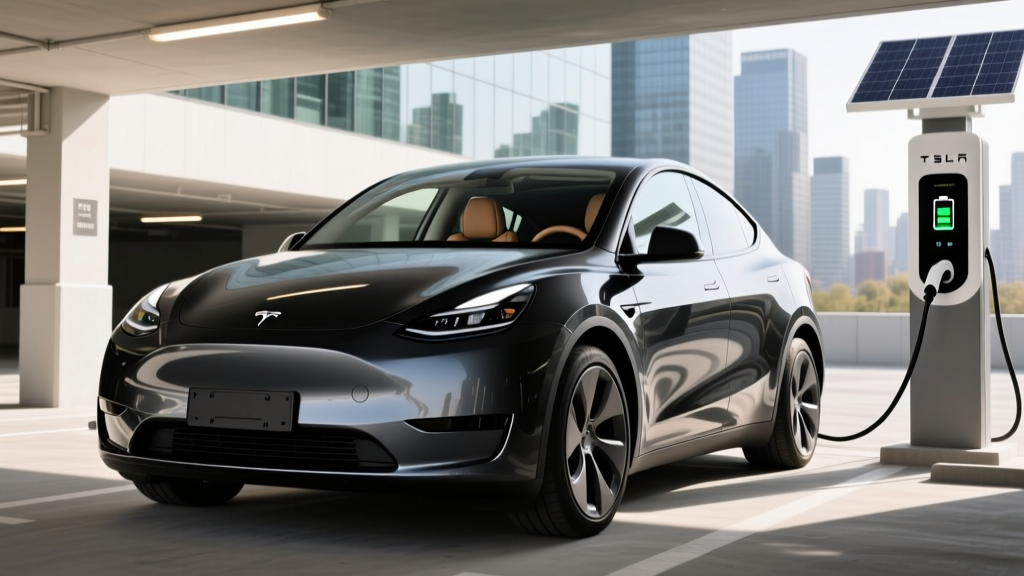
Incentives lower the purchase price, but ownership costs determine whether an EV truly saves money long-term. Let's compare a representative EV (a 2026 Tesla Model Y Long Range, ~$44,990 MSRP) against a comparable gas crossover (a 2026 Toyota RAV4 XLE AWD, ~$33,000 MSRP) over 5 years and 75,000 miles in Illinois.
| Cost Category | Tesla Model Y LR (EV) | Toyota RAV4 XLE AWD (Gas) |
|---|---|---|
| Base MSRP | $44,990 | $33,000 |
| Federal tax credit (§30D) | −$7,500 | $0 |
| Illinois state rebate | −$4,000 | $0 |
| Effective purchase price | $33,490 | $33,000 |
| Fuel / charging (75K mi) | $3,375* | $7,875** |
| Maintenance (5 yrs) | $900 | $3,200 |
| Insurance (5 yrs) | $11,500 | $8,750 |
| Depreciation (5-yr est.) | $16,800 | $14,850 |
| 5-Year TCO | $66,065 | $67,675 |
*EV charging at $0.15/kWh average (Illinois home electricity + some public DCFC), vehicle efficiency 3.5 mi/kWh (28.6 kWh/100mi).
**Gas at $3.50/gal, 28 MPG combined.
The takeaway: after incentives, the Model Y and RAV4 reach near-parity on purchase price, and the EV pulls ahead on fuel and maintenance — but loses ground on insurance and depreciation. Over 5 years, the EV saves roughly $1,600 in this scenario. Extend to 7 or 10 years (more miles driven), and the EV's fuel and maintenance savings widen considerably.
Charging vs. Gas: The Per-Mile Math
Fuel savings are where EVs earn their keep, but the exact number depends on how and where you charge. Here's the breakdown for Illinois drivers:
| Scenario | Cost per kWh / Gallon | Cost per Mile |
|---|---|---|
| Home Level 2 (ComEd residential, ~$0.14/kWh) | $0.14/kWh | $0.040 |
| Home Level 2 (off-peak TOU rate, ~$0.08/kWh) | $0.08/kWh | $0.023 |
| Public DC fast charging (~$0.40/kWh) | $0.40/kWh | $0.114 |
| Gas car (28 MPG, $3.50/gal) | $3.50/gal | $0.125 |
The critical insight: Home charging at residential or off-peak rates is 3–5× cheaper per mile than gasoline. But if you rely exclusively on public DC fast chargers (Electrify America, EVgo, Tesla Superchargers at $0.35–$0.48/kWh), your per-mile cost approaches — and can exceed — a fuel-efficient gas car. Illinois buyers with access to home or workplace Level 2 charging capture the full fuel savings; apartment dwellers dependent on public charging see much smaller gains.
For a typical Illinois driver covering 15,000 miles/year with 80% home charging and 20% public DCFC, the blended electricity cost is roughly $0.18/kWh, yielding a $0.051/mile fuel cost vs. $0.125/mile for gas — a savings of about $1,110 per year.
Maintenance Savings: Where EVs Quietly Win
EVs have dramatically fewer moving parts than internal combustion vehicles, and the maintenance savings compound over time. Here's what disappears from your service schedule:
| Service Item | Gas Car (5-yr cost) | EV (5-yr cost) |
|---|---|---|
| Oil changes (5–7 over 75K mi) | $350–$600 | $0 |
| Transmission fluid service | $150–$300 | $0 |
| Brake pads (1–2 replacements) | $400–$800 | $0–$200* |
| Spark plugs, belts, filters | $300–$600 | $0 |
| Tire rotation / replacement | $1,200–$1,600 | $1,400–$1,800** |
| Cabin air filter | $100–$200 | $100–$200 |
| Total (est.) | $2,500–$4,100 | $1,500–$2,200 |
*Regenerative braking significantly reduces brake pad wear — many EV owners go 80,000+ miles on original pads. **EVs are heavier (battery mass) and deliver instant torque, which accelerates tire wear. Budget for tire replacement slightly sooner than a comparable gas car.
Net maintenance savings for an EV over 5 years: roughly $1,000–$2,000. The savings grow with mileage — at 100,000+ miles, avoided oil changes, transmission services, and exhaust repairs make the gap substantial.
The Insurance Reality: EVs Cost More to Insure
This is where EV ownership costs bite. On average, EV insurance premiums run 15–30% higher than equivalent gas vehicles. For our Model Y vs. RAV4 comparison, expect roughly $2,300/year vs. $1,750/year — a $2,750 gap over 5 years.
Why the premium?
- Higher repair costs: EV battery packs, power electronics, and specialized structural components are expensive to replace after collision damage
- Limited repair network: Fewer body shops have the high-voltage certification and equipment needed for EV repairs, driving up labor rates
- Total-loss thresholds: Battery damage in a collision can push repair costs above the vehicle's value, leading insurers to declare total losses more frequently
- Vehicle value: EVs in comparable segments often carry higher MSRPs, which translates to higher comprehensive and collision premiums
How to mitigate: Shop quotes from EV-friendly insurers (Geico, Progressive, State Farm, and Tesla Insurance all have EV-specific rate programs). Bundling home and auto, maintaining a clean driving record, and selecting higher deductibles can narrow the gap to 5–10% above gas-car rates.
Depreciation and Resale Value Trends
EV depreciation has been volatile. Through 2023–2025, several factors compressed EV resale values:
- Tesla price cuts on new vehicles cascaded through the used market, pulling down resale values for all EV brands
- Rapid model turnover and range improvements made 2–3-year-old EVs feel outdated faster than gas cars
- Battery health concerns among used buyers suppressed demand for higher-mileage EVs
- Fleet/rental sell-offs (Hertz, etc.) flooded the used market with high-mileage EVs
As of 2026, the market is stabilizing. Models with strong reputations for battery durability (Tesla, Hyundai/Kia E-GMP vehicles) hold value better, while luxury EVs from legacy brands (Mercedes EQS, BMW iX) continue to depreciate steeply — often 50–60% over 3 years.
Realistic 5-year depreciation estimates:
- Mainstream EVs (Model Y, Ioniq 5, Equinox EV): 40–50% of original MSRP (before incentives)
- Luxury EVs (EQS, iX, Taycan): 55–65%
- Comparable gas crossovers (RAV4, CR-V): 35–45%
An important nuance: depreciation should be calculated on your effective purchase price after incentives. If you paid $33,490 for a Model Y after $11,500 in combined federal/state credits, and it's worth $20,000 after 5 years, your actual depreciation loss is $13,490 — not the $22,495 it would be on the full MSRP. Incentives effectively cushion your depreciation hit.
Stacking Incentives: An Illinois Buyer's Best-Case Scenario
Here's what optimal incentive stacking looks like for a qualified Illinois buyer purchasing a 2026 Chevrolet Equinox EV 2LT (MSRP ~$36,900):
- Federal §30D credit: $7,500 (qualifies on MSRP, assembly, sourcing, and income)
- Illinois EV rebate: $4,000 (standard tier) or $6,000 (low-income tier)
- ComEd charger rebate: Up to $1,000 for Level 2 home charger installation
- Total incentives: $12,500–$14,500
- Effective price: ~$22,400–$24,400
At that effective price, the Equinox EV becomes competitive with a base Honda CR-V or Toyota RAV4 — before factoring in the ongoing fuel and maintenance savings. This is the scenario where EV ownership economics become genuinely compelling.
Frequently Asked Questions
How much does it really cost to own an EV over 5 years in Illinois?
For a mainstream EV like the Tesla Model Y Long Range after stacking federal ($7,500) and Illinois ($4,000) incentives, expect a 5-year TCO of roughly $63,000–$68,000 covering purchase, charging, maintenance, insurance, and depreciation. That's comparable to — or slightly cheaper than — a gas crossover like the Toyota RAV4 AWD at $65,000–$70,000. The EV pulls ahead significantly at higher annual mileage (20,000+ mi/yr) where fuel savings compound.
Do I qualify for the federal EV tax credit?
You qualify for up to $7,500 under §30D if: your modified AGI is under $150K (individual) / $300K (joint), the vehicle's MSRP is under $55K (sedans) or $80K (SUVs/trucks/vans), the vehicle is assembled in North America, and its battery meets 2026 critical-mineral and component sourcing thresholds. Use the fueleconomy.gov tax credit lookup to verify specific models, and confirm your income eligibility with a tax professional.
How much do I save on fuel and maintenance with an EV in Illinois?
With 80% home charging at Illinois residential rates (~$0.14/kWh) and 20% public DCFC, expect fuel savings of $900–$1,200 per year vs. a 28 MPG gas car. Maintenance savings add another $200–$400 per year from eliminated oil changes, reduced brake wear, and fewer scheduled services. Combined, that's $1,100–$1,600 in annual operating savings — or $5,500–$8,000 over 5 years.
Are EVs more expensive to insure?
Yes — typically 15–30% higher premiums than comparable gas vehicles, driven by costlier collision repairs, limited EV-certified body shops, and higher total-loss rates from battery damage. For a Model Y, expect roughly $2,200–$2,500/year vs. $1,600–$1,900/year for a RAV4. Shopping multiple insurers and bundling policies can reduce the gap.
How well do EVs hold their value?
Mainstream EVs (Tesla, Hyundai, Kia) depreciate roughly 40–50% over 5 years from original MSRP, while luxury EVs can lose 55–65%. Gas crossovers hold slightly better at 35–45% depreciation. However, because incentives reduce your effective purchase price, your actual dollar loss to depreciation is often smaller than the percentages suggest. A Model Y bought for $33,490 after incentives and sold for $20,000 loses $13,490 in real depreciation — competitive with a RAV4 bought at $33,000 and sold for $19,800 ($13,200 loss).
Can I stack the Illinois rebate with the federal tax credit?
Yes. The Illinois EV Rebate Program and the federal §30D credit are separate programs with separate eligibility criteria. You can claim both, plus any utility rebates your provider offers. The key is ensuring you meet each program's requirements independently — income limits, vehicle eligibility, and application deadlines differ across programs.
What if I live in an apartment and can't install a home charger?
This is the biggest financial headwind for EV ownership. Without home charging, you'll rely on public DCFC at $0.35–$0.48/kWh, pushing your per-mile fuel cost to $0.10–$0.14 — close to or exceeding a gas car. Before buying, map your access to workplace charging, apartment-complex chargers, and reliable public stations near your routine routes. Some Illinois municipalities and ComEd have programs supporting multi-unit dwelling charger installations — check with your building manager and utility.