If you've searched for iKamper Rivian setups, you already know the appeal: combining Rivian's electric adventure platform with iKamper's premium rooftop tents and overlanding gear. But bolting a 130–170 lb rooftop tent onto an electric truck or SUV changes the equation in ways that gas-truck owners rarely think about. Aerodynamic drag, payload capacity, range reduction, and campsite power all become critical calculations.
This guide breaks down exactly what happens when you pair an iKamper Skycamp or BDV with a 2026 Rivian R1T or R1S — including the real-world range hit, payload math, charging logistics, and whether Rivian's camp features make the combo worthwhile.
Why Pair iKamper With a Rivian?
iKamper makes some of the most refined hard-shell rooftop tents on the market, and Rivian builds the most capable electric adventure vehicles available. The overlap in buyer demographics is nearly total: outdoor enthusiasts who want premium gear, silent off-grid camping, and zero tailpipe emissions at the trailhead.
Rivian's R1T (truck) and R1S (SUV) both come with roof rails rated for dynamic loads, integrated camp power via their Camp Kitchen and onboard outlets, and a software-defined platform that receives over-the-air updates. iKamper's tents — the Skycamp 3.0, Skycamp Mini, and BDV (truck-bed tent) — are engineered for quick setup, low-profile driving, and family-sized sleeping capacity.
The question isn't whether they work together mechanically — they do — but how the combination affects range, efficiency, and the overall ownership experience.
Range Impact: What a Rooftop Tent Does to Your EPA Numbers
Every rooftop tent adds two penalties to an EV: weight and aerodynamic drag. The drag penalty matters far more at highway speeds, which is exactly where EVs already lose efficiency compared to city driving.
Real-World Range Expectations With an iKamper Mounted
Rivian R1T Dual-Motor (Max Pack, 2026): EPA-estimated 420 miles. With an iKamper Skycamp 3.0 (~165 lb, ~18" height closed), expect approximately 330–355 miles in mixed driving and as low as 280–310 miles sustained highway at 70 mph. Cold weather (below 32°F) can push real-world range down to 240–275 miles with the tent mounted.
Rivian R1S Dual-Motor (Max Pack, 2026): EPA-estimated 410 miles. The SUV's slightly less aerodynamic profile means a similar 15–25% reduction. Expect 310–345 miles mixed, 270–300 miles highway with the tent.
Standard Pack models (149 kWh battery, ~270 mi EPA): With a rooftop tent, highway range drops to roughly 185–210 miles. This is workable for weekend trips but requires more deliberate charging planning.
The key insight: most of the range loss comes from the aerodynamic disruption of even a closed hard-shell tent on the roof, not the weight alone. Removing the tent between trips recovers nearly all lost range.
Rivian R1T and R1S: The Base Vehicles at a Glance
Before committing to an iKamper setup, here's what you're working with across the current Rivian lineup.
| Spec | R1T Dual-Motor Max | R1S Dual-Motor Max | R1T Tri-Motor |
|---|---|---|---|
| EPA Range | 420 mi | 410 mi | 380 mi |
| Battery (usable) | ~149 kWh (NMC) | ~149 kWh (NMC) | ~149 kWh (NMC) |
| Horsepower | 665 hp | 665 hp | 850 hp |
| 0-60 mph | ~4.5 sec | ~4.5 sec | ~3.0 sec |
| Max DC Fast Charge | ~220 kW | ~220 kW | ~220 kW |
| 10-80% DC Charge | ~27 min | ~27 min | ~27 min |
| Level 2 Home Charge | 11.5 kW (~25 mi/hr) | 11.5 kW (~25 mi/hr) | 11.5 kW (~25 mi/hr) |
| MPGe (combined) | 70 MPGe | 69 MPGe | 65 MPGe |
| Max Towing | 11,000 lb | 7,700 lb | 11,000 lb |
| Payload Capacity | ~1,760 lb | ~1,400 lb | ~1,760 lb |
| Roof Dynamic Load | 165 lb | 165 lb | 165 lb |
| Battery Warranty | 8 yr / 175,000 mi | 8 yr / 175,000 mi | 8 yr / 175,000 mi |
| Base MSRP (2026) | $99,900 | $104,900 | $119,900 |
Rivian uses NMC (nickel manganese cobalt) chemistry across its large battery packs. NMC offers higher energy density than LFP, which is critical in a full-size truck/SUV platform where space is at a premium. According to fueleconomy.gov, NMC packs typically see 10–15% degradation over 100,000 miles — Rivian's warranty guarantees at least 70% capacity retention at 8 years/175,000 miles.
Payload Math: Will Your iKamper Fit the Roof?
This is where many buyers get tripped up. Rivian rates its roof rails for a dynamic (driving) load of 165 lb and a static (parked) load significantly higher — important for sleeping in the tent.
Here's how iKamper's lineup stacks up against that limit:
- iKamper Skycamp 3.0: ~165 lb — right at the dynamic limit. Rivian has confirmed compatibility, but you're at the ceiling of the rating. Two adults and a child sleeping inside (~400+ lb static) is well within the static load rating.
- iKamper Skycamp Mini: ~125 lb — comfortably under the dynamic limit, with room for crossbars or accessories.
- iKamper BDV (Bed Deck Tent, R1T only): ~110 lb — sits on the truck bed, not the roof, eliminating roof-load concerns entirely while keeping the roof free for gear or solar.
Critical note: The dynamic load rating includes the weight of the tent plus any mounting hardware, crossbars, and accessories. If you're using aftermarket crossbars that weigh 20 lb, your available tent budget drops to 145 lb for driving. Always calculate the total system weight.
Charging Logistics for Overland Trips
With a rooftop tent reducing your effective range to 280–355 miles depending on conditions, DC fast charging becomes part of every long overland trip. Here's what to expect.
| Charging Level | Power | Speed | Use Case |
|---|---|---|---|
| Level 1 (120V) | ~1.4 kW | ~3 mi/hr | Emergency/trickle only |
| Level 2 (240V home) | 11.5 kW | ~25 mi/hr | Daily home charging |
| DC Fast (Rivian Adventure Network) | Up to 220 kW | ~140 mi in 15 min | Road trips |
| DC Fast (Tesla Supercharger w/ adapter) | Up to ~180 kW | ~120 mi in 15 min | Expanded network access |
Rivian's charge curve peaks around 220 kW below 30% State of Charge (SoC) and tapers significantly above 80%. For overland planning, plan your DC fast stops around the 10–80% window (~27 minutes) rather than attempting a full charge, which can take 45+ minutes.
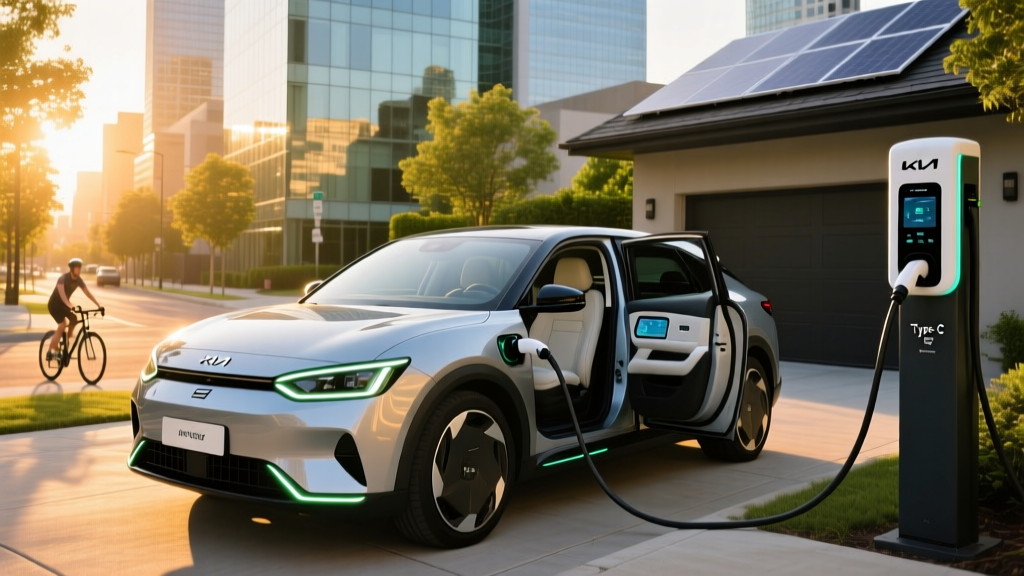
The Rivian Adventure Network continues to expand through 2026, with chargers placed near national parks, trailheads, and outdoor recreation areas — precisely where iKamper owners are headed. Combined with the included Tesla Supercharger adapter, Rivian owners now access over 30,000 DC fast chargers nationwide.
Camp Power: Running Gear Without a Generator
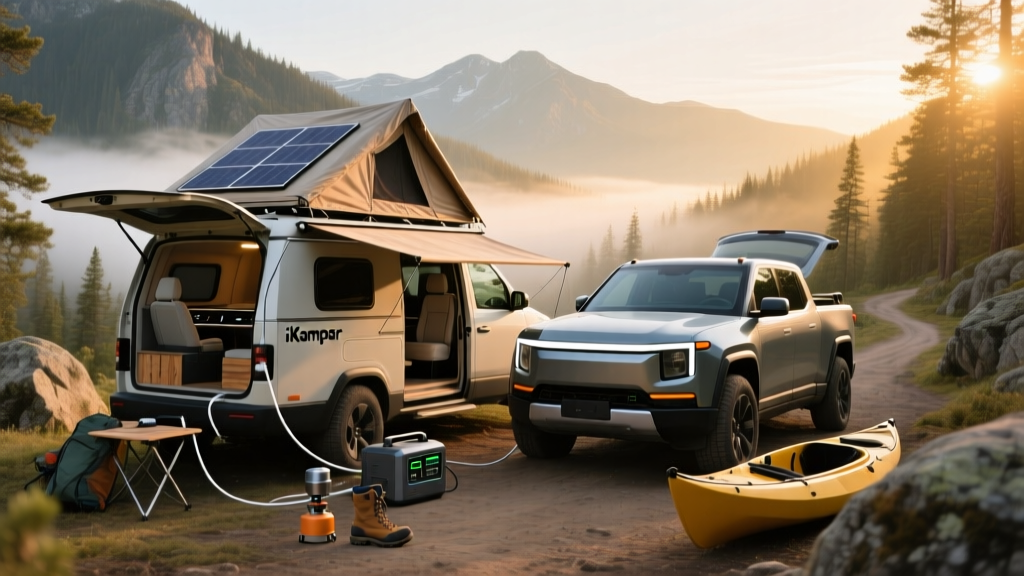
One of the biggest advantages of pairing an iKamper with a Rivian is eliminating the need for a gas generator. The R1T's Camp Kitchen option includes an induction cooktop and sink powered directly from the traction battery. Even without it, the truck bed and cabin offer 120V and USB-C outlets.
With a 149 kWh battery, running camp lights, a portable fridge, phone charging, and an electric blanket overnight might consume 2–5 kWh — roughly 1–3% of total battery capacity. You'll never notice the range impact from camp power alone.
Pricing and Federal Tax Credit Eligibility
Rivian pricing has shifted multiple times; here's where the 2026 models sit before options and accessories.
| Model / Trim | Base MSRP | §30D Credit Eligible? | Est. Net Price |
|---|---|---|---|
| R1T Dual-Motor (Standard) | $79,900 | Yes — if under income/MSRP caps | ~$72,400 |
| R1T Dual-Motor (Max Pack) | $99,900 | Yes — under $80K truck cap? No* | $99,900 |
| R1S Dual-Motor (Standard) | $84,900 | No — exceeds $80K SUV cap | $84,900 |
| R1T Tri-Motor | $119,900 | No — exceeds $80K truck cap | $119,900 |
*Important MSRP cap note: Under IRS §30D rules, trucks (R1T) have an MSRP cap of $80,000 and SUVs (R1S) also cap at $80,000. The R1T Dual-Motor Standard Pack at $79,900 squeaks under the truck cap, making it one of the few Rivian configurations eligible for the up-to-$7,500 federal credit — provided the buyer also meets income limits ($150K single / $300K joint AGI) and the vehicle meets critical-mineral and battery-component sourcing requirements.
The point-of-sale transfer option allows you to apply the credit as a down-payment reduction at purchase rather than waiting for tax filing. Always verify current eligibility with a tax professional, as battery-sourcing rules tighten annually.
iKamper Tent Pricing (2026)
- Skycamp 3.0: ~$4,699 — flagship family tent, sleeps 4
- Skycamp Mini: ~$3,899 — lighter, sleeps 2-3
- BDV (truck-bed tent for R1T): ~$3,499 — mounts in bed, no roof load
Factor in crossbars or a roof rack system (~$300–$600) and mounting hardware for a total iKamper system cost of $3,800–$5,300 on top of the vehicle.
Pros and Cons of the iKamper + Rivian Combo
Pros
- Silent, emission-free camping — no generator noise or fumes
- Massive battery powers camp appliances for days without meaningful range loss
- Rivian's Gear Tunnel (R1T) adds 11 cu ft of secure, weatherproof storage
- iKamper tents set up in under 60 seconds with the hard-shell design
- Rivian Adventure Network chargers placed near outdoor destinations
- Class-leading off-road capability with quad-motor ground clearance (up to 14.9")
- Over-the-air updates continuously improve vehicle features
Cons
- Rooftop tent reduces highway range by 15–25% — real planning required on long trips
- Dynamic roof load limit (165 lb) restricts tent options and eliminates some accessories
- Higher trims exceed $80K MSRP cap, eliminating federal tax credit eligibility
- DC fast charging adds 25–30 minutes per stop on multi-day overland routes
- iKamper tents are premium-priced — total system investment exceeds $83,000+
- Cold-weather range loss compounds with tent drag — winter overlanding requires conservative planning
Who Should Buy This Setup?
The iKamper + Rivian Combo Is Right For You If:
- Weekend overlanders: 1–3 night trips within 200–300 miles of home, with charging stops planned along the route.
- Silent-camping enthusiasts: You value zero generator noise in dispersed campsites and want to power camp gear from the vehicle battery.
- Tech-forward adventurers: OTA updates, app-based vehicle controls, and integrated navigation with charger routing appeal to you.
- Dual-income households: The combined $83K–$125K investment (vehicle + tent + accessories) fits your budget.
Consider Alternatives If:
- You regularly drive 400+ miles between charging stops in remote areas.
- You need to tow a heavy trailer while also carrying a rooftop tent (towing further reduces range).
- You're budget-conscious — a used Rivian or a more affordable ground tent setup may serve you better.
Frequently Asked Questions
What is the real-world range of a Rivian with an iKamper rooftop tent?
Expect a 15–25% reduction from EPA estimates. A Max Pack R1T rated at 420 miles EPA will deliver approximately 330–355 miles in mixed driving and 280–310 miles at sustained highway speeds with an iKamper Skycamp mounted. Cold weather pushes this lower.
Does the iKamper Skycamp fit Rivian's roof rails?
Yes. The Skycamp 3.0 weighs approximately 165 lb, which matches Rivian's dynamic roof load rating exactly. The Skycamp Mini (~125 lb) and BDV (~110 lb) provide more margin. Always account for crossbar weight in your total calculation.
How fast does a Rivian charge on DC fast chargers?
Rivian's Max Pack charges at up to ~220 kW on compatible DC fast chargers, achieving a 10–80% charge in approximately 27 minutes. The charge curve tapers significantly above 80%, so plan stops around the 10–80% window for efficiency.
Does the Rivian R1T qualify for the federal EV tax credit?
Only the R1T Dual-Motor Standard Pack (MSRP $79,900) falls under the $80,000 truck MSRP cap set by IRS §30D. Higher trims and all R1S configurations exceed the cap. Buyer income limits ($150K single / $300K joint) and battery-sourcing requirements also apply. Consult IRS guidance and a tax professional before purchasing.
Can I sleep in the iKamper tent while the Rivian is charging?
Yes. You can remain in or on the vehicle at a charging station, though most DC fast chargers are located in parking lots without the privacy or terrain you'd want for a proper camp setup. Level 2 charging at a campground is a better scenario for overnight tent use while charging.
Is the iKamper BDV a better choice than a rooftop tent for the R1T?
The BDV mounts in the truck bed rather than the roof, eliminating dynamic load concerns and reducing aerodynamic drag. If you use the R1T primarily for overlanding and don't need the bed for other cargo, the BDV is the more range-efficient choice. If you need bed flexibility, the rooftop Skycamp is the better option.
How does Rivian's battery warranty compare?
Rivian covers the battery and drive system for 8 years or 175,000 miles, whichever comes first, with a capacity retention threshold of 70%. This is competitive with the industry standard and reflects confidence in their NMC pack management and thermal systems.
Bottom Line
The iKamper and Rivian pairing is one of the most compelling overland setups available in 2026 — if you go in with eyes open about the range trade-offs. A rooftop tent will cost you 50–100 miles of real-world highway range, and the total investment is substantial. But the payoff — silent, generator-free camping powered by a 149 kWh battery, with class-leading off-road capability and a growing charging network near outdoor destinations — is something no gas truck can match. Plan your routes, respect the payload math, and the combo delivers an experience that justifies the premium.