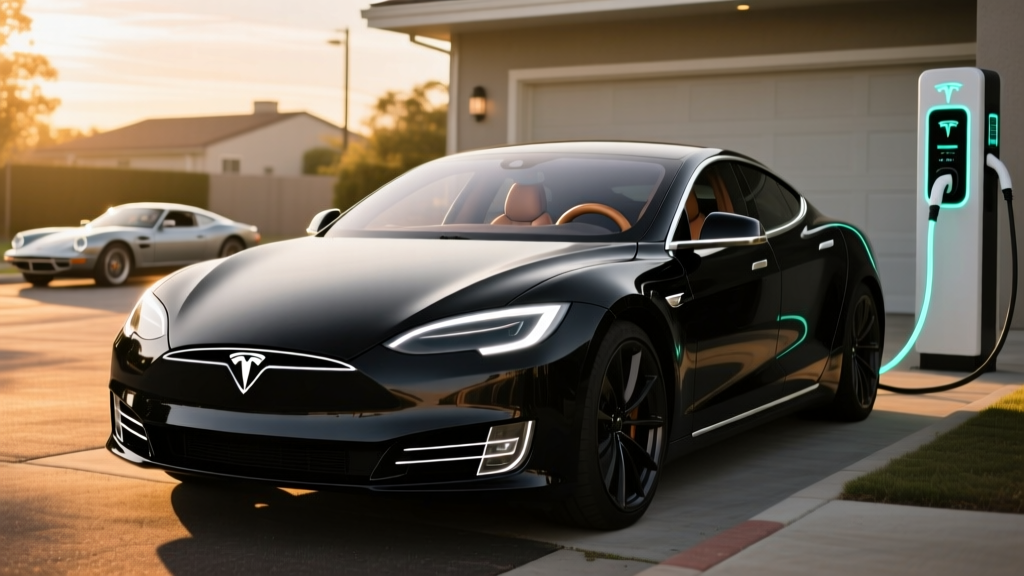
For drivers still loyal to the rumble of a V8 and the ritual of a gas station fill-up, the jump to electric can feel like a leap into the unknown. The phrase "ICE to Tesla" captures that exact transition — moving from an internal combustion engine to Tesla's flagship sedan. The 2026 Tesla Model S remains the benchmark luxury EV sedan, and for the ex-gas car enthusiast, it's the most compelling argument for electrification yet. But does the spec sheet hold up when you strip away the marketing and look at real-world numbers? Here's every figure that matters.
2026 Tesla Model S: Core Specifications at a Glance
| Spec | Model S Long Range | Model S Plaid |
|---|---|---|
| EPA Range | 402 mi | 396 mi |
| Battery (usable) | ~95 kWh (NMC) | ~95 kWh (NMC) |
| Drivetrain | Dual-Motor AWD | Tri-Motor AWD |
| Horsepower | 670 hp | 1,020 hp |
| 0-60 mph | 3.1 sec | 1.99 sec |
| Top Speed | 155 mph | 200 mph |
| Max DC Fast Charge | 250 kW | 250 kW |
| 10-80% DC Time | ~27 min | ~27 min |
| Level 2 Charge Rate | 11.5 kW (~44 mi/hr) | 11.5 kW (~44 mi/hr) |
| MPGe (combined) | 122 MPGe | 116 MPGe |
| Efficiency | 28 kWh/100 mi | 30 kWh/100 mi |
| Cargo Volume | 28 cu ft (rear) + 3.1 cu ft (frunk) | 28 cu ft (rear) + 3.1 cu ft (frunk) |
| Rear Legroom | 35.4 in | 35.4 in |
| Base MSRP | $79,990 | $89,990 |
| Battery Warranty | 8 yr / 150,000 mi | 8 yr / 150,000 mi |
Real-World Range: What the EPA Sticker Doesn't Tell You
The 95 kWh (usable) nickel-manganese-cobalt (NMC) battery pack prioritizes energy density over the cycle-life advantage of LFP chemistry. That's the right call for a 400-mile sedan — LFP packs are heavier and less energy-dense, which is why Tesla reserves them for the standard-range Model 3 and Model Y. According to fueleconomy.gov, the Long Range achieves 122 MPGe combined (28 kWh/100 mi), while the Plaid's tri-motor thirst drops it to 116 MPGe (30 kWh/100 mi). For an ICE convert used to a 15-mpg V8 sedan, that's roughly a 70-80% reduction in per-mile energy cost when charging at home on average US electricity rates of $0.16/kWh.
Charging Speed: DC Fast Charging and Home Setup
| Charging Level | Power / Rate | Miles Added per Hour | Notes |
|---|---|---|---|
| Level 1 (120V) | ~1.4 kW | ~3-4 mi/hr | Emergency/trickle only |
| Level 2 (240V, 48A) | 11.5 kW | ~44 mi/hr | Full charge in ~9 hours |
| DC Fast (V3 Supercharger) | Peak 250 kW | ~200 mi in 15 min | 10-80% in ~27 min |
| DC Fast (V4 Supercharger) | Peak 250 kW (CCS/NACS) | ~200 mi in 15 min | Same peak; cable design differs |
Tesla's Supercharger network remains the gold standard for DC fast charging reliability. The Model S peaks at 250 kW on V3 and V4 Superchargers using its native NACS connector. Here's what the charging curve actually looks like: the car sustains above 200 kW from roughly 10-30% state of charge, then tapers progressively. By 60% SoC, you're seeing around 150 kW; by 80%, it drops to approximately 60-70 kW. That 10-80% session takes roughly 27 minutes in ideal conditions (warm battery, preconditioned via navigation to a Supercharger).
For home charging, the Model S accepts 11.5 kW on a 240V/48A Level 2 circuit. That translates to about 44 miles of range per hour of charging, or a full 0-100% replenishment in approximately 9 hours. A NEMA 14-50 outlet (40A circuit) delivers about 9.6 kW, which is sufficient for most overnight needs. Installation costs for a dedicated 60A circuit with hardwired Tesla Wall Connector typically run $800-$2,000 depending on panel proximity and local permit fees — a licensed electrician should confirm your panel has capacity for the additional load.
Performance: The Numbers That Convert ICE Enthusiasts
The Plaid's 1.99-second 0-60 mph time is not a marketing gimmick — it's independently verified and remains one of the quickest production-car times ever recorded. The tri-motor setup (one front, two rear) produces 1,020 horsepower and delivers torque-vectoring that no mechanical limited-slip differential can match. For context, a 2025 BMW M5 (ICE hybrid) hits 60 in about 3.3 seconds with 717 hp. The Model S Plaid does it nearly 1.3 seconds faster with 40% more power, all while achieving 116 MPGe instead of 17 mpg combined.
The Long Range's 3.1-second 0-60 on 670 hp is hardly slow — it matches or beats most V8 sport sedans from just five years ago. Both trims feature adaptive air suspension with automatic ride-height adjustment, and the yoke steering (now optional alongside a conventional round wheel) requires some acclimation but offers unobstructed sightlines to the 12.3-inch driver display.
Pricing, Trims, and Federal Tax Credit Eligibility
| Trim | Base MSRP | Federal Tax Credit (§30D) | Effective Price |
|---|---|---|---|
| Model S Long Range | $79,990 | Not eligible (MSRP cap: $55,000 for sedans) | $79,990 |
| Model S Plaid | $89,990 | Not eligible (MSRP cap: $55,000 for sedans) | $89,990 |
Here's the critical detail for ICE-to-EV shoppers: the Model S does not qualify for the $7,500 federal EV tax credit under IRS §30D. The credit applies a $55,000 MSRP cap for sedans (SUVs and trucks get an $80,000 cap), and both Model S trims exceed it substantially. Additionally, buyer income caps apply ($150,000 single / $300,000 joint filers) and battery critical-mineral sourcing requirements must be met. Per IRS guidelines, these rules are current for 2026 but subject to legislative change.
Where the Model S can save you money: state-level incentives (check your state's energy office for current programs), reduced fuel costs (approximately $1,200-$1,800/year savings over premium gasoline at 12,000 miles/year), and lower maintenance (no oil changes, fewer brake replacements due to regenerative braking). Total cost of ownership over five years often breaks even with comparably performing ICE sedans like the BMW M5 or Mercedes-AMG GT, despite the higher sticker.
Interior, Tech, and Daily Livability
The 2026 Model S interior has aged into a comfortable maturity. The 17-inch center touchscreen runs Tesla's latest UI with native navigation, Spotify/Apple Music integration, and a surprisingly capable gaming suite (the car's AMD Ryzen processor handles Cyberpunk 2077 at reasonable framerates while parked). Rear-seat passengers get a dedicated 8-inch screen for climate and entertainment controls, plus heated and ventilated seats on all trims.
Cargo space measures 28 cubic feet behind the rear seats (expandable with a 60/40 split-fold) plus a 3.1-cubic-foot frunk. Rear legroom of 35.4 inches is adequate for adults but trails the Mercedes EQS (43.0 in) significantly. For families, two rear-facing child seats fit with room to spare; the hatchback-style trunk opening is far more practical than the EQS's traditional sedan lid.
On the driver-assist front, Tesla's Autopilot comes standard and includes adaptive cruise control and lane-centering. Full Self-Driving (Supervised) is a $8,000 option (or $99/month subscription) that adds automatic lane changes, intersection handling, and parking assistance. Important clarity: FSD Supervised is an SAE Level 2 system — you must remain attentive with hands on or near the wheel at all times. It is not autonomous driving. Only Level 4 services like Waymo operate without driver supervision in geofenced areas.
Pros, Cons, and the ICE-Convert Verdict
Pros
- 402-mile EPA range eliminates range anxiety for most road trips
- 250-kW Supercharger network is the most reliable DC fast-charging ecosystem
- Plaid's 1,020 hp / 1.99-sec 0-60 is unmatched at any price point
- Over-the-air updates continuously add features post-purchase
- Hatchback cargo practicality beats traditional luxury sedans
- 8-year/150,000-mile battery warranty provides long-term confidence
Cons
- No federal tax credit due to $55K sedan MSRP cap
- Rear legroom (35.4 in) trails German competitors significantly
- 250-kW peak charge rate lags Hyundai Ioniq 5's 350-kW capability
- Build quality, while improved, still inconsistent vs. Mercedes/Porsche
- FSD (Supervised) remains a Level 2 system despite the name
- NMC battery chemistry degrades faster than LFP if frequently charged to 100%
Who the Model S suits best: Performance-oriented drivers transitioning from sport sedans (BMW 5 Series, Audi RS7, Mercedes-AMG GT) who want supercar acceleration with daily-driver practicality and road-trip range. It's ideal for tech-forward commuters with home charging access who log 200+ miles/week and want minimal maintenance. It is not the best choice for families needing maximum rear-seat space (look at the Model X or Rivian R1S) or budget-conscious buyers who need tax-credit eligibility (the Model 3 Long Range at ~$47,990 qualifies).
How It Stacks Up Against Key Competitors
Against the BMW i7 eDrive50 ($105,700, 318-mi range, 536 hp), the Model S wins decisively on performance, range, and charging infrastructure, though the i7's interior materials and rear-seat luxury are a class above. The Mercedes EQS 450+ ($104,400, 371-mi range, 355 hp) offers superior ride comfort and rear-seat space but can't match Tesla's Supercharger reliability or Plaid-level acceleration. The Porsche Taycan Turbo S ($190,000+, 283-mi range, 750 hp) is the driver's car for handling precision, but its lower range and higher price make it a weekend toy rather than a daily-driver EV for most ICE converts.
For the ex-gas enthusiast, the Model S Plaid occupies a unique position: hypercar acceleration, genuine 300+ mile real-world range, access to the best charging network in North America, and a price that undercuts every ICE or EV competitor delivering comparable performance. According to NHTSA, the Model S carries a 5-star overall safety rating, and the IIHS has historically rated it well in crashworthiness testing.
Frequently Asked Questions
What is the real-world range of the 2026 Tesla Model S?
The Long Range delivers approximately 340-370 miles in mixed real-world driving, and 290-320 at sustained highway speeds. The Plaid runs about 320-350 mixed and 270-300 highway. Cold weather (below 32°F) reduces these figures by 20-30%.
How fast does the Model S charge at home and on the road?
On a Level 2 home charger (240V/48A), the Model S charges at 11.5 kW, adding roughly 44 miles per hour for a full charge in about 9 hours. On a Tesla V3 or V4 Supercharger, it peaks at 250 kW and charges from 10-80% in approximately 27 minutes under ideal conditions.
Does the Tesla Model S qualify for the $7,500 federal EV tax credit?
No. Under IRS §30D rules, the federal tax credit has a $55,000 MSRP cap for sedans. Both the Model S Long Range ($79,990) and Plaid ($89,990) exceed this cap and are ineligible. Buyer income limits and battery-sourcing requirements apply to all qualifying vehicles regardless.
Is the Model S Plaid worth buying over the Long Range?
If performance is a priority and you're coming from a high-output ICE sedan, the Plaid's 1,020 hp and 1.99-second 0-60 justify the $10,000 premium. If you want maximum range (402 vs 396 mi) and don't need tri-motor acceleration, the Long Range is the more rational daily driver and saves money upfront.
How does the Model S compare to gas sedans on operating cost?
At $0.16/kWh (US average electricity rate) and 28 kWh/100 mi, the Long Range costs approximately $4.48 per 100 miles to fuel at home. A comparable 17-mpg V8 sedan on $4.50/gallon premium costs $26.47 per 100 miles — a savings of over $2,100 per year at 12,000 miles annually. Add eliminated oil changes and reduced brake wear, and annual savings approach $2,500-$3,000.
What's the battery warranty and expected longevity?
Tesla covers the Model S battery and drive units for 8 years or 150,000 miles, whichever comes first, with a minimum 70% capacity retention guarantee. Real-world data from high-mileage Model S owners suggests NMC packs typically retain 85-90% capacity at 100,000 miles when charged primarily to 80-90% daily (Tesla recommends against routine 100% charges for NMC chemistry).