Why Ian Wright's Tesla DNA Still Matters in 2026
Before Elon Musk became the face of Tesla, five co-founders incorporated the company in 2003. Among them was Ian Wright, a New Zealand-born engineer who brought deep powertrain and manufacturing expertise to Tesla's earliest days. Though Wright departed Tesla in 2004 to pursue heavy-duty electric drivetrains (founding Wrightspeed, which builds electric powertrains for delivery trucks), his foundational engineering ethos — efficiency-first design, rigorous thermal management, and software-defined vehicle architecture — remains embedded in every Tesla rolling off the Fremont and Austin lines today.
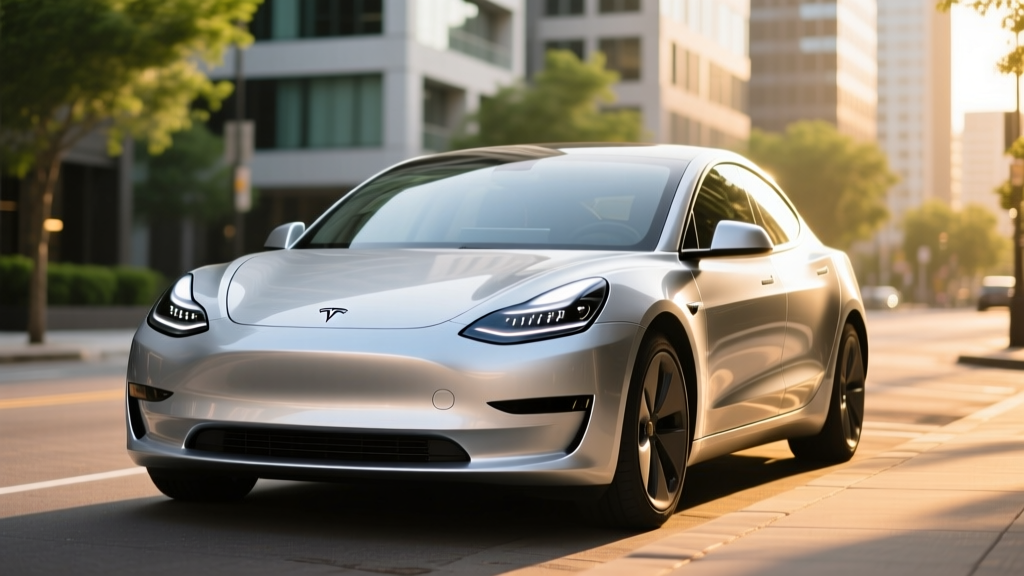
For 2026 EV shoppers, understanding this lineage isn't an academic exercise. Tesla's competitive edge in energy efficiency (kWh/100mi), charging curve optimization, and battery thermal management traces directly to engineering decisions Wright and the original team championed. This profile examines how that legacy manifests in the current 2026 Tesla Model Y and 2026 Tesla Model 3 — the two vehicles most directly shaped by Tesla's founding engineering principles — with exact specs, real-world data, and ownership economics.
2026 Tesla Model Y: Specs at a Glance
| Attribute | Specification |
|---|---|
| EPA Estimated Range | 320 miles |
| Battery Capacity | 78.1 kWh usable (NMC chemistry) |
| Drivetrain | Dual Motor AWD |
| Horsepower | 384 hp combined |
| 0–60 mph | 4.8 seconds |
| Efficiency | 26 kWh/100mi (127 MPGe combined) |
| Max DC Fast Charge | 250 kW peak (V3 Supercharger) |
| 10–80% DC Charge Time | ~27 minutes |
| Level 2 Home Charge Rate | 11.5 kW / ~37 mi/hr |
| Cargo Volume (rear seats up) | 30.2 cu ft |
| Cargo Volume (rear seats folded) | 72.1 cu ft |
| Rear Legroom | 40.5 inches |
| Battery Warranty | 8 years / 120,000 miles (70% retention) |
| Base MSRP | $44,990 |
2026 Tesla Model 3: The Efficiency Benchmark
The Model 3 remains Tesla's most energy-efficient vehicle — a direct reflection of Wright's original insistence on minimizing mass and maximizing powertrain efficiency. The 2026 Model 3 Long Range RWD achieves an EPA-estimated 363 miles of range from a 77.4 kWh NMC battery, translating to just 24 kWh/100mi (139 MPGe combined). That efficiency figure is among the best in the entire EV market, rivaling the Hyundai Ioniq 6 and outperforming the BMW i4 eDrive40 (which posts 27 kWh/100mi).
| Attribute | Specification |
|---|---|
| EPA Estimated Range | 363 miles |
| Battery Capacity | 77.4 kWh usable (NMC) |
| Drivetrain | Rear-Wheel Drive (single motor) |
| Horsepower | 271 hp |
| 0–60 mph | 5.8 seconds |
| Efficiency | 24 kWh/100mi (139 MPGe) |
| Max DC Fast Charge | 250 kW peak |
| 10–80% DC Charge Time | ~25 minutes |
| Level 2 Home Charge Rate | 11.5 kW / ~44 mi/hr |
| Cargo Volume (trunk + frunk) | 23.0 cu ft total |
| Rear Legroom | 35.3 inches |
| Battery Warranty | 8 years / 120,000 miles (70% retention) |
| Base MSRP | $42,490 |
Charging Speed: DC Fast and Home Level 2
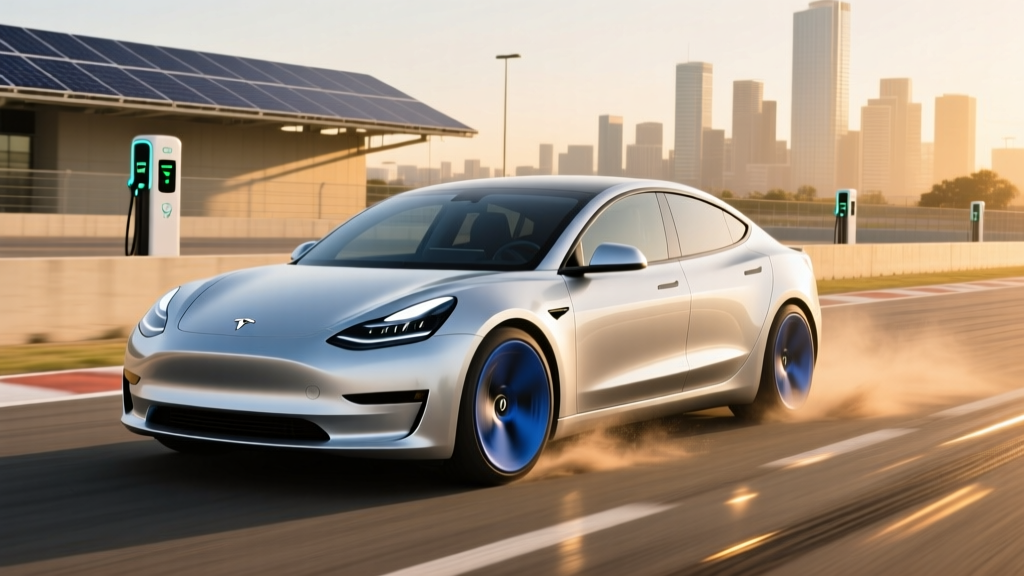
Ian Wright's early emphasis on thermal management pays dividends at the charger. Tesla's battery preconditioning system — which warms or cools the pack en route to a Supercharger — enables sustained high-power charging that many competitors still struggle to match. The 2026 Model Y and Model 3 both peak at 250 kW on V3 Superchargers, but the critical metric is sustained power, not peak.
| Metric | Model Y LR AWD | Model 3 LR RWD |
|---|---|---|
| Peak DC Rate | 250 kW | 250 kW |
| Sustained Avg (10–80%) | ~140 kW | ~150 kW |
| 10–80% Time | ~27 min | ~25 min |
| Miles Added in 15 min | ~162 mi | ~185 mi |
| Level 2 (11.5 kW) | ~37 mi/hr | ~44 mi/hr |
| Level 1 (120V, 1.4 kW) | ~4 mi/hr | ~5 mi/hr |
On a V3 Supercharger, the Model 3 Long Range sustains closer to 150 kW on average from 10–80% thanks to its slightly smaller pack and superior efficiency. The charge curve tapers significantly above 80% State of Charge — a 10–90% session takes roughly 42 minutes, making the last 10% disproportionately slow. For road-trip efficiency, plan charging stops around the 10–80% window.
For home charging, both vehicles accept up to 11.5 kW on Level 2 (48 amps on a 60-amp circuit). A full overnight charge from 20% to 100% takes approximately 7 hours. Installation of a Tesla Wall Connector with a dedicated 60-amp circuit typically costs $800–$1,500 for the unit plus $500–$2,000 for electrician labor, depending on panel proximity and whether your home's electrical panel requires an upgrade from 100A to 200A service.
Pricing, Trims, and Federal Tax Credit Eligibility
| Trim | MSRP | Est. After §30D Credit | Destination |
|---|---|---|---|
| Model 3 Long Range RWD | $42,490 | $34,990* | $1,390 |
| Model 3 Long Range AWD | $47,490 | $39,990* | $1,390 |
| Model 3 Performance | $52,990 | $45,490* | $1,390 |
| Model Y Long Range AWD | $44,990 | $37,490* | $1,390 |
| Model Y Performance | $49,990 | $42,490* | $1,390 |
*After-credit prices assume full $7,500 federal §30D credit eligibility. Actual eligibility depends on multiple factors — see checklist below.
- Income Cap: Modified AGI ≤ $150,000 (single) / $300,000 (joint)
- MSRP Cap: Vehicle MSRP must be ≤ $55,000 (sedans) / $80,000 (SUVs/trucks) — all current Model 3 and Model Y trims qualify
- Battery Sourcing: Critical minerals and battery components must meet phased-in domestic-content thresholds per IRS guidelines. As of 2026, Tesla's Austin-built vehicles with CATL-sourced LFP packs may face partial credit reduction — verify VIN-specific eligibility at fueleconomy.gov
- Point-of-Sale Transfer: Buyers may transfer the credit to the dealer for an immediate price reduction at purchase, rather than waiting for a tax refund
- Tax Liability: The credit is non-refundable — you must owe at least $7,500 in federal tax to claim the full amount
Always confirm eligibility with a tax professional and check your specific VIN against the IRS qualified vehicle list before purchase.
Performance and Driving Dynamics
Wright's engineering philosophy prioritized efficiency over brute power, but Tesla's current lineup offers both. The 2026 Model Y Performance (dual motor AWD, 456 hp) hits 0–60 mph in 3.5 seconds — supercar territory from a five-passenger crossover. The Model 3 Performance (510 hp, AWD) drops that to 2.9 seconds, making it one of the quickest production sedans under $60,000.
However, the efficiency-oriented trims tell a more compelling ownership story. The Model 3 Long Range RWD's 271 hp and 5.8-second 0–60 time are more than adequate for highway merging and daily driving, while its 24 kWh/100mi efficiency translates to roughly $0.045 per mile at the national average electricity rate of $0.17/kWh — compared to $0.14/mile for a 28 MPG gas sedan at $3.90/gallon.
Technology, Driver Assistance, and Drawbacks
Every 2026 Tesla includes the latest iteration of Tesla's infotainment system running on the AMD Ryzen processor, with a 15.4-inch center touchscreen (Model Y) or 15.4-inch display (Model 3). The minimalist interior eliminates physical buttons — climate, mirrors, and glovebox are all screen-controlled, which some buyers find frustrating.
Tesla's Autopilot and Full Self-Driving (Supervised) are SAE Level 2 driver-assistance systems. The driver must remain fully engaged, hands on the wheel (or providing steering-torque input), and eyes on the road at all times. These systems do NOT make the vehicle self-driving. Only SAE Level 4 services like Waymo operate without a human driver.
Standard driver assists include Autosteer (lane centering), Traffic-Aware Cruise Control, automatic emergency braking, and blind-spot monitoring. FSD (Supervised) adds automatic lane changes, traffic-light recognition, and city-street navigation for $8,000 (one-time purchase) or $99/month — but its real-world performance remains inconsistent in construction zones, unmapped areas, and adverse weather.
Notable drawbacks: The absence of Apple CarPlay/Android Auto frustrates smartphone-reliant drivers. The single-screen interface for climate controls requires looking away from the road. Rear-seat comfort in the Model 3 is tight for passengers over 6 feet tall (35.3 inches of legroom). And Tesla's service-center network, while improving, still has longer wait times than legacy automaker dealer networks in many metro areas.
Model Y vs. Model 3: Decision Framework
Choose the 2026 Model Y if:
- You need 72+ cu ft of cargo space for family gear, camping equipment, or frequent IKEA runs
- You want available third-row seating (7-passenger option, $3,000) for carpool duty
- You prefer a higher seating position and easier ingress/egress
- You plan to tow (3,500 lb max towing capacity)
Choose the 2026 Model 3 if:
- Maximum range and efficiency are top priorities (363 mi vs 320 mi; 24 vs 26 kWh/100mi)
- You commute solo or with one passenger and don't need SUV cargo volume
- You want the lowest cost of entry after tax credits ($34,990 estimated)
- Driving dynamics and a lower center of gravity matter to you
How the Ian Wright Tesla Legacy Compares to Key Rivals
Against the 2026 Hyundai Ioniq 5 (318 mi EPA, 220 kW peak charge, $42,990 base), the Model Y holds a slight range edge and a significant Supercharger-network advantage. The Ioniq 5's 800V architecture enables faster 10–80% charging on compatible 350 kW chargers (~18 min vs Tesla's ~27 min), but 350 kW chargers remain less common than Tesla's V3 network.
Against the 2026 Ford Mustang Mach-E (320 mi EPA Extended Range, $44,995 base), the Model Y matches range but wins on efficiency (26 vs 29 kWh/100mi) and charging reliability. The Mach-E offers Apple CarPlay and a more traditional interior layout, which appeals to Tesla-skeptical buyers.
Against the 2026 BMW i4 eDrive40 (307 mi EPA, $52,200 base), the Model 3 Long Range dominates on value — $10,000 less expensive, 56 more miles of EPA range, and superior charging infrastructure access.
Pros and Cons: The 2026 Verdict
- Class-leading energy efficiency (24–26 kWh/100mi)
- Supercharger network reliability (17,000+ US stalls)
- Over-the-air updates continuously add features
- Strong resale value retention vs. EV competitors
- Standard heat pump minimizes cold-weather range loss
- Point-of-sale tax credit transfer simplifies purchase
- No Apple CarPlay or Android Auto integration
- Screen-only climate/mirror controls distract from driving
- FSD (Supervised) remains Level 2 despite the name
- Service center wait times can exceed 2 weeks in some markets
- Rear-seat space in Model 3 is tight for tall adults
- Insurance premiums run 15–25% higher than comparable gas vehicles
Frequently Asked Questions
What is the real-world range of the 2026 Tesla Model Y?
The EPA estimates 320 miles for the Model Y Long Range AWD. Real-world highway driving at 70 mph yields approximately 270–290 miles. Cold weather below 30°F reduces range to 220–250 miles, mitigated somewhat by the standard heat pump.
How fast does the Model 3 charge at home and on DC fast chargers?
On a V3 Supercharger (250 kW peak), the Model 3 Long Range charges from 10–80% in approximately 25 minutes, adding about 185 miles in 15 minutes. On a home Level 2 charger (11.5 kW / 48A), it gains roughly 44 miles per hour of charging — a full overnight session easily replenishes daily driving.
How much does a 2026 Tesla cost after federal tax credits?
The 2026 Model 3 Long Range RWD starts at $42,490 MSRP. With full $7,500 §30D credit eligibility (income within caps, battery sourcing requirements met, sufficient tax liability), the effective price drops to approximately $34,990 before destination fees. Verify your VIN's eligibility at fueleconomy.gov before purchase.
Is a Tesla worth buying over a Hyundai Ioniq 5 or Ford Mach-E?
Tesla wins on Supercharger network access, energy efficiency, and over-the-air feature updates. The Ioniq 5 charges faster on 800V-compatible stations and offers Apple CarPlay. The Mach-E provides a more conventional interior. If reliable public charging on road trips is your top priority, Tesla's network advantage remains decisive in 2026.
Does the 2026 Model Y qualify for the full $7,500 federal tax credit?
Most 2026 Model Y configurations built at Giga Texas qualify for the full $7,500 credit, provided the buyer meets income caps ($300,000 joint / $150,000 single) and the vehicle's battery meets critical-mineral and domestic-component sourcing thresholds. However, vehicles with certain foreign-sourced battery components may see partial credit reduction. Always check the IRS qualified vehicle list for your specific VIN. Consult a tax professional for your situation.
What warranty coverage does Tesla provide on the battery?
Tesla covers the Model Y and Model 3 Long Range battery and drive unit for 8 years or 120,000 miles, whichever comes first, with a guaranteed minimum 70% capacity retention. If the battery degrades below 70% State of Health within that period, Tesla will repair or replace it at no cost. Real-world data from IIHS and owner surveys suggest most Tesla packs retain 90%+ capacity at 100,000 miles under normal use.
Sources: fueleconomy.gov (EPA range and efficiency data), IRS §30D credit rules, Tesla manufacturer specifications.