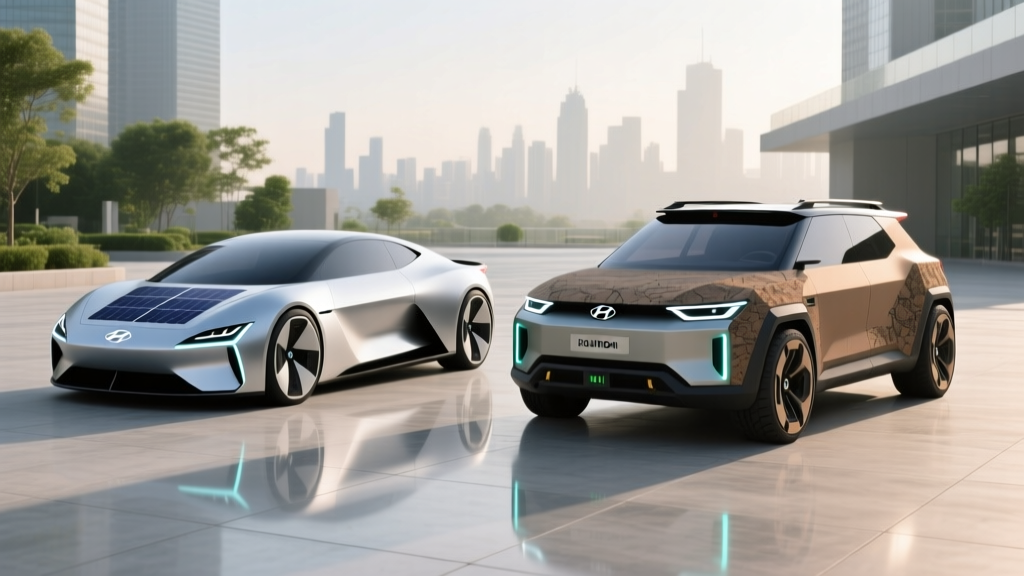
Hyundai's Ioniq sub-brand has reshaped the mid-market EV landscape with the Ioniq 5 and Ioniq 6, and now the automaker is signaling its next chapter. In a reveal that caught the industry off guard, Hyundai teased new Venus and Earth Ioniq concept designs — two vehicles that preview the brand's upcoming electric models built on an evolved version of the Hyundai Motor Group's Integrated Modular Architecture (IMA). While these remain concept-stage vehicles and are not yet available for purchase, the teasers offer enough detail to piece together what future Ioniq buyers might expect in terms of range, charging, packaging, and technology.
Below, we analyze everything confirmed or strongly indicated by Hyundai's preview materials, cross-referenced with the trajectory of the current Ioniq lineup and the IMA platform's known capabilities. All specifications discussed are preliminary and subject to change ahead of production.
What the Venus and Earth Concepts Represent
Hyundai has historically used celestial naming for its forward-looking design studies, and the Venus and Earth concepts appear to slot into distinct segments:
- Ioniq Venus — Based on teaser silhouettes and Hyundai's design language trajectory, the Venus concept previews a compact-to-midsize crossover SUV, likely positioned between the Ioniq 5 and a potential smaller Ioniq entry. Think of it as Hyundai's answer to the Tesla Model Y and Kia EV5 in the high-volume compact SUV segment.
- Ioniq Earth — The Earth concept appears to preview a larger, more utilitarian vehicle — potentially a three-row SUV or a rugged wagon/crossover aimed at the outdoor-adventure and family-hauling segments. This would compete with the Kia EV9, Rivian R1S, and the forthcoming electric Jeep Recon.
Both concepts ride on the next-generation IMA platform, which Hyundai Motor Group confirmed will support 800V architecture (carried over from the E-GMP platform), improved energy density battery packs, and over-the-air (OTA) software update capability across all vehicle domains.
Estimated Range and Battery Specs (Preliminary)
Based on IMA platform capabilities and current Ioniq efficiency benchmarks, here are our projected estimates:
- Ioniq Venus (estimated): ~84 kWh usable battery (NMC chemistry), targeting EPA 320–350 miles. Real-world highway driving at 70+ mph: expect ~260–290 miles. In cold weather (below 32°F), add a 20–30% reduction, dropping effective range to ~200–240 miles without preconditioning.
- Ioniq Earth (estimated): ~100–110 kWh usable battery (NMC), targeting EPA 300–340 miles (heavier vehicle, larger frontal area). Real-world highway: ~240–280 miles. Cold weather: ~190–230 miles.
Note: These are analyst estimates based on platform data and current-generation benchmarks. Official EPA figures will be published closer to production launch.
Hyundai's current Ioniq 5 (2025 model year) achieves up to EPA 318 miles with an 84 kWh pack, and the Ioniq 6 Long Range reaches EPA 361 miles thanks to its aerodynamic sedan profile. The IMA platform's next-gen battery modules are expected to deliver a 10–15% improvement in energy density over current E-GMP packs, which supports the higher range targets despite potentially larger vehicle dimensions.
Both concepts are expected to use NMC (nickel manganese cobalt) chemistry for maximum energy density, consistent with Hyundai's long-range models. An LFP (lithium iron phosphate) variant for a lower-cost base trim is possible but unconfirmed — Hyundai has begun offering LFP in select global markets for cost reduction, though U.S. availability of LFP trims remains uncertain.
| Spec | Ioniq Venus (Est.) | Ioniq Earth (Est.) |
|---|---|---|
| Platform | IMA (next-gen) | IMA (next-gen) |
| Battery (usable) | ~84 kWh NMC | ~100–110 kWh NMC |
| EPA Range (target) | 320–350 mi | 300–340 mi |
| Drivetrain | RWD / AWD dual-motor | AWD dual-motor (std) |
| Horsepower | ~225 hp (RWD) / ~320 hp (AWD) | ~380–400 hp (AWD) |
| 0–60 mph | ~6.5s (RWD) / ~4.8s (AWD) | ~4.5–5.0s |
| Max DC Charge Rate | ~250–350 kW (peak) | ~250–350 kW (peak) |
| 10–80% DC Time | ~15–18 min (est.) | ~18–22 min (est.) |
| Segment | Compact/Midsize Crossover | Large SUV / 3-Row |
Charging Speed: What the IMA Platform Promises
One of the strongest selling points of Hyundai's current E-GMP platform is its 800V architecture, which enables DC fast charging at up to 240 kW on the Ioniq 5 and Ioniq 6 (10–80% in approximately 18 minutes on a capable charger). The next-generation IMA platform is expected to push this further.
| Charge Level | Power / Rate | Miles Added per Hour | Notes |
|---|---|---|---|
| Level 1 (120V) | ~1.4 kW | ~3–5 mi/hr | Emergency/top-off only |
| Level 2 (240V, 48A) | ~11.5 kW | ~30–38 mi/hr | Full charge in ~8–10 hours |
| DC Fast (peak) | 250–350 kW | N/A | 10–80% in ~15–22 min; tapers above 80% |
Charging curve reality check: Peak kW figures are never sustained across the full session. Based on current Hyundai charging behavior, expect peak rates only between roughly 10–40% State of Charge (SoC), tapering to ~150 kW by 60%, and dropping to ~50–80 kW above 80%. A 10–80% time of 15–18 minutes assumes a 350 kW-capable charger (like newer Electrify America or Tesla Supercharger V4 stalls) and proper battery preconditioning. Without preconditioning — which the navigation system should trigger automatically when a charger is set as your destination — add 3–5 minutes to those estimates, especially in cold weather.
Hyundai is also expected to adopt the NACS (North American Charging Standard) port natively on these next-generation models, eliminating the need for a CCS-to-NACS adapter. Hyundai confirmed NACS adoption for U.S. models starting with 2025 vehicles, so production versions of the Venus and Earth should feature native Tesla Supercharger compatibility.
Performance and Drivetrain Projections
Current Ioniq models offer a clear performance hierarchy: the Ioniq 5 ranges from a 168 hp Standard Range RWD to the 641 hp Ioniq 5 N. The IMA platform should carry forward this modular approach.
For the Ioniq Venus, expect a base single-motor RWD configuration around 225 hp (adequate for commuting and daily driving) and an available dual-motor AWD setup producing roughly 320 hp. The AWD variant should hit 0–60 mph in the high-4-second range — quick enough for confident highway merging without entering performance-EV territory.
The Ioniq Earth, given its larger size and probable three-row seating, will likely come standard with dual-motor AWD producing 380–400 hp. Towing capacity is a key question here: if Hyundai targets the family-adventure segment, a 5,000-pound towing rating (matching the Kia EV9) would be competitive. Hyundai's current Ioniq 5 is rated for just 2,300 pounds (with trailer brakes), so the Earth will need a significant upgrade if it's positioned as an outdoor/adventure vehicle.
Interior, Cargo, and Technology Expectations
Hyundai's concept teasers reveal a continuation of the brand's minimalist interior philosophy, but with some notable evolutions:
Ioniq Venus (projected):
- Seating for 5 passengers
- Cargo volume: ~28–32 cu ft behind rear seats, ~65–72 cu ft with rear seats folded (estimated, based on Ioniq 5's 27.2/59.3 cu ft)
- Front trunk (frunk): likely ~1.5–2.0 cu ft (smaller on AWD models due to front motor)
- Rear legroom: ~38–40 inches (the Ioniq 5 offers 39.4 inches — a segment benchmark)
Ioniq Earth (projected):
- Seating for 6 or 7 passengers (three-row configuration)
- Cargo volume: ~18–22 cu ft behind third row, ~45–50 cu ft behind second row, ~80+ cu ft with all rear seats folded
- Frunk: ~2.0–3.0 cu ft
- Second-row legroom: ~38–42 inches; third row: ~30–33 inches (tight for adults on long trips, typical for the segment)
Technology highlights likely to carry forward or debut:
- Dual 12.3-inch displays (or potentially a single curved panoramic display, following the trend Hyundai showed in recent concepts)
- Hyundai Digital Key 3 with Ultra-Wideband (UWB) — use your phone as the key fob
- Highway Driving Assist 2 (HDA 2) — Hyundai's Level 2 driver-assistance system with lane-centering, adaptive cruise, and lane-change assist. This is a SAE Level 2 system requiring full driver engagement — not self-driving.
- Vehicle-to-Load (V2L) — power external devices (camping gear, tools, even home appliances during outages) at up to 3.6 kW via an interior or exterior outlet
- OTA updates covering powertrain calibration, infotainment, ADAS, and battery management
- Augmented reality head-up display (AR HUD) with navigation overlay
Hyundai's Highway Driving Assist 2 and any future "autonomous" features on these vehicles will be SAE Level 2 driver-assistance systems. The driver must keep hands on or near the wheel, monitor the road at all times, and remain prepared to take over instantly. These are not self-driving systems. Only Level 4 services like Waymo operate without a human driver — and those are limited to geo-fenced urban areas.
Pricing, Trims, and Federal Tax Credit Outlook
Since these are concept-stage vehicles, final pricing is not yet available. However, we can project based on Hyundai's current positioning and market dynamics:
| Model / Trim | Est. Base MSRP | §30D Credit Eligibility | Est. After Credit |
|---|---|---|---|
| Ioniq Venus SE (RWD) | ~$43,000–$46,000 | Likely partial or full* | ~$35,500–$38,500 |
| Ioniq Venus SEL (AWD) | ~$48,000–$52,000 | Likely partial or full* | ~$40,500–$44,500 |
| Ioniq Earth SE (AWD) | ~$55,000–$60,000 | Eligible (under $80K cap)* | ~$47,500–$52,500 |
| Ioniq Earth Limited (AWD) | ~$65,000–$72,000 | Eligible (under $80K cap)* | ~$57,500–$64,500 |
*IRS §30D Federal Tax Credit Requirements (2026 rules):
- MSRP cap: SUVs/pickups must be under $80,000; sedans/wagons under $55,000. Both Venus and Earth should qualify based on projected pricing, though a fully loaded Venus SEL could approach the sedan cap if classified as a wagon/crossover.
- Buyer income cap: Modified adjusted gross income (MAGI) must not exceed $150,000 (single), $225,000 (head of household), or $300,000 (joint filers).
- Battery sourcing: A percentage of critical minerals and battery components must be sourced from the U.S. or free-trade-agreement countries. This requirement tightens annually and is the main reason many EVs receive only $3,750 (half credit) or no credit at all. Hyundai's Georgia battery plant (in partnership with SK On) improves the odds of full credit eligibility, but final determination depends on the specific model year's sourcing compliance.
- Point-of-sale transfer: Buyers can apply the credit as an instant rebate at the dealership rather than waiting for tax filing.
Tax credit eligibility is complex and subject to change. Always verify current rules at IRS.gov and consult a tax professional before making a purchase decision based on credit assumptions.
Warranty Coverage (Expected)
Hyundai currently offers one of the best EV warranties in the industry, and there's no reason to expect a reduction for the next-generation models:
- Battery: 10 years / 100,000 miles (capacity retention threshold: typically 70% of original capacity)
- Powertrain: 10 years / 100,000 miles
- New vehicle (bumper-to-bumper): 5 years / 60,000 miles
- Roadside assistance: 5 years / unlimited miles
- Complimentary maintenance: 3 years / 36,000 miles (current Hyundai program)
The 10-year battery warranty is a significant differentiator versus Tesla (8 years / 100,000–150,000 miles depending on model) and most competitors. Hyundai's track record with battery degradation has been solid — real-world data from Ioniq 5 owners shows approximately 5–8% capacity loss over the first 60,000 miles, well within the warranty threshold.
Who These EVs Will Suit Best
- Daily commuters who want 300+ miles of range with fast charging for occasional road trips
- Small families needing a practical crossover with strong cargo flexibility
- Buyers cross-shopping the Tesla Model Y, Ford Mustang Mach-E, and Kia EV5
- Urban/suburban drivers who value compact dimensions with interior spaciousness
- Families needing three-row seating without stepping up to a minivan
- Outdoor enthusiasts who want V2L capability and potential 5,000-lb towing
- Buyers considering the Kia EV9, Rivian R1S, or Volvo EX90
- Those who prioritize passenger comfort over sporty handling dynamics
Pros, Cons, and Competitive Outlook
- 800V architecture with class-leading DC fast-charge speeds
- Native NACS port for Tesla Supercharger access
- 10-year/100,000-mile battery warranty
- Spacious interiors on flat-floor skateboard platforms
- V2L capability for camping, worksite, or backup power
- Strong expected §30D tax credit eligibility
- Hyundai's proven OTA update infrastructure
- Concept stage — production specs may differ from projections
- Hyundai's dealer experience varies widely by location
- Insurance costs for EVs remain 15–25% higher than comparable gas vehicles
- Third-row space in the Earth likely tight for adults (segment norm)
- Full §30D credit depends on battery-sourcing compliance at launch
- Highway and cold-weather range loss will be significant for the larger Earth model
- Production timeline unconfirmed — buyers may face a wait
Competitive positioning: The Venus will enter the most competitive EV segment in America, going head-to-head with the Tesla Model Y, Ford Mustang Mach-E, Chevrolet Equinox EV, and Kia's own compact electric offerings. Hyundai's differentiation will hinge on charging speed (800V is still rare in this class), interior quality, and warranty. The Earth faces a thinner but growing field — the Kia EV9 is its closest sibling, while the Rivian R1S commands a premium and the Volvo EX90 targets the luxury end.
Frequently Asked Questions
When will the Hyundai Ioniq Venus and Earth go on sale?
Hyundai has not confirmed a production timeline. Based on Hyundai's typical concept-to-production cycle (18–24 months), the earliest plausible U.S. arrival would be the 2027 or 2028 model year. We'll update this article as Hyundai releases more information.
Will these models qualify for the $7,500 federal EV tax credit?
Based on projected pricing (under the $80,000 SUV cap), Hyundai's Georgia battery manufacturing, and expected buyer income eligibility, both models have a strong chance of qualifying for at least a partial credit. However, the exact amount depends on battery-sourcing requirements at the time of production, which tighten annually. Always check current eligibility at IRS.gov.
Will the Ioniq Venus and Earth have native Tesla Supercharger compatibility?
Yes, based on Hyundai's confirmed NACS adoption for all U.S. models starting in 2025, production versions of these vehicles should feature native NACS ports — no adapter needed for Tesla Superchargers.
What is the estimated real-world highway range?
For the Venus, expect roughly 260–290 highway miles from a full charge (versus the estimated EPA 320–350). For the Earth, expect 240–280 highway miles (versus EPA 300–340). Cold weather will reduce these by an additional 20–30%.
How fast will they charge at home?
On a Level 2 home charger (240V, 48-amp circuit), expect approximately 30–38 miles of range added per hour, with a full charge taking 8–10 hours. Most owners charge overnight and wake up to a full battery every morning — the primary advantage of home charging.
Is it worth waiting for these models, or should I buy an Ioniq 5 or EV9 now?
If you need a vehicle within the next 12 months, the current Ioniq 5 and Kia EV9 are proven, available, and tax-credit-eligible vehicles. If your purchase timeline extends to 2027–2028 and you want the latest in battery density, charging speed, and NACS native compatibility, waiting for the Venus or Earth is reasonable — but understand that production specs and pricing may shift.
This article is based on Hyundai's concept teaser materials and analyst projections. All specifications are preliminary and subject to change. We will update with confirmed data as Hyundai moves these models toward production. For official information, visit Hyundai News.