Quick Answer: Is the Hyundai Staria Electric Available?
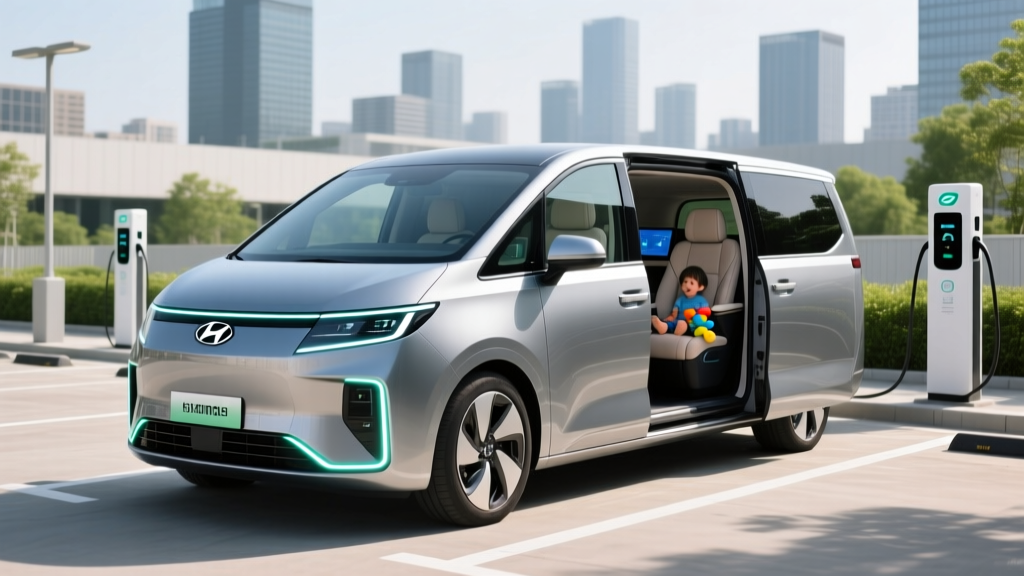
As of early 2026, the Hyundai Staria Electric remains an announced/upcoming model — it has not yet gone on sale in the United States. Hyundai confirmed the electrified Staria variant for global markets, with a North American launch anticipated for the 2027 model year. Expected specs point to a large battery pack (likely 80+ kWh usable), over 250 miles of range, and DC fast charging capability on Hyundai's E-GMP or next-generation platform. If you need a three-row electric family hauler today, alternatives like the Kia EV9, Tesla Model X, or Chrysler Pacifica PHEV are currently available. This guide covers everything confirmed and estimated about the Staria Electric so you can plan your next move.
What We Know About the Hyundai Staria Electric
The Hyundai Staria is a boxy, space-maximized people-mover sold primarily in Asia-Pacific and Australian markets. Think of it as Hyundai's answer to the minivan segment — a vehicle built around interior volume, flexible seating (up to 11 passengers in some configurations), and practicality over sporty driving dynamics. The electrified version has been previewed through Hyundai's product roadmap announcements and spy shots of test mules.
Here is what has been confirmed or strongly indicated by Hyundai and industry reporting:
| Spec | Estimated / Confirmed |
|---|---|
| Platform | Hyundai E-GMP (or next-gen EV platform) |
| Battery Chemistry | Likely NMC (nickel manganese cobalt) |
| Battery Capacity (usable) | ~80–100 kWh (estimated) |
| EPA Range | 250–300 mi (estimated, final TBD) |
| Peak DC Fast Charge Rate | ~220–250 kW (E-GMP architecture) |
| 10–80% DC Charge Time | ~18–22 minutes (estimated) |
| Level 2 AC Charging | 10.9 kW onboard charger (typical Hyundai) |
| Drivetrain | RWD standard, AWD available |
| Seating | 7–9 passengers (market dependent) |
| Estimated US MSRP | $50,000–$62,000 (pre-incentive) |
| US Availability | Announced — expected 2027 model year |
Note: All specifications above are preliminary estimates based on Hyundai's existing E-GMP vehicle lineup (Ioniq 5, Ioniq 6, Ioniq 9, Kia EV9) and industry reporting. Final EPA-certified figures will differ. We will update this guide when official US specs are released.
How the Staria Electric Compares to Gas Minivans
The Staria's natural competitors in the US market — if it launches here — are three-row family haulers. The most direct comparison is the gas-powered minivan segment: the Toyota Sienna (hybrid-only), Honda Odyssey, and Chrysler Pacifica (available as a PHEV). Here is how the economics and ownership experience stack up.
| Metric | Hyundai Staria Electric (Est.) | Toyota Sienna Hybrid | Chrysler Pacifica PHEV |
|---|---|---|---|
| Powertrain | BEV (battery electric) | HEV (gas hybrid) | PHEV (plug-in hybrid) |
| Est. Range / MPG | ~250–300 mi (EPA est.) | 36 MPG combined | 32 mi electric + 30 MPG gas |
| Est. Price (base) | $50,000–$55,000 | $38,000–$42,000 | $50,000–$53,000 |
| Federal Tax Credit (§30D) | Up to $7,500 (if eligible) | None | Up to $7,500 (if eligible) |
| Fuel/Energy Cost per Mile | ~$0.04–$0.06 (home charging) | ~$0.09–$0.12 (gas) | ~$0.04 electric / ~$0.10 gas |
| Annual Fuel Savings vs. Gas | ~$800–$1,200 | Baseline | ~$400–$700 (mixed driving) |
| Maintenance (annual est.) | ~$300–$400 | ~$600–$800 | ~$500–$700 |
The Staria Electric's biggest financial advantage is per-mile energy cost. At the US average residential electricity rate of ~$0.16/kWh (per EIA data) and an estimated efficiency of ~3.0 mi/kWh for a large van, home charging costs roughly $0.05 per mile. A gas minivan at 30 MPG with fuel at $3.30/gallon costs about $0.11 per mile. Over 15,000 miles annually, that is a $900/year savings on energy alone.
Maintenance savings add another $200–$400 annually — no oil changes, no transmission fluid, fewer brake replacements thanks to regenerative braking. Over a 5-year ownership period, total operating savings could reach $5,500–$8,000 compared to a gas-only minivan, partially offsetting a higher purchase price.
Real-World Ownership: What to Plan For
Buying a large electric van involves practical considerations that go well beyond the sticker price. Here is what a first-time EV buyer in this segment needs to budget and prepare for.
Home Charging Is Non-Negotiable for Convenience
A vehicle this size will likely have an 80–100 kWh battery. On a standard 120V household outlet (Level 1, ~1.4 kW), a full charge would take 55–70 hours — effectively useless for daily use. You will need a Level 2 home charger.
| Item | Cost Range |
|---|---|
| Level 2 charger hardware (40–48A, hardwired) | $400–$750 |
| Electrician labor (240V circuit, 50–60A breaker) | $800–$2,000 |
| Electrical panel upgrade (if needed, 100A→200A) | $1,500–$3,500 |
| Permit & inspection | $100–$300 |
| Total (no panel upgrade) | $1,300–$3,050 |
| Total (with panel upgrade) | $2,800–$6,550 |
At 10.9 kW (Level 2), the Staria Electric would add roughly 30–35 miles of range per hour of charging, meaning an overnight session (8–10 hours) fully replenishes the battery. This is the ownership model that makes BEVs work: plug in at night, wake up full.
If you live in an apartment or lack dedicated parking with electrical access, a large BEV becomes significantly less practical. Public DC fast charging is viable for road trips but should not be your primary charging strategy — it costs 2–3x more per kWh and repeated fast charging accelerates battery degradation slightly.
Climate and Range Reality
EPA range estimates are measured under controlled conditions. Real-world range for a large, heavy van will vary considerably:
- Mild weather, mixed driving: Expect ~90–95% of EPA range
- Highway-only at 75+ mph: Expect ~80–85% of EPA (aerodynamic drag is brutal on a boxy van)
- Cold weather (below 32°F / 0°C): Expect 20–35% range loss without preconditioning; a heat pump (expected on the Staria Electric) mitigates this to ~15–25% loss
- Full passenger + cargo load: Adds 5–10% energy consumption vs. solo driving
If the Staria Electric achieves a 280-mile EPA rating, plan for ~220–240 miles of usable highway range in summer and ~190–220 miles in freezing conditions. For families whose daily driving stays under 60–80 miles round-trip, this is a non-issue with home charging. For road trips exceeding 200 miles, you will need to plan DC fast-charging stops.
Federal Tax Credit and Purchase Economics
The IRS §30D Clean Vehicle Credit offers up to $7,500 for qualifying new EVs, but eligibility depends on several factors that change regularly:
- MSRP cap: Vans, SUVs, and pickup trucks must have an MSRP at or below $80,000
- Buyer income cap: Adjusted gross income must not exceed $300,000 (joint), $225,000 (head of household), or $150,000 (single)
- Battery sourcing: Critical minerals and battery components must meet phased-in domestic/free-trade-agreement sourcing thresholds — these requirements tighten each year
- Point-of-sale transfer: As of 2024, eligible buyers can transfer the credit to the dealer at purchase, reducing the upfront price rather than waiting for a tax refund
If the Staria Electric launches with a base MSRP around $52,000 and qualifies for the full $7,500 credit, the effective purchase price drops to roughly $44,500 — competitive with a well-equipped Toyota Sienna or Honda Odyssey. However, battery-sourcing rules are the wildcard; many EVs have lost partial or full credit eligibility as requirements tighten. We will update this section once Hyundai confirms US battery sourcing details.
Consult a tax professional to confirm your personal eligibility. State and local incentives (utility rebates for charger installation, state EV credits) may stack on top — check AFDC's state incentive database for your area.
Common Misconceptions About Electric Vans
| Myth | Fact |
|---|---|
| "The battery will need replacing in 5 years" | Modern NMC and LFP batteries are warrantied for 8 years/100,000 miles at ≥70% capacity retention. Real-world data from Hyundai/Kia E-GMP vehicles shows ~5–8% degradation over 100,000 miles. |
| "Charging takes too long for family road trips" | At 220+ kW DC fast charging, a 10–80% session takes ~20 minutes — roughly the time needed for a rest stop with kids. You will charge 2–3 times on a 600-mile trip. |
| "EVs are more expensive to insure" | Often true: EV insurance premiums run 10–25% higher than equivalent gas vehicles due to repair costs and battery replacement risk. Budget an extra $150–$300/year. |
| "The power grid can't handle EV charging" | A single Level 2 charger draws ~10.9 kW — similar to an electric dryer or oven. Most 200A home panels handle this without issue. Grid-level concerns apply to neighborhood-scale adoption, not individual homes. |
| "EVs don't work in cold climates" | Range drops 15–35% in freezing temperatures, but preconditioning (warming the battery while plugged in) and heat pumps significantly mitigate this. Norwegians have been driving EVs through Arctic winters for a decade. |
Should You Wait for the Staria Electric or Buy Now?
Actionable Decision Framework
Wait for the Hyundai Staria Electric if:
- You do not need a new vehicle within the next 12–18 months
- You want a Hyundai-specific design with van-style boxy interior volume
- You prefer Hyundai's warranty coverage (5-year/60,000-mile basic, 10-year/100,000-mile powertrain) and dealer network
- You are targeting the §30D tax credit and want to see if the Staria qualifies at launch
Buy an available alternative now if:
- You need a three-row electric or electrified family vehicle within 6 months
- You want confirmed EPA range, real-world charging data, and established ownership forums
- You are concerned about first-year model teething issues (common with any new nameplate)
Consider these currently available alternatives:
- Kia EV9 (EPA range up to 304 mi, starts ~$55,000, 3-row SUV) — shares E-GMP platform with expected Staria Electric, available now with DC fast charging up to 236 kW
- Chrysler Pacifica PHEV (32 mi electric-only + gas, starts ~$50,000) — best bridge option if you lack reliable home charging or take frequent long road trips
- Toyota Sienna Hybrid (36 MPG combined, starts ~$38,000) — lowest cost of entry, no plug needed, excellent fuel economy but no electric-only mode
- Tesla Model X (EPA range up to 335 mi, starts ~$80,000) — premium pricing but proven Supercharger network access and fast charging
Frequently Asked Questions
When will the Hyundai Staria Electric be available in the US?
Hyundai has not confirmed an exact US launch date. Industry reporting and Hyundai's product roadmap suggest a 2027 model-year introduction, meaning showroom arrivals could occur in late 2026 or early 2027. The Staria is currently sold in international markets with internal combustion engines; the EV variant is expected to follow.
Will the Staria Electric qualify for the $7,500 federal tax credit?
It depends on battery component and critical-mineral sourcing at the time of purchase. IRS §30D rules tighten annually, and many EVs have lost partial eligibility. Hyundai manufactures vehicles at its Metaplant in Georgia, which improves domestic-content positioning, but final credit eligibility cannot be confirmed until the vehicle is certified. Always verify current rules at IRS.gov.
How much will it cost to charge the Staria Electric at home?
Assuming an 85 kWh usable battery and $0.16/kWh average electricity rate, a full home charge costs roughly $13.60. For a typical daily drive of 40 miles consuming ~13 kWh, daily charging costs about $2.10 — compared to ~$4.40 in gasoline for a 30-MPG minivan. Annual home charging for 15,000 miles of driving: approximately $800.
Can the Staria Electric tow a trailer?
Official towing ratings have not been published. For reference, the Kia EV9 (similar E-GMP platform) is rated for up to 5,000 lbs with the AWD configuration. A similarly equipped Staria Electric should offer comparable capability, but towing significantly reduces range — expect a 30–50% reduction depending on trailer weight and aerodynamics.
What battery chemistry will the Staria Electric use?
Hyundai has not confirmed chemistry details. Based on the E-GMP platform's current lineup, NMC (nickel manganese cobalt) is most likely for the US market to maximize energy density and range. LFP (lithium iron phosphate) may appear in lower trims or future model years — LFP offers longer cycle life and lower cost but with ~10–15% less energy density, which could reduce range in a vehicle this large.
Is a used Staria (gas) a better value right now?
If you need a Staria now and it is available in your market, a used gas-powered Staria will cost significantly less upfront (roughly $25,000–$40,000 depending on year and trim). However, you will pay more in fuel and maintenance over time, and you will not qualify for any EV tax incentives. The used Staria is not imported to the US market as of 2026, so availability is limited to gray-market imports or international purchase.
This article will be updated as Hyundai releases official US specifications, pricing, and availability for the Staria Electric. Last updated: early 2026. Always verify tax credit eligibility with the IRS and check fueleconomy.gov for certified EPA ratings once published.