The Short Answer on the Hyundai EV Van
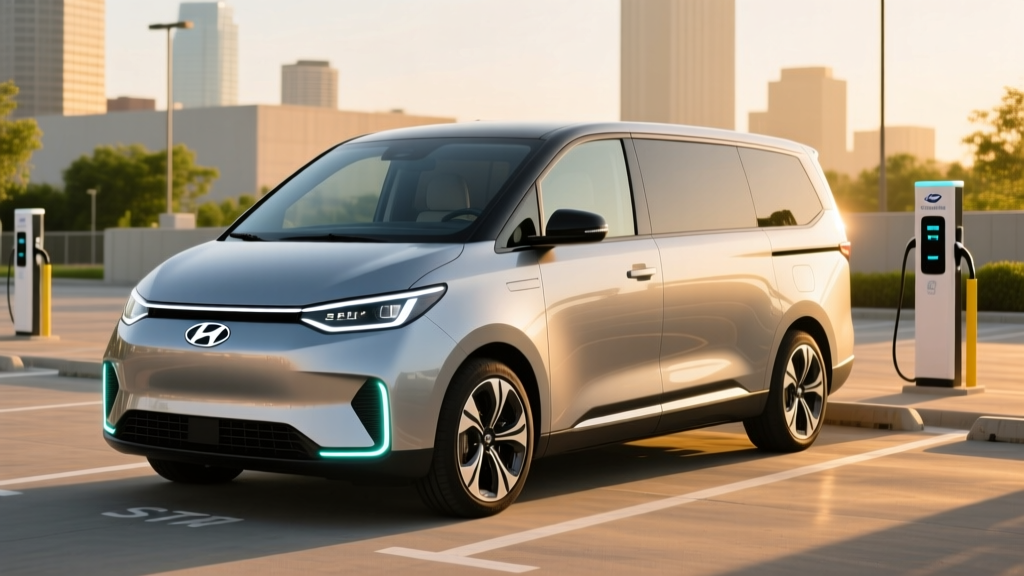
Hyundai's ST1 (Service Type 1) is a purpose-built electric commercial van unveiled in April 2025 and entering production in South Korea through Hyundai Glovis. It rides on a dedicated 800V EV platform with a 76.1 kWh NMC battery targeting roughly 230+ miles (WLTP) of range and DC fast charging from 10–80% in approximately 20 minutes at up to 150 kW. However, US availability is not confirmed for 2026 — Hyundai has not announced North American pricing, EPA certification, or a delivery timeline. For US fleet buyers needing an electric cargo van today, the closest alternatives are the Ford E-Transit and Mercedes-Benz eSprinter.
What Is the Hyundai ST1 EV Van?
The Hyundai ST1 is not a consumer minivan replacement for the Sienna or Carnival. It is a modular, skateboard-platform commercial van designed for last-mile delivery, shuttle services, and light logistics. Hyundai classifies it under its new "ST" (Service Type) designation, signaling a shift from passenger-focused EVs to purpose-built commercial electric platforms.
The ST1 was developed in partnership with Hyundai Glovis, the automaker's logistics arm, and is being assembled at a dedicated facility in South Korea. The van's architecture supports multiple body configurations — cargo, passenger shuttle, and a low-floor variant for wheelchair-accessible applications. Hyundai has emphasized that the ST1 is part of a broader strategy to supply fleet operators with electric platforms, not a retail consumer product in the traditional sense.
Specs, Range, and Charging: What We Know
Because the ST1 is still ramping production and has not been EPA-certified for the US market, the figures below are based on Hyundai's preliminary disclosures and WLTP-cycle estimates. Actual EPA range and US-spec pricing will differ if and when the van reaches North America.
| Specification | Hyundai ST1 (Preliminary) |
|---|---|
| Battery Capacity | 76.1 kWh (usable), NMC chemistry |
| Platform | Dedicated 800V EV skateboard |
| WLTP Range (est.) | ~230+ miles (~370 km) |
| EPA Range | Not yet certified for US |
| DC Fast Charging (peak) | Up to 150 kW |
| 10–80% DC Charge Time | ~20 minutes (under optimal conditions) |
| Level 2 AC Charging | 11 kW onboard charger (est.) |
| Drivetrain | Rear-wheel drive, single motor |
| Estimated Power | ~215 hp (160 kW) motor output |
| Payload Capacity | Varies by configuration (~1,000 kg cargo est.) |
| Battery Warranty | Expected 8 yr / 100,000 mi (Hyundai standard) |
| US MSRP | Not announced |
Real-World Range Reality Check
The WLTP cycle tends to overstate range compared to the US EPA test by roughly 10–15%. If the ST1 achieves 230 miles WLTP, expect an EPA-equivalent range closer to 195–210 miles. In real-world fleet use — stop-and-go urban routes with frequent door openings, climate control running, and partial loads — operators should budget for 160–180 usable miles per charge. Cold-weather operation in northern US climates could reduce that further by 15–25%, bringing effective range to 120–150 miles in sub-freezing conditions.
How Does It Compare to Gas Vans and Existing Electric Alternatives?
For fleet managers weighing the ST1 against conventional options, the comparison is less about 0–60 times and more about total cost per mile, route suitability, and depot charging logistics. Here is how the ST1 stacks up against the gas-powered Ford Transit and the two electric vans currently available in the US market.
| Metric | Hyundai ST1 (est.) | Ford E-Transit (2026) | Ford Transit Gas (2026) | Mercedes eSprinter (2026) |
|---|---|---|---|---|
| Battery / Fuel | 76.1 kWh NMC | 68 kWh NMC | 3.5L V6 gas | |
| EPA Range | ~200 mi (est.) | 126 mi | ~400 mi (16 gal tank) | |
| DC Fast Charge (10–80%) | ~20 min @ 150 kW | ~45 min @ 115 kW | N/A (5-min refuel) | |
| Fuel / Energy Cost per Mile | ~$0.05–0.08 | ~$0.05–0.08 | ~$0.18–0.22 | |
| Estimated Base Price | TBD (not in US) | ~$52,000 | ~$46,000 | |
| Maintenance Cost / Year | Low (no oil, fewer fluids) | Low | Higher (oil, filters, belts) |
The Ford E-Transit's EPA range of just 126 miles has been a persistent complaint among fleet operators. If the ST1 reaches the US with a genuine 200-mile EPA rating, it would nearly double the E-Transit's range and cover significantly more daily routes without mid-day charging. However, the E-Transit has an established US dealer and service network — a critical advantage for fleet uptime.
Cost Breakdown: Purchase, Charging, and Maintenance
Without confirmed US pricing, we can model the ST1's expected ownership economics based on comparable electric commercial vans and Hyundai's consumer EV pricing patterns.
| Cost Category | EV Van (ST1 est.) | Gas Van (Transit) | Notes |
|---|---|---|---|
| Estimated Purchase Price | $48,000–$55,000 | $46,000–$52,000 | ST1 pricing speculative; E-Transit starts ~$52K |
| Federal Tax Credit (§30D / 45W) | Up to $7,500 (if eligible) | $0 | Commercial vehicles may qualify under IRS §45W instead of §30D |
| Fuel / Electricity per Year (15K mi) | $750–$1,200 | $2,700–$3,300 | Based on $0.13/kWh avg vs $3.50/gal gas |
| Maintenance per Year | $300–$500 | $800–$1,200 | No oil changes, fewer brake replacements (regen) |
| Insurance per Year | $1,800–$2,400 | $1,500–$2,000 | EV insurance premiums typically 15–20% higher |
| 5-Year Total Fuel + Maint. | $5,250–$8,500 | $17,500–$22,500 | EV saves $9,000–$14,000 over 5 years |
The operating-cost advantage of an electric van is substantial for fleets running predictable daily routes under 150 miles. The fuel savings alone — roughly $2,000 per year per vehicle — compound quickly across a multi-van fleet. Maintenance savings from regenerative braking (extending brake pad life by 2–3x) and the elimination of oil changes, transmission fluid, and exhaust system repairs add another $400–$700 annually.
However, the upfront cost premium and the capital expense of depot charging infrastructure (Level 2 chargers at $1,500–$3,500 installed per stall, plus potential panel upgrades at $2,000–$5,000) must be factored into the purchase decision. A fleet of 10 vans could require $35,000–$80,000 in charging infrastructure before the first vehicle arrives.
Common Misconceptions About Electric Cargo Vans
| Myth | Fact |
|---|---|
| "EV vans can't handle a full day of deliveries." | Most last-mile delivery routes cover 60–120 miles daily. A 200-mile-range van with overnight depot charging covers this easily. Mid-day top-ups at 150 kW add ~80 miles in 10 minutes. |
| "Battery replacement will bankrupt the fleet." | Modern NMC batteries in commercial applications are warrantied for 8 years / 100,000 miles. Fleet data from early E-Transit and Rivian EDV operators shows less than 8% degradation after 100K miles of urban stop-and-go use. |
| "Cold weather makes EV vans useless." | Cold weather reduces range by 15–25%. A 200-mile van becomes a 150–170 mile van in January. This matters for routes already near the range limit but is manageable with route planning and depot preconditioning. |
| "The Hyundai ST1 is available to buy in the US now." | As of 2026, Hyundai has not announced US pricing, EPA certification, or a retail/fleet sales channel for the ST1 in North America. Production is currently focused on the Korean market via Hyundai Glovis. |
| "All commercial EVs qualify for the $7,500 tax credit." | Eligibility depends on MSRP caps, buyer income (for §30D), battery sourcing requirements, and whether the vehicle is classified as personal or commercial. Commercial fleets may qualify under IRS §45W with different rules. Consult a tax professional. |
Real-World Ownership Considerations for Fleet Buyers
If the ST1 does reach the US market, fleet operators should evaluate these practical factors before committing:
Depot Charging Infrastructure
Commercial EV vans thrive on overnight Level 2 charging at a fleet depot. A typical 76 kWh battery charging at 11 kW requires roughly 7 hours for a full charge — perfect for overnight turnaround. However, your facility needs sufficient electrical capacity. A 10-van fleet charging simultaneously at 11 kW draws 110 kW continuously, which may require a commercial service upgrade ($15,000–$50,000 depending on local utility requirements). Work with a licensed electrician and your utility provider early in the planning process.
Route Suitability
Electric vans are ideal for urban and suburban delivery routes with predictable daily mileage under 150 miles. They are less suited for long-haul intercity routes, rural areas with sparse charging, or operations requiring frequent highway-speed driving (efficiency drops significantly above 65 mph). Analyze your telematics data: if 90%+ of your routes fall within the van's usable range, electrification makes financial sense.
Climate Impact
Fleet operators in northern states (Minnesota, Michigan, Maine) should plan for 20–25% winter range loss. This means a 200-mile van effectively becomes a 150-mile van. The ST1's 800V architecture and expected heat pump should mitigate this better than older platforms, but physics cannot be fully engineered away. Southern fleets face the inverse problem: battery cooling demands in extreme heat can slow DC fast-charging speeds during summer afternoons.
Service Network
Hyundai's US commercial vehicle service infrastructure is limited compared to Ford's. The E-Transit benefits from Ford's extensive commercial dealer network with trained EV technicians and guaranteed parts availability. If the ST1 launches in the US, Hyundai will need to demonstrate comparable fleet service support — uptime guarantees, mobile service options, and rapid parts logistics — to win fleet contracts.
Decision Framework: Should You Wait for the ST1 or Buy Now?
Choose Your Path
Buy the Ford E-Transit now if: You need an electric van immediately, your routes are under 120 miles daily, you have an existing Ford commercial dealer relationship, and depot charging is already in place. The E-Transit's lower range is its biggest weakness, but its established service network reduces operational risk.
Buy the Mercedes-Benz eSprinter now if: You need more cargo volume and range (up to 200+ miles EPA on the high-roof variant), your budget allows for a higher purchase price (~$70,000+), and your routes demand the extra capacity.
Wait for the Hyundai ST1 if: You are planning a fleet electrification rollout for 2027 or later, you want 200+ miles of range at a mid-market price point, and you can tolerate the uncertainty of an unproven US commercial service network. Monitor Hyundai's US commercial announcements closely — if the ST1 launches without a robust fleet service commitment, the E-Transit or eSprinter remain safer bets.
Stick with gas vans if: Your routes regularly exceed 200 miles, you operate in regions with no depot charging feasibility, your fleet turnover timeline is under 2 years, or your daily mileage patterns are highly variable and unpredictable.
Frequently Asked Questions
Is the Hyundai ST1 EV van available to buy in the United States?
No. As of 2026, Hyundai has not announced US availability, pricing, or EPA certification for the ST1. The van is in production for the South Korean market through Hyundai Glovis. US fleet buyers should not plan procurement timelines around the ST1 until Hyundai makes a formal North American announcement.
What Hyundai electric vans are available in the US right now?
None. Hyundai's US EV lineup currently includes the Ioniq 5, Ioniq 6, and Kona Electric — all passenger vehicles. Hyundai does not sell a commercial electric van in the US market. The closest Hyundai product for commercial use is the Santa Cruz pickup, which is gas-powered.
How much would the ST1 cost if it comes to the US?
There is no confirmed US pricing. Based on the Ford E-Transit (~$52,000 base) and the Mercedes-Benz eSprinter (~$70,000+), a competitive ST1 would likely price between $48,000 and $58,000 depending on configuration and battery option. Commercial fleet incentives under IRS §45W could offset up to $7,500 for qualifying vehicles.
What is the difference between kW and kWh?
This is the most common EV confusion. kW (kilowatts) measures power — the rate at which energy flows, like the flow rate of a hose. A 150 kW charger delivers energy quickly. kWh (kilowatt-hours) measures energy capacity — the total amount stored, like the size of a bucket. The ST1's 76.1 kWh battery holds the energy; a 150 kW charger fills it fast. You cannot use these terms interchangeably.
Do commercial electric vans qualify for the federal tax credit?
It depends. The IRS §30D credit applies to personal-use vehicles and has income caps, MSRP caps, and battery sourcing requirements. Commercial fleets purchasing vehicles for business use may instead qualify under §45W (Commercial Clean Vehicle Credit), which has different eligibility criteria including vehicle weight classifications and incremental cost calculations. Always consult a tax professional before basing purchase decisions on credit eligibility.
How long will the ST1's battery last in commercial use?
Hyundai typically warranties its EV batteries for 8 years or 100,000 miles against degradation below 70% of original capacity. In commercial stop-and-go delivery use, NMC batteries in similar vans have shown 5–8% degradation over 100,000 miles. With proper thermal management and avoiding routine 100% charges (fleet management software can cap SoC at 80–90%), the battery should remain functional well beyond 200,000 miles.