Quick Answer: Is There a 2026 Santa Fe Electric?
As of early 2026, Hyundai sells the Santa Fe as a hybrid (HEV) and plug-in hybrid (PHEV) — not as a fully electric vehicle. The current-generation Santa Fe (introduced for 2024) offers no battery-electric variant. Buyers searching for a "Santa Fe electric" are most likely looking for the Santa Fe Plug-In Hybrid, which delivers approximately 30 miles of electric-only range before the gas engine engages, or the Ioniq 5, Hyundai's all-electric midsize crossover that serves as the closest EV alternative in the lineup. Below, we break down exactly what's available, the real costs, and how to decide between them.
What Hyundai Actually Sells: Santa Fe Hybrid Lineup for 2026
Hyundai's Santa Fe comes in two electrified flavors for the 2026 model year. Neither is a pure battery-electric vehicle (BEV), but both reduce fuel consumption and, in the PHEV's case, allow short electric-only commutes.
| Specification | Santa Fe Hybrid (HEV) | Santa Fe Plug-In Hybrid (PHEV) | Ioniq 5 (BEV Alternative) |
|---|---|---|---|
| Powertrain | 1.6L turbo + electric motor | 1.6L turbo + larger electric motor | Dual-motor AWD / Single-motor RWD |
| Combined Horsepower | ~230 hp | ~261 hp | 168 hp (RWD) / 320 hp (AWD) |
| EPA Fuel Economy | ~36 MPG combined | ~33 MPG combined (gas) / 79 MPGe | 110 MPGe combined (AWD) |
| Electric-Only Range | N/A | ~30 miles | ~290 miles (AWD, EPA est.) |
| Battery Capacity | ~1.5 kWh | ~13.8 kWh | 84 kWh usable (NMC) |
| Starting MSRP | ~$39,000 | ~$44,000 | ~$45,500 |
| Federal Tax Credit (§30D) | Not eligible | Up to $3,750 (PHEV rules apply) | Up to $7,500 (eligibility varies) |
| Drivetrain Warranty | 10 yr / 100,000 mi | 10 yr / 100,000 mi | 10 yr / 100,000 mi |
The Santa Fe PHEV's 30-mile electric range covers many daily commutes entirely on electricity. Once depleted, it operates as a conventional hybrid at roughly 33 MPG combined. For buyers who want a true zero-tailpipe-emission SUV from Hyundai, the Ioniq 5 is the closest electric option — though it's smaller in cargo volume and third-row seating than the Santa Fe.
Real Costs: Santa Fe PHEV vs. Gas vs. Ioniq 5
Let's compare the five-year cost picture for a buyer driving 12,000 miles per year, with electricity at $0.16/kWh (national average) and gasoline at $3.40/gallon.
| Cost Category (5-Year) | Santa Fe Gas (2.5T AWD) | Santa Fe PHEV | Ioniq 5 AWD (BEV) |
|---|---|---|---|
| Base MSRP | $41,500 | $44,000 | $49,500 |
| Est. Federal Tax Credit | $0 | $0–$3,750* | $0–$7,500* |
| Effective Purchase Price | $41,500 | $40,250–$44,000 | $42,000–$49,500 |
| Fuel/Energy (5 yrs, 60K mi) | $8,500 (24 MPG avg) | $5,100 (mix of electric + gas) | $3,800 (all electric) |
| Maintenance (5 yrs) | $3,200 | $2,800 | $1,800 |
| Est. Insurance (5 yrs) | $7,800 | $8,200 | $9,100 |
| 5-Year Total (excl. depreciation) | $61,000 | $56,350–$60,100 | $56,700–$64,200 |
*Tax credit eligibility depends on buyer income, vehicle MSRP caps, battery sourcing, and point-of-sale transfer rules under IRS §30D. PHEV credits are generally lower than BEV credits and depend on battery capacity. Consult a tax professional for your specific situation.
The Santa Fe PHEV sits in a cost sweet spot for buyers who can charge at home nightly but still take longer gas-powered road trips without planning charging stops. The Ioniq 5 costs less to fuel and maintain over five years, but its higher insurance premiums and potentially higher upfront price (depending on credit eligibility) narrow the gap.
Real-World Ownership: What First-Time Electrified Buyers Need to Know
Home Charging Is the Make-or-Break Factor
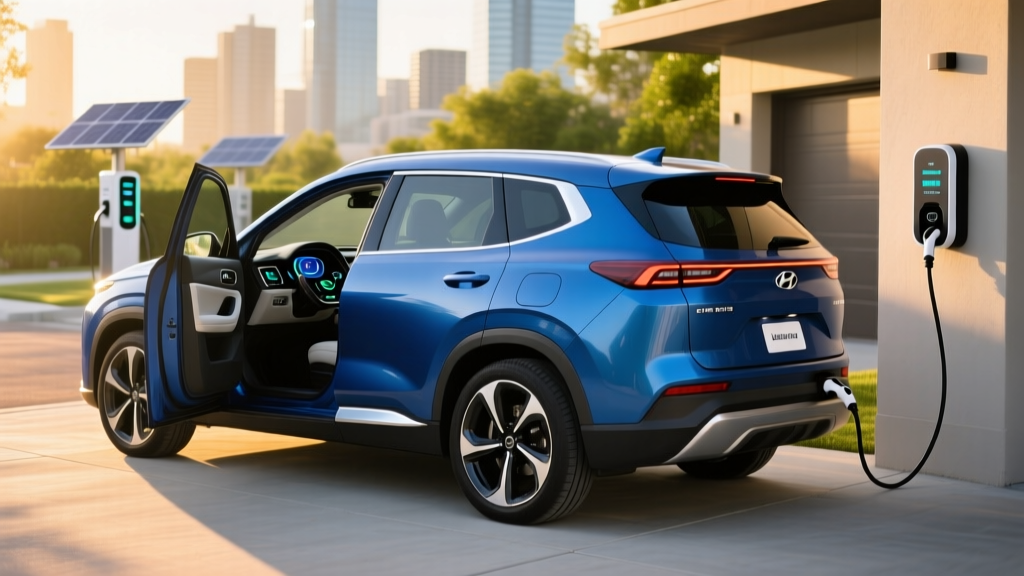
The Santa Fe PHEV's 30-mile electric range is only useful if you can charge at home. With a standard 120V outlet (Level 1), the 13.8 kWh battery recharges in roughly 5–6 hours — adequate for overnight top-ups. A Level 2 home charger (240V, 32A) cuts that to approximately 2 hours, which is more practical for households with two drivers sharing the vehicle.
If you live in an apartment without charging access or rely entirely on street parking, the PHEV's electric advantage shrinks considerably. In that scenario, the standard Santa Fe Hybrid (no plug needed) may be the smarter buy — you get 36 MPG combined without any charging infrastructure dependency.
Cold Weather Reduces Electric Range
In freezing temperatures (below 32°F), expect the PHEV's electric-only range to drop by 20–30%, from 30 miles down to roughly 20–24 miles. This is normal for lithium-ion batteries and affects all plug-in vehicles. The gas engine will engage sooner, but the vehicle remains fully functional — you simply burn more gasoline in winter.
The Ioniq 5 Alternative: True EV Trade-Offs
If you're considering the Ioniq 5 as your "Santa Fe electric" substitute, understand the practical differences:
- Cargo space: Ioniq 5 offers ~27 cu ft behind the second row; Santa Fe offers ~41 cu ft. If you haul gear or have a growing family, the Santa Fe wins decisively.
- Third row: The Santa Fe has one; the Ioniq 5 does not.
- Charging speed: The Ioniq 5's 800V architecture supports DC fast charging up to 240 kW peak, reaching 10–80% in approximately 18 minutes. This is genuinely fast for road trips, but you'll still need to plan charging stops on drives over 250 miles.
- Real-world highway range: The Ioniq 5 AWD's EPA-estimated ~290 miles typically delivers 240–260 miles in sustained 70-mph highway driving, and less in cold weather.
Common Misconceptions About the "Santa Fe Electric"
| Myth | Fact |
|---|---|
| "The 2026 Santa Fe comes in a full-electric version." | Hyundai sells the Santa Fe only as a hybrid and plug-in hybrid. The Ioniq 5 and Ioniq 9 are Hyundai's electric SUVs. |
| "The PHEV qualifies for the full $7,500 federal tax credit." | PHEV credits scale with battery capacity and are subject to sourcing and income rules. Many PHEVs qualify for $3,750 or less under current §30D rules. |
| "I don't need to charge a plug-in hybrid." | Without regular charging, a PHEV operates as a heavier, less efficient hybrid. You pay a premium for a battery you never use. |
| "The Santa Fe PHEV can drive 100+ miles on electricity." | EPA-rated electric-only range is approximately 30 miles. Beyond that, the gas engine runs. |
| "EVs and PHEVs cost more to insure — always." | Premiums vary by model, driver, and region. The Santa Fe PHEV's insurance uplift over the gas version is typically modest ($400–$600 over 5 years). |
Decision Framework: Which Santa Fe (or Hyundai EV) Should You Buy?
If...Then...
- If you have home charging AND your daily commute is under 30 miles: The Santa Fe PHEV lets you commute on electricity most days while keeping gas flexibility for road trips. Best of both worlds.
- If you have home charging AND want zero gasoline use: Look at the Ioniq 5 (or wait for the larger Ioniq 9, which offers three-row seating closer to the Santa Fe's footprint).
- If you cannot charge at home: The Santa Fe Hybrid (HEV) gives you 36 MPG combined with zero plug dependency. Don't pay the PHEV premium for a battery you can't use.
- If you need three rows and want electric: Hyundai's Ioniq 9 (announced for the 2025–2026 timeframe) targets this exact need. Check current availability and specs on Hyundai's site.
- If you tow frequently: The Santa Fe gas/hybrid models offer towing capacity up to ~3,500 lbs. The Ioniq 5 is not rated for heavy towing. Factor this into your decision.
Frequently Asked Questions
Will Hyundai release a fully electric Santa Fe?
Hyundai has not announced a battery-electric Santa Fe. The brand's electric SUV strategy centers on the Ioniq 5 (midsize, two-row) and the Ioniq 9 (larger, three-row). The Santa Fe nameplate is expected to remain hybrid and plug-in hybrid for the foreseeable future.
How much does it cost to charge the Santa Fe PHEV at home?
Fully charging the 13.8 kWh battery from empty at $0.16/kWh costs approximately $2.21. That buys you roughly 30 miles of electric driving, or about 7.4 cents per mile — roughly half the per-mile cost of gasoline at $3.40/gallon and 33 MPG.
Does the Santa Fe PHEV qualify for any tax incentives?
Under current IRS §30D rules, plug-in hybrids may qualify for a partial credit (typically up to $3,750) depending on battery capacity, critical-mineral sourcing, buyer income caps ($150K single / $300K joint), and the vehicle's MSRP falling under the $80,000 SUV cap. Eligibility changes — always verify current-year rules before purchasing.
What's the real-world fuel economy if I never plug in the PHEV?
Without regular charging, the Santa Fe PHEV operates as a conventional hybrid and delivers roughly 30–33 MPG combined, slightly below the standard HEV's ~36 MPG because the PHEV carries extra battery weight. Plugging in regularly is essential to justify the PHEV's higher purchase price.
How does the Ioniq 5 compare to the Santa Fe for family use?
The Ioniq 5 is a five-passenger, two-row crossover with ~27 cu ft of cargo space. The Santa Fe seats up to seven with ~41 cu ft behind the second row. For families needing third-row seating or maximum cargo capacity, the Santa Fe (hybrid or PHEV) is the more practical vehicle. The Ioniq 5 is better suited for smaller households prioritizing all-electric operation.
What's the battery warranty on Hyundai's electrified SUVs?
Hyundai covers the high-voltage battery and electric powertrain components for 10 years or 100,000 miles on both the Santa Fe Hybrid/PHEV and the Ioniq 5. This is among the strongest warranty packages in the industry and applies to the original owner.