Quick Answer: Does a Hyundai Santa Cruz Electric Exist in 2026?
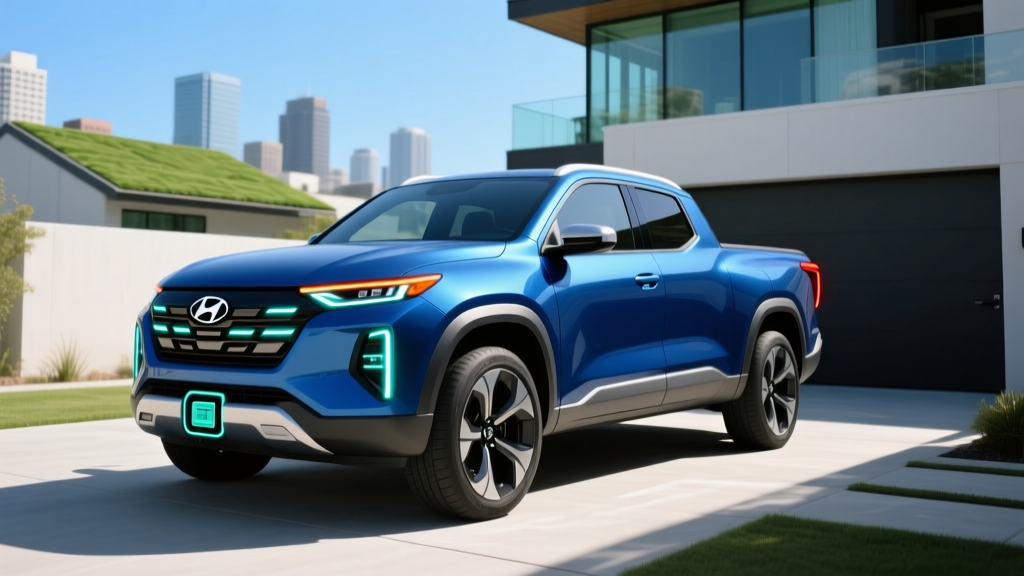
As of mid-2026, Hyundai has not officially released or fully detailed a battery-electric Santa Cruz for the U.S. market. The current Santa Cruz remains a gas-powered compact pickup (with a 2.5L turbo option). However, Hyundai has confirmed it is developing an electrified compact pickup built on its E-GMP platform, widely expected to arrive for the 2027 model year. Below, we break down what's confirmed, what's projected based on Hyundai's existing EV architecture, and whether you should wait or consider alternatives like the Ford Maverick Hybrid or Rivian R2.
What We Know About the Hyundai Santa Cruz Electric
Hyundai's compact pickup has been a sales success since its 2022 debut, but the electrified version has been slower to materialize than many expected. Here is the current state of play:
- Platform: The electric Santa Cruz is expected to ride on a modified version of Hyundai's E-GMP (Electric-Global Modular Platform), the same architecture underpinning the Ioniq 5 and Ioniq 6. This means an 800V electrical system, supporting ultra-fast DC charging.
- Announcement status: Hyundai has referenced an "electrified" compact truck in product roadmap presentations but has not published final EPA range, battery capacity, or MSRP figures. All specs below are projected estimates based on E-GMP sibling vehicles and industry analysis.
- Expected launch: Late 2026 reveal for a 2027 model year, with deliveries likely beginning in early-to-mid 2027.
- Body style: Expected to retain the unibody compact pickup form factor with a ~4-foot bed, though the skateboard platform may allow a slightly longer bed or front trunk (frunk).
Projected Specs: What E-GMP Tells Us
Because the Santa Cruz EV will share underpinnings with proven Hyundai EVs, we can make well-grounded projections. The Ioniq 5 uses a 77.4 kWh usable NMC battery and achieves up to 303 miles EPA in Long Range RWD trim. A pickup body, with higher drag coefficient and likely heavier curb weight, will reduce that figure.
| Spec | Projected (Santa Cruz EV) | Basis (Ioniq 5 AWD) |
|---|---|---|
| Battery (usable) | ~77–84 kWh (NMC) | 77.4 kWh (NMC) |
| EPA Range (est.) | 250–290 miles | 290 miles (AWD) |
| Real-World Highway Range | ~210–250 miles | ~240 miles |
| Peak DC Fast Charge | ~240 kW (800V) | 240 kW |
| 10–80% DC Charge Time | ~18–22 minutes | 18 minutes |
| Level 2 AC Charge Rate | 10.9 kW | 10.9 kW |
| 0–60 mph (est.) | 5.0–6.5 sec (AWD dual motor) | 5.0 sec (AWD) |
| Horsepower (est.) | 320–378 hp | 320 hp |
| Towing Capacity (est.) | 3,500–5,000 lbs | N/A (Ioniq 5 not rated high) |
| Starting MSRP (est.) | $40,000–$45,000 | $46,650 (Ioniq 5 SEL) |
Hyundai Santa Cruz Electric vs. Gas Santa Cruz: Cost Comparison
The current 2026 gas Hyundai Santa Cruz starts at approximately $28,250 (SE trim) and reaches ~$42,000 for a fully loaded Limited turbo AWD. Let's compare a mid-trim gas model against the projected EV version over 5 years of ownership.
| Category | Gas Santa Cruz SEL AWD | Santa Cruz EV (Projected) |
|---|---|---|
| Base MSRP | $33,000 | $42,000 (est.) |
| Federal Tax Credit (§30D) | $0 | Up to $7,500 (if eligible) |
| Effective Purchase Price | $33,000 | $34,500 (est., after credit) |
| Fuel/Energy (5 yr / 75,000 mi) | $9,400 (23 MPG, $3.10/gal) | $3,200 (3.0 mi/kWh, $0.13/kWh) |
| Maintenance (5 yr) | $3,500 | $1,500 |
| Insurance (5 yr est.) | $8,500 | $9,800 |
| Estimated 5-Year Total Cost | $54,400 | $49,000 |
Key takeaway: The EV version carries a higher upfront price, but the ~$6,200 fuel savings and ~$2,000 maintenance savings over five years close the gap substantially — especially if you qualify for the full §30D credit. Home charging at residential electricity rates is where the math works best; exclusive reliance on public DC fast charging (at $0.35–$0.50/kWh) erases most fuel-cost advantage.
Federal Tax Credit: Will the Santa Cruz EV Qualify?
The IRS §30D clean vehicle credit offers up to $7,500, but eligibility depends on several factors that change frequently:
- MSRP cap: Trucks and pickups must be under $80,000 MSRP — the Santa Cruz EV should clear this easily at a projected $40,000–$50,000 range.
- Buyer income limits: AGI must not exceed $150,000 (single), $225,000 (head of household), or $300,000 (joint filers).
- Battery sourcing: A percentage of critical minerals and battery components must be sourced from the U.S. or free-trade-agreement countries. Hyundai's shift to U.S. battery production (via the Metaplant in Georgia) improves the odds of qualification, but final determinations depend on the specific model year's supply chain.
- Point-of-sale transfer: As of 2024+, buyers can transfer the credit to the dealer for an immediate price reduction at purchase, rather than waiting to claim it on their tax return.
- North American assembly: Final assembly must occur in North America. Hyundai's Georgia Metaplant is expected to handle production.
Consult a tax professional and check fueleconomy.gov for the most current eligibility list before purchasing. Rules tighten annually.
Should You Wait? The Decision Framework
Choose to WAIT for the Santa Cruz EV if:
- You have reliable home Level 2 charging access (garage or driveway with a 240V outlet).
- Your daily driving is under 100 miles round-trip, and road trips are infrequent.
- You want a compact pickup but prefer zero tailpipe emissions and lower operating costs.
- You can defer your purchase to late 2026 or 2027.
- You value the 800V ultra-fast charging architecture for road-trip convenience (~18-minute 10–80% stops).
Choose an ALTERNATIVE now if:
- You need a truck immediately — the Santa Cruz EV is still 12–18 months from deliveries.
- You lack home charging and your area has sparse public charging infrastructure.
- You regularly tow over 4,000 lbs (EV range drops 30–50% under heavy towing loads).
- You frequently drive in extreme cold (below 10°F), where range loss compounds with a pickup's already-lower efficiency.
Alternatives to Consider Right Now
If you need an electrified compact or midsize truck today, these options are available or arriving imminently:
| Vehicle | Powertrain | EPA Range / MPG | Starting MSRP | Status |
|---|---|---|---|---|
| Ford Maverick Hybrid | HEV (2.5L + electric motor) | 42 MPG city / 33 hwy | $28,995 | Available now |
| Hyundai Santa Cruz (gas) | 2.5L Turbo AWD | 22 MPG combined | $28,250 | Available now |
| Rivian R2 (Standard) | BEV (dual motor AWD) | ~300+ miles (est.) | ~$45,000 (est.) | Expected 2026–2027 |
| Chevrolet Silverado EV (4WT) | BEV | ~370 miles (est., Work Truck) | ~$55,000+ | Limited availability |
| Tesla Cybertruck (AWD) | BEV | 340 miles (EPA) | $79,990 | Available (limited) |
The Ford Maverick Hybrid is the pragmatic bridge: it delivers 42 MPG city without range anxiety, starts under $29,000, and is widely available. For buyers who want electric but can wait, the Rivian R2 targets a similar compact-truck buyer at a projected ~$45,000 price point.
Real-World Ownership Considerations
Home Charging: The Make-or-Break Factor
Any EV pickup lives or dies by your home charging setup. A Level 2 home charger (240V, 32–48 amps) adds roughly 25–35 miles of range per hour of charging, meaning a full overnight replenishment from 20% to 80% takes about 5–7 hours on a 10.9 kW onboard charger. Installation costs typically range from $800 to $2,500 depending on panel capacity and wiring distance. If your home has a 100-amp electrical panel, a $1,500–$3,000 panel upgrade to 200 amps may be required.
Cold Weather and Towing: The Range Killers
Electric pickups face a double penalty: the blunt aerodynamics of a truck bed combined with cold-weather battery chemistry slowdown. In testing of similar E-GMP vehicles, sub-20°F conditions without battery preconditioning have shown 25–35% range reduction. Add a 3,000-lb trailer, and expect an additional 30–40% range loss on top of that. If you tow frequently in winter, an EV pickup's real-world range may drop to 130–160 miles per charge — a serious limitation for rural or mountain driving.
Insurance Costs
EVs typically carry 15–25% higher insurance premiums than their gas counterparts due to higher repair costs (battery replacement, specialized body panels). Budget an extra $200–$400/year over the gas Santa Cruz for comprehensive coverage.
Common Misconceptions About the Santa Cruz EV
| Myth | Fact |
|---|---|
| "It's available to order now." | Hyundai has not opened orders. The current Santa Cruz is gas-only as of 2026. |
| "It will get 350+ miles of range like the Ioniq 6." | Pickup aerodynamics and weight reduce efficiency. Expect 250–290 miles EPA at best. |
| "The $7,500 tax credit is guaranteed." | Eligibility depends on battery sourcing, your income, MSRP caps, and North American assembly — all subject to annual rule changes. |
| "EV trucks can't tow." | They can tow, but range drops dramatically (30–50%). Plan routes around charging for any tow over 100 miles. |
| "Charging takes too long on road trips." | At an 800V DC fast charger, 10–80% takes ~18–22 minutes. The bottleneck is charger availability, not charge speed. |
Frequently Asked Questions
When will the Hyundai Santa Cruz electric be available?
Hyundai has not confirmed an exact on-sale date. Based on product roadmap statements and the Georgia Metaplant production timeline, a late-2026 reveal with early-2027 deliveries is the most likely scenario.
Will the electric Santa Cruz have a frunk (front trunk)?
The E-GMP platform's compact motor packaging typically allows a front storage compartment. However, its size in a pickup configuration is unconfirmed — expect 1.5–3.0 cubic feet if included, similar to the Ioniq 5's small frunk.
What battery chemistry will it use?
Hyundai's E-GMP vehicles currently use NMC (nickel-manganese-cobalt) lithium-ion cells. LFP (lithium iron phosphate) is possible for a base trim to lower cost, but Hyundai has not confirmed this for the Santa Cruz EV. NMC offers higher energy density; LFP offers longer cycle life and lower cost.
How does the Santa Cruz EV compare to the Ford F-150 Lightning?
Different segments entirely. The F-150 Lightning is a full-size body-on-frame truck (5,000+ lb curb weight, up to 320-mile range, $55,000+). The Santa Cruz EV will be a compact unibody pickup — lighter, more car-like, more efficient, but with less towing and bed capacity.
Should I buy the gas Santa Cruz now or wait?
If you need a truck today and lack home charging, the gas Santa Cruz (or Maverick Hybrid) is the practical choice. If you have home charging, drive under 100 miles daily, and can wait 12–18 months, the EV version will likely offer lower long-term operating costs and a more refined driving experience.