Quick Answer: Does Hyundai Make a Retro Electric Car?
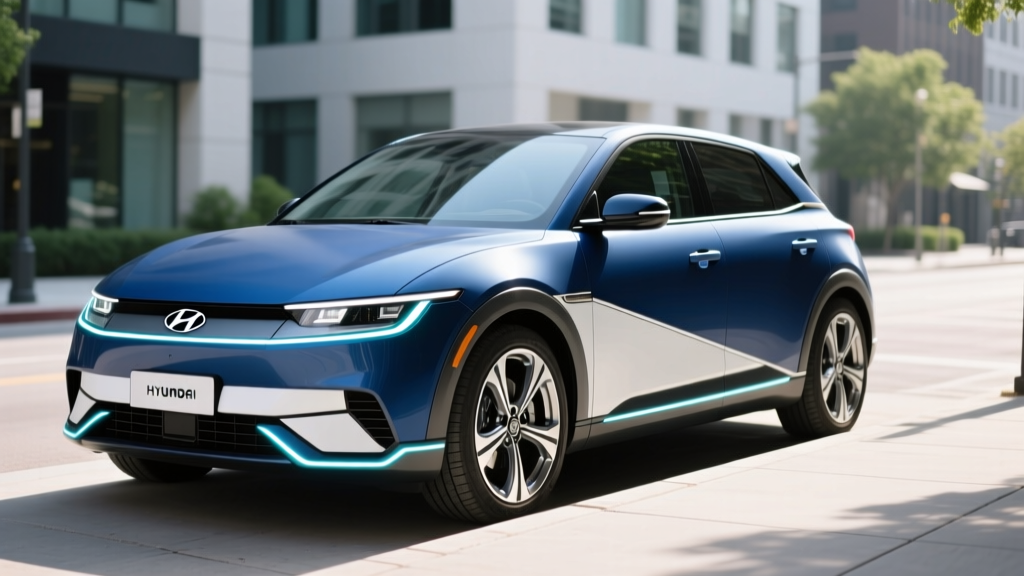
Hyundai's retro-styled electric car is the Ioniq 5 Heritage concept, inspired by the 1974 Pony Coupe. As of early 2026, this remains a concept vehicle — not available for purchase. However, the production Hyundai Ioniq 5 (which the Heritage concept is based on) carries retro design cues and is available now. The 2025/2026 Ioniq 5 starts at $42,600, offers up to 303 miles EPA range, and qualifies for up to $7,500 in federal tax credits (subject to IRS §30D eligibility rules). If you want a Hyundai retro electric car today, the Ioniq 5 is the real-world answer.
What Is the Hyundai Retro Electric Car?
The term "Hyundai retro electric car" typically refers to one of two vehicles:
- Hyundai Ioniq 5 Heritage Concept — A one-off design study unveiled in 2021 that reimagines the iconic 1974 Pony Coupe as a modern EV with pixel-style LED lighting, a fastback silhouette, and minimalist interior.
- Hyundai Ioniq 5 (Production) — The actual EV you can buy, which incorporates retro-futuristic styling cues from the Pony era: geometric pixel lights, flat surfaces, and a clamshell hood. It rides on Hyundai's E-GMP platform with 800V architecture.
Hyundai also showed the N Vision 74 concept in 2022 — a hydrogen-electric hybrid with aggressive retro styling based on the Pony Coupe concept. This is also not available for sale.
For buyers searching for a "Hyundai retro electric car" in 2026, the production Ioniq 5 is the vehicle to evaluate. Below, we break down everything you need to know about specs, costs, and whether it's right for you.
2025/2026 Hyundai Ioniq 5: Real Specs You Need
| Specification | SE/SEL (Standard Range) | SE/SEL/Limited (Long Range RWD) | Long Range AWD |
|---|---|---|---|
| EPA Range | 245 mi | 303 mi | 261–290 mi |
| Battery (usable) | 58 kWh (LFP) | 77.4 kWh (NMC) | 77.4 kWh (NMC) |
| Horsepower | 168 hp | 225 hp | 320 hp |
| 0–60 mph | ~8.5 sec | ~7.0 sec | ~5.0 sec |
| Peak DC Charge Rate | ~150 kW | 240 kW | 240 kW |
| 10–80% DC Fast Charge | ~25 min | ~18 min | ~18 min |
| Level 2 Charge Rate | 10.9 kW | 10.9 kW | 10.9 kW |
| MPGe (combined) | 114 MPGe | 117 MPGe | 101–110 MPGe |
| Starting MSRP | $42,600 | $47,650 | $51,150 |
| Battery Warranty | 10 years / 100,000 miles | ||
Sources: fueleconomy.gov, Hyundai USA specifications.
Real-World Range vs. EPA Sticker
The 303-mile EPA figure for the Long Range RWD assumes a mix of city and moderate-speed driving. In our experience and consistent with independent testing:
- Highway (70–75 mph): Expect 250–270 miles in mild weather
- Cold weather (below 32°F): Range drops 15–25%, yielding roughly 225–260 miles for the Long Range RWD
- City/regenerative driving: Can match or slightly exceed the EPA figure
The Ioniq 5's heat pump (standard on Long Range trims) helps mitigate cold-weather losses compared to EVs without one.
Cost Breakdown: Ioniq 5 vs. Comparable Gas Car
Let's compare the Ioniq 5 SEL Long Range RWD ($47,650) against a similarly equipped Toyota RAV4 XLE AWD (~$32,000) over 5 years and 75,000 miles.
| Cost Category | Hyundai Ioniq 5 SEL LR RWD | Toyota RAV4 XLE AWD |
|---|---|---|
| Purchase Price (MSRP) | $47,650 | $32,000 |
| Federal Tax Credit (§30D) | –$7,500 (if eligible) | $0 |
| Effective Purchase Price | $40,150 | $32,000 |
| Fuel/Energy (75k mi) | $2,250 (home charging, $0.13/kWh) | $8,100 (gas at $3.60/gal, 27 MPG) |
| Maintenance (5 yr) | ~$1,200 | ~$3,500 |
| Insurance (5 yr avg) | ~$9,500 | ~$7,500 |
| Estimated Depreciation | ~$18,000 | ~$12,000 |
| 5-Year Total Cost | ~$71,100 | ~$63,100 |
Key takeaways:
- The Ioniq 5 saves roughly $5,850 in fuel and $2,300 in maintenance over 5 years
- Insurance runs $300–$500/year higher for the EV
- The $7,500 tax credit significantly narrows the purchase gap, but eligibility depends on your income, the vehicle's MSRP cap compliance, and battery-sourcing requirements (see IRS §30D rules)
- Depreciation remains higher for EVs in percentage terms, though this is stabilizing as the market matures
Federal Tax Credit Checklist (§30D, 2026 Rules)
- ✓ Buyer AGI: ≤$150,000 (single) / ≤$300,000 (joint) / ≤$225,000 (head of household)
- ✓ Vehicle MSRP: ≤$55,000 (SUVs, vans, trucks) — Ioniq 5 classifies as SUV
- ✓ Battery components: ≥60% manufactured/assembled in North America (phase-in % increases yearly)
- ✓ Critical minerals: ≥50% extracted/processed in US or FTA country
- ✓ Point-of-sale transfer available — apply credit at dealership to reduce down payment
Always verify current-year rules at irs.gov and consult a tax professional. Requirements change annually.
Charging Reality: Home vs. Public
The Ioniq 5's 800V architecture gives it one of the fastest charging curves in its class. But "240 kW peak" doesn't mean you'll charge at that rate the entire session.
| Charging Level | Power | Miles Added/Hour | Typical Use Case |
|---|---|---|---|
| Level 1 (120V) | ~1.4 kW | ~4–5 mi/hr | Emergency/overnight trickle |
| Level 2 (240V, 48A) | 10.9 kW | ~35–40 mi/hr | Home/work daily charging |
| DC Fast (350 kW station) | Peak 240 kW | ~800+ mi/hr (peak) | Road trips; 10–80% in ~18 min |
Charging curve reality: The Ioniq 5 peaks near 240 kW between roughly 10–40% State of Charge (SoC), then tapers to ~150 kW by 60%, and drops below 80 kW past 80%. This is normal for lithium-ion thermal management. Plan road-trip stops around 10–80% sessions for maximum speed.
Home charging installation: A Level 2 home charger requires a 240V circuit (typically 50–60A). Installation costs vary widely:
- Simple install (panel nearby, short run): $500–$1,200
- Moderate install (longer wire run, conduit): $1,200–$2,500
- Panel upgrade needed (older 100A service): $2,500–$5,000+
Always get a quote from a licensed electrician. Many utilities offer rebates of $200–$500 for charger installation.
Common Misconceptions About the Ioniq 5
| Myth | Fact |
|---|---|
| "The retro Heritage concept is available to buy" | The Heritage and N Vision 74 are design concepts only. The production Ioniq 5 is what's for sale. |
| "240 kW charging means a full charge in 18 minutes" | 18 minutes covers 10–80%. Charging above 80% slows dramatically to protect the battery — a 10–100% session takes ~35–40 minutes. |
| "The battery will need expensive replacement soon" | Hyundai warranties the battery for 10 years/100,000 miles. Industry data shows modern NMC and LFP packs typically lose 8–12% capacity over 150,000 miles. |
| "I can't road-trip because charging takes too long" | With NACS adapter (included with 2025+ Ioniq 5), you access Tesla Superchargers. Combined with Electrify America and other networks, 18–20 minute stops every 200 miles are practical. |
| "I need a Tesla to use Superchargers" | Hyundai switched to the NACS connector for the 2025 model year. The Ioniq 5 natively plugs into Tesla Superchargers without an adapter (2025+ models). CCS models can use a Hyundai-provided adapter. |
First-Time EV Buyer: What You Must Know
If the Ioniq 5 is your first EV, here are the ownership realities no brochure will emphasize:
- Home charging is essential for most owners. Public-only charging is possible but adds 2–3x the energy cost and significant time. If you can't install a Level 2 charger at home (apartment, street parking), consider a PHEV like the Hyundai Tucson PHEV instead.
- Plan for cold-weather range loss. If your daily commute is 150+ miles round-trip in winter, the Standard Range (245 mi EPA) may not suffice. Choose the Long Range (303 mi EPA) for buffer.
- Preconditioning matters. Use the Ioniq 5's navigation-based battery preconditioning before DC fast charging in cold weather. It warms the battery for faster charging — without it, your first 10 minutes at a fast charger may be at half-speed.
- Insurance is higher. Get quotes before purchasing. EV insurance runs 15–25% higher on average due to repair costs and battery replacement value.
- Tires wear faster. EVs are heavier and produce instant torque. Expect tire replacement every 25,000–35,000 miles vs. 40,000+ for gas cars. Budget accordingly.
Decision Framework: Is the Ioniq 5 Right for You?
Choose the Ioniq 5 if:
- You want a retro-styled EV with modern tech and fast charging
- You have home Level 2 charging access (or can install it)
- Your daily driving is under 200 miles (well within real-world range)
- You value design and stand out from the Tesla-heavy EV crowd
- You qualify for the $7,500 federal credit, making the effective price competitive
Consider alternatives if:
- You can't charge at home → Look at the Toyota RAV4 Hybrid (39 MPG combined, no plug needed)
- You need 3-row seating → The Hyundai Ioniq 9 (2025+) or Kia EV9 may suit better
- You tow frequently → EVs lose 30–50% range when towing; a hybrid truck may be more practical
- Budget is under $35,000 → Consider the Chevrolet Equinox EV or a used Ioniq 5
- You want the Heritage concept specifically → It's not for sale; monitor Hyundai's announcements for any production variant
Frequently Asked Questions
Will Hyundai ever sell the Heritage concept as a production car?
Hyundai has not announced a production version of the Ioniq 5 Heritage concept. The N Vision 74 is also a concept with no confirmed production timeline. Hyundai uses these vehicles to gauge public reaction and showcase design direction. If demand is strong enough, a limited-run production variant is possible but unconfirmed.
Is the Ioniq 5 a good first EV?
Yes, particularly the Long Range RWD at $47,650 (before credits). It offers 303 miles EPA range, fast 240 kW charging, a comfortable interior, and strong safety ratings (IIHS Top Safety Pick+ in prior years). The main caveat: you need reliable home charging access to make EV ownership convenient.
How much does it cost to charge an Ioniq 5 at home?
At the US average electricity rate of ~$0.16/kWh, fully charging the 77.4 kWh Long Range battery costs roughly $12.40. That's equivalent to about $0.04/mile. A gas car at 27 MPG and $3.60/gallon costs ~$0.13/mile — a 3x difference.
Does the Ioniq 5 use NACS or CCS?
The 2025+ Hyundai Ioniq 5 uses the NACS (Tesla-style) connector natively, giving direct access to Tesla Supercharger stations. Pre-2025 models use CCS1 and can access Superchargers via a Hyundai-provided NACS adapter. Both generations support Electrify America, EVgo, and other non-Tesla DC networks.
What's the LFP vs NMC battery difference in the Ioniq 5?
The Standard Range Ioniq 5 uses an LFP (lithium iron phosphate) battery — it's cheaper, longer-lasting in cycle life, and can be charged to 100% daily without degradation concerns, but it's heavier and has lower energy density (hence the 245-mile range). The Long Range uses NMC (nickel manganese cobalt) — higher energy density for 303 miles, but Hyundai recommends keeping daily charges to 80% for longevity, reserving 100% for road trips.