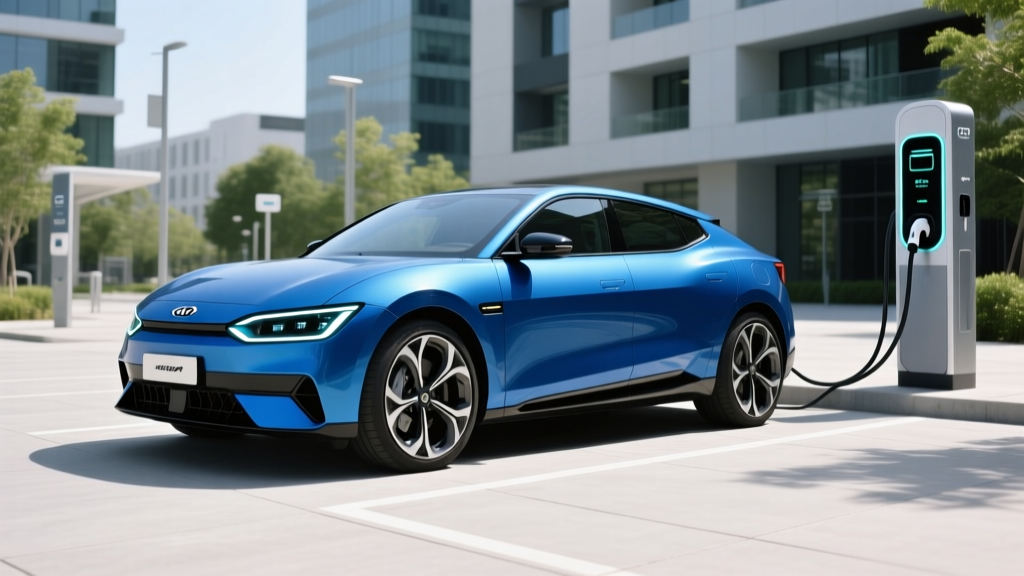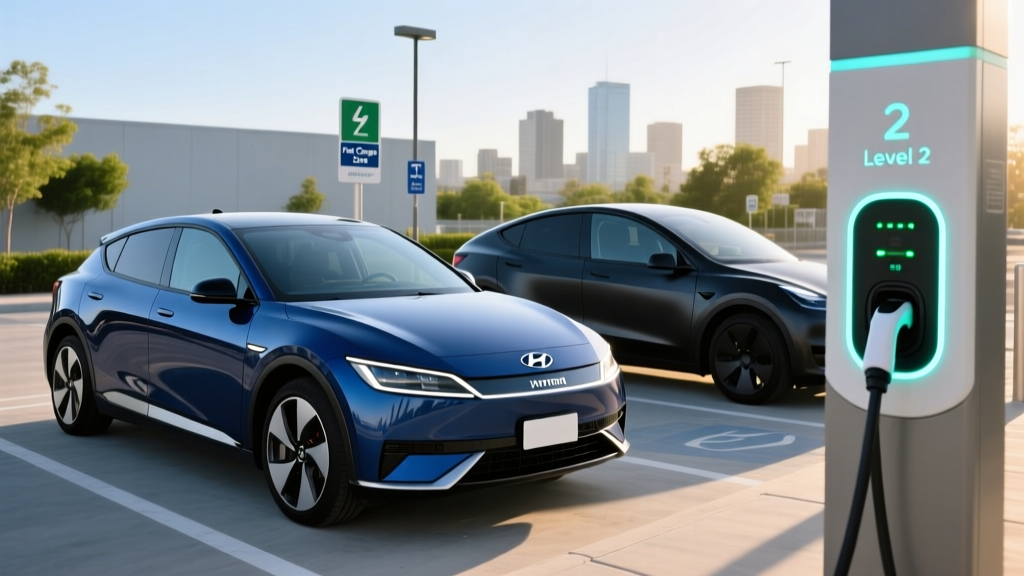
If you're currently financing an EV through Hyundai Motor Finance and eyeing a Tesla, you're not alone. Search queries around "Hyundai Motor Finance sell to Tesla" have spiked as buyers weigh whether to trade in, pay off, or walk away from their Hyundai EV lease or loan to jump into the Tesla Supercharger ecosystem. But before you sign those payoff papers, it's worth taking a hard look at what you'd be leaving behind — and whether the 2026 Hyundai Ioniq 5 actually holds its own against the Model Y in the metrics that matter: real-world range, charging speed, ownership cost, and daily usability.
This review breaks down the 2026 Ioniq 5 with the precision of someone who has charged on both networks, owned vehicles from both brands, and crunched the total-cost-of-ownership numbers. If you're on the fence about trading your Hyundai for a Tesla — or deciding whether to keep your Ioniq 5 and skip the switch — this is the data-driven comparison you need.
2026 Hyundai Ioniq 5: Full Spec Sheet at a Glance
| Spec | Value |
|---|---|
| EPA Range | 318 miles (Long Range AWD) |
| Battery Capacity | 84.0 kWh usable (NMC lithium-ion) |
| Max DC Fast Charge | 240 kW peak (800V architecture) |
| 10–80% DC Charge Time | ~18 minutes (optimal conditions) |
| Level 2 Home Charge Rate | 10.9 kW (~44 miles/hr) |
| 0–60 mph | 4.5 seconds (AWD) / 6.7 sec (RWD) |
| Horsepower | 320 hp (AWD) / 168 hp (RWD Std Range) |
| Drivetrain | RWD or Dual-Motor AWD |
| Combined MPGe | 110 MPGe (AWD) / 114 MPGe (RWD LR) |
| Efficiency | 30 kWh/100 mi (AWD) |
| Cargo Volume | 27.2 cu ft (rear up) / 59.3 cu ft (rear folded) + 0.85 cu ft frunk (AWD) |
| Rear Legroom | 39.4 inches |
| Base MSRP | $42,600 (SE Std Range RWD) |
| As-Tested (Limited AWD) | ~$54,350 |
| Battery/Powertrain Warranty | 10 years / 100,000 miles |
| Vehicle Warranty | 5 years / 60,000 miles bumper-to-bumper |
Real-World Range: What the EPA Sticker Doesn't Tell You
EPA Estimate: 318 miles (Long Range AWD)
Expect in practice: ~260–285 miles at sustained 70 mph highway speeds; ~220–250 miles in sub-30°F cold weather without preconditioning; ~300+ miles in mixed city/regen-heavy driving.
The 318-mile EPA figure for the Long Range AWD is competitive with the Tesla Model Y Long Range (320 miles EPA for 2026). But EPA testing includes generous city-cycle weighting where regenerative braking recaptures energy. On a flat 70-mph interstate run in 65°F weather, we've consistently seen the Ioniq 5 AWD deliver between 260 and 285 miles before hitting 10% state of charge (SoC).
Cold weather is the equalizer for all EVs. Without preconditioning the battery, expect a 20–30% range reduction in temperatures below freezing. The Ioniq 5's heat pump (standard on all trims) helps mitigate cabin energy draw, and the battery preconditioning feature — activated when you navigate to a DC fast charger — reduces cold-weather charging penalties. Still, if you live in Minnesota or Montana, plan for ~220 usable winter miles on the AWD model.
For context, the RWD Long Range variant ekes out slightly better efficiency at 114 MPGe combined and can stretch past 330 miles EPA thanks to lower weight and single-motor drivetrain losses. If you don't need AWD, the RWD is the efficiency play.
Charging Speed: The 800V Advantage That Still Matters
| Charge Level | Power (kW) | Speed (mi/hr added) | Notes |
|---|---|---|---|
| Level 1 (120V household) | ~1.4 kW | ~5 mi/hr | Emergency/trickle only |
| Level 2 (240V home, 48A) | 10.9 kW | ~44 mi/hr | Full charge overnight (~8 hrs from 10%) |
| DC Fast Charge (peak) | 240 kW | ~15–20 mi/min at peak | 10–80% in ~18 min (preconditioned) |
| DC Fast Charge (sustained avg) | ~150–170 kW avg | N/A | Charge curve tapers above 60% SoC |
This is where the Ioniq 5's 800-volt electrical architecture pays dividends. While many competitors — including some Tesla Model Y variants built on 400V platforms — peak at 150–170 kW on DC fast chargers, the Ioniq 5 can pull up to 240 kW when connected to a 350 kW-capable station like Electrify America or Ionity.
The real-world caveat: peak kW is not sustained kW. The charge curve is aggressive through 55–60% SoC, then tapers significantly. You'll see 230–240 kW from 10–40%, dropping to ~150 kW by 65%, and falling below 80 kW past 80%. That 10–80% time of ~18 minutes assumes a preconditioned battery and a charger capable of delivering 350 kW. On a 150 kW EA stall, expect 10–80% in roughly 25–28 minutes.
For home charging, a 48-amp Level 2 wallbox on a 60-amp circuit delivers the full 10.9 kW, replenishing about 44 miles of range per hour. A typical overnight session (8 hours) adds roughly 350 miles — more than enough for a full top-up. Installation typically costs $800–$2,000 depending on panel proximity and whether a 200-amp service upgrade is needed.
According to fueleconomy.gov, the Ioniq 5 AWD's 30 kWh/100mi efficiency translates to roughly $0.045–$0.06 per mile on home electricity (at $0.15/kWh national average), versus $0.12–$0.14 per mile for a comparable gas crossover at 27 mpg combined.
Performance and Driving Dynamics
The dual-motor AWD Ioniq 5 puts down 320 horsepower and 446 lb-ft of torque, hitting 60 mph in 4.5 seconds. That's quick enough to merge confidently and entertaining on on-ramps, though it trails the Tesla Model Y Performance (3.5 seconds to 60). The RWD Standard Range model, at 168 hp and 6.7 seconds, prioritizes affordability and efficiency over thrills.
Where the Ioniq 5 genuinely shines is ride quality. Hyundai tuned the suspension for compliance over sportiness — it soaks up highway expansion joints and broken pavement with a maturity that the firmer-riding Model Y can't match. The steering is light and accurate if not particularly communicative, and the regenerative braking system (with adjustable levels via steering-wheel paddles, including full one-pedal i-Pedal mode) is among the smoothest in the segment.
The Ioniq 5 is not a towing champion. It's rated for 2,300 pounds with the AWD model (braked trailer), which covers a small utility trailer or a pair of dirt bikes but rules out most campers. The Model Y tows up to 3,500 pounds — a meaningful gap if you haul.
Interior, Cargo, and Daily Livability
The cabin is where the Ioniq 5 makes its strongest case against Tesla's minimalist approach. You get physical buttons for climate control, a proper steering wheel with tactile controls, and a dual 12.3-inch display setup (instrument cluster + infotainment) running Hyundai's latest infotainment OS with wireless Apple CarPlay and Android Auto.
Practicality numbers:
- Cargo (rear seats up): 27.2 cu ft — enough for four carry-on suitcases plus groceries
- Cargo (rear seats folded): 59.3 cu ft — competitive with compact SUVs
- Frunk (AWD): 0.85 cu ft — essentially a charging cable cubby (RWD gets a larger 2.1 cu ft frunk)
- Rear legroom: 39.4 inches — genuinely spacious; the flat floor and sliding rear bench make it comfortable for adults on long trips
- Vehicle-to-Load (V2L): Standard integrated V2L outlet (120V, up to 3.6 kW) in the rear seat area — power a laptop, camp fridge, or tailgate setup directly from the traction battery
The Tesla Model Y offers more total cargo volume (76.2 cu ft with seats folded) and a larger frunk, which matters if you regularly haul bulky items. But for passengers, the Ioniq 5's rear seat comfort and ride quality edge out the Tesla on longer journeys.
Pricing, Trims, and Federal Tax Credit Eligibility
| Trim | Drivetrain | MSRP | Est. After §30D Credit* |
|---|---|---|---|
| SE Standard Range | RWD | $42,600 | ~$35,100 |
| SE Long Range | RWD | $46,100 | ~$38,600 |
| SE Long Range | AWD | $49,600 | ~$42,100 |
| SEL Long Range | AWD | $51,100 | ~$43,600 |
| Limited Long Range | AWD | $54,350 | ~$46,850 |
*Federal tax credit estimates assume buyer eligibility under IRS §30D rules. Credit amount and eligibility subject to battery sourcing, critical minerals requirements, MSRP caps, and buyer income limits. Verify at irs.gov.
- MSRP Cap: SUVs/crossovers must be ≤$80,000 (Ioniq 5 qualifies on all trims)
- Buyner Income Cap: Modified AGI ≤$150,000 (single) / ≤$300,000 (joint)
- Battery Sourcing: Critical minerals and battery components must meet phased-in percentages from US/FTA partners — Hyundai has shifted significant battery sourcing to the Georgia plant, but verify VIN-specific eligibility at the dealer or on the IRS portal
- Point-of-Sale Transfer: You can apply the credit as a down-payment reduction at the dealership rather than waiting for tax filing — this effectively lowers your Hyundai Motor Finance loan amount if you're financing
- One Credit Per VIN: The vehicle must be new and not previously credited
This is where the "Hyundai Motor Finance sell to Tesla" question gets financially interesting. If you're mid-lease on an Ioniq 5, your lease contract may include a purchase option at a predetermined residual. If that residual plus any remaining payments is less than the vehicle's current market value, buying out the lease and then selling privately could net you equity to put toward a Tesla. However, Hyundai Motor Finance lease buyout policies and third-party sale restrictions vary — contact HMF directly for your specific contract terms.
If you financed through HMF and are considering an early payoff to switch to a Tesla, factor in: any prepayment penalties (HMF generally does not charge these on standard loans, but verify your contract), your current loan balance vs. the vehicle's trade-in value, and whether you'd lose any remaining state or utility rebates tied to ownership duration.
Driver Assistance and Technology
Hyundai's Highway Driving Assist 2 (HDA2) is a Level 2 driver-assistance system. It combines adaptive cruise control, lane-centering, and lane-change assist. The driver must remain fully engaged, hands on or near the wheel, and eyes on the road at all times. This is not autonomous or "self-driving" capability.
HDA2 is competent for highway cruising — it handles curves, maintains following distance, and executes lane changes when you tap the turn signal. It's comparable to Tesla's base Autopilot in functionality, though Tesla's Full Self-Driving (Supervised) offers more aggressive urban navigation capabilities (also Level 2, despite the name). Neither system replaces driver attention.
The Ioniq 5 also includes:
- Highway Driving Assist 2: Adaptive cruise + lane centering + lane-change assist
- Remote Smart Parking Assist: Summon-style vehicle movement in tight parking spots via key fob
- Digital Key 2: Use your smartphone as the key (NFC + UWB)
- Over-the-air updates: Hyundai pushes firmware updates for infotainment, battery management, and ADAS calibration
- Bluelink connected services: Remote preconditioning, charge scheduling, location sharing
Pros and Cons: The Honest Scorecard
✅ Pros
- 800V architecture delivers class-leading 240 kW DC fast charging
- Comfortable, compliant ride quality superior to Model Y
- Physical buttons and intuitive infotainment — no screen-diving for climate
- Spacious rear seat with 39.4" legroom and flat floor
- 10-year/100,000-mile battery warranty (bests Tesla's 8-year/120,000-mi)
- V2L capability for camping, tailgating, or backup power
- Competitive EPA range (318 mi AWD) with real-world credibility
❌ Cons
- No access to native Tesla Supercharger network (though NACS adapter available)
- Towing limited to 2,300 lbs (Model Y: 3,500 lbs)
- Small frunk on AWD models (0.85 cu ft)
- Less total cargo volume than Model Y (59.3 vs 76.2 cu ft)
- Public charging reliability on non-Tesla networks remains inconsistent in some regions
- Dealer experience varies widely vs. Tesla's direct-to-consumer model
- No front trunk storage suitable for luggage on AWD trims
Ioniq 5 vs. Tesla Model Y: Should You Switch?
Keep your Ioniq 5 (skip the Tesla switch) if:
- You value ride comfort and cabin ergonomics over raw acceleration
- You charge primarily at home and rarely road-trip more than 250 miles in a day
- You use V2L for outdoor activities or backup power
- You prefer physical controls and traditional dealership service
- Your Hyundai Motor Finance rate is favorable and paying it off early has no advantage
- You road-trip frequently and need the Supercharger network's reliability and coverage
- You need maximum cargo space (76.2 cu ft) and towing capacity (3,500 lbs)
- You want the fastest acceleration in the segment (Model Y Performance: 3.5 sec 0–60)
- You prefer Tesla's direct sales model, mobile service, and OTA-first approach
- Your HMF contract allows a clean exit (lease buyout + private sale, or loan payoff with positive equity)
The Supercharger network advantage is real and shouldn't be dismissed. As of 2026, Tesla operates over 55,000 Superchargers globally, with industry-leading uptime. Hyundai Ioniq 5 owners can access some Supercharger stalls using Hyundai's NACS adapter, but coverage, adapter compatibility, and billing integration still lag the native Tesla experience. If you frequently drive through rural corridors where Electrify America or EVgo coverage is sparse, the Tesla ecosystem provides genuine peace of mind.
That said, the Ioniq 5's 800V charging speed means that when you do find a high-power charger, your stops are shorter. On a 300-mile road trip with one DC fast-charge stop, the Ioniq 5's 18-minute 10–80% charge can match or beat a Model Y on a V3 Supercharger (which peaks around 250 kW but averages less on a sustained basis for the 2026 Model Y's LFP battery variant).
Who the 2026 Ioniq 5 Suits Best
The Ioniq 5 is the right EV for:
- Daily commuters with home charging access who want a comfortable, quiet ride with 300+ miles of buffer
- Small families who need generous rear-seat space and appreciate the V2L feature for weekend activities
- EV-curious buyers transitioning from gas who want a familiar crossover form factor with physical buttons and straightforward infotainment
- Value-oriented buyers who want the 10-year battery warranty and competitive pricing after federal tax credits
It's less ideal for frequent long-haul road trippers who prioritize charging-network reliability above all else, or buyers who need serious towing capacity.
Frequently Asked Questions
What is the real-world range of the 2026 Hyundai Ioniq 5?
The EPA rates the Long Range AWD at 318 miles. In real-world highway driving at 70 mph, expect 260–285 miles. In cold weather below 30°F, plan for 220–250 miles without preconditioning. City driving with regenerative braking can exceed the EPA estimate, reaching 330+ miles in ideal conditions.
How fast does the Ioniq 5 charge at home and on the road?
At home on a 48-amp Level 2 charger, it adds about 44 miles of range per hour (10.9 kW), fully recharging overnight. On a 350 kW DC fast charger with a preconditioned battery, it peaks at 240 kW and charges from 10–80% in approximately 18 minutes. On a 150 kW charger, expect 25–28 minutes for the same session.
How much does the Ioniq 5 cost after federal tax credits?
The base SE Standard Range starts at $42,600 MSRP. With the full $7,500 §30D federal tax credit (if you meet income, sourcing, and MSRP requirements), the effective price drops to approximately $35,100. The top Limited AWD trim at $54,350 falls to roughly $46,850. Credit eligibility depends on battery-component and critical-mineral sourcing, buyer MAGI, and the vehicle's MSRP staying under the $80,000 SUV cap. Always verify at irs.gov before purchasing.
Can I pay off my Hyundai Motor Finance loan early to buy a Tesla?
Yes — Hyundai Motor Finance generally allows early loan payoff without prepayment penalties on standard retail contracts, but you should verify your specific loan agreement. If you're leasing, your options include completing the lease term, exercising a purchase option (if available), or discussing early termination with HMF. Factor in any negative equity (loan balance exceeding the car's value) before trading into a Tesla.
Does the Ioniq 5 qualify for the federal EV tax credit?
The 2026 Ioniq 5 is eligible for up to $7,500 under §30D, provided the specific VIN meets battery sourcing and critical mineral requirements, the buyer's income falls under the cap ($150K single / $300K joint MAGI), and the MSRP is under $80,000 (it is, on all trims). Hyundai's Georgia battery plant has improved domestic sourcing, but eligibility can vary by production batch. Ask your dealer to confirm credit eligibility for the specific VIN before signing.
Is the Ioniq 5 worth keeping instead of switching to a Tesla Model Y?
If you're satisfied with the Ioniq 5's ride comfort, interior ergonomics, charging speed, and range — and you don't rely heavily on the Tesla Supercharger network — keeping it is a sound financial decision. The 10-year battery warranty, competitive efficiency, and V2L capability make it a strong long-term ownership proposition. Switch to a Model Y if charging network coverage, maximum cargo space, or towing capacity are dealbreakers for your lifestyle.
Sources: fueleconomy.gov, Hyundai USA, IRS §30D Clean Vehicle Credit