Quick Verdict: Is the 2026 Hyundai Kona EV Worth It?
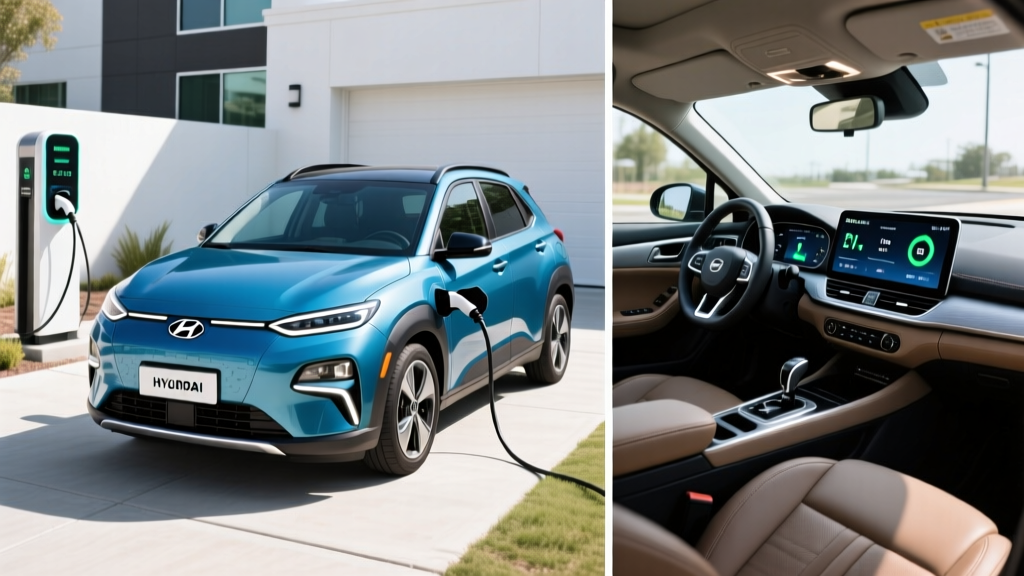
The 2026 Hyundai Kona EV delivers an EPA-estimated 261 miles of range from its 64.8 kWh battery, charges from 10-80% in roughly 43 minutes on a DC fast charger (peak ~100 kW), and starts at $32,975. It's one of the most practical subcompact electric crossovers for buyers who prioritize value, efficiency, and a proven warranty over raw charging speed. If you can charge at home and your daily commute is under 60 miles round-trip, the Kona EV is an excellent entry point into EV ownership with low running costs. If you road-trip frequently or live in extreme cold, the modest DC charging rate and real-world range reduction are meaningful trade-offs to weigh.
Range and Efficiency: What You'll Actually Get
The 2026 Kona EV Long Range uses a 64.8 kWh (usable) battery pack with NMC (nickel-manganese-cobalt) chemistry. The EPA rates it at 261 miles of combined range for the front-wheel-drive SEL and Limited trims, with a combined efficiency of approximately 118 MPGe (roughly 28 kWh/100 mi). The SE trim with smaller 18-inch wheels may achieve slightly higher figures.
Per fueleconomy.gov, the Kona EV's efficiency places it among the most efficient subcompact electric crossovers in its class.
Real-World Range Expectations
EPA Sticker: 261 miles (combined)
Highway driving (70-75 mph): Expect ~220-235 miles. EVs are less efficient at sustained highway speeds due to aerodynamic drag and lack of regenerative braking opportunities.
Cold weather (below 32°F / 0°C): Expect ~185-210 miles. Battery chemistry slows and cabin heating draws significant energy. The Kona EV uses a heat pump (standard on most trims), which mitigates but does not eliminate cold-weather range loss.
City/stop-and-go: You may exceed the EPA estimate, reaching 270+ miles thanks to frequent regenerative braking.
Charging Speed and Infrastructure
Understanding charging is the single biggest factor in EV satisfaction. Here's how the Kona EV performs across all three charging levels:
| Level | Power (kW) | Connector | Speed (mi/hr) | Notes |
|---|---|---|---|---|
| Level 1 (120V) | ~1.4 kW | Standard outlet (J1772 adapter) | ~4-5 mi/hr | Emergency/trickle only; ~55 hrs for full charge |
| Level 2 (240V) | ~11 kW (onboard charger) | J1772 / NACS (with adapter) | ~35-40 mi/hr | Full charge in ~7 hours; ideal for overnight home charging |
| DC Fast Charge | Peak ~100 kW | CCS1 / NACS (with adapter) | Varies by SoC | 10-80% in ~43 min; tapers significantly above 80% |
Key distinction — kW vs kWh: The Kona's battery holds 64.8 kWh of energy (like a 12-gallon gas tank). The DC fast charger delivers up to 100 kW of power (like the flow rate at the pump). Higher kW means faster filling, but the rate slows as the battery fills — this is the charge curve.
The Kona EV's peak 100 kW DC rate is its most discussed limitation. Competitors like the Hyundai Ioniq 5 (peak 240 kW on 800V architecture) or Kia EV6 can charge 10-80% in roughly 18 minutes. On a long road trip, that difference means 25 extra minutes at each DC fast-charging stop in the Kona. For daily driving and overnight Level 2 home charging, however, the Kona's speed is perfectly adequate — most owners plug in at night and wake up full.
Hyundai now provides the Kona EV with a NACS (Tesla-style) charge port on newer production runs, granting access to Tesla Supercharger stations. Earlier 2024-2025 models shipped with CCS1 and can use Superchargers via a Hyundai-provided adapter. Confirm your specific vehicle's port type at purchase.
Performance and Powertrain
The 2026 Kona EV is powered by a single front-mounted permanent-magnet synchronous motor producing 201 horsepower and 188 lb-ft of torque. Hyundai quotes a 0-60 mph time of approximately 7.0 seconds. That's brisk for a subcompact crossover and more than adequate for merging, passing, and daily commuting.
The instant torque delivery characteristic of electric motors makes the Kona feel quicker in real-world driving than the 0-60 number alone suggests. Regenerative braking is adjustable via steering-wheel paddles (levels 0-3 plus an "i-PEDAL" one-pedal driving mode), allowing you to recapture energy and reduce brake wear.
Pricing, Trims, and Federal Tax Credit Eligibility
| Trim | MSRP | Key Features |
|---|---|---|
| SE | $32,975 | 18" wheels, dual 12.3" displays, wireless CarPlay/Android Auto |
| SEL | $34,475 | Heated seats, power driver seat, roof rails, Highway Driving Assist |
| Limited | $38,975 | Leather, ventilated front seats, HUD, Bose audio, sunroof |
All prices include destination. The Kona EV qualifies under the §30D federal tax credit rules, but eligibility is not guaranteed for every buyer. Per IRS guidelines, the credit (up to $7,500) depends on:
- MSRP cap: SUVs/crossovers must be under $80,000 — the Kona EV clears this easily.
- Buyer income limits: Modified AGI must not exceed $150,000 (single), $225,000 (head of household), or $300,000 (joint filers).
- Battery sourcing requirements: Critical minerals and battery components must meet phased-in percentages from US or free-trade-agreement countries. These requirements tighten annually through 2026.
- Point-of-sale transfer: You can apply the credit as a down-payment reduction at the dealer rather than waiting for a tax refund.
Important: Battery-sourcing rules change yearly. Verify current eligibility on fueleconomy.gov or with your tax professional before committing to a purchase. Some Kona EV builds may qualify for the full $7,500, a partial credit, or none depending on the specific battery pack's supply chain.
Ownership Costs: Kona EV vs Gas Kona vs Kona Hybrid
Here's how the Kona EV stacks up against its gas and hybrid siblings over 5 years and 60,000 miles of ownership:
| Category | Kona EV (SEL) | Kona Gas (SEL AWD) | Kona Hybrid (Blue) |
|---|---|---|---|
| Purchase Price (MSRP) | $34,475 | $29,475 | $30,475 |
| Fed. Tax Credit (est.) | -$7,500* | $0 | $0 |
| Net Purchase | $26,975 | $29,475 | $30,475 |
| Fuel / Energy (60k mi) | ~$3,600** | ~$7,800*** | ~$5,100*** |
| Maintenance (5 yr) | ~$1,200 | ~$3,200 | ~$2,800 |
| Insurance (5 yr est.) | ~$8,400 | ~$7,200 | ~$7,400 |
| Total 5-Yr Cost | ~$40,175 | ~$47,675 | ~$45,775 |
*Assumes full §30D credit eligibility. **Based on $0.15/kWh national average. ***Based on $3.50/gal and 30 MPG combined (gas) / 46 MPG combined (hybrid). Insurance varies significantly by driver, state, and provider — get quotes before purchasing.
The Kona EV saves roughly $7,500-$8,000 over five years compared to the gas Kona when the full federal credit applies, primarily from lower energy and maintenance costs. EVs have no oil changes, no transmission fluid, no spark plugs, and significantly less brake wear thanks to regenerative braking. The main trade-off is higher insurance premiums — EVs tend to cost 10-20% more to insure due to higher repair costs after collisions.
What First-Time EV Buyers Should Know
Is the Kona EV Right for You?
Choose the Kona EV if:
- You can install or already have Level 2 (240V) home charging — this is the single biggest predictor of EV satisfaction.
- Your daily round-trip commute is under 100 miles (well within the buffer of the 261-mi range).
- You road-trip fewer than 4-5 times per year and can plan around DC fast-charging stops.
- You want to minimize ongoing fuel and maintenance costs.
- You qualify for the §30D tax credit, which significantly reduces the effective purchase price.
Consider a hybrid (Kona Hybrid or PHEV) instead if:
- You lack reliable home or workplace charging access.
- You frequently drive 300+ miles between stops in areas with sparse DC fast-charging infrastructure.
- You live in a region with extreme cold (below 0°F) where range loss exceeds 30%.
- Your budget cannot absorb the higher upfront cost even after incentives.
Common Misconceptions — Myth vs Fact
| Myth | Fact |
|---|---|
| "EV batteries need replacing every few years at enormous cost." | Hyundai covers the Kona EV battery with a 10-year/100,000-mile warranty (retaining ≥70% capacity). Modern NMC batteries are lasting 200,000+ miles before significant degradation. Replacement, if ever needed, runs $8,000-$12,000 — but most owners never face this. |
| "261 miles isn't enough range." | The average American drives ~37 miles/day (FHWA data). 261 miles covers nearly a week of typical driving. For road trips, a 43-minute DC fast-charge stop every ~200 miles is manageable with planning. |
| "Charging an EV is more expensive than gas." | At $0.15/kWh (national home average), the Kona EV costs roughly $0.06/mile to fuel. A 30 MPG gas car at $3.50/gallon costs $0.12/mile. Public DC fast charging is more expensive (~$0.30-$0.48/kWh), but most charging should happen at home. |
| "EVs are slow." | The Kona EV's 201 HP and instant torque deliver a 7.0-second 0-60 — quicker than the gas Kona's 2.0L turbo (7.5 sec) and most subcompact crossovers in its price range. |
| "I can just use a regular wall outlet." | Level 1 (120V) adds only ~4-5 miles per hour of charging. A full recharge would take 55+ hours. A Level 2 home charger installation ($500-$2,000 depending on electrical panel) is strongly recommended for practical daily use. |
Warranty, Reliability, and Long-Term Battery Health
Hyundai offers one of the best warranty packages in the industry:
- Battery: 10 years / 100,000 miles (guaranteed ≥70% capacity retention)
- Powertrain: 10 years / 100,000 miles
- New vehicle: 5 years / 60,000 miles
- Roadside assistance: 5 years / unlimited miles
To maximize long-term battery State of Health (SoH), follow these practices: avoid routinely charging to 100% on DC fast chargers (set a daily charge limit of 80% on Level 2), precondition the battery before fast charging in cold weather (the Kona EV supports this via navigation-routed preconditioning), and avoid leaving the vehicle at 0% or 100% SoC for extended periods in extreme heat.
Frequently Asked Questions
Does the 2026 Kona EV qualify for the $7,500 federal tax credit?
It likely qualifies for the full or partial credit depending on battery-sourcing compliance for the specific build. The Kona EV's MSRP is well under the $80,000 SUV cap. Your personal eligibility depends on income limits ($150K single / $300K joint). Check the latest status on fueleconomy.gov and consult a tax professional.
Can I charge the Kona EV at a Tesla Supercharger?
Yes. Newer 2025-2026 Kona EVs are built with the NACS (Tesla-style) charge port. Earlier models with CCS1 can access Superchargers using a Hyundai-provided NACS adapter. Confirm your vehicle's port configuration with the dealer.
How much does home Level 2 charger installation cost?
Expect $500-$2,000 for a standard installation (240V/40A circuit with a hardwired or plug-in Level 2 unit). If your home's electrical panel needs an upgrade from 100A to 200A service, add $1,500-$3,000. Always get a quote from a licensed electrician — costs vary widely by region and home age.
What's the real-world highway range?
Expect approximately 220-235 miles at 70-75 mph in moderate temperatures. In winter conditions below freezing, highway range drops to roughly 185-210 miles. Use ChargePoint, PlugShare, or A Better Routeplanner to plan road trips around these real-world figures, not the EPA sticker.
Is the Kona EV a good first EV?
Yes — particularly for buyers who can charge at home, have moderate commutes, and want a proven warranty with low running costs. Its main limitation is the ~100 kW DC fast-charging speed, which adds time on long road trips compared to 800V-architecture competitors. If road-tripping is a priority, consider the Ioniq 5 or EV6 instead.