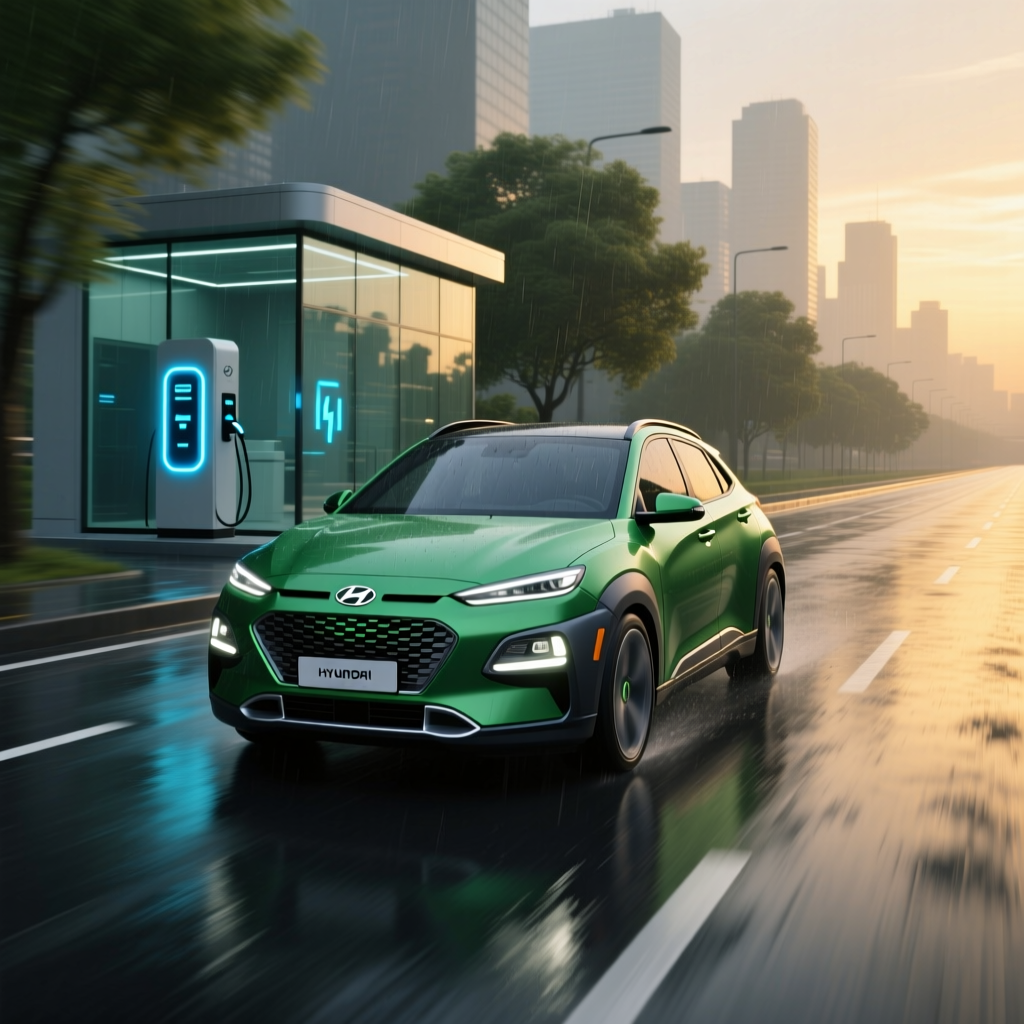
The transition to electric mobility has fundamentally altered the automotive landscape, particularly for city dwellers who require a vehicle that is nimble, efficient, and practical. The subcompact electric crossover segment has become a fiercely competitive battleground, and the Hyundai Kona Electric stands out as a premier choice for urban commuters. Blending a practical footprint with an impressive electric powertrain, this vehicle redefines what drivers can expect from a daily city driver. In this comprehensive review, we explore why the Kona Electric remains a top contender in our list of the best subcompact EVs on the market, offering a perfect blend of technology, efficiency, and everyday usability.
Vehicle Overview: The Urban Commuter’s Ideal Companion
Hyundai has long been a pioneer in the electric vehicle space, and the Kona Electric represents the culmination of their expertise in building accessible, mass-market EVs. Designed from the ground up to navigate tight city streets while providing the elevated seating position and cargo versatility that crossover buyers demand, the Kona Electric is a masterclass in packaging. Its aerodynamic exterior design not only turns heads but also actively reduces drag to maximize efficiency. Beneath the sleek sheet metal lies a sophisticated battery-electric architecture that prioritizes interior space and low-center-of-gravity handling. Whether you are navigating crowded downtown intersections or embarking on a weekend getaway, the Kona Electric proves that you do not need a massive, expensive SUV to enjoy the benefits of zero-emission driving. For those weighing their options in this price bracket, our Chevrolet Bolt vs. Hyundai Kona comparison offers further insights into how these segment rivals stack up against one another.
Real-World Range & Efficiency
Range anxiety is often the primary concern for prospective EV buyers, but the Hyundai Kona Electric effectively mitigates this fear, especially in an urban environment. Equipped with a high-capacity lithium-ion battery pack, the long-range variants of the Kona Electric deliver an impressive EPA-estimated range that comfortably exceeds 250 miles on a single charge. This figure is more than sufficient for a full week of typical city commuting, school runs, and grocery trips without ever needing to search for a charger.
In real-world urban testing, the Kona Electric often outperforms its official EPA ratings. City driving is inherently advantageous for electric vehicles due to the lack of idling losses and the heavy utilization of regenerative braking. Every time you lift off the accelerator or press the brake pedal to navigate stop-and-go traffic, the electric motor reverses its function, acting as a generator to recapture kinetic energy and feed it back into the battery. Independent automotive testers have consistently noted that in mild weather conditions and predominantly urban driving cycles, the Kona Electric can easily stretch its range to near 280 miles, making it one of the most efficient subcompact crossovers available.
Furthermore, Hyundai’s advanced thermal management system ensures that the battery operates at its optimal temperature, preserving efficiency and longevity. The available heat pump system is a game-changer for commuters in colder climates, as it scavenges waste heat from the powertrain to warm the cabin, significantly reducing the range penalty typically associated with winter driving. This dedication to efficiency solidifies its position on our best EVs under $40,000 list.
Charging Speed & Infrastructure
A critical component of EV ownership is the charging experience, and the Kona Electric is well-equipped to handle both home and public charging scenarios. For urban dwellers who have access to a garage or a dedicated parking spot with a Level 2 (240-volt) home charger, the Kona Electric can easily replenish its battery overnight. A full charge from empty to 100 percent takes roughly seven hours, meaning you can plug in when you get home from work and wake up to a full battery every morning. For a deeper dive into setting up your home infrastructure, be sure to read our complete EV charging guide.
When it comes to public DC fast charging, the Kona Electric supports rapid charging speeds that make longer road trips entirely feasible. Utilizing a CCS (Combined Charging System) connector, the vehicle can accept peak charging rates of up to 100 kW or more, depending on the specific model year and battery state. Under optimal conditions at a high-speed public charger, the Kona Electric can charge from 10 percent to 80 percent in approximately 43 minutes. While this may not be the absolute fastest in the entire EV market, it is highly competitive for the subcompact segment and provides ample time to grab a coffee or a quick meal during a highway rest stop.
Hyundai has also integrated a battery preconditioning feature into the navigation system. If you route your trip to a DC fast charger, the vehicle will automatically warm or cool the battery to the ideal temperature before you arrive, ensuring that you hit peak charging speeds immediately upon plugging in. This level of software integration demonstrates Hyundai’s commitment to making the EV charging process as seamless and user-friendly as possible for everyday commuters.
Interior Comfort & Technology
Stepping inside the Hyundai Kona Electric reveals a cabin that punches well above its weight class in terms of technology, material quality, and ergonomic design. The dashboard is dominated by a seamless, panoramic dual-screen setup that houses both the digital instrument cluster and the central infotainment touchscreen. The interface is highly intuitive, featuring crisp graphics, rapid response times, and standard wireless Apple CarPlay and Android Auto integration. This means urban commuters can easily access their favorite navigation apps, streaming music, and hands-free messaging without being tethered by cables.
Despite its subcompact exterior dimensions, the Kona Electric offers a surprisingly spacious interior. The flat floor, a direct benefit of the dedicated EV architecture, provides excellent legroom for rear-seat passengers. The cargo area is generous for the segment, offering ample space for groceries, gym bags, or luggage for a weekend trip. Clever under-floor storage compartments in the trunk help organize charging cables and smaller items, keeping the main cargo area clutter-free.
Safety and driver assistance are paramount in chaotic city environments, and the Kona Electric comes loaded with Hyundai SmartSense. This comprehensive suite includes forward collision-avoidance assist with pedestrian and cyclist detection, blind-spot collision warning, rear cross-traffic collision-avoidance assist, and lane keeping assist. The surround-view monitor and blind-spot view monitor are particularly invaluable when navigating tight urban parking garages or changing lanes on congested highways, providing an extra layer of confidence and security for the driver.
Driving Dynamics & Urban Maneuverability
The true test of an urban commuter vehicle is how it handles the rigors of city driving, and the Hyundai Kona Electric excels in this arena. The instant torque delivery inherent to electric motors provides brisk, effortless acceleration from a standstill, making it incredibly easy to merge onto highways or dart through gaps in city traffic. With over 200 horsepower available in the higher-output trims, the Kona Electric feels genuinely quick and responsive, transforming mundane commutes into engaging driving experiences.
One of the standout features for urban driving is the steering-wheel-mounted paddle shifters that control the regenerative braking levels. Drivers can cycle through multiple levels of regen, all the way up to the i-Pedal mode, which allows for true one-pedal driving. In heavy stop-and-go traffic, i-Pedal is a revelation; you can accelerate, slow down, and come to a complete halt using only the accelerator pedal, significantly reducing driver fatigue and minimizing wear on the physical friction brakes.
The suspension tuning strikes an excellent balance between comfort and agility. The Kona Electric glides over potholes, speed bumps, and uneven pavement with a compliance that is rare in this segment, thanks to the added weight of the battery pack lowering the center of gravity and stabilizing the ride. The steering is light and precise, and the compact turning radius makes U-turns and parallel parking a breeze. Furthermore, the cabin is remarkably quiet, with extensive sound-deadening materials keeping wind and road noise at bay, creating a serene sanctuary away from the chaos of the city streets outside.
Ownership Costs & Value
Beyond the environmental benefits, the Hyundai Kona Electric makes a compelling financial case for urban commuters. The total cost of ownership is significantly lower than that of a comparable internal combustion engine vehicle. Electricity costs a fraction of what gasoline does, and charging at home during off-peak hours can reduce your monthly fuel expenses to mere pocket change. Additionally, EVs require far less routine maintenance; there are no oil changes, spark plugs, or transmission fluid replacements to worry about, and the regenerative braking system drastically extends the life of the brake pads and rotors.
Hyundai also provides exceptional peace of mind with its industry-leading warranty coverage. The battery is backed by a 10-year or 100,000-mile warranty, ensuring that the most expensive component of the vehicle is protected for the long haul. When combined with available federal, state, and local tax incentives or rebates, the effective purchase price of the Kona Electric becomes incredibly attractive. For those looking to maximize their savings, our EV tax credits guide breaks down how to take full advantage of these financial benefits.
Pros & Cons
Pros:
- Excellent real-world range that frequently exceeds EPA estimates in city driving.
- Highly effective regenerative braking with i-Pedal one-pedal driving capability.
- Spacious, tech-forward interior with dual panoramic displays and wireless smartphone integration.
- Comprehensive Hyundai SmartSense safety suite standard on most trims.
- Industry-leading 10-year/100,000-mile battery warranty.
Cons:
- DC fast charging speeds, while adequate, lag slightly behind some newer 800-volt competitors.
- Lack of a front trunk (frunk) for additional cable storage.
- Rear visibility is somewhat compromised by the thick C-pillars, though mitigated by camera systems.
Key Specifications Comparison Table
To understand how the Kona Electric stacks up against its closest rivals, we have compiled a comparison table featuring key specifications. This highlights why it remains a top choice in the subcompact EV segment.
| Feature | Hyundai Kona Electric | Kia Niro EV | Chevrolet Bolt EUV |
|---|---|---|---|
| Estimated Range (EPA) | ~261 miles | ~239 miles | ~247 miles |
| Battery Capacity | ~65.4 kWh | ~64.8 kWh | ~65.0 kWh |
| Horsepower | 201 hp | 201 hp | 200 hp |
| DC Fast Charge (10-80%) | ~43 minutes | ~45 minutes | ~30 minutes |
| Cargo Space (Behind Rear Seats) | 25.8 cu. ft. | 23.7 cu. ft. | 16.3 cu. ft. |
| One-Pedal Driving | Yes (i-Pedal) | Yes | No |
Frequently Asked Questions
Is the Hyundai Kona Electric good for long road trips?
While the Kona Electric is optimized for urban commuting and daily driving, it is entirely capable of long road trips. With an EPA-estimated range of over 250 miles, you can comfortably cover significant distances between stops. The DC fast-charging capability allows you to add substantial range in under an hour, making highway travel convenient, provided you plan your route around available charging infrastructure using the built-in navigation system.
How does the Kona Electric handle winter weather and cold temperatures?
Cold weather naturally reduces the efficiency of all electric vehicles due to battery chemistry and the energy required to heat the cabin. However, the Kona Electric mitigates this with an available heat pump system and battery preconditioning. The heat pump efficiently scavenges waste heat from the powertrain to warm the interior, significantly reducing the range penalty associated with freezing temperatures. Additionally, features like heated seats and a heated steering wheel provide immediate comfort without drawing excessive power from the main battery.
Can I install a Level 2 charger in my urban apartment building?
Installing a Level 2 charger in an apartment building or shared garage is becoming increasingly common, though it requires coordination with your property management or HOA. Many cities now have right-to-charge laws that facilitate these installations. You will typically need to hire a licensed electrician to assess the building’s electrical capacity and install a dedicated 240-volt circuit. If home charging is impossible, the Kona Electric’s efficient battery and widespread public charging compatibility make it viable to rely on local public Level 2 and DC fast chargers.
How does the Kona Electric compare to the Kia Niro EV?
The Hyundai Kona Electric and the Kia Niro EV share underlying powertrain components and battery technology, as both brands are part of the same corporate umbrella. However, the Kona Electric generally offers a slightly more engaging driving experience, a more modern interior tech layout with the panoramic dual screens, and slightly more cargo space. The Niro EV, on the other hand, offers a slightly more conservative design and a marginally softer ride. Both are exceptional choices, but the Kona often edges out the competition in overall value and tech integration.
What is the expected battery degradation over time?
Hyundai’s advanced battery thermal management system is designed to preserve the health of the lithium-ion cells over the long term. Modern EV batteries are engineered to retain a vast majority of their original capacity even after hundreds of thousands of miles. Hyundai backs the Kona Electric’s battery with a 10-year or 100,000-mile warranty, guaranteeing that it will maintain a specific state of health. In real-world scenarios, owners typically experience minimal degradation, ensuring the vehicle remains a reliable commuter for well over a decade.
In conclusion, the Hyundai Kona Electric is a triumph of practical engineering and thoughtful design. It proves that an electric vehicle does not need to be excessively large or prohibitively expensive to deliver a premium, stress-free commuting experience. With its outstanding real-world range, rapid charging capabilities, cutting-edge interior technology, and engaging driving dynamics, it remains a benchmark in the subcompact crossover segment. For urban drivers ready to make the switch to electric, the Kona Electric is an outstanding choice that promises to make every daily commute a little bit better.