Quick Verdict: The Budget-Friendly EV That Gets the Basics Right
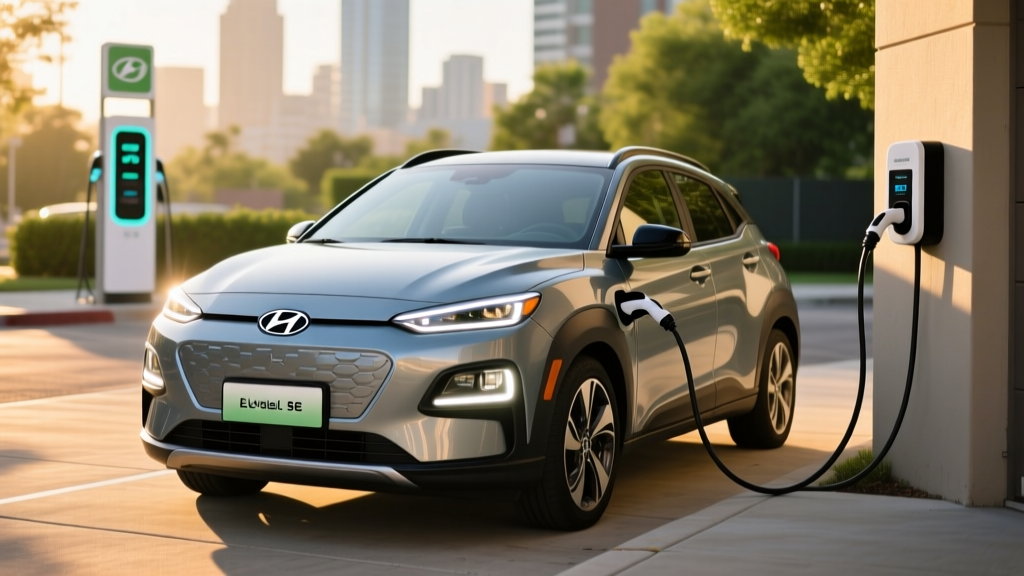
The 2026 Hyundai Kona Electric SE occupies a specific niche: an affordable, compact crossover with enough range for daily commuting and weekend errands, without the premium price tag of larger EVs. Starting at $32,975 before destination, it undercuts rivals like the Chevrolet Equinox EV and Nissan Ariana while delivering 261 miles of EPA-estimated range. But value comes with trade-offs—slower DC fast charging, a front-wheel-drive layout, and a tighter back seat than some competitors.
After spending time with the Kona Electric SE, it's clear Hyundai has optimized this EV for urban and suburban buyers who prioritize low running costs and straightforward tech over performance thrills or cutting-edge driver assistance. If your commute is under 40 miles round-trip and you have home charging access, the Kona Electric SE makes a compelling case as a first EV or a practical second car.
Range and Efficiency: EPA Numbers vs. Real-World Reality
Real-World Expectation: 220–240 miles (mixed driving), ~190–210 miles (highway at 70+ mph), ~160–180 miles (cold weather below 32°F)
The Kona Electric SE's 261-mile EPA rating places it squarely in the "enough for most people" category. For context, the average American drives 37 miles per day according to the Federal Highway Administration, meaning most owners will charge once or twice a week at home. But EPA estimates assume a mix of city and highway driving at moderate temperatures—a scenario that rarely matches real life.
In mixed driving with a combination of stop-and-go traffic and suburban roads at 55–65 mph, expect to see 220–240 miles before the battery dips to 10%. Push the speed to 70–75 mph on the interstate, and aerodynamic drag cuts range to roughly 190–210 miles. Cold weather is the Kona's Achilles' heel: below freezing, the lithium-ion battery's internal resistance increases, and cabin heating draws significant power. In 20°F weather with the heat on, plan for 160–180 miles of usable range.
The Kona Electric uses a 65.4 kWh battery pack (usable capacity; gross capacity is slightly higher to account for buffer). Hyundai has not publicly disclosed the chemistry for the 2026 model year, but previous Kona Electric generations used NMC (nickel-manganese-cobalt) cells. NMC offers higher energy density than LFP (lithium iron phosphate), which is why the Kona achieves 261 miles from a relatively compact pack. The trade-off: NMC batteries degrade slightly faster over time and prefer not to sit at 100% state of charge for extended periods.
Efficiency is measured at 120 MPGe combined (129 city / 108 highway) or 28 kWh per 100 miles, per EPA data. That's respectable for a crossover, though the Tesla Model Y and Hyundai Ioniq 5 achieve better efficiency thanks to more advanced heat pumps and aerodynamic tuning.
Charging Speed: Adequate for Home, Modest on Road Trips
| Charging Level | Power | Time / Rate | Best For |
|---|---|---|---|
| Level 1 (120V outlet) | 1.4 kW | ~4 miles per hour | Emergency top-ups |
| Level 2 (240V home charger) | 7.2 kW | ~24 miles per hour; 0–100% in ~9 hours | Daily overnight charging |
| DC Fast Charging | 100 kW peak | 10–80% in ~43 minutes | Road trips (with planning) |
Home charging is where the Kona Electric SE shines—assuming you have access to a Level 2 charger. At 7.2 kW, a full charge from empty takes about 9 hours, which fits neatly into an overnight window. Most owners will plug in at 30–40% remaining and wake up to a full battery. If you're installing a home Level 2 charger, expect to pay $500–$1,200 for equipment and electrician labor, depending on your panel capacity and run distance.
DC fast charging is the Kona's weak point. The 100 kW peak rate is modest by 2026 standards—rivals like the Hyundai Ioniq 5 (240 kW), Tesla Model Y (250 kW), and Ford Mustang Mach-E (150 kW) charge significantly faster. More critically, the Kona's charge curve tapers early: you'll see 100 kW only briefly in the 20–40% state of charge window, then the rate drops to 60–70 kW through the 60% mark, and further to 40 kW above 80%. A 10–80% charge takes approximately 43 minutes under ideal conditions (warm battery, low state of charge at plug-in). In cold weather without preconditioning, add 10–15 minutes.
The Kona Electric SE uses the CCS (Combined Charging System) connector, not the Tesla NACS standard. Hyundai has announced a transition to NACS for future models, but the 2026 Kona Electric retains CCS. This means you'll rely on networks like Electrify America, EVgo, and ChargePoint for public fast charging. Reliability on these networks varies by location—check PlugShare reviews for stations along your common routes before committing to a road trip.
Performance: Adequate Power, Front-Wheel-Drive Limitations
| Specification | Value |
|---|---|
| Horsepower | 201 hp |
| Torque | 188 lb-ft |
| 0–60 mph | 7.2 seconds (manufacturer estimate) |
| Drivetrain | Front-wheel drive (single motor) |
| Towing Capacity | Not rated for towing |
The Kona Electric SE's 201-horsepower single motor delivers brisk acceleration around town—0–60 mph in 7.2 seconds is quick enough for confident highway merging and passing. Electric motors provide instant torque, so the Kona feels punchy off the line, even if it's not a performance EV. The single-speed reduction gear means no shift lag, just smooth, linear power delivery.
The front-wheel-drive layout is a cost-saving measure, and it shows in low-traction conditions. In rain or snow, the Kona's front tires can struggle for grip under hard acceleration, especially with the instant torque electric motors provide. If you live in a region with harsh winters, consider all-season or winter tires, or look at all-wheel-drive alternatives like the Hyundai Ioniq 5 AWD or Tesla Model Y Long Range.
Regenerative braking is adjustable via paddle shifters, with four levels (0–3). Level 3 provides strong one-pedal driving in stop-and-go traffic, though it doesn't bring the car to a complete stop—you'll still need the brake pedal for final halts. The brake feel is typical of EVs: slightly numb at the pedal's top travel where regen engages, then firmer as friction brakes kick in.
Interior, Cargo, and Technology
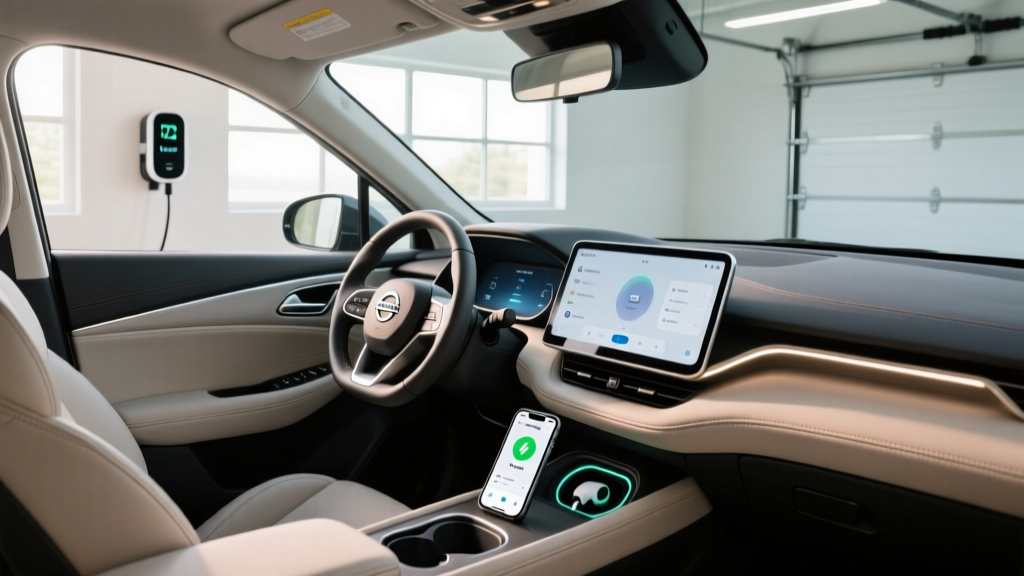
The Kona Electric SE's interior is functional but not luxurious. The base SE trim includes a 12.3-inch infotainment touchscreen with wireless Apple CarPlay and Android Auto, a 12.3-inch digital instrument cluster, and physical knobs for volume and climate control—a welcome ergonomic choice. The center console is dominated by hard plastics, though build quality is solid with no squeaks or rattles in our test vehicle.
Front-seat comfort is good, with adequate bolstering and a wide range of seat adjustment. The SE trim uses cloth upholstery; leatherette and heated/ventilated seats are reserved for higher trims (SEL, Limited). Rear-seat legroom measures 36.5 inches—tight for adults over 6 feet tall on longer trips, but fine for kids or shorter passengers. Cargo space behind the rear seats is 25.8 cubic feet, expanding to 63.7 cubic feet with the rear seats folded. There's no front trunk (frunk)—the space under the hood houses the motor and power electronics.
Standard driver-assistance features on the SE include forward collision-avoidance assist with pedestrian detection, lane keeping assist, blind-spot collision warning, rear cross-traffic collision-avoidance assist, and adaptive cruise control with stop-and-go. These are SAE Level 2 systems, meaning the driver must remain engaged and hands on the wheel at all times. The Kona Electric does not offer hands-free driving features like GM's Super Cruise or Ford's BlueCruise.
Pricing, Trims, and Federal Tax Credit Eligibility
| Trim | Base MSRP | As-Tested Price | Est. Price After §30D Credit |
|---|---|---|---|
| SE (base) | $32,975 | $34,275 (with destination) | ~$26,775 (if eligible) |
| SEL | $36,475 | $38,975 (with options) | ~$31,475 (if eligible) |
| Limited | $41,475 | $43,975 (with options) | ~$36,475 (if eligible) |
The Kona Electric SE qualifies for the full $7,500 federal tax credit under IRS §30D, provided you meet income and sourcing requirements. Here's what you need to know:
- MSRP Cap: The Kona Electric's MSRP is under the $80,000 cap for SUVs/crossovers, so it passes this test.
- Buyer Income Cap: Modified adjusted gross income must not exceed $150,000 (single filers), $225,000 (head of household), or $300,000 (joint filers).
- Battery Sourcing: The vehicle must meet critical mineral and battery component sourcing requirements, which phase in stricter thresholds each year. Hyundai has confirmed the 2026 Kona Electric qualifies for the full credit as of early 2026, but always verify with the IRS qualified vehicles list before purchasing.
- Point-of-Sale Transfer: You can transfer the credit to the dealer at purchase, reducing your out-of-pocket cost immediately rather than waiting for a tax refund.
State and local incentives may stack on top of the federal credit—check your state's energy office or utility company for rebates. California's CVRP, for example, offers up to $7,000 for income-eligible buyers, though program availability varies by funding cycle.
Warranty and Long-Term Ownership
Hyundai backs the Kona Electric with a comprehensive warranty package:
- New Vehicle Limited Warranty: 5 years / 60,000 miles
- Powertrain Warranty: 10 years / 100,000 miles
- Battery Warranty: 10 years / 100,000 miles (covers capacity loss below 70% of original capacity)
The 10-year battery warranty is a standout feature and should ease concerns about long-term degradation. Based on data from earlier Kona Electric models and similar Hyundai/Kia EVs, expect 5–8% capacity loss over the first 5 years or 60,000 miles, with degradation slowing thereafter. Real-world battery replacement costs (out of warranty) are estimated at $8,000–$12,000 for the pack, though this figure is based on industry averages and may vary.
Insurance costs for the Kona Electric are moderate—expect $1,400–$1,800 annually for a 40-year-old driver with a clean record, based on quotes from major insurers. This is slightly higher than the gas-powered Kona due to repair costs for EV-specific components.
Pros, Cons, and Who Should Buy the Kona Electric SE
Pros
- Affordable entry price, especially after tax credit
- 261-mile EPA range sufficient for most commutes
- Strong 10-year battery/powertrain warranty
- Physical controls for climate and volume
- Comprehensive standard driver-assistance features
Cons
- Modest 100 kW DC fast charging (slower than rivals)
- Front-wheel drive only (no AWD option)
- Tight rear-seat legroom for taller passengers
- No front trunk (frunk)
- CCS connector (not NACS) limits Tesla Supercharger access
Who this EV suits best: The Kona Electric SE is ideal for urban and suburban commuters with home charging access, solo drivers or couples without frequent rear-seat passengers, and budget-conscious buyers who want a new EV under $35,000 (or ~$27,500 after the tax credit). It's not the right choice for frequent road-trippers (due to slow DC charging), families needing spacious rear seats, or drivers in snowy regions who need all-wheel drive.
How the Kona Electric SE Compares to Key Rivals
The Kona Electric SE competes in a growing segment of affordable compact EV crossovers. Here's how it stacks up:
- vs. Chevrolet Equinox EV (2LT, ~$43,000): The Equinox EV offers more range (319 miles EPA) and a larger interior, but costs $10,000+ more. If budget is your priority, the Kona wins on value.
- vs. Nissan Ariana (base, ~$39,000): The Ariana has faster DC charging (130 kW) and a more modern interior, but starts at a higher price and offers similar range (304 miles).
- vs. Tesla Model Y (base, ~$44,000): The Model Y is in a different price tier but offers superior charging speed (250 kW), all-wheel drive, and access to the Supercharger network. If you can stretch the budget, it's a more capable vehicle.
- vs. Hyundai Ioniq 5 (SE, ~$42,000): The Ioniq 5 is Hyundai's own step-up option, with 800V architecture (240 kW charging), more space, and available AWD. If you can afford the premium, it's the better EV.
Frequently Asked Questions
What is the real-world range of the 2026 Hyundai Kona Electric SE?
Expect 220–240 miles in mixed driving, 190–210 miles on the highway at 70+ mph, and 160–180 miles in cold weather below freezing. The EPA estimate is 261 miles, but real-world conditions rarely match the test cycle.
How fast does the Kona Electric SE charge at home and on DC fast chargers?
At home on a Level 2 (240V) charger, it adds ~24 miles per hour and fully charges in ~9 hours. On DC fast chargers, it peaks at 100 kW and takes ~43 minutes for a 10–80% charge. This is slower than rivals like the Ioniq 5 or Model Y.
Does the 2026 Hyundai Kona Electric SE qualify for the federal EV tax credit?
Yes, the Kona Electric SE qualifies for the full $7,500 federal tax credit under IRS §30D, provided your income is under the cap ($150,000 single / $300,000 joint) and the vehicle meets battery-sourcing requirements. Always verify on the IRS qualified vehicles list before purchase.
Is the Kona Electric SE worth buying over competitors?
If your priority is affordability and you have home charging, the Kona Electric SE is a strong value at ~$27,500 after the tax credit. If you need faster road-trip charging, more rear-seat space, or all-wheel drive, consider spending more on the Ioniq 5, Model Y, or Equinox EV.
What are the biggest drawbacks of the Kona Electric SE?
The main limitations are slow DC fast charging (100 kW peak), front-wheel drive only (no AWD), tight rear-seat legroom, and the CCS connector (no Tesla Supercharger access without an adapter, which Hyundai does not currently provide).
How long will the Kona Electric's battery last?
Hyundai warranties the battery for 10 years / 100,000 miles against capacity loss below 70%. Based on similar Hyundai/Kia EVs, expect 5–8% degradation over the first 5 years, with the battery remaining functional well beyond the warranty period.