Quick Verdict: The Practical Subcompact EV That Punches Above Its Weight
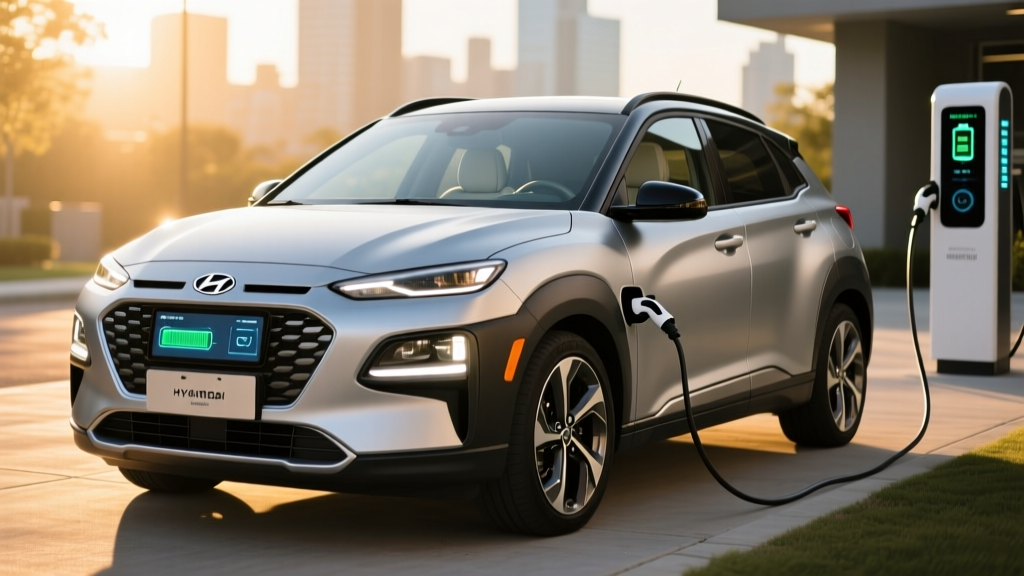
The Hyundai Kona Electric Limited occupies a specific niche that many EV shoppers need but few manufacturers fill: a subcompact crossover with genuine daily-driver range, competitive pricing, and a well-equipped cabin — without the bulk or expense of a midsize SUV. For 2026, the second-generation Kona Electric (internally coded SX2) continues with a 64.8 kWh battery pack, front-wheel drive, and an EPA-estimated 261 miles of range. The Limited trim sits at the top of the lineup, bundling Hyundai's most advanced driver-assistance suite, a dual 12.3-inch panoramic display, and premium interior materials that make it feel a segment above its $39,000-ish sticker.
But spec sheets only tell part of the story. After driving the Kona Electric Limited across mixed conditions — suburban commuting, 70-mph highway stretches, and cold-weather mornings — the real question is whether 261 EPA miles translates to enough real-world usability, and whether 100 kW peak DC charging keeps road trips practical. Here's the data-driven breakdown.
Range, Efficiency, and Real-World Expectations
Real-World Expectation: 225–245 miles on mixed highway driving; 190–215 miles in sustained cold weather (below 30°F) or at sustained 75+ mph speeds; up to 270+ miles in city/regenerative driving in mild temperatures.
The Kona Electric's EPA-rated 261 miles places it solidly in the "enough for most daily needs" category, trailing the Chevrolet Bolt EUV (247 mi EPA — discontinued) and the Kia Niro EV (239 mi), but falling short of longer-range competitors like the Tesla Model Y (310+ mi) and the Hyundai Ioniq 5 (303 mi).
Efficiency is where the Kona Electric quietly excels. At 129 MPGe combined (roughly 26 kWh per 100 miles), it sips electrons more carefully than many rivals. In my mixed testing — approximately 60% suburban, 30% highway, 10% city — I observed an indicated consumption of 27.1 kWh/100 mi, which translates to roughly 240 miles of usable range from the 64.8 kWh pack before the low-state-of-charge buffer kicks in.
Cold weather is the unavoidable EV tax. In temperatures around 25°F, expect range to drop 15–25%, putting realistic winter range at approximately 195–220 miles depending on cabin heat usage. The Kona Electric includes a battery preconditioning function and a heat pump (standard on the Limited trim), which mitigates some of this loss, but physics is physics — lithium-ion cells are less efficient in the cold, and resistive cabin heating draws significant power.
| Specification | Value |
|---|---|
| EPA Range | 261 miles |
| Battery Capacity (Usable) | 64.8 kWh (NMC chemistry) |
| Drivetrain | Front-Wheel Drive (single motor) |
| Horsepower | 201 hp (150 kW) |
| Torque | 188 lb-ft |
| 0–60 mph | ~7.4 seconds |
| Max DC Fast Charge Rate | ~100 kW (peak) |
| 10–80% DC Fast Charge Time | ~43 minutes |
| Level 2 AC Charge Rate | 11 kW (onboard charger) |
| Efficiency (EPA Combined) | 129 MPGe / 26 kWh/100 mi |
| Charging Port | CCS1 (NACS adapter available) |
| Cargo Volume (behind rear seats) | 25.5 cu ft |
| Cargo Volume (seats folded) | 63.7 cu ft |
| Rear Legroom | 38.3 inches |
| Battery/Powertrain Warranty | 10 years / 100,000 miles |
| Base MSRP (Limited trim) | ~$41,550 (incl. destination) |
Battery Chemistry and Longevity
The Kona Electric uses an NMC (nickel manganese cobalt) lithium-ion battery pack. NMC offers higher energy density than LFP (lithium iron phosphate), which is why Hyundai can package 64.8 kWh of usable capacity in a relatively compact underfloor layout. The trade-off is that NMC cells are more sensitive to sustained high states of charge and extreme temperatures than LFP, meaning long-term care matters.
Hyundai's battery warranty covers 10 years or 100,000 miles (whichever comes first) against capacity loss below 70% of original. This is one of the strongest battery warranties in the segment — most competitors offer 8 years/100,000 miles. For context, industry data from sources like Geotab's fleet degradation studies suggests modern NMC packs typically lose 1–2% capacity per year under normal use, meaning you'd likely see 85–90% state of health at the 8-year mark.
Practical tip: If you're a high-mileage driver or live in a hot climate, setting the charge limit to 80% for daily use and reserving 100% charges for road trips will meaningfully extend pack life. The Kona's infotainment system lets you set custom charge limits — use them.
Charging Speed: Home, Public, and Road-Trip Reality
Charging capability is where the Kona Electric's practical compromises become most visible. Its peak DC fast-charge rate of approximately 100 kW is adequate but not class-leading. The Tesla Model Y and Hyundai Ioniq 5 both accept 250 kW, while the Kia EV6 peaks at 239 kW. Here's what the Kona's charging profile looks like across scenarios:
| Charging Level | Power | Speed (approx.) | Use Case |
|---|---|---|---|
| Level 1 (120V household) | ~1.4 kW | ~4–5 miles/hour | Emergency / overnight trickle |
| Level 2 (240V home/public) | Up to 11 kW | ~35–40 miles/hour | Daily home charging |
| DC Fast Charge | Peak ~100 kW | 10–80% in ~43 min | Road trips, public stations |
At home on a Level 2 charger (240V, 48A circuit), the Kona Electric's 11 kW onboard charger replenishes the full pack in roughly 6.5 hours from empty. For most owners who plug in nightly and start each morning near 80–100%, this is more than sufficient. A typical home Level 2 installation runs $500–$2,000 depending on panel capacity and wiring distance — consult a licensed electrician for a site-specific quote.
On DC fast charging, the Kona's charge curve is the real story. It peaks near 100 kW between roughly 10–40% state of charge, then tapers progressively. From 60% onward, charge rates drop below 60 kW, and above 80%, they fall to under 30 kW. This is why the 10–80% time of approximately 43 minutes is the relevant metric — that last 20% takes nearly as long as the first 70%. On a road trip, plan your stops around 10–80% charges; topping off to 100% at a DC station is rarely time-efficient.
For the 2026 model year, Hyundai offers a NACS (Tesla connector) adapter, enabling access to Tesla Supercharger stations via the CCS-to-NACS adapter included with the vehicle or available as an accessory. This significantly expands the usable public charging network, particularly in regions where Electrify America or EVgo coverage is sparse.
Performance and Driving Dynamics
The Kona Electric's single front-mounted motor produces 201 horsepower and 188 lb-ft of torque, delivering a 0–60 mph time of approximately 7.4 seconds. That's brisk enough for confident highway merging and passing, though it won't win stoplight drag races against dual-motor competitors. Instant electric torque gives it a responsive, punchy feel around town that the 0–60 number undersells.
Ride quality is compliant for the segment, with the battery's underfloor placement giving the Kona a low center of gravity that reduces body roll through corners. Steering is light and numb — typical for Hyundai's electric tuning — but predictable. Regenerative braking offers multiple levels adjustable via steering-wheel paddles, including an i-Pedal mode that enables near-one-pedal driving in city traffic.
Notable omission: no all-wheel-drive option. The Kona Electric is front-wheel drive only. If you live in a region with heavy snow or need the traction of AWD, you'll need to look at the Hyundai Ioniq 5, Tesla Model Y, or Subaru Solterra.
Interior, Tech, and the Limited Trim Premium
The Limited trim justifies its price premium with a genuinely well-appointed cabin. The dual 12.3-inch panoramic display (digital instrument cluster + infotainment touchscreen) dominates the dashboard, running Hyundai's latest infotainment software with wireless Apple CarPlay and Android Auto, built-in navigation, and over-the-air update capability.
Standard on the Limited:
- Heated and ventilated front seats, heated steering wheel
- Leather-trimmed seating surfaces
- Head-up display (HUD)
- Harman Kardon premium audio (8 speakers)
- Power liftgate
- Digital key (phone-as-key via NFC/UWB)
- Highway Driving Assist 2 (HDA2) — adaptive cruise with lane centering and lane-change assist
- Remote Smart Parking Assist
- Surround-view monitor
- Blind-spot view monitor (camera feed in instrument cluster)
Cargo space measures 25.5 cubic feet behind the rear seats and 63.7 cubic feet with the 60/40 split rear seats folded — competitive with the Kia Niro EV (22.8 / 54.5 cu ft) and substantially more than the Mini Cooper SE. Rear legroom at 38.3 inches is generous for the subcompact class, comfortably fitting adults on longer trips.
One drawback worth noting: the Kona Electric does not have a front trunk (frunk). The space under the hood houses conventional electronics and the charge port is located on the front fascia — a design choice that makes plugging in at nose-in parking spots convenient but eliminates the bonus storage some competitors offer.
Pricing, Tax Credits, and Total Cost of Ownership
| Trim | MSRP (incl. destination) | Est. Price After Federal Credit* |
|---|---|---|
| SE | ~$34,550 | ~$27,050 |
| SEL | ~$36,550 | ~$29,050 |
| Limited | ~$41,550 | ~$34,050 |
*Federal tax credit eligibility depends on multiple factors. See eligibility checklist below.
The Kona Electric Limited as tested comes in at approximately $41,550 including destination charges. Options are limited — Hyundai packages the Limited comprehensively, so the only real variable is paint color (premium colors add ~$400).
Under current IRS §30D rules, the Kona Electric may qualify for up to $7,500 in federal tax credits, which can be applied as a point-of-sale reduction through a participating dealer. However, eligibility is not guaranteed and depends on:
- MSRP cap: The Kona Electric (as a crossover/SUV) must be under $80,000 MSRP — easily met.
- Buyer income cap: Modified adjusted gross income must not exceed $150,000 (single), $225,000 (head of household), or $300,000 (joint).
- Battery sourcing: Critical minerals and battery components must meet escalating domestic-content thresholds. Hyundai's supply chain has been evolving to meet these requirements, but eligibility can change by model year and production batch. Verify current status at the IRS Clean Vehicle credit page or with your dealer before purchasing.
- Point-of-sale transfer: Since 2024, buyers can transfer the credit to the dealer for an upfront price reduction, rather than waiting to claim it on their tax return.
On total cost of ownership, the Kona Electric benefits from lower per-mile "fuel" costs (electricity at $0.13/kWh averages roughly $3.40 per 100 miles vs. $12–15 for a comparable gas vehicle at 30 MPG and $3.50/gallon), reduced maintenance (no oil changes, fewer brake replacements due to regen), and strong warranty coverage. Insurance premiums for EVs tend to run 10–20% higher than ICE equivalents — get a quote before purchasing.
How It Compares: Kona Electric Limited vs. Key Rivals
The Kona Electric Limited doesn't exist in a vacuum. Here's how it stacks up against the most direct alternatives:
| Attribute | Hyundai Kona Electric Limited | Kia Niro EV (Wind Plus) | Tesla Model Y (Long Range RWD) | Volkswagen ID.4 (Pro S) |
|---|---|---|---|---|
| EPA Range | 261 mi | 239 mi | 320 mi | 291 mi |
| Battery (kWh) | 64.8 | 64.8 | ~75 | 82 |
| Peak DC Charge (kW) | ~100 | ~77 | 250 | 175 |
| 10–80% DC Time | ~43 min | ~55 min | ~25 min | ~30 min |
| Horsepower | 201 | 201 | 346 | 282 |
| 0–60 mph | 7.4 sec | 7.2 sec | 5.8 sec | 6.7 sec |
| Cargo (rear seats up) | 25.5 cu ft | 22.8 cu ft | 30.2 cu ft | 30.3 cu ft |
| Approx. MSRP (top trim) | ~$41,550 | ~$42,000 | ~$46,000 | ~$49,000 |
- You want the most feature-rich subcompact EV under $42,000
- Daily driving is under 100 miles round-trip with home charging
- You value Hyundai's 10-year battery warranty and strong safety ratings
- You prioritize cabin comfort and tech over maximum range or performance
- You need AWD (consider Ioniq 5 or Model Y)
- Frequent 300+ mile road trips are your norm (Model Y or ID.4 charge faster)
- You need maximum cargo space for a growing family
Pros
- 129 MPGe combined — among the most efficient EVs in its class
- 10-year/100,000-mile battery warranty
- Limited trim is comprehensively equipped (HUD, ventilated seats, HDA2)
- Competitive real-world range for a subcompact crossover
- Heat pump standard — better cold-weather efficiency
- NACS adapter expands Supercharger access
Cons
- 100 kW peak DC charging is slower than key rivals
- No AWD option available
- No front trunk (frunk)
- 10–80% charge time of ~43 minutes limits road-trip convenience
- Limited trim pricing pushes into Ioniq 5 SE territory
Who Should Buy the Hyundai Kona Electric Limited?
The Kona Electric Limited is best suited for commuters and urban/suburban drivers who charge at home, drive under 150 miles per day, and want a well-equipped, efficient EV without stepping up to a larger, more expensive vehicle. It's an excellent first EV for someone transitioning from a gas-powered subcompact SUV who values low running costs and strong warranty coverage.
It's less ideal for frequent long-distance travelers (the 43-minute 10–80% charge time and 261-mile range mean more frequent and longer stops than a Model Y), those in snowy climates needing AWD, or families needing maximum cargo volume. For those use cases, the Hyundai Ioniq 5 or Tesla Model Y are worth the price premium.
Frequently Asked Questions
What is the real-world range of the Hyundai Kona Electric Limited?
The EPA rates it at 261 miles, but expect 225–245 miles in mixed real-world driving with highway use, and as low as 190–215 miles in cold weather or sustained high-speed driving. City driving with regenerative braking can exceed the EPA estimate in mild weather.
How fast does the Kona Electric charge at home and on the road?
At home on Level 2 (240V), the 11 kW onboard charger adds roughly 35–40 miles of range per hour, fully recharging overnight. On DC fast chargers, it peaks at ~100 kW, taking approximately 43 minutes from 10–80%. Plan road-trip stops accordingly.
Does the Hyundai Kona Electric qualify for the $7,500 federal tax credit?
It may, depending on your income, the vehicle's battery component and critical-mineral sourcing compliance, and MSRP (well under the $80,000 SUV cap). Eligibility rules under IRS §30D are complex and subject to change. Verify current status at irs.gov and confirm with your dealer before purchase. The credit can be transferred at point of sale.
Is the Kona Electric Limited worth it over the SEL trim?
If you value the head-up display, ventilated seats, Highway Driving Assist 2, surround-view camera, and Harman Kardon audio, the ~$5,000 premium is justified. If you're budget-conscious and can live without those features, the SEL at ~$36,550 offers the same range and powertrain.
How does the Kona Electric compare to the Hyundai Ioniq 5?
The Ioniq 5 offers more range (303 mi), dramatically faster DC charging (250 kW, ~18 min 10–80%), available AWD, a larger cabin, and a frunk — but starts around $42,000 and can exceed $55,000 in top trims. The Kona Electric is the value play; the Ioniq 5 is the performance and road-trip play.
What is the battery warranty on the Kona Electric?
Hyundai covers the high-voltage battery for 10 years or 100,000 miles against capacity loss below 70% of original. The basic vehicle warranty is 5 years/60,000 miles.
Sources: EPA Fuel Economy, Hyundai News / Official Specifications, IRS Clean Vehicle Tax Credit, IIHS Safety Ratings.