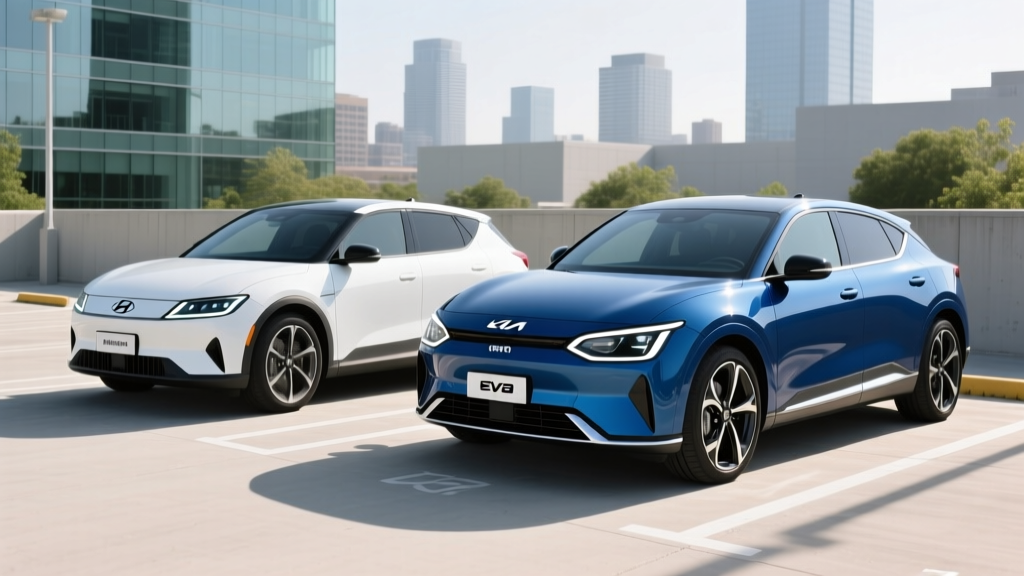
Hyundai and Kia EV sales in the US have reached a critical inflection point in 2026. With the opening of the Hyundai Motor Group Metaplant America (HMGMA) in Georgia, both brands have moved from import-dependent challengers to domestic-production powerhouses — a shift that directly affects pricing, availability, and federal tax credit eligibility for American buyers.
If you've been tracking Hyundai Kia EV sales US trends, you've likely noticed the Ioniq 5 and EV6 dominating the conversation. These sibling vehicles share the E-GMP platform and 800V architecture but target different buyer sensibilities. This guide breaks down exactly what you get, what you'll pay, and how these EVs perform in the real world — not just on the spec sheet.
2026 Hyundai Ioniq 5: The Retro-Futurist Daily Driver
The 2026 Ioniq 5 continues to anchor Hyundai's EV lineup. Built now in Georgia alongside the Ioniq 9, the US-assembled Ioniq 5 qualifies for the full federal tax credit under current §30D rules — a major advantage over competitors still reliant on overseas battery sourcing.
| Spec | SE/SEL RWD | SEL/Limited AWD |
|---|---|---|
| EPA Range | 303 miles | 260 miles |
| Battery (usable) | 84.0 kWh (NMC) | 84.0 kWh (NMC) |
| Horsepower | 168 hp | 320 hp |
| 0-60 mph | 7.4 sec | 4.5 sec |
| Drivetrain | Rear-Wheel Drive | Dual-Motor AWD |
| MPGe (combined) | 114 MPGe | 98 MPGe |
| Efficiency | 29 kWh/100 mi | 34 kWh/100 mi |
| Max DC Fast Charge | ~235 kW (peak) | ~235 kW (peak) |
| 10-80% DC Time | ~18 minutes | ~18 minutes |
| Level 2 Home Charge | 10.9 kW (~44 mi/hr) | 10.9 kW (~44 mi/hr) |
| Cargo Volume | 27.2 cu ft (rear up) / 59.3 cu ft (rear down) | 27.2 / 59.3 cu ft |
| Rear Legroom | 39.4 inches | 39.4 inches |
| Base MSRP | $42,600 | $50,100 |
2026 Kia EV6: The Performance-Oriented Sibling
The Kia EV6 shares the E-GMP platform and 800V electrical architecture with the Ioniq 5 but wraps it in a sleeker, more performance-forward package. The GT variant competes directly with the Tesla Model 3 Performance and Porsche Taycan on acceleration, while the standard trims serve as practical daily drivers.
| Spec | Light/Wind RWD | GT-Line AWD | GT |
|---|---|---|---|
| EPA Range | 310 miles | 252 miles | 206 miles |
| Battery (usable) | 77.4 kWh (NMC) | 77.4 kWh (NMC) | 77.4 kWh (NMC) |
| Horsepower | 167 hp | 320 hp | 576 hp |
| 0-60 mph | 7.3 sec | 4.6 sec | 3.4 sec |
| Drivetrain | RWD | Dual-Motor AWD | Dual-Motor AWD |
| MPGe (combined) | 117 MPGe | 99 MPGe | 85 MPGe |
| Max DC Fast Charge | ~235 kW (peak) | ~235 kW (peak) | ~235 kW (peak) |
| 10-80% DC Time | ~18 minutes | ~18 minutes | ~18 minutes |
| Level 2 Home Charge | 10.9 kW (~41 mi/hr) | 10.9 kW (~41 mi/hr) | 10.9 kW (~41 mi/hr) |
| Cargo Volume | 24.4 cu ft / 50.2 cu ft | 24.4 / 50.2 cu ft | 24.4 / 50.2 cu ft |
| Rear Legroom | 39.0 inches | 39.0 inches | 39.0 inches |
| Base MSRP | $42,900 | $52,200 | $61,600 |
Charging: The 800V Architecture Advantage
Both the Ioniq 5 and EV6 use Hyundai Motor Group's 800V electrical architecture, which enables peak DC fast-charge rates around 235 kW at compatible 350 kW chargers (such as Electrify America's latest stalls). Here's what that means in practice:
| Charging Level | Power / Rate | Time or Miles Added |
|---|---|---|
| Level 1 (120V household) | ~1.4 kW | ~5 miles per hour |
| Level 2 (240V home, 48A) | 10.9 kW | ~41-44 miles per hour; full charge in ~8 hours |
| DC Fast (50 kW station) | 50 kW | 10-80% in ~55 minutes |
| DC Fast (150 kW station) | ~150 kW (sustained) | 10-80% in ~25 minutes |
| DC Fast (350 kW station) | ~235 kW (peak, tapering) | 10-80% in ~18 minutes |
Charging curve reality: The 235 kW peak rate holds roughly from 10% to 55% SoC, then tapers progressively. From 80% to 100%, charging slows dramatically — adding that final 20% can take as long as the 10-80% session itself. For battery longevity and time efficiency, plan your road-trip stops around the 10-80% window.
A key advantage of the 800V system is that even at 150 kW chargers (still the majority of US public infrastructure), both vehicles charge near their maximum acceptance rate. You don't need a 350 kW stall to get good speeds — a significant practical advantage over 400V competitors that bottleneck at lower-power stations.
Federal Tax Credit & Pricing: What You'll Actually Pay
The domestic production shift has been the single biggest factor in Hyundai and Kia EV sales in the US market. With the Ioniq 5 now assembled in Georgia and the EV6 expected to follow, the §30D federal tax credit picture has improved dramatically versus 2023-2024, when Korean-built models were excluded.
| Model / Trim | Base MSRP | §30D Credit Eligibility | Effective Price (est.) |
|---|---|---|---|
| Ioniq 5 SE RWD | $42,600 | Up to $7,500 (battery sourcing + income rules apply) | ~$35,100 |
| Ioniq 5 SEL AWD | $50,100 | Up to $7,500 (MSRP under $55K SUV cap ✓) | ~$42,600 |
| Ioniq 5 Limited AWD | $58,100 | Exceeds $55K SUV MSRP cap — NOT eligible | $58,100 |
| EV6 Light RWD | $42,900 | Up to $7,500 (sourcing rules apply) | ~$35,400 |
| EV6 GT-Line AWD | $52,200 | Up to $7,500 (MSRP under $55K SUV cap ✓) | ~$44,700 |
| EV6 GT | $61,600 | Exceeds $55K SUV MSRP cap — NOT eligible | $61,600 |
- MSRP Cap: SUVs (including crossovers like these) must be ≤ $80,000; sedans ≤ $55,000. Both the Ioniq 5 and EV6 are classified as SUVs by the IRS, so the $80,000 cap applies — making even the Limited and GT potentially eligible on price alone.
- Buyer Income Cap: AGI ≤ $150,000 (single), $225,000 (head of household), $300,000 (joint).
- Battery Sourcing: Critical minerals and battery components must meet phased-in percentage thresholds from US or FTA partners. Verify current-year compliance on IRS.gov's qualified vehicle list.
- Point-of-Sale Transfer: You can transfer the credit to the dealer at purchase, reducing your out-of-pocket cost immediately rather than waiting for tax filing.
Source: IRS Clean Vehicle Credits. Eligibility changes frequently — always confirm with your tax professional before purchasing.
Tech, Safety & Driver Assistance
Both vehicles come equipped with Hyundai Motor Group's latest ADAS suite, but there are meaningful differences in how each brand packages technology.
Hyundai Ioniq 5 highlights:
- 12.3-inch dual-screen panoramic display with wireless Apple CarPlay and Android Auto
- Highway Driving Assist 2 (HDA-2) — SAE Level 2 driver assistance with lane-centering, adaptive cruise, and lane-change assist
- Vehicle-to-Load (V2L) — power external devices (up to 3.6 kW) via interior outlet or exterior adapter
- Digital Side Mirrors (Limited trim) — camera-based mirrors reducing drag coefficient
- Augmented reality head-up display (HUD)
Kia EV6 highlights:
- 12.3-inch curved panoramic display with Kia Connect connected services
- Highway Driving Assist 2 (HDA-2) with similar Level 2 capabilities
- Remote Smart Parking Assist (GT-Line and above) — vehicle parks/unparks itself via key fob
- V2L capability (same 3.6 kW output)
- Meridian premium audio (GT-Line and GT)
Safety ratings: Both the Ioniq 5 and EV6 have earned IIHS Top Safety Pick+ awards and 5-star NHTSA overall ratings, with strong performance in the updated moderate overlap and side-impact tests.
Warranty & Long-Term Ownership
Hyundai and Kia offer identical powertrain and battery warranties — and they remain among the best in the industry:
- Battery warranty: 10 years / 100,000 miles (capacity retention threshold: 70% of original capacity)
- Powertrain warranty: 10 years / 100,000 miles
- Bumper-to-bumper: 5 years / 60,000 miles
- Roadside assistance: 5 years / unlimited miles
- Complimentary maintenance: 3 years / 36,000 miles (Hyundai); varies by Kia dealer
The NMC battery chemistry in both vehicles has demonstrated moderate degradation in real-world fleet data — approximately 5-8% capacity loss over the first 100,000 miles, based on owner-reported data from early 2022-2023 model-year vehicles. This is within expected norms for liquid-cooled NMC packs and well within the 70% warranty threshold.
Ioniq 5 vs. EV6: Which Should You Buy?
Ioniq 5 — Choose This If:
- You prioritize maximum cargo space (27.2 cu ft vs 24.4)
- You prefer an upright, airy cabin with excellent outward visibility
- You want the most range-per-dollar in the AWD configuration
- You value Hyundai's slightly more conservative, commuter-friendly suspension tuning
- Retro design language appeals to you
EV6 — Choose This If:
- You want a sportier driving experience with sharper steering response
- The GT variant's 576 hp and 3.4-second 0-60 excite you
- You prefer a lower, sleeker crossover-coupe profile
- Remote Smart Parking Assist is a priority for tight urban garages
- You value Kia's slightly more aggressive regenerative braking calibration (i-Pedal mode)
Competitor Comparison: How They Stack Up
The Ioniq 5 and EV6 don't exist in a vacuum. Here's how they compare to key rivals on the specs that matter most:
| Vehicle | EPA Range | 10-80% DC | Base MSRP | §30D Credit |
|---|---|---|---|---|
| Hyundai Ioniq 5 SE RWD | 303 mi | ~18 min | $42,600 | Up to $7,500 |
| Kia EV6 Wind RWD | 310 mi | ~18 min | $42,900 | Up to $7,500 |
| Tesla Model Y LR AWD | 320 mi | ~25 min | $44,990 | Up to $7,500 |
| Ford Mustang Mach-E Premium | 290 mi | ~33 min | $45,995 | Up to $7,500 |
| VW ID.4 Pro S | 291 mi | ~28 min | $44,995 | Up to $7,500 |
The E-GMP platform's 10-80% charge time of approximately 18 minutes remains a class-leading figure. The Tesla Model Y charges on the Supercharger network (reliability advantage) but at a slower peak rate. The Mach-E and ID.4 trail noticeably on DC fast-charge speed — a factor that compounds on road trips.
Frequently Asked Questions
What is the real-world range of the Ioniq 5 and EV6?
The Ioniq 5 RWD delivers approximately 240-270 miles on the highway (EPA 303). The EV6 Wind RWD yields 250-280 highway miles (EPA 310). AWD trims lose 15-20% versus their EPA figures on the highway, and cold weather (below 30°F) reduces range by an additional 20-30% across all trims. Plan conservatively — the EPA sticker is a best-case scenario, not a guarantee.
How fast do these vehicles charge at home and on the road?
At home on a Level 2 (240V/48A) charger, both add approximately 41-44 miles of range per hour, with a full charge taking about 8 hours. On DC fast chargers, they peak at roughly 235 kW, achieving 10-80% in about 18 minutes at a 350 kW station. At the more common 150 kW stations, expect 10-80% in approximately 25 minutes. The 800V architecture means you get excellent speeds even at mid-tier chargers.
Do the Ioniq 5 and EV6 qualify for the $7,500 federal EV tax credit?
Most trims do, but eligibility depends on your income (AGI ≤ $300,000 joint), the specific trim's MSRP, and current battery-sourcing compliance. The Ioniq 5 SE ($42,600) and EV6 Wind ($42,900) clearly qualify on price. Higher trims like the Ioniq 5 Limited and EV6 GT may qualify under the IRS's SUV classification ($80,000 cap), but always verify on the IRS qualified vehicles list and consult a tax professional. The credit can be transferred to the dealer at point of sale.
Is the Ioniq 5 or EV6 worth buying over a Tesla Model Y?
It depends on your priorities. The Model Y offers more range (320 mi EPA), access to the Supercharger network (still the gold standard for reliability), and over-the-air updates. The Ioniq 5 and EV6 counter with faster DC charging (18 vs ~25 minutes), V2L capability, more traditional interior controls, and — for many buyers — a more comfortable ride. If Supercharger access is non-negotiable for your road-trip routes, the Model Y wins. If you value charge speed, interior quality, and don't mind planning around Electrify America or other networks, the E-GMP siblings are compelling alternatives.
What are the biggest pros and cons of the E-GMP platform?
Pros: Class-leading 800V fast charging, spacious flat-floor interior, excellent safety ratings, strong warranty (10yr/100k battery), V2L capability, competitive real-world range.
Cons: No front trunk (frunk) on most trims (only a small accessory compartment), rear visibility is compromised on the EV6 due to the sloping roofline, infotainment learning curve for first-time Hyundai/Kia EV buyers, public charging network reliability outside Tesla's ecosystem remains inconsistent.
How long will the battery last?
Based on early fleet data from 2022-2023 E-GMP vehicles, NMC battery degradation averages 5-8% over the first 100,000 miles with normal charging habits (avoiding frequent 100% charges and DC fast-charging exclusively). The 10-year/100,000-mile warranty covers capacity loss below 70%. Most owners report the battery remains well above that threshold. Expect 150,000-200,000+ miles before any significant range reduction becomes noticeable.
Sources: fueleconomy.gov (EPA), IRS §30D Clean Vehicle Credits, Hyundai Motor America, Kia America. All specs reflect 2026 model-year data as of publication. Tax credit rules are subject to change — verify current eligibility before purchase.