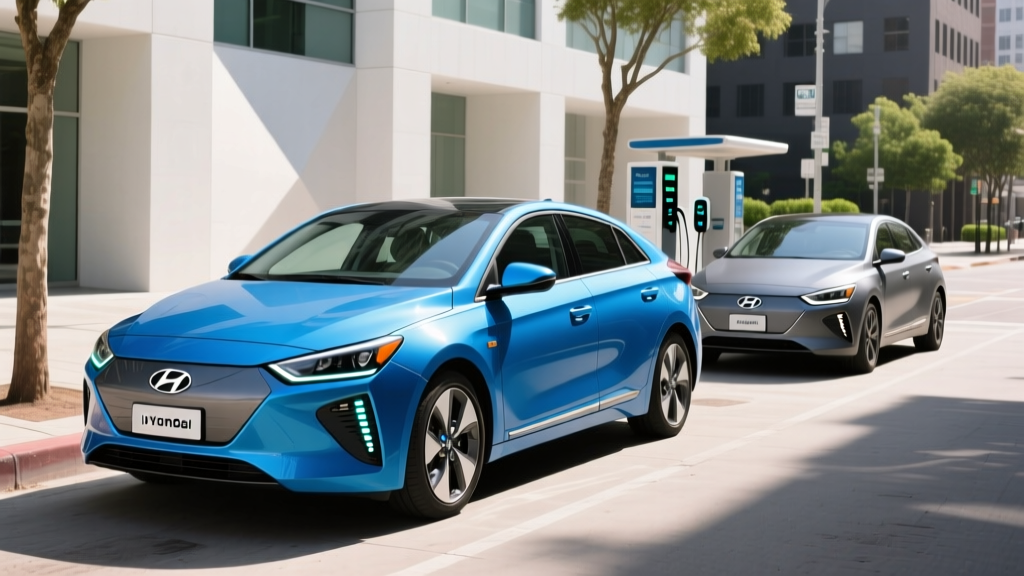
Hyundai's Ioniq sub-brand now spans three distinct electric vehicles, and leasing has become one of the most strategic ways to get behind the wheel of any of them. Whether you're eyeing the compact Ioniq 5 crossover, the aerodynamic Ioniq 6 sedan, or the three-row Ioniq 9 SUV, a lease can insulate you from EV depreciation risk while letting you lock in current incentive structures. This guide breaks down exactly what each 2026 Ioniq model delivers in range, charging performance, pricing, and real-world usability — so you can decide which lease actually makes financial sense.
2026 Hyundai Ioniq Lineup at a Glance
Before we get into leasing math, here's what you're choosing between. Hyundai currently sells three Ioniq battery-electric vehicles in the U.S., each built on the E-GMP platform with 800V electrical architecture — a rarity at these price points that enables class-leading DC fast-charging speeds.
| Spec | Ioniq 5 | Ioniq 6 | Ioniq 9 |
|---|---|---|---|
| Body Style | Compact Crossover | Midsize Sedan | 3-Row SUV |
| EPA Range (max) | 303 mi | 361 mi | 300 mi (est.) |
| Battery (usable) | 77.4 kWh (NMC) | 77.4 kWh (NMC) | 110.3 kWh (NMC) |
| Peak DC Charge | 238 kW | 238 kW | ~250 kW (est.) |
| 10–80% DC Time | ~18 min | ~18 min | ~24 min (est.) |
| Level 2 Rate | 10.9 kW (~44 mi/hr) | 10.9 kW (~44 mi/hr) | 10.9 kW (~38 mi/hr) |
| 0–60 mph | 5.1s (RWD) / 3.4s (AWD) | 6.2s (SE) / 5.1s (Limited) | ~5.5s (AWD, est.) |
| Drivetrain | RWD or AWD | RWD or AWD | AWD |
| Base MSRP | $42,600 | $37,850 | $59,900 (est.) |
Real-World Range: What the EPA Sticker Doesn't Tell You
Ioniq 5 (Long Range RWD): EPA 303 mi — expect ~265–280 mi highway, ~230–250 mi in sub-freezing temps.
Ioniq 6 (SEL RWD): EPA 361 mi — expect ~310–330 mi highway, ~270–290 mi in cold weather.
Ioniq 9 (AWD, est.): EPA ~300 mi — expect ~255–275 mi highway, ~220–240 mi in cold weather.
The Ioniq 6's teardrop shape (drag coefficient of 0.21) gives it a genuine efficiency advantage on the highway that no other Ioniq model can match. On a 70-mph cruise, the Ioniq 6 consistently returns 3.8–4.0 mi/kWh, translating to over 300 real-world miles before you'd want to stop. The Ioniq 5's boxier profile costs it roughly 15–20 miles of highway range compared to its EPA figure. The Ioniq 9, as a heavy three-row SUV, will see the largest gap between sticker and reality, particularly when loaded with passengers and cargo.
Cold-weather impact is significant across all three. Without preconditioning the battery, expect a 20–30% range reduction in temperatures below 32°F. Hyundai's heat pump (standard on Limited trims, optional on lower trims) mitigates cabin-heating energy draw but doesn't eliminate cold-induced battery resistance. Always precondition while plugged in before a winter road trip.
Charging Speed: The 800V Advantage in Practice
Hyundai's E-GMP platform supports 800V DC fast charging, which means the Ioniq 5 and 6 can accept up to 238 kW at compatible chargers. That's meaningfully faster than competitors limited to 400V architectures (typically peaking around 150 kW). Here's what that looks like across charging levels:
| Charging Level | Power | Ioniq 5 (mi added/hr) | Ioniq 6 (mi added/hr) | Ioniq 9 (mi added/hr, est.) |
|---|---|---|---|---|
| Level 1 (120V) | ~1.4 kW | ~5 mi/hr | ~6 mi/hr | ~4 mi/hr |
| Level 2 (240V, 48A) | 10.9 kW | ~44 mi/hr | ~48 mi/hr | ~38 mi/hr |
| DC Fast (350 kW station) | Peak 238 kW | 10–80% in ~18 min | 10–80% in ~18 min | 10–80% in ~24 min |
A critical caveat: that 238 kW peak only holds between roughly 10% and 40% state of charge. By 60%, the rate tapers to ~150 kW; by 80%, it drops below 80 kW. This is normal lithium-ion charge-curve behavior, but it means your actual average charging speed over a 10–80% session is closer to 160–170 kW, not the headline peak.
For home Level 2 charging, a 10.9 kW onboard charger means a full 0–100% charge takes roughly 7.5 hours for the Ioniq 5 and 6, and approximately 10.5 hours for the larger Ioniq 9 battery. Most owners charging overnight from 20% to 80% will wake up to a full daily-usable charge in under 5 hours. Installation of a 240V/48A home charger typically costs $800–$2,000 depending on panel capacity and conduit runs — factor this into your lease decision if you don't already have Level 2 at home.
Leasing vs. Buying: The Tax Credit Math
The federal EV tax credit landscape under IRS §30D has specific requirements that directly affect whether buying or leasing is the better move for a Hyundai Ioniq.
- MSRP Cap: SUVs (Ioniq 5, Ioniq 9) ≤ $80,000; Sedans (Ioniq 6) ≤ $55,000
- Income Cap: AGI ≤ $150K (single) / $225K (head of household) / $300K (joint)
- Battery Sourcing: Critical minerals and battery components must meet phased-in domestic/free-trade sourcing thresholds — Hyundai's Korea-sourced batteries may partially or fully disqualify some trims
- Credit Amount: Up to $7,500 ($3,750 for critical minerals + $3,750 for battery components)
- Point-of-Sale Transfer: Eligible buyers can transfer the credit to the dealer as a down-payment reduction at purchase
Here's where leasing gets interesting: under current IRS guidance, the commercial clean vehicle credit (§45W) applies to vehicles leased by a dealership or leasing company, and the lessor may pass the savings through as a lower lease payment — without the buyer-side MSRP or income caps that apply to §30D purchases. This "lease loophole" has been a major driver of Hyundai Ioniq leasing volume, since Hyundai's U.S.-built Ioniq 5 and 6 models sometimes face battery-sourcing limitations that reduce or eliminate the purchase credit, while the lease credit remains available.
| Model / Trim | Base MSRP | Est. Monthly Lease | Purchase After §30D | Lease Advantage |
|---|---|---|---|---|
| Ioniq 5 SE (RWD) | $42,600 | ~$349–$399/mo | $35,100–$42,600 | Access to full $7,500 via lessor credit regardless of buyer income/battery sourcing |
| Ioniq 6 SEL (RWD) | $42,350 | ~$329–$379/mo | $34,850–$42,350 | Lower monthly; sedan MSRP cap is $55K so purchase credit usually available |
| Ioniq 9 Limited (AWD) | ~$72,000 (est.) | ~$649–$749/mo | ~$64,500–$72,000 | Depreciation protection on higher-priced vehicle; sourcing credit more uncertain on purchase |
Important: Lease terms vary by dealer, region, money factor, and residual value. The figures above are estimates based on typical Hyundai Motor Finance lease structures. Always request a full lease breakdown showing capitalized cost, money factor, residual percentage, and any dealer markups before signing. Check current offers at Hyundai's official offers page.
Efficiency, Performance, and Daily Drivability
Efficiency separates the Ioniq 6 from the pack. According to fueleconomy.gov, the Ioniq 6 SEL RWD achieves an EPA-rated 140 MPGe combined (approximately 24 kWh/100 mi), making it one of the most efficient EVs in its class. The Ioniq 5 Long Range RWD returns 114 MPGe combined (~30 kWh/100 mi), while the AWD performance variants drop to roughly 100 MPGe. The Ioniq 9, given its mass and frontal area, is estimated around 85–95 MPGe combined.
Performance is more than adequate across the lineup:
- Ioniq 5 RWD: 168 hp, 0–60 in 7.4 seconds — brisk city acceleration, relaxed highway merging
- Ioniq 5 AWD: 320 hp, 0–60 in 5.1 seconds — genuinely quick, confident in all conditions
- Ioniq 6 Limited AWD: 320 hp, 0–60 in 5.1 seconds — same powertrain, slightly better highway stability from the lower drag coefficient
- Ioniq 9 AWD: ~379 hp (est.), 0–60 in ~5.5 seconds — impressive for a 5,500+ lb SUV
All three models feature Hyundai's Highway Driving Assist 2 (HDA2), a Level 2 driver-assistance system combining adaptive cruise control with lane-centering and lane-change assist. This is not self-driving — you must keep your hands on the wheel and eyes on the road at all times. It's a capable highway companion that reduces fatigue on long trips, comparable to Toyota's TSS 3.0 but not as permissive as GM's Super Cruise on compatible highways.
Interior Space, Cargo, and Tech
Space is where the three Ioniq models diverge sharply:
| Dimension | Ioniq 5 | Ioniq 6 | Ioniq 9 |
|---|---|---|---|
| Front Legroom | 41.7 in | 42.2 in | ~42 in (est.) |
| Rear Legroom | 39.4 in | 36.3 in | ~38 in (est.) |
| Cargo (rear seats up) | 27.2 cu ft | 12.3 cu ft | ~22 cu ft (est.) |
| Cargo (rear seats folded) | 59.3 cu ft | ~40 cu ft | ~80 cu ft (est.) |
| Frunk | 0.85 cu ft | 0.5 cu ft | ~1.5 cu ft (est.) |
The Ioniq 5 is the practicality winner for couples and small families — its flat floor (thanks to E-GMP) creates an airy cabin with generous rear legroom. The Ioniq 6 sacrifices rear headroom and trunk space to its sleek roofline; it's a driver's car, not a cargo hauler. The Ioniq 9 fills the three-row family role with available captain's chairs in the second row and a power-folding third row.
Tech highlights across the lineup include a 12.3-inch dual-screen setup (digital cluster + infotainment), wireless Apple CarPlay and Android Auto, vehicle-to-load (V2L) capability (powering devices up to 3.6 kW from the charge port or an interior outlet), and over-the-air updates. The Ioniq 5 and 9 also offer Hyundai's Digital Key 2, letting you use a smartphone or smartwatch as a key fob.
Warranty Coverage and Long-Term Confidence
Hyundai backs all Ioniq EVs with one of the strongest warranties in the segment:
- Battery: 10 years / 100,000 miles (capacity retention above 70%)
- Powertrain: 10 years / 100,000 miles
- New Vehicle: 5 years / 60,000 miles
- Roadside Assistance: 5 years / unlimited miles
For lessees on a standard 36-month lease, you'll be fully covered under the new-vehicle warranty for the entire term. The 10-year battery warranty becomes more relevant if you plan to purchase at lease-end or if you're considering a longer 48-month lease. Hyundai's NMC battery chemistry has shown strong real-world durability, with most early Ioniq 5 owners reporting less than 5% degradation at 50,000 miles based on community data.
Pros and Cons of Leasing a Hyundai Ioniq
- Access to full $7,500 commercial credit via lessor, bypassing buyer income/battery-sourcing caps
- Lower monthly payments vs. financing a purchase
- No depreciation risk — EV resale values remain volatile
- Full warranty coverage for the entire lease term
- Upgrade to newer battery/charging tech every 2–3 years
- V2L and OTA updates mean the car improves during your lease
- No equity at lease-end; purchase option may be above market value
- Mileage penalties (typically $0.20–$0.25/mi over limit)
- Cannot claim §30D purchase credit if you later buy out the lease
- Disposition fee (~$395–$495) if you don't lease another Hyundai
- Money factor (lease interest) may be higher than current auto loan APRs
- Limited customization — no wrapping, aftermarket wheels, etc.
Who Should Lease Which Ioniq?
Choose the Ioniq 5 lease if: You need a compact crossover with real cargo space (27.2 cu ft), want the broadest trim/option selection, and value the retro-futuristic design. Best all-around lease for most households.
Choose the Ioniq 6 lease if: Range is your top priority (361 mi EPA is best-in-class), you commute long distances on the highway, and you rarely haul bulky cargo. The efficiency advantage saves real money on electricity over 36 months.
Choose the Ioniq 9 lease if: You need three rows for a growing family, want to avoid the depreciation hit of a $65K+ EV purchase, and value the strongest lease-credit advantage (highest absolute dollar savings from the lessor credit).
Buy instead of leasing if: You drive under 10,000 miles/year (lease mileage minimums waste money), qualify for the full §30D credit on purchase, and plan to keep the vehicle 7+ years to ride out depreciation.
Frequently Asked Questions
Does the Hyundai Ioniq qualify for the federal EV tax credit?
It depends on how you acquire it. For purchase, the Ioniq 5 and Ioniq 6 (both now assembled in Savannah, Georgia) may qualify for up to $7,500 under §30D, but eligibility depends on your income, the specific trim's MSRP vs. the cap, and whether the battery's critical minerals and components meet current-year sourcing thresholds. For leasing, the commercial clean vehicle credit (§45W) is available to the lessor and is typically passed through as a capitalized-cost reduction — without buyer income or battery-sourcing restrictions. Always verify current eligibility with your dealer and consult a tax professional.
What is the real-world range of the Hyundai Ioniq 5 and 6?
The Ioniq 5 Long Range RWD is EPA-rated at 303 miles; expect 265–280 miles on the highway and 230–250 miles in freezing temperatures. The Ioniq 6 SEL RWD is EPA-rated at 361 miles; expect 310–330 miles highway and 270–290 miles in cold weather. These figures assume moderate driving habits — aggressive acceleration and sustained 80+ mph speeds will reduce range further.
How fast does the Hyundai Ioniq charge at home and on the road?
On a 240V Level 2 home charger, all Ioniq models charge at up to 10.9 kW, adding roughly 38–48 miles of range per hour. On a 350 kW DC fast charger, the Ioniq 5 and 6 peak at 238 kW and reach 10–80% in approximately 18 minutes. The Ioniq 9, with its larger battery, takes approximately 24 minutes for the same session. Note that charging speed tapers significantly above 80% — plan road-trip stops around 10–80% sessions for the fastest turnaround.
Is it better to lease or buy a Hyundai Ioniq in 2026?
Leasing is advantageous if you want to maximize incentive access (the lessor credit bypasses buyer-side restrictions), minimize monthly payments, avoid depreciation risk, and upgrade every 2–3 years. Buying is better if you qualify for the full purchase credit, drive low annual miles, and plan to keep the vehicle long-term. The volatile EV resale market makes leasing particularly attractive right now.
What are the biggest drawbacks of the Hyundai Ioniq lineup?
The Ioniq 6's trunk (12.3 cu ft) is surprisingly small for a midsize sedan, and rear headroom is tight for taller passengers. The Ioniq 5's frunk is nearly useless at 0.85 cu ft. None of the Ioniq models offer true hands-free driving — HDA2 requires constant supervision. Public charging reliability remains a concern in rural areas, though Hyundai's partnership with Electrify America and the growing NACS adapter ecosystem (Hyundai now includes NACS ports on newer builds) is improving access. Insurance premiums for Ioniq EVs run 10–20% above comparable gas vehicles in most states.