Hyundai's Ioniq Sub-Brand in 2026: Where Design Meets Engineering
Hyundai's Ioniq sub-brand has become one of the most recognizable names in the EV space, and the 2026 lineup — spanning the Ioniq 5 crossover, Ioniq 6 sedan, and the newly launched Ioniq 9 three-row SUV — tells a clear story about where the brand is headed. The Ioniq future design direction blends retro-futurist pixel aesthetics with aerodynamic efficiency, 800-volt architecture, and increasingly competitive pricing. But design only matters if the specs hold up. This profile breaks down the 2026 Ioniq family with the exact numbers buyers need: EPA range, real-world charging curves, battery chemistry, tax-credit eligibility, and who each model actually suits.
Rather than reviewing a single vehicle, we're treating the 2026 Ioniq lineup as a design-and-engineering case study. The pixel-light signatures, parametric surfaces, and clamshell hoods that debuted on the Ioniq 5 have now propagated across the entire family — and each model interprets that language differently based on its mission.
2026 Ioniq Lineup at a Glance: Core Specifications
| Spec | Ioniq 5 (Long Range RWD) | Ioniq 6 (Long Range SE) | Ioniq 9 (Long Range RWD) |
|---|---|---|---|
| EPA Range | 317 mi | 361 mi | 335 mi (est.) |
| Battery (usable) | 84.0 kWh (NMC) | 77.4 kWh (NMC) | 110.3 kWh (NMC) |
| Max DC Fast Charge | 240 kW (peak) | 240 kW (peak) | 240 kW (peak) |
| 10–80% DC Time | ~18 min | ~18 min | ~24 min |
| Level 2 Rate (kW) | 10.9 kW | 10.9 kW | 10.9 kW |
| 0–60 mph | 7.2 sec (RWD) | 6.2 sec (RWD) | 8.2 sec (RWD, est.) |
| Horsepower | 225 hp (RWD) | 225 hp (RWD) | 215 hp (RWD, est.) |
| MPGe (combined) | 114 MPGe | 140 MPGe | ~100 MPGe (est.) |
| Cargo (behind 2nd row) | 27.2 cu ft | 12.3 cu ft (trunk) | ~22 cu ft (est.) |
| Base MSRP | $45,500 | $42,500 | $59,900 (est.) |
| Battery Warranty | 10 yr / 100,000 mi | 10 yr / 100,000 mi | 10 yr / 100,000 mi |
Sources: EPA / fueleconomy.gov, Hyundai Newsroom. Ioniq 9 figures are preliminary estimates pending final EPA certification.
Real-World Range: What the EPA Sticker Doesn't Tell You
EPA vs. Reality — Ioniq 5 Long Range RWD: The EPA rates the Ioniq 5 at 317 miles. In real-world highway driving at 70–75 mph in moderate temperatures (55–75°F), expect roughly 265–285 miles before needing a charge. In cold weather (below 30°F), plan for 220–245 miles of usable range. The Ioniq 6's superior aerodynamics (0.21 Cd) help it hold highway efficiency better than the boxier Ioniq 5.
The Ioniq 6 Long Range SE leads the family at 361 miles EPA — one of the highest figures in any mainstream EV under $50,000. That efficiency comes from its teardrop silhouette, active air flaps, and a lower, lighter body. On a 250-mile highway trip at 72 mph in 65°F weather, the Ioniq 6 can realistically arrive with 60–80 miles remaining, which is comfortable margin.
The Ioniq 9, being larger and heavier (estimated curb weight over 5,600 lbs), trades range for three-row capacity. Its estimated 335-mile EPA figure is respectable for the segment, but real-world highway use will likely yield 270–295 miles in moderate conditions. Cold weather will push that closer to 235–260 miles — still workable for most family road trips with one DC stop.
All three use NMC (nickel manganese cobalt) chemistry, which offers higher energy density than LFP but benefits from the 20–80% daily charging window to maximize long-term battery health. Hyundai's thermal management system includes battery preconditioning, which warms the pack before DC fast charging — critical for maintaining the advertised 18-minute 10–80% time in colder weather.
Charging Speed: 800-Volt Architecture in Practice
| Level | Power / Rate | Ioniq 5 | Ioniq 6 | Ioniq 9 |
|---|---|---|---|---|
| Level 1 (120V) | ~1.4 kW | ~4 mi/hr | ~5 mi/hr | ~3 mi/hr |
| Level 2 (240V) | 10.9 kW | ~32 mi/hr | ~38 mi/hr | ~26 mi/hr |
| DC Fast (peak) | 240 kW | 10–80% ~18 min | 10–80% ~18 min | 10–80% ~24 min |
| DC Sustained (avg 10–80%) | ~175 kW | ~155 kW avg | ~150 kW avg | ~140 kW avg |
The Ioniq family's 800-volt E-GMP platform remains one of its strongest engineering advantages. While peak charge rates hit 240 kW, real-world charging curves tell a more nuanced story. The Ioniq 5 sustains roughly 180–210 kW from 10% to about 55% SoC, then tapers progressively — dropping to around 100 kW by 70% and further to 50–60 kW approaching 80%. The 18-minute 10–80% claim holds true on a 350 kW charger with a preconditioned battery in warm conditions.
On a typical 150 kW Electrify America or EVgo station, expect 10–80% in approximately 25–28 minutes for the Ioniq 5 and 6, and 32–35 minutes for the Ioniq 9. That's still class-competitive, but buyers in areas without 350 kW infrastructure should plan accordingly.
For home charging, all three accept 10.9 kW on a Level 2 circuit (48 amps on a 60-amp breaker). A full charge from 10% to 100% takes roughly 7–8 hours for the Ioniq 5 and 6, and about 10 hours for the Ioniq 9's larger pack. Hyundai includes a NACS (Tesla-style) native port on 2026 models, eliminating the need for a CCS-to-NACS adapter at Superchargers — a significant convenience upgrade over prior model years.
Design Language: Pixels, Parametrics, and Aerodynamics
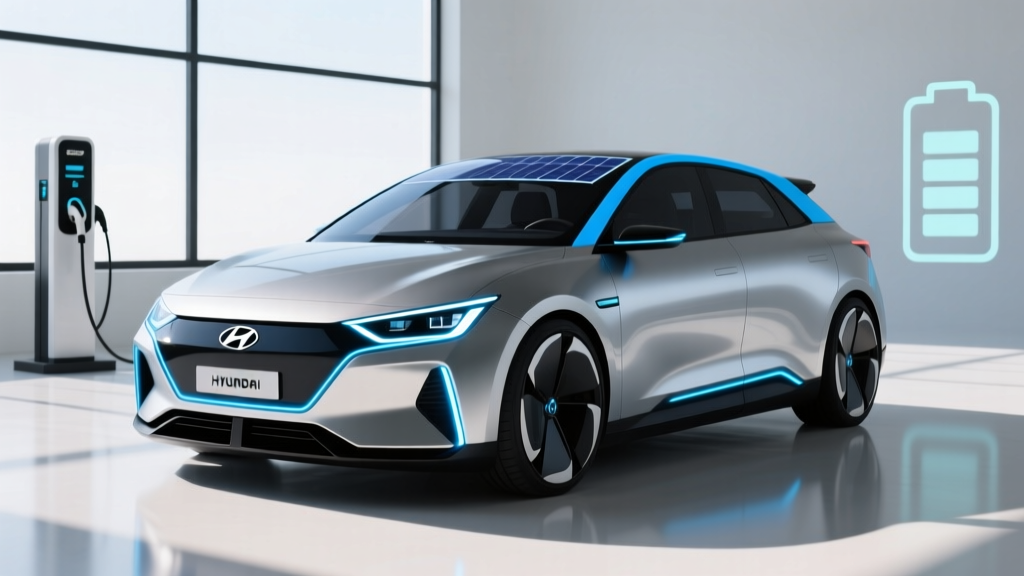
The Ioniq future design direction is rooted in what Hyundai calls "Parametric Pixel" identity — a design philosophy that uses pixelated light elements, geometric surface treatments, and retro-digital cues to create instant brand recognition. The Ioniq 5 debuted this language with its wedge-shaped profile and pixel LED clusters inspired by the 1974 Pony. By 2026, that language has matured across three distinct body styles.
The Ioniq 5 leans into a "living space" interior concept with a flat floor, sliding center console, and lounge-like seating. Cargo space measures 27.2 cubic feet behind the second row (59.3 cu ft with seats folded), plus a 0.85 cu ft frunk on AWD models and 2.0 cu ft on RWD. Rear legroom is an exceptional 39.4 inches — competitive with midsize SUVs a class above.
The Ioniq 6 takes the pixel theme and stretches it into a streamlined fastback. The result is the most aerodynamic vehicle Hyundai has ever produced (0.21 drag coefficient), but the tradeoff is a relatively modest 12.3 cu ft trunk. The Ioniq 6 is the commuter's choice — outstanding efficiency, whisper-quiet at highway speeds, and a cabin that prioritizes the driver with a curved dual-screen cockpit.
The Ioniq 9, launched for the 2026 model year, scales the pixel design up to a full-size three-row SUV. Its upright stance sacrifices some aerodynamic efficiency but delivers the passenger volume families need. Hyundai positions it as a premium alternative to the Kia EV9 with a more futuristic, less traditional SUV aesthetic. Estimated cargo behind the second row is approximately 22 cu ft, expanding to over 80 cu ft with both rear rows folded.
Pricing, Tax Credits, and Total Value
| Model / Trim | Base MSRP | As-Tested (AWD/Limited) | §30D Credit Eligibility |
|---|---|---|---|
| Ioniq 5 SE Standard Range | $42,500 | — | Eligible (up to $7,500)* |
| Ioniq 5 SEL AWD | $48,200 | $52,500 | Eligible (up to $7,500)* |
| Ioniq 6 SE Long Range | $42,500 | — | Eligible (up to $7,500)* |
| Ioniq 6 Limited AWD | $52,300 | $55,800 | Eligible (up to $7,500)* |
| Ioniq 9 Long Range RWD | $59,900 (est.) | $70,500 (est.) | Eligible (up to $7,500)* |
*IRS §30D Federal Tax Credit Rules (2026): Eligibility for the full $7,500 credit depends on three tests: (1) MSRP cap — SUVs/vans/pickups must be under $80,000; sedans under $55,000. The Ioniq 6 sedan must stay under $55,000 MSRP to qualify. The Ioniq 5 and 9, classified as SUVs, clear the $80,000 cap. (2) Buyer income cap — AGI must not exceed $150,000 (single), $225,000 (head of household), or $300,000 (joint). (3) Battery sourcing — critical minerals and battery components must meet phased-in domestic/FAT-partner sourcing thresholds per IRS guidelines. Hyundai has worked to shift supply chains, but buyers should verify current-year sourcing compliance on the IRS qualified vehicles list before purchase. The credit can be transferred to the dealer at point of sale as an immediate price reduction.
After the maximum $7,500 credit, an Ioniq 5 SE Standard Range effectively starts near $35,000 — making it one of the most affordable ways into an 800V, 300+ mile EV. The Ioniq 6 SE Long Range at roughly $35,000 post-credit is arguably the best efficiency-per-dollar EV on the market. The Ioniq 9, even at $52,400+ after credit, competes aggressively against the Kia EV9 and Rivian R1S on price while offering a distinctly more futuristic design.
Technology, Driver Assistance, and Notable Drawbacks
Across the 2026 lineup, Hyundai equips the Ioniq family with a 12.3-inch digital cluster and 12.3-inch infotainment touchscreen (dual-screen curved layout on Ioniq 6), wireless Apple CarPlay and Android Auto, over-the-air updates, and Hyundai Digital Key 2 (phone-as-key via NFC/UWB).
Driver assistance falls under Hyundai's Highway Driving Assist 2 (HDA2) — a solid SAE Level 2 system that handles adaptive cruise, lane centering, and lane-change assist on divided highways. It requires continuous driver supervision and does not make the vehicle self-driving. HDA2 is reliable and less aggressive than some competitors' systems, but it lacks hands-free capability on mapped highways (unlike GM's Super Cruise or Ford's BlueCruise). Hyundai's Highway Driving Assist does not permit hands-off operation.
ADAS Limitation Notice: HDA2 is an SAE Level 2 driver-assist system. The driver must remain fully attentive, keep hands on or near the wheel, and be prepared to take over at any time. This is not autonomous driving.
Notable drawbacks across the lineup:
- Ioniq 5: No rear wiper on pre-refresh models (2025+ refresh added one). Frunk is small (under 2 cu ft on RWD). Rear visibility is compromised by thick C-pillars.
- Ioniq 6: Trunk space is limited (12.3 cu ft). Rear headroom is tight for passengers over 6 feet. Touch-sensitive climate controls frustrate some users.
- Ioniq 9: Heavier weight impacts efficiency. Third-row space suits children, not adults, for long trips. Pricing climbs quickly on upper trims.
- All models: Hyundai's infotainment, while improved, still lags behind Tesla and Rivian in responsiveness and navigation integration. No native route-based battery preconditioning on all software versions — verify OTA update status.
Pros and Cons: The 2026 Ioniq Family
Pros
- 800V architecture delivers class-leading DC charge speeds (10–80% in ~18 min)
- Native NACS port on 2026 models — direct Tesla Supercharger access
- Ioniq 6 achieves 361 mi EPA / 140 MPGe — segment-leading efficiency
- 10-year/100,000-mile battery warranty — among the best in the industry
- Distinctive design language that stands out in a crowded EV market
- Competitive pricing, especially after the §30D federal tax credit
- Spacious interiors with flat floors (Ioniq 5 and 9 especially)
Cons
- HDA2 lacks hands-free highway capability (no Level 2+ hands-off)
- Ioniq 6 trunk is impractical for large cargo (12.3 cu ft)
- Ioniq 9 third row is best suited for children
- Infotainment UX not as polished as Tesla or Rivian
- Real-world highway range drops 12–18% below EPA on all models
- Battery sourcing compliance for §30D credit must be verified per model year
Who Should Buy an Ioniq — And Which One?
Choose the Ioniq 5 if: You need a practical daily-driver crossover with good cargo space (27.2 cu ft), comfortable rear seats, and fast charging for road trips. Best for couples and small families who want versatility.
Choose the Ioniq 6 if: You commute long distances, prioritize maximum range (361 mi EPA) and efficiency (140 MPGe), and don't need large cargo capacity. Best for solo drivers and couples with light cargo needs.
Choose the Ioniq 9 if: You need three rows, value futuristic design, and want a premium large SUV under $60,000 (before credit). Best for families of 5–7 who occasionally road-trip and can accept slightly lower efficiency.
The Ioniq future design direction signals Hyundai's commitment to making EVs that are visually distinctive, technically advanced, and priced to compete. The 800V platform, native NACS adoption, and competitive EPA range figures put the Ioniq family in the conversation against Tesla, Ford, Kia, and Rivian across multiple segments.
Frequently Asked Questions
What is the real-world range of the 2026 Hyundai Ioniq 5?
The EPA rates the Ioniq 5 Long Range RWD at 317 miles. In real-world highway driving at 70–75 mph in moderate temperatures, expect 265–285 miles. In cold weather below 30°F, plan for 220–245 miles of usable range before needing to charge.
How fast does the Ioniq family charge at home and on DC fast chargers?
All 2026 Ioniq models accept up to 240 kW peak DC fast charging, achieving 10–80% in approximately 18 minutes (Ioniq 5 and 6) or 24 minutes (Ioniq 9) on a 350 kW charger with a preconditioned battery. At home on a Level 2 (240V, 48-amp) circuit, they charge at 10.9 kW — adding roughly 26–38 miles of range per hour depending on the model.
How much does a 2026 Ioniq cost after federal tax credits?
With the maximum $7,500 §30D federal credit applied at point of sale, the Ioniq 5 SE Standard Range starts near $35,000, the Ioniq 6 SE Long Range near $35,000, and the Ioniq 9 near $52,400. Eligibility depends on buyer income (AGI caps), MSRP limits, and battery sourcing compliance — verify on the IRS qualified vehicles list before purchasing.
Is the Ioniq 5 worth buying over the Tesla Model Y or Kia EV6?
The Ioniq 5 offers faster DC charging (800V vs. Tesla's ~250 kW peak on Model Y), a more distinctive design, and a 10-year battery warranty vs. Tesla's 8-year/120,000-mile. The Model Y wins on Supercharger network maturity and cargo space. The Kia EV6 shares the E-GMP platform but has a sportier drive and slightly less rear headroom. The Ioniq 5 is the comfort-and-charging-speed pick; the EV6 is the handling pick; the Model Y is the network-and-cargo pick.
Does the 2026 Ioniq qualify for the federal EV tax credit?
Most 2026 Ioniq trims are expected to qualify for up to $7,500 under IRS §30D, provided the buyer meets income caps ($150K single / $300K joint AGI), the MSRP is under the applicable limit ($55K for sedans like the Ioniq 6; $80K for SUVs like the Ioniq 5 and 9), and the battery meets current-year critical mineral and component sourcing thresholds. Always verify on the IRS website before purchase, as sourcing compliance can change mid-year.
What battery chemistry do Ioniq models use?
All 2026 Ioniq models use NMC (nickel manganese cobalt) lithium-ion cells. NMC offers higher energy density than LFP, which helps achieve the long EPA range figures, but it benefits from daily charging between 20–80% SoC for optimal long-term health. Hyundai's 10-year/100,000-mile battery warranty covers capacity retention, though the specific degradation threshold (typically 70% of original capacity) should be confirmed in your purchase agreement.