The three-row electric SUV segment has no shortage of contenders, but the 2026 Hyundai Ioniq 9 arrives with a specific mandate: maximize interior volume, charging speed, and family practicality on Hyundai's E-GMP platform. With Ioniq 9 seating configurations stretching to seven passengers and a long-wheelbase architecture, Hyundai is aiming squarely at the Kia EV9, Tesla Model X, and Rivian R1S. This review breaks down the real-world range, charging behavior, seating flexibility, and ownership economics you need before putting down a deposit.
Ioniq 9 Seating Configurations and Interior Dimensions
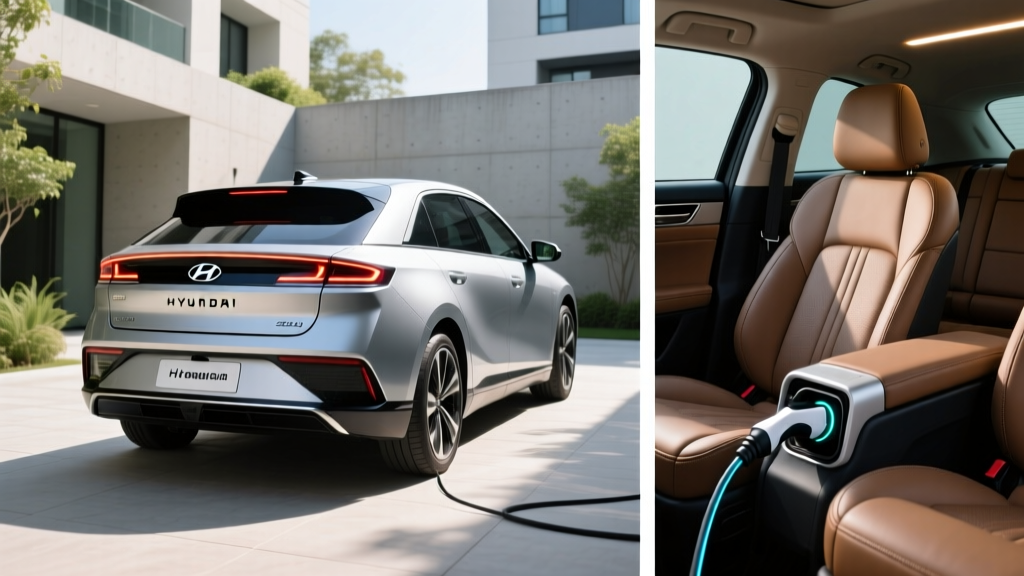
Hyundai offers the Ioniq 9 in two primary seating layouts: a six-passenger configuration with second-row captain's chairs and a seven-passenger bench setup. The captain's-chair variant (available on SEL and above trims) includes a center console between the second-row seats with cupholders and storage, while the bench configuration maximizes passenger count for larger families.
Thanks to the E-GMP platform's flat floor and a wheelbase stretching approximately 123.2 inches, the Ioniq 9 delivers genuinely usable third-row space — a common failing in three-row crossovers. Here's how the dimensions break down:
| Measurement | Specification |
|---|---|
| Seating Capacity | 6 (captain's chairs) or 7 (bench) |
| Front Headroom | 40.1 in |
| Second-Row Legroom | 41.7 in (captain's chairs, slide-adjustable) |
| Third-Row Legroom | 32.1 in |
| Cargo (behind 3rd row) | 15.9 cu ft |
| Cargo (3rd row folded) | 44.2 cu ft |
| Cargo (all rear rows folded) | 81.7 cu ft |
| Frunk (front trunk) | 1.8 cu ft (AWD) / 3.5 cu ft (RWD) |
The third row is best suited for children or adults on shorter trips — 32.1 inches of legroom is tight for six-footers on long hauls. However, the second-row seats slide fore and aft on SEL and higher trims, allowing you to trade second-row legroom for third-row comfort when needed. The 15.9 cu ft behind the third row is enough for a couple of carry-on bags and groceries, but a full family road trip will require folding at least one side of the split third row.
EPA Range, Battery, and Real-World Expectations
The 2026 Ioniq 9 uses a 110.3 kWh battery pack (usable capacity approximately 105 kWh) based on NMC (nickel-manganese-cobalt) chemistry, chosen for its higher energy density — a practical necessity in a large, heavy three-row SUV. The RWD Long Range variant achieves the highest EPA rating.
EPA Estimated Range (RWD Long Range): 311 miles
EPA Estimated Range (AWD): 282 miles
Real-World Expectations: On mixed highway driving at 70-75 mph, expect approximately 265-280 miles from the RWD model and 240-255 miles from the AWD variant. In freezing temperatures (below 32°F), plan for a 20-30% range reduction, bringing effective highway range down to roughly 195-225 miles depending on cabin heating load and terrain. The Ioniq 9's heat pump (standard on all trims) mitigates some cold-weather loss compared to resistive heating systems.
Efficiency for the RWD Long Range lands at approximately 84 MPGe combined (roughly 40 kWh/100 mi), which is respectable for a vehicle with a curb weight approaching 5,600 lbs. The AWD model drops to around 78 MPGe combined. For context, the Kia EV9 RWD achieves a similar 84 MPGe, while the heavier Rivian R1S (Dual-Motor) sits closer to 70 MPGe.
Source: fueleconomy.gov — EPA estimates for the 2026 model year.
Charging Speed: DC Fast Charge and Home Level 2
Charging speed is where the E-GMP platform's 800-volt architecture shows its advantage. Most competitors in this segment use 400-volt systems, which limits sustained charging power. The Ioniq 9 can accept significantly more power for longer during a DC fast-charge session.
| Charging Level | Power / Rate | Speed |
|---|---|---|
| Level 1 (120V household) | 1.4 kW | ~4 mi/hr |
| Level 2 (240V home, 48A) | 11.5 kW | ~32 mi/hr |
| DC Fast Charge (peak) | 210 kW | 10-80% in ~24 min |
| DC Fast Charge (sustained avg 10-80%) | ~170 kW | ~185 mi added in 24 min |
A critical nuance: the 210 kW figure is a peak, not a sustained rate. In real-world DC fast charging, the Ioniq 9 ramps quickly to ~200 kW between 10-30% State of Charge, then gradually tapers. Between 50-80%, you'll see rates closer to 130-150 kW. This taper is normal for battery longevity but means the last 30% takes disproportionately longer. For road trips, charging from 10-80% is the practical window — plan your stops around that.
At home on a 48-amp Level 2 charger (like a ChargePoint Home Flex or Hyundai's own Wallbox), a full overnight charge from 20% to 100% takes roughly 8-9 hours. If you're installing a Level 2 charger, ensure your electrical panel has capacity for a 60-amp circuit — panel upgrades can add $1,500-$3,000 to installation costs.
The Ioniq 9 ships with the NACS (North American Charging Standard) connector, granting native access to Tesla Supercharger stations (now open to non-Tesla EVs) without an adapter. This is a significant practical advantage for road-trip charging infrastructure access in 2026.
Performance and Drivetrain
| Spec | RWD Long Range | AWD (Dual Motor) |
|---|---|---|
| Horsepower | 215 hp | 379 hp |
| Torque | 258 lb-ft | 446 lb-ft |
| 0-60 mph | 7.9 sec | 5.1 sec |
| Drivetrain | Rear-Wheel Drive | Dual-Motor AWD |
| Towing Capacity | 2,000 lbs | 4,000 lbs |
| Curb Weight (approx.) | 5,400 lbs | 5,650 lbs |
The RWD model is adequate for commuting and highway merging but feels its weight around town. The AWD dual-motor variant transforms the driving character — 5.1 seconds to 60 mph in a three-row SUV is genuinely quick, and the instant torque makes highway passing effortless. Regenerative braking offers four levels adjustable via steering-wheel paddles, with Level 3 enabling near one-pedal driving in city traffic.
Towing is a practical consideration for family buyers: the AWD's 4,000-lb capacity handles a small boat or light camper trailer. The RWD's 2,000-lb limit is best reserved for a small utility trailer. Note that towing will slash range by 35-50% depending on trailer weight and aerodynamics.
Pricing, Trims, and Federal Tax Credit
Hyundai prices the Ioniq 9 across four trims, with the RWD powertrain available on the base SE and the AWD standard on upper trims:
| Trim | Drivetrain | MSRP | Est. After §30D Credit* |
|---|---|---|---|
| SE (RWD Long Range) | RWD | $52,400 | ~$44,900 |
| SEL (AWD) | AWD | $57,900 | ~$50,400 |
| Limited (AWD) | AWD | $63,500 | ~$56,000 |
| Calligraphy (AWD) | AWD | $68,900 | ~$61,400 |
*Federal tax credit estimates assume full eligibility under IRS §30D rules. Actual credit may be $0-$7,500 depending on your situation.
- MSRP Cap: SUVs/vans must be ≤$80,000 — all Ioniq 9 trims qualify ✓
- Buyer Income Cap: AGI ≤$150,000 (single) / ≤$300,000 (joint) — verify on your tax return
- Battery Sourcing: Critical minerals and battery components must meet phased-in percentages from US/FTA partners — Hyundai has been localizing supply chains, but verify current-year compliance on the IRS qualified vehicles list
- Point-of-Sale Transfer: You can transfer the credit to the dealer at purchase, reducing your out-of-pocket cost immediately (requires dealer participation and IRS registration)
- Assembly: Must be assembled in North America — the Ioniq 9 is built at Hyundai's Ellabell, GA plant ✓
Source: IRS §30D Clean Vehicle Credit. Consult a tax professional for your specific eligibility.
Technology, Safety, and Driver Assistance
The Ioniq 9's cabin tech centers on a curved panoramic display combining a 12.3-inch digital instrument cluster and a 12.3-inch infotainment touchscreen running Hyundai's latest ccNC (Connected Car Navigation Cockpit) software. Wireless Apple CarPlay and Android Auto are standard. Over-the-air updates keep the system current without dealer visits.
Notable technology features include:
- Digital Key 2: Use your smartphone or smartwatch to unlock and start the vehicle, shareable with family members
- Highway Driving Assist 2 (HDA2): Adaptive cruise + lane centering with lane-change assist — this is an SAE Level 2 system requiring full driver attention
- Remote Smart Parking Assist: Move the Ioniq 9 in and out of tight spaces via key fob (available on Limited/Calligraphy)
- V2L (Vehicle-to-Load): Power external devices up to 3.6 kW via interior and exterior outlets — useful for camping, tailgating, or emergency backup power
- Highway Driving Assist with lane-change function on navigation-based routes (Limited and above)
Safety ratings from NHTSA and IIHS for the 2026 Ioniq 9 were pending at publication. The E-GMP platform's structural rigidity and standard suite of front, side, and curtain airbags (including second-row side airbags) provide a strong safety foundation.
Pros, Cons, and Who Should Buy
Pros
- 800V architecture enables 10-80% DC charging in ~24 min
- NACS connector = native Tesla Supercharger access
- Usable third-row seating with slide-adjustable second row
- Strong value vs. Tesla Model X and Rivian R1S
- V2L capability for outdoor and emergency use
- Heat pump standard across all trims
- US-built (Georgia plant), supporting §30D eligibility
Cons
- RWD base model feels underpowered for a 5,400-lb vehicle
- Third-row legroom (32.1 in) is tight for adults on long trips
- Cargo behind 3rd row (15.9 cu ft) is modest for the class
- AWD range drops to 282 mi EPA — real-world highway ~240 mi
- Towing capacity (4,000 lbs AWD) trails some body-on-frame SUVs
- Frunk is small (3.5 cu ft RWD) due to HVAC equipment
- No Level 3 or hands-free driving option available
Who the Ioniq 9 Suits Best
Ideal for: Families of 4-5 who need occasional third-row seating for carpools or visiting relatives, prioritize fast DC charging for road trips, and want native Supercharger access. The SEL AWD trim hits the sweet spot for all-weather capability with reasonable range.
Less ideal for: Buyers who regularly carry 6-7 adults (the third row is kid-focused), those who need maximum cargo volume behind all rows, or anyone prioritizing a hands-free driving experience (BlueCruise on the Ford Explorer EV or Super Cruise on the Cadillac Escalade IQ offer that capability, though still Level 2).
Consider the Kia EV9 instead if: You want a slightly lower entry price and similar E-GMP underpinnings, or prefer Kia's styling. The Ioniq 9 edges ahead on charging speed and second-row flexibility.
Warranty and Ownership Costs
Hyundai backs the Ioniq 9 with one of the strongest warranties in the segment:
| Coverage | Term |
|---|---|
| Battery (capacity retention ≥70%) | 10 years / 100,000 miles |
| Electric Powertrain (motor, inverter) | 10 years / 100,000 miles |
| New Vehicle Limited | 5 years / 60,000 miles |
| Roadside Assistance | 5 years / unlimited miles |
| Complimentary Maintenance | 3 years / 36,000 miles |
The 10-year/100,000-mile battery warranty with a 70% capacity retention threshold is among the best available. For context, Tesla covers its battery packs at 8 years/120,000-150,000 miles (depending on model) with the same 70% threshold. Hyundai's extra two years of coverage provides meaningful peace of mind for a vehicle in this price range.
Estimated annual charging costs (based on $0.16/kWh national average and 12,000 mi/yr) run approximately $640-$720 for the RWD model — roughly 60-65% less than a comparable gasoline three-row SUV at $3.50/gallon.
Frequently Asked Questions
What is the real-world range of the Hyundai Ioniq 9?
The EPA rates the RWD Long Range at 311 miles and the AWD at 282 miles. In real-world highway driving at 70-75 mph, expect approximately 265-280 miles (RWD) or 240-255 miles (AWD). In cold weather below freezing, subtract 20-30% from those figures. The heat pump helps, but cabin heating and battery warming still consume significant energy.
How fast does the Ioniq 9 charge at home and on the road?
At home on a 240V Level 2 charger (48 amps), the Ioniq 9 adds about 32 miles of range per hour, fully charging overnight in 8-9 hours. On a DC fast charger, it peaks at 210 kW and charges from 10-80% in approximately 24 minutes, adding roughly 185 miles of range in that window. The 800-volt architecture gives it a meaningful edge over 400V competitors.
Does the 2026 Ioniq 9 qualify for the federal EV tax credit?
The Ioniq 9 is assembled in Georgia and falls under the $80,000 MSRP cap for SUVs, meeting two key §30D requirements. Full $7,500 credit eligibility depends on battery-component and critical-mineral sourcing rules (which phase in annually) and your personal income (≤$150K single / ≤$300K joint). Check the fueleconomy.gov credit tracker and consult a tax professional before relying on the credit.
Is the Ioniq 9 worth buying over the Kia EV9 or Tesla Model X?
Against the Kia EV9 (its platform sibling), the Ioniq 9 offers slightly faster peak charging, a more premium interior on upper trims, and a more spacious second-row experience. The EV9 may undercut it on price at the base level. Against the Tesla Model X, the Ioniq 9 is significantly more affordable (by $20,000-$30,000) with comparable seating and better third-row access, though the Model X offers falcon-wing doors, more power, and access to Tesla's software ecosystem. For most families, the Ioniq 9 represents the better value proposition.
Can the Ioniq 9's third row fit adults comfortably?
With 32.1 inches of third-row legroom, adults will be comfortable on trips under an hour. For longer journeys, it's best reserved for children or teenagers. The second-row slide function can redistribute legroom, and the relatively flat floor (thanks to the E-GMP skateboard platform) makes entry and exit easier than in many competitors.
What is the Ioniq 9's towing capacity?
The AWD dual-motor Ioniq 9 is rated for 4,000 lbs of towing — enough for a small boat, popup camper, or light utility trailer. The RWD model is limited to 2,000 lbs. Keep in mind that towing at or near maximum capacity will reduce range by 35-50% and increases energy consumption substantially.