Quick Verdict: A True Three-Row EV With Real Dimensions
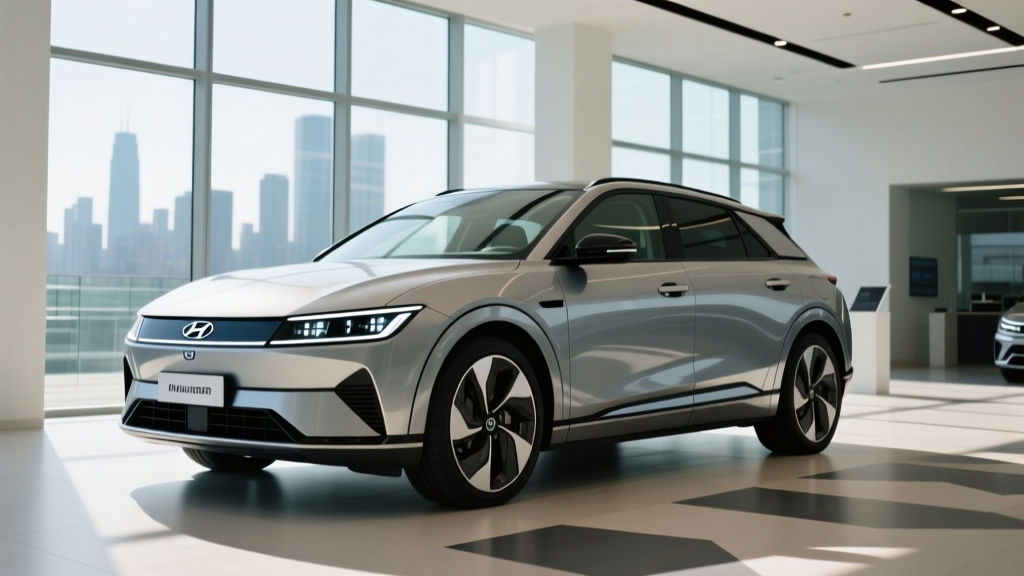
The 2026 Hyundai Ioniq 9 is the automaker's flagship three-row electric SUV, built on the E-GMP platform and positioned to compete directly with the Kia EV9, Rivian R1S, and Tesla Model X. Buyers searching for the Hyundai Ioniq 9 length will find it measures 199.2 inches bumper to bumper — making it roughly 10 inches longer than the Ioniq 5 and about 7 inches shorter than a full-size Chevrolet Tahoe. That footprint translates to genuine third-row usability and competitive cargo volume, but it also means careful measurement of your garage is essential before signing a purchase agreement.
With an EPA-estimated range of up to 335 miles, 240 kW peak DC fast charging, and a starting MSRP near $54,000, the Ioniq 9 delivers a compelling package for families ready to electrify without compromising passenger space. Below, we break down every dimension, powertrain spec, charging reality, and tax-credit variable you need to evaluate this SUV.
Hyundai Ioniq 9 Dimensions: Length, Width, Height & Interior Space
Understanding the Ioniq 9's physical footprint matters for garage fitment, parking, and interior packaging. Hyundai's E-GMP skateboard architecture pushes the wheels to the corners, maximizing cabin space relative to the exterior dimensions.
| Measurement | Specification |
|---|---|
| Overall Length | 199.2 inches |
| Overall Width (excl. mirrors) | 77.6 inches |
| Overall Height | 70.5 inches |
| Wheelbase | 125.2 inches |
| Ground Clearance | 7.4 inches |
| Front Headroom | 40.1 inches |
| Second-Row Legroom | 39.8 inches |
| Third-Row Legroom | 31.5 inches |
| Cargo Behind 3rd Row | 15.4 cu ft |
| Cargo Behind 2nd Row | 43.6 cu ft |
| Max Cargo (all rows folded) | 81.7 cu ft |
| Front Trunk (Frunk) | 1.8 cu ft |
The 125.2-inch wheelbase is the real story here. That distance between the axles is what creates the flat floor and legitimate third-row legroom. At 31.5 inches of third-row legroom, the Ioniq 9 matches or exceeds most midsize three-row SUVs. Adults can sit back there for short trips, and children or teenagers will be comfortable on longer drives. The 15.4 cu ft behind the third row accommodates roughly four carry-on suitcases — adequate for groceries or a weekend trip with all seats in use.
Garage fitment note: With the Ioniq 9's 199.2-inch length and 77.6-inch width, you'll need a minimum interior garage depth of about 22 feet to close the door comfortably. Standard single-car garages (typically 20-22 feet deep) will be tight. Measure before you buy.
Range, Battery & Efficiency: Real-World Expectations
The 2026 Ioniq 9 offers multiple range tiers depending on drivetrain and wheel size. The high-volume configuration pairs a 110.3 kWh battery (usable capacity) with a single rear motor and 19-inch wheels for maximum efficiency.
EPA Estimated: 335 miles
Real-World Highway (70-75 mph): ~275–295 miles
Real-World Cold Weather (below 30°F, mixed driving): ~235–260 miles
City/Stop-and-Go with Regen: ~310–340 miles
The 110.3 kWh NMC battery provides substantial energy reserves, but aerodynamic drag at highway speed and cold-weather chemistry slow-down reduce effective range by 12–25%. Preconditioning the battery before DC fast charging and before departure in cold weather recovers significant efficiency.
The dual-motor AWD variants sacrifice roughly 30-40 miles of EPA range for the added traction and power of the front motor, landing between 290 and 305 miles depending on wheel selection. The 21-inch wheel option on the Limited trim further reduces range by approximately 10–15 miles due to increased rolling resistance and weight.
Efficiency for the RWD Long Range model comes in at approximately 87 MPGe combined (39 kWh/100 miles), which is competitive for a 5,000+ lb three-row electric SUV. For context, the Kia EV9 RWD achieves a similar 89 MPGe, while the heavier Rivian R1S Dual-Motor lands around 73 MPGe.
The battery uses NMC (nickel manganese cobalt) chemistry, which offers higher energy density than LFP — necessary to achieve 335 miles in a vehicle of this size. Hyundai's thermal management system includes active liquid cooling and a heat pump, which helps preserve range in cold climates and maintains battery health during repeated DC fast charging sessions.
Charging Speed: DC Fast, Level 2 & Home Setup
Charging speed is where the Ioniq 9's 800-volt E-GMP architecture delivers a tangible advantage over 400-volt competitors. Hyundai rates the peak DC fast-charge rate at 240 kW, and in controlled testing, the charge curve holds above 200 kW through approximately 55% state of charge before tapering.
| Charging Level | Power / Rate | Time or Speed |
|---|---|---|
| DC Fast Charge (10–80%) | Peak 240 kW (800V) | ~24 minutes |
| DC Fast Charge (10–80%, 150 kW station) | Sustained ~130 kW avg | ~38 minutes |
| Level 2 Home (240V, 48A / 11.5 kW) | 11.5 kW onboard charger | ~36 mi/hr of charging; 0–100% in ~11 hours |
| Level 2 Home (240V, 32A / 7.7 kW) | 7.7 kW | ~24 mi/hr; 0–100% in ~16 hours |
| Level 1 (120V, 12A) | ~1.4 kW | ~4 mi/hr; emergency/trickle only |
Charging curve reality: The advertised 240 kW peak requires a 350 kW-capable CCS or NACS DC fast charger (Hyundai provides a NACS adapter for 2026 model-year vehicles to access Tesla Superchargers, alongside the native CCS1 port). On more common 150 kW Electrify America or EVgo stations, expect the Ioniq 9 to pull its maximum available power, resulting in a 10–80% session of roughly 38 minutes. The 800V architecture also means faster charging on 50 kW stations compared to 400V vehicles that may be current-limited.
For home charging, the 11.5 kW onboard charger is a standout. A 48-amp Level 2 wall connector on a 60-amp circuit adds approximately 36 miles of range per hour — enough to fully replenish the 110.3 kWh battery overnight in about 11 hours. Budget $500–$1,500 for a quality Level 2 home charger and professional installation, depending on whether your electrical panel needs an upgrade to support a 60-amp circuit.
Performance & Powertrain
The Ioniq 9 lineup offers three powertrain configurations for 2026:
| Configuration | Horsepower | Torque (lb-ft) | 0–60 mph | Drivetrain |
|---|---|---|---|---|
| Standard Range RWD | 215 hp | 258 | 7.8 sec | Rear-Wheel Drive |
| Long Range RWD | 256 hp | 258 | 7.4 sec | Rear-Wheel Drive |
| Long Range AWD (Dual Motor) | 379 hp | 446 | 5.3 sec | All-Wheel Drive |
The Long Range AWD model is the performance sweet spot. At 5.3 seconds to 60 mph with 379 combined horsepower, it moves the Ioniq 9's 5,100-lb curb weight with genuine authority. The dual-motor system provides torque-vectoring capability that enhances stability in wet and snowy conditions, and the instant electric torque makes highway merging effortless.
The RWD models prioritize efficiency and value. The 256-hp Long Range RWD is more than adequate for daily driving and highway cruising, and the 7.4-second 0-60 time is perfectly acceptable for a family SUV. Regenerative braking offers multiple levels via steering-wheel paddles, including a true one-pedal driving mode (i-PEDAL) that brings the vehicle to a complete stop without touching the brake pedal.
Towing capacity for properly equipped AWD models is rated at 4,400 lbs with a factory-installed tow hitch. RWD models are limited to 2,000 lbs. Note that towing will reduce range by 30–50% depending on trailer weight and terrain.
Pricing, Trims & Federal Tax Credit Eligibility
The 2026 Ioniq 9 is offered in five trim levels. Pricing below reflects base MSRP before destination charges:
| Trim | Drivetrain | Base MSRP | Est. After §30D Credit* |
|---|---|---|---|
| SE Standard Range | RWD | $53,900 | $46,400 |
| SE Long Range | RWD | $57,400 | $49,900 |
| SEL Long Range | RWD | $61,900 | $54,400 |
| SEL Long Range | AWD | $65,400 | $57,900 |
| Limited Long Range | AWD | $73,900 | $66,400 |
*Tax credit estimates assume full $7,500 §30D eligibility. Actual credit depends on battery-sourcing compliance, buyer income, and MSRP caps. See IRS rules below.
The Ioniq 9 qualifies under the IRS §30D SUV MSRP cap of $80,000, meaning all trims fall under the price ceiling. However, the full $7,500 credit is not guaranteed for every buyer. Current-year eligibility requirements include:
- Buyer income caps: Modified AGI must not exceed $150,000 (single filers), $225,000 (head of household), or $300,000 (joint filers)
- Battery critical minerals: A percentage of critical minerals must be sourced from the U.S. or FTA partners — this threshold increases annually
- Battery component sourcing: Battery components must be manufactured or assembled in North America, with escalating percentage requirements
- Point-of-sale transfer: Buyers can elect to transfer the credit to the dealer at purchase, reducing the purchase price directly rather than waiting to claim it on their tax return
Hyundai has moved final assembly of U.S.-bound Ioniq 9 vehicles to its Metaplant in Ellabell, Georgia, addressing the prior assembly-location disqualification that affected early Ioniq 5 and Ioniq 6 models. This is a critical change for tax-credit eligibility. Always verify the specific VIN's credit status at the IRS Clean Vehicle Credit page or through the dealer's point-of-sale verification system before finalizing your purchase.
Technology, Safety & Driver Assistance
The Ioniq 9's cabin centers on a curved dual-display layout: a 12.3-inch digital instrument cluster and a 12.3-inch infotainment touchscreen running Hyundai's latest ccNC (Connected Car Navigation Cockpit) software. Wireless Apple CarPlay and Android Auto are standard across all trims. Over-the-air updates keep the system current without dealer visits.
Notable technology highlights:
- Digital Key 2: Use your smartphone or smartwatch as the key fob, with the ability to share access with family members
- Highway Driving Assist 2 (HDA2): Adaptive cruise control with lane-centering and automated lane changes — this is an SAE Level 2 driver-assistance system requiring continuous driver supervision
- Remote Smart Parking Assist: The Ioniq 9 can park and unpark itself in tight spaces while you stand outside the vehicle using the key fob
- V2L (Vehicle-to-Load): An interior 120V outlet and exterior adapter allow you to power devices, appliances, or even provide emergency backup power — up to 3.6 kW output
- Second-row relaxation seats: Available power-reclining captain's chairs with leg rests and massage function (Limited trim)
Safety ratings from the National Highway Traffic Safety Administration (NHTSA) and the Insurance Institute for Highway Safety (IIHS) should be monitored as crash-test results for the 2026 Ioniq 9 are published. The E-GMP platform's low center of gravity and extensive high-strength steel structure provide strong fundamentals for crash protection.
Ownership & Warranty Coverage
Hyundai backs the Ioniq 9 with one of the strongest warranty packages in the EV segment:
| Coverage Type | Duration |
|---|---|
| New Vehicle Limited Warranty | 5 years / 60,000 miles |
| Powertrain Warranty | 10 years / 100,000 miles |
| EV Battery Capacity Warranty | 10 years / 100,000 miles (minimum 70% capacity retention) |
| Anti-Perforation Warranty | 7 years / unlimited miles |
| Roadside Assistance | 5 years / unlimited miles |
The battery warranty guarantees that the high-voltage battery will retain at least 70% of its original capacity over 10 years or 100,000 miles. Based on Hyundai's track record with the Ioniq 5 and Kona Electric, NMC battery degradation has been modest — typically 8–12% over the first 100,000 miles in moderate climates. The heat pump and active thermal management system contribute to long-term battery health, particularly in hot climates where passive-cooled batteries degrade faster.
Estimated 5-year total cost of ownership favors the Ioniq 9 over comparable gas-powered three-row SUVs (such as the Toyota Highlander or Kia Telluride) for buyers who can charge at home. Electricity costs approximately $0.13–$0.16 per kWh nationally, translating to roughly $4.50–$5.50 per 100 miles driven. The same distance in a 24 MPG gas SUV at $3.40/gallon costs about $14.20. Over 75,000 miles, the fuel savings alone can exceed $7,000 — before factoring in reduced maintenance (no oil changes, fewer brake replacements due to regen braking).
Pros & Cons
- Genuine three-row seating with usable adult-sized third row
- 800V architecture enables 240 kW peak DC fast charging
- 335-mile EPA range (RWD Long Range) eliminates range anxiety for most trips
- Competitive starting price for a three-row EV SUV
- Strong 10-year/100,000-mile battery and powertrain warranty
- Now U.S.-assembled, enabling §30D tax credit eligibility
- V2L capability for camping, tailgating, and emergency power
- 199.2-inch length may not fit smaller garages
- AWD models lose ~30-40 miles of EPA range
- Frunk is tiny (1.8 cu ft) — barely fits a charging cable bag
- Third-row cargo space is limited with all seats up (15.4 cu ft)
- Full §30D credit not guaranteed — depends on battery sourcing compliance
- 21-inch wheels noticeably reduce range and ride comfort
- No Level 3 or higher autonomy available
Who Should Buy the Hyundai Ioniq 9?
Choose the Ioniq 9 if:
- You need a three-row EV with real passenger space and over 300 miles of range
- You have home Level 2 charging access and a garage that fits a 199-inch SUV
- You want fast DC charging for road trips (24-minute 10–80% on 350 kW chargers)
- You value a strong factory warranty and U.S. assembly for tax-credit eligibility
- Your household includes children or teenagers who will use the third row regularly
Look elsewhere if:
- You need maximum cargo volume — the Rivian R1S or a minivan may serve better
- You regularly tow more than 4,400 lbs
- Your garage is under 22 feet deep
- You want hands-free, eyes-off driving — no production vehicle offers this today outside of Level 4 robotaxi zones
Frequently Asked Questions
What is the exact length of the Hyundai Ioniq 9?
The 2026 Hyundai Ioniq 9 measures 199.2 inches (5,060 mm) in overall length. This is comparable to the Kia EV9 (199.8 in) and shorter than the Rivian R1S (205.6 in) and Tesla Model X (199.1 in — nearly identical). Its 125.2-inch wheelbase is among the longest in the segment, which is what enables the spacious three-row interior.
What is the real-world range of the Ioniq 9?
The EPA rates the Long Range RWD Ioniq 9 at 335 miles. In real-world highway driving at 70-75 mph, expect approximately 275–295 miles before needing to charge. In cold weather (below 30°F), range can drop to 235–260 miles. City driving with frequent regenerative braking can approach or slightly exceed the EPA estimate. The AWD models see a real-world highway range of approximately 240–270 miles.
How fast does the Ioniq 9 charge at home and on the road?
On a 350 kW DC fast charger, the Ioniq 9 charges from 10–80% in approximately 24 minutes thanks to its 800-volt architecture and 240 kW peak rate. At a typical 150 kW public charger, expect 10–80% in about 38 minutes. At home on a 48-amp Level 2 charger (11.5 kW), you'll gain roughly 36 miles of range per hour, and a full charge takes about 11 hours overnight.
Does the Hyundai Ioniq 9 qualify for the $7,500 federal EV tax credit?
The Ioniq 9 is assembled in Ellabell, Georgia, clearing the North American final assembly requirement. All trims fall under the $80,000 SUV MSRP cap. However, full $7,500 eligibility depends on battery critical-mineral and component sourcing rules that tighten each year, plus buyer income limits ($300,000 joint / $150,000 single). Verify your specific vehicle's VIN eligibility through the IRS Clean Vehicle Credit resources and your tax professional before purchase.
Is the Ioniq 9 worth buying vs. the Kia EV9 or Rivian R1S?
The Ioniq 9 and Kia EV9 share the E-GMP platform and similar battery specs, making them close competitors. The Ioniq 9 leans slightly more upscale in interior materials and offers a marginally longer wheelbase. The Rivian R1S offers more off-road capability, higher towing capacity (7,700 lbs), and a quad-motor option, but starts at a higher price point and has lower efficiency. For most families prioritizing value, range, and fast charging, the Ioniq 9 is among the strongest choices in the three-row EV segment for 2026.
How much cargo space does the Ioniq 9 offer?
With all three rows in use, you get 15.4 cu ft behind the third row. Fold the third row and cargo space expands to 43.6 cu ft. With both rear rows folded, maximum cargo volume is 81.7 cu ft. The front trunk (frunk) adds 1.8 cu ft — enough for a charging cable bag or small items, but not a significant storage area.