The three-row electric SUV segment just got crowded, and Hyundai is swinging hard. The 2026 Hyundai Ioniq 9 is the brand's flagship electric hauler, built on the E-GMP platform and designed to take on the Kia EV9, Tesla Model X, and Rivian R1S. With seating for up to seven, an available 110.3 kWh battery, and a starting MSRP that undercuts several rivals, it's drawing serious attention — especially from buyers weighing an Ioniq 9 lease versus a purchase.
We've spent time with the specs, the charging data, and the ownership math. Here's everything you need to know before signing paperwork.
Range, Battery, and Real-World Efficiency
The Ioniq 9 offers two battery configurations depending on trim. The Standard Range model uses a 76.1 kWh usable NMC (nickel-manganese-cobalt) pack, while the Long Range trims step up to a 110.3 kWh usable NMC battery. Hyundai has not offered an LFP (lithium iron phosphate) variant for the U.S. market, prioritizing energy density for maximum range in this larger vehicle.
| Trim Group | Battery (usable kWh) | Chemistry | EPA Range | MPGe (combined) | kWh/100 mi |
|---|---|---|---|---|---|
| Standard Range (SE/SEL) | 76.1 kWh | NMC | 230 mi (est.) | ~84 MPGe | ~40 |
| Long Range RWD (SEL/Limited) | 110.3 kWh | NMC | 335 mi | 89 MPGe | 37 |
| Long Range AWD (SEL/Limited/Calligraphy) | 110.3 kWh | NMC | 310 mi | 83 MPGe | 40 |
Efficiency for a vehicle this size is competitive. The Long Range RWD achieves roughly 37 kWh per 100 miles, which translates to about $0.055–$0.07 per mile when charging at home on a national-average electricity rate of $0.16/kWh. That's roughly half the per-mile fuel cost of a comparable gas-powered three-row SUV getting 22 MPG combined.
Charging Speed: DC Fast Charge and Home Level 2
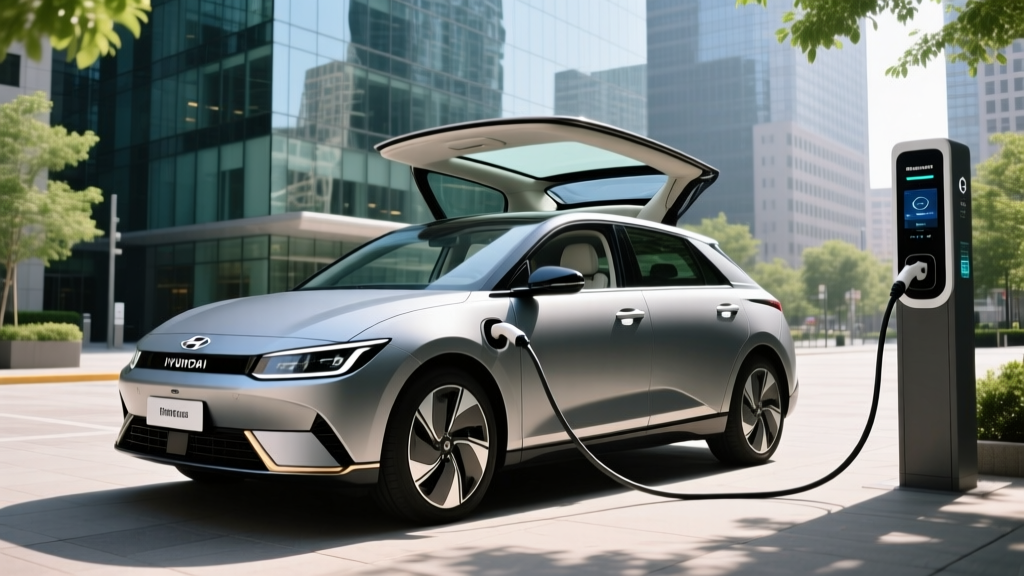
Charging speed is where large-battery EVs live or die, and Hyundai's E-GMP architecture has consistently delivered strong results. The Ioniq 9 Long Range supports a peak DC fast-charge rate of up to 240 kW on a 350 kW-capable charger using its native CCS1 connector (NACS adapter available for Tesla Supercharger access).
| Charging Level | Power / Rate | Time or Miles Added |
|---|---|---|
| Level 1 (120V household) | ~1.4 kW | ~3–4 miles per hour |
| Level 2 (240V home, 48A) | 10.9 kW | ~25–30 miles per hour; full charge in ~11 hrs (Long Range) |
| DC Fast Charge (peak) | Up to 240 kW | 10–80% in approximately 24 minutes (Long Range) |
| DC Fast Charge (Standard Range) | Up to 180 kW | 10–80% in approximately 20 minutes |
Charging curve reality: The 240 kW peak rate is not sustained across the entire session. Expect peak speeds between 10–50% state of charge, tapering significantly above 80%. Hyundai's battery preconditioning feature — activated when you navigate to a DC fast charger — warms the pack to optimal temperature and is essential for hitting peak rates in cool weather. Without preconditioning, a cold-soaked battery may peak closer to 150 kW.
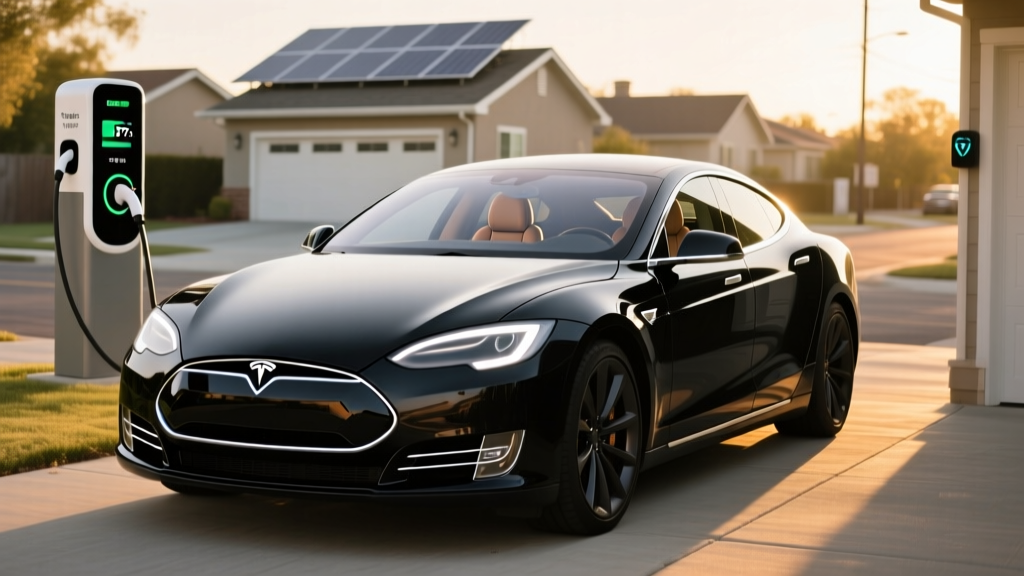
For home charging, a 48-amp Level 2 station on a 240V/60A circuit delivers roughly 10.9 kW, replenishing the Long Range battery from empty in about 11 hours. Most owners charging overnight from 20–80% will need roughly 6–7 hours. If your home electrical panel is older or maxed out, budget $500–$2,000 for a panel upgrade on top of the $600–$1,200 typical Level 2 installation cost.
Performance, Drivetrain, and Towing
The Ioniq 9 doesn't try to be a performance SUV, but it has enough power to make highway merging and passing effortless.
| Configuration | Horsepower | Torque (lb-ft) | 0–60 mph | Drivetrain | Towing Capacity |
|---|---|---|---|---|---|
| Standard Range RWD | 215 hp | 258 | ~7.8 sec | Rear-wheel drive | ~2,000 lbs |
| Long Range RWD | 215 hp | 258 | ~8.2 sec | Rear-wheel drive | ~2,000 lbs |
| Long Range AWD (dual-motor) | 379 hp | 516 | ~5.2 sec | All-wheel drive | ~4,000 lbs (est.) |
The dual-motor AWD variant is the one to drive if you want genuine acceleration punch — 379 horsepower moves this 5,500-pound SUV with authority. The RWD models prioritize efficiency and are perfectly adequate for daily driving, though the extra weight of the 110.3 kWh battery makes the Long Range RWD slightly slower to 60 than the Standard Range.
Ride quality is tuned for comfort over sportiness. The multi-link rear suspension and available adaptive dampers on upper trims soak up highway imperfections well. Cabin noise is low thanks to acoustic laminated glass on front and rear windows.
Interior Space, Cargo, and Technology
Hyundai designed the Ioniq 9 on a stretched E-GMP platform with a long 123.2-inch wheelbase, and the interior volume reflects it.
- Passenger capacity: 7 (2+3+2) or 6 (2+2+2 with captain's chairs in the second row)
- Second-row legroom: ~42.0 inches
- Third-row legroom: ~30.5 inches (usable for children and shorter adults on trips under an hour)
- Cargo behind third row: ~15.9 cu ft
- Cargo behind second row (third row folded): ~48.0 cu ft
- Max cargo (all rear seats folded): ~87.0 cu ft
- Front trunk (frunk): ~1.8 cu ft (AWD) / ~3.5 cu ft (RWD)
The dual 12.3-inch curved display setup runs Hyundai's latest infotainment software with native wireless Apple CarPlay and Android Auto. Available features include a head-up display with augmented-reality navigation, a digital center mirror, Hyundai's Highway Driving Assist 2 (a Level 2 driver-assistance system with lane-centering and adaptive cruise), and Remote Smart Parking Assist. A notable feature: the Ioniq 9 offers Vehicle-to-Load (V2L) capability via an interior outlet and exterior adapter, letting you power devices or appliances at up to 3.6 kW — useful for camping or emergency backup.
Drawbacks to note: The third row, while functional, is tighter than the Rivian R1S or the gas Hyundai Palisade. The frunk is modest. And like many Hyundai/Kia EVs, the Ioniq 9 still uses a CCS1 port natively — Tesla Supercharger access requires a NACS adapter, which Hyundai includes but it's one more piece to manage.
Pricing, Lease Options, and Federal Tax Credit
Here's where the Ioniq 9 makes a compelling case, especially if you're comparing a lease against an outright purchase.
| Trim | Drivetrain | Base MSRP | Est. Lease (36 mo, 10k mi/yr) |
|---|---|---|---|
| SE Standard Range | RWD | $53,400 | ~$450–$525/mo |
| SEL Long Range | RWD | $58,900 | ~$525–$600/mo |
| SEL Long Range | AWD | $62,400 | ~$575–$650/mo |
| Limited Long Range | AWD | $67,900 | ~$650–$725/mo |
| Calligraphy Long Range | AWD | $72,900 | ~$725–$825/mo |
Lease advantage: Under IRS §30D rules, the $7,500 federal EV tax credit has strict buyer income caps ($150K single / $300K joint), MSRP caps ($80,000 for SUVs), and battery critical-mineral sourcing requirements that may limit eligibility for some buyers. However, when you lease, the leasing company (the legal owner) can claim the commercial clean vehicle credit under §45W and pass the $7,500 savings through as a capitalized-cost reduction. This effectively makes the credit available to all lessees regardless of personal income or the vehicle's battery-sourcing compliance — a significant advantage. Hyundai has historically passed through the full credit on Ioniq leases.
- Buyer AGI must not exceed $150K (single), $225K (HOH), or $300K (joint)
- Vehicle MSRP must not exceed $80,000 (SUV classification)
- Battery must meet critical-mineral and North American assembly requirements — verify current-year compliance at fueleconomy.gov
- Credit can be transferred to the dealer at point of sale for an immediate price reduction
- Lease: credit passes through via §45W — no income or sourcing restrictions apply to lessee
Warranty and Long-Term Ownership
Hyundai backs the Ioniq 9 with one of the strongest warranty packages in the segment:
- Battery & drive unit: 10 years / 100,000 miles (covers defects and capacity loss below 70%)
- New vehicle limited: 5 years / 60,000 miles
- Powertrain: 10 years / 100,000 miles
- Roadside assistance: 5 years / unlimited miles
- Complimentary maintenance: 3 years / 36,000 miles
The 10-year battery warranty is a standout. Hyundai's 70% capacity-retention threshold is standard for the industry, but the 100,000-mile coverage window exceeds what most competitors offer (typically 8 years/100,000 miles). For a family SUV you plan to keep long-term, this is meaningful peace of mind.
How the Ioniq 9 Stacks Up Against Competitors
| Spec | Hyundai Ioniq 9 LR AWD | Kia EV9 LR AWD | Tesla Model X LR | Rivian R1S Dual-Motor |
|---|---|---|---|---|
| EPA Range | 310 mi | 280 mi | 335 mi | 330 mi |
| Battery (kWh) | 110.3 | 100.0 | ~100 | 106 (Std) / 141 (Max) |
| Peak DC Charge | 240 kW | 236 kW | 250 kW | 220 kW |
| 10–80% Time | ~24 min | ~24 min | ~25 min | ~27 min |
| 0–60 mph | 5.2 sec | 5.0 sec | 3.8 sec | 5.0 sec |
| Starting MSRP (AWD) | $62,400 | $63,900 | $81,630 | $79,900 |
| Battery Warranty | 10 yr/100K mi | 10 yr/100K mi | 8 yr/120K mi | 8 yr/120K mi |
The Ioniq 9's strongest competitive advantage is its combination of range, price, and battery warranty. It undercuts the Rivian R1S and Tesla Model X by $17,000–$19,000 in AWD form while matching or exceeding their range. The Kia EV9 is its closest sibling — both share the E-GMP platform — but the Ioniq 9's larger battery gives it a 30-mile range advantage and slightly more interior space.
- Choose the Ioniq 9 if: You want maximum range-per-dollar in a three-row EV, value the 10-year warranty, and prefer Hyundai's design language and dealer network.
- Choose the Kia EV9 if: You want a slightly more aggressive design and don't mind 30 fewer miles of range for a marginally lower starting price on base trims.
- Choose the Rivian R1S if: Off-road capability, adventure features (gear tunnel, camp kitchen), and a premium build experience justify the $17K+ premium.
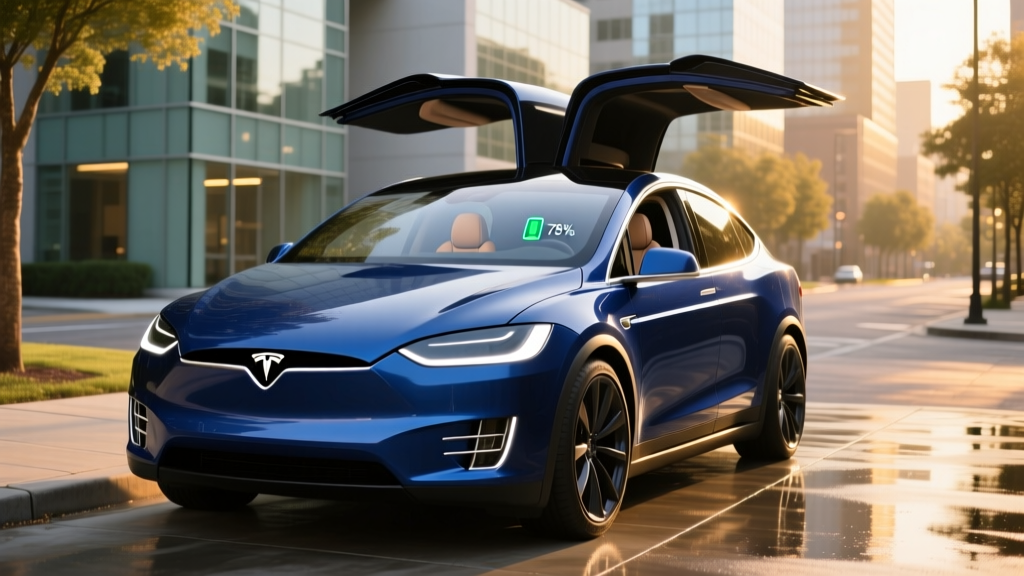
- Choose the Tesla Model X if: You need falcon-wing doors, the Supercharger network natively (no adapter), and sub-4-second acceleration — and your budget allows it.
Pros and Cons
Pros
- Class-leading 335-mile EPA range (Long Range RWD)
- 240 kW DC fast charging with 10–80% in ~24 minutes
- 10-year/100,000-mile battery warranty
- Competitive pricing — AWD starts at $62,400
- V2L capability for off-grid and emergency power
- Spacious second row with available captain's chairs
- Lease path unlocks full $7,500 credit for all buyers
Cons
- Third-row legroom is tight for adults on long trips
- Small frunk, especially on AWD models
- CCS1 native port — Supercharger access requires adapter
- No LFP battery option for buyers wanting longer cycle life
- RWD acceleration is leisurely for a vehicle this heavy
- Calligraphy trim pushes near $73K — close to §30D MSRP cap
Frequently Asked Questions
What is the real-world range of the Hyundai Ioniq 9?
The Long Range RWD carries an EPA rating of 335 miles. In real-world mixed driving at highway speeds, expect 280–310 miles. In cold weather below 30°F, that drops to approximately 240–270 miles. The AWD Long Range is rated at 310 miles EPA, with real-world highway driving closer to 260–290 miles.
How fast does the Ioniq 9 charge at home and on the road?
On a 48-amp Level 2 home charger, the Long Range battery adds roughly 25–30 miles of range per hour, with a full charge taking about 11 hours. On a DC fast charger, the Long Range peaks at 240 kW and charges from 10–80% in approximately 24 minutes when the battery is preconditioned.
How much does the Ioniq 9 cost after the federal tax credit?
If you purchase and qualify under IRS §30D rules (income, MSRP, and battery-sourcing requirements met), the effective price drops by up to $7,500 — bringing the SEL Long Range RWD from $58,900 to roughly $51,400. If you lease, the leasing company typically passes through the $7,500 as a cap-cost reduction regardless of your personal income, reducing monthly payments by approximately $150–$200/month over a 36-month term.
Does the Ioniq 9 qualify for the federal EV tax credit?
Eligibility under §30D depends on current-year battery-sourcing and critical-mineral compliance, your adjusted gross income, and the vehicle's MSRP (must be under $80,000 for SUVs). The Ioniq 9's MSRP clears the cap on all trims. Verify battery-sourcing compliance at fueleconomy.gov before purchasing. Leasing bypasses these restrictions entirely via the §45W commercial credit.
Is the Ioniq 9 worth leasing versus buying?
Leasing is the strongest financial play for most buyers right now. You get the full $7,500 credit passed through regardless of income or battery-sourcing rules, you're protected against EV depreciation (which has been steep in the three-row segment), and you can upgrade in three years as charging infrastructure and battery technology continue to evolve. Buying makes more sense if you plan to keep the vehicle 7+ years and want to maximize the value of Hyundai's 10-year warranty.
Who is the Hyundai Ioniq 9 best for?
The Ioniq 9 is ideal for families who need three rows occasionally but prioritize daily efficiency and long road-trip range. It's a strong commuter vehicle in RWD form and a capable road-trip hauler in AWD. It's less suited for buyers who need frequent adult-sized third-row seating (consider a minivan) or serious off-road capability (look at the Rivian R1S).