Quick Verdict: The Ioniq 9 ICCU Platform Delivers Flagship Three-Row EV Muscle
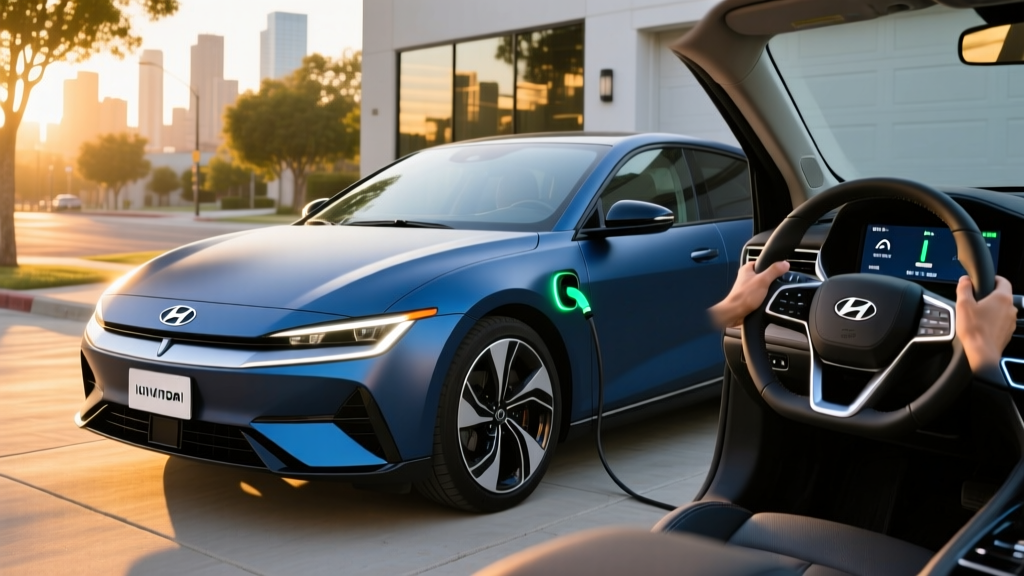
The 2026 Hyundai Ioniq 9 is the brand's largest electric SUV, riding on the E-GMP platform with Hyundai's next-generation Integrated Charging Control Unit (ICCU). The ICCU is the unsung hero under the metal: it consolidates the onboard charger, DC-DC converter, and power distribution into a single module, shaving weight and improving both charging efficiency and vehicle-to-load (V2L) output. For buyers, the result is a three-row electric SUV that charges at up to 350 kW, offers up to 335 miles of EPA-estimated range, and packs a long list of standard tech — all starting under $58,000 before incentives.
But the three-row EV SUV segment is crowded. The Kia EV9, Tesla Model X, and Rivian R1S all compete here. This review breaks down whether the Ioniq 9's ICCU-enhanced charging architecture, battery specs, and real-world usability make it the right pick for your household.
| Spec | SE/SEL (RWD Long Range) | Limited (AWD) |
|---|---|---|
| EPA Range | 335 miles | 290 miles |
| Battery (usable) | 110.3 kWh (NMC) | 110.3 kWh (NMC) |
| Peak DC Charge Rate | 350 kW | 350 kW |
| 10–80% DC Fast Charge | ~24 minutes | ~24 minutes |
| Level 2 Charge Rate | 10.9 kW (~34 mi/hr) | 10.9 kW (~34 mi/hr) |
| Drivetrain | RWD, single motor | AWD, dual motor |
| Horsepower | 215 hp | 379 hp |
| 0–60 mph | 8.2 sec | 4.9 sec |
| MPGe (combined) | 89 MPGe | 79 MPGe |
| Efficiency | 38 kWh/100 mi | 42 kWh/100 mi |
| Towing Capacity | 2,000 lbs | 4,500 lbs |
| Base MSRP | $57,900 | $71,400 |
Battery, ICCU Architecture, and Energy Density
The Ioniq 9 uses a 110.3 kWh usable battery pack built with nickel-manganese-cobalt (NMC) lithium-ion cells. Hyundai chose NMC over LFP (lithium iron phosphate) for this flagship model because the energy density advantage is critical in a vehicle this large — NMC packs store more energy per kilogram, which keeps curb weight from ballooning further in a 5,000+ pound three-row SUV.
The ICCU (Integrated Charging Control Unit) is the technical differentiator for the 2026 model year. Where older EVs use separate onboard chargers and DC-DC converters, the ICCU merges these into one compact, lighter unit. This integration yields three practical benefits:
- Higher V2L output: The Ioniq 9's V2L system can deliver up to 3.6 kW through interior and exterior outlets — enough to power a campsite, run power tools, or provide emergency home backup during an outage.
- Reduced parasitic loss: Consolidated power electronics mean less energy wasted as heat during AC-to-DC conversion, improving overall efficiency by an estimated 2–3% over the previous generation.
- Weight savings: Approximately 15–20 lbs eliminated from the power electronics, which matters when you're moving a three-row SUV.
The battery sits in a flat skateboard layout beneath the floor, contributing to a low center of gravity. Hyundai's battery thermal management system uses a heat pump (standard on all trims), which is critical for preserving range in cold weather and enabling fast DC charging speeds in low temperatures through battery preconditioning.
Real-World Range: What the EPA Number Doesn't Tell You
EPA vs. Reality
RWD Long Range (SE/SEL): EPA-estimated 335 miles. Expect 280–310 miles on a highway-dominant road trip at 70–75 mph. In freezing temperatures (below 32°F), plan for 220–260 miles due to battery chemistry limitations and cabin heating load.
AWD (Limited): EPA-estimated 290 miles. Highway reality: 240–270 miles. Cold weather: 190–230 miles.
Source: EPA fueleconomy.gov
The Ioniq 9 RWD's 335-mile EPA figure is competitive with the Kia EV9 Long Range RWD (304 miles EPA) and significantly ahead of the Tesla Model X (320 miles EPA, but at a much higher price). However, large SUV-shaped vehicles suffer disproportionate highway range loss compared to sedans. The Ioniq 9's boxy profile creates aerodynamic drag that cuts efficiency at sustained speeds above 65 mph.
In real-world mixed driving — a combination of suburban errands, highway commuting, and stop-and-go traffic — most owners will see 295–320 miles from the RWD model. The heat pump helps, but if you live in the upper Midwest or Northeast where winter temperatures regularly dip below 20°F, budget for a 25–30% range reduction. That means a 335-mile sticker becomes roughly 235–255 miles on the coldest days. For daily commuting, this is still more than adequate. For winter road trips, plan your DC fast-charging stops accordingly.
Charging Speed: The ICCU Advantage at Public Chargers
| Charging Level | Power / Voltage | Speed | Notes |
|---|---|---|---|
| Level 1 (120V household) | ~1.4 kW | ~4 miles/hour | Emergency/top-up only; full charge takes 70+ hours |
| Level 2 (240V home) | 10.9 kW | ~34 miles/hour | Full 0–100% in ~10.5 hours; ideal overnight |
| DC Fast Charge (800V) | Peak 350 kW | 10–80% in ~24 min | Requires 350 kW-capable station; tapers above 80% |
| DC Fast Charge (150 kW station) | ~150 kW sustained | 10–80% in ~38 min | More common station type; still practical for road trips |
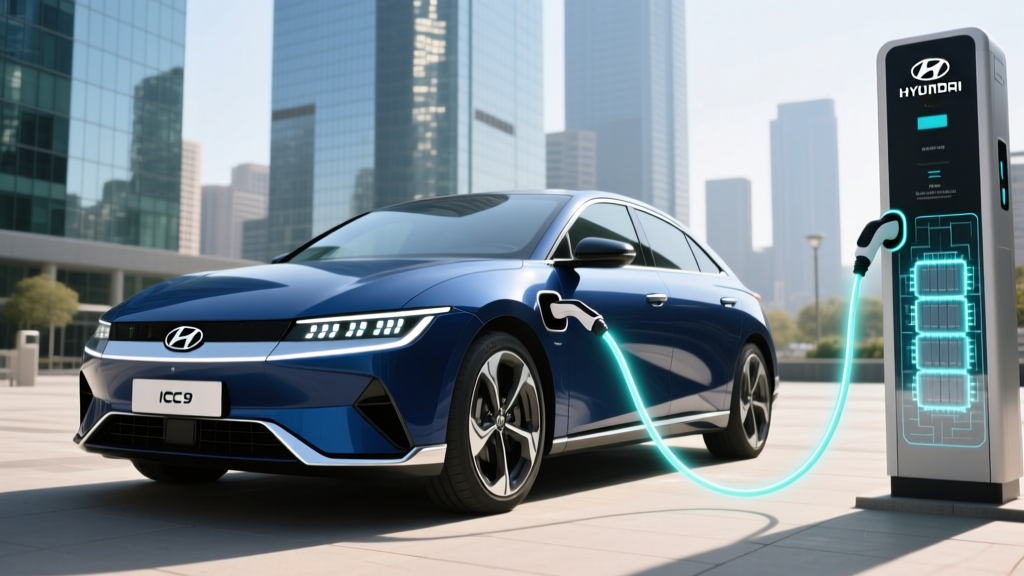
The Ioniq 9's 800-volt architecture — enabled in part by the ICCU's power electronics — allows it to accept up to 350 kW at compatible DC fast chargers. On a 350 kW Electrify America or Tesla Supercharger V4 station (with NACS adapter or CCS native connector), the Ioniq 9 can add roughly 148 miles of range in 10 minutes and reach 80% state of charge in approximately 24 minutes.
Here's where the charging curve matters: like all EVs, the Ioniq 9 does not sustain peak charge rate across the entire session. The pack accepts maximum kW roughly between 10–55% SoC, then progressively tapers. From 80–100%, charging slows dramatically to protect cell longevity. On a road trip, the practical strategy is to charge to 80% and go — the last 20% can take nearly as long as the first 60%.
At home on a Level 2 (240V/48A) charger, the 10.9 kW onboard rate replenishes the 110.3 kWh pack in roughly 10.5 hours. Most owners will plug in overnight and wake up to a full battery every morning. If you're installing a home Level 2 charger, budget $800–$2,000 for the unit and electrician labor, with possible panel-upgrade costs of $1,500–$3,000 if your home's electrical service needs an upgrade to 200A.
The Ioniq 9 comes with a NACS (North American Charging Standard) port, granting native access to Tesla's Supercharger network — a major advantage for road-trip charging reliability. For legacy CCS stations, Hyundai includes a NACS-to-CCS adapter.
Performance, Drivetrain, and Towing
The RWD Long Range model uses a single rear-mounted motor producing 215 hp and 258 lb-ft of torque. The 0–60 mph time of 8.2 seconds is adequate for merging and passing but won't thrill anyone. This is the efficiency-focused configuration — it's the one that achieves the 335-mile EPA rating.
The AWD dual-motor variant (available on SEL and standard on Limited trims) adds a front motor for a combined 379 hp and 446 lb-ft of torque. The 0–60 time drops to 4.9 seconds, which is genuinely quick for a three-row SUV weighing over 5,300 lbs. The AWD system also enables the higher 4,500-lb towing capacity (RWD is limited to 2,000 lbs).
Ride quality benefits from the E-GMP platform's multi-link rear suspension and the low-slung battery mass. The Ioniq 9 offers an available adaptive damping system on Limited trims that smooths out highway expansion joints without feeling floaty. Steering is light and precise — tuned for comfort, not sportiness.
Regenerative braking offers multiple levels selectable via steering-wheel paddles, including a full one-pedal driving mode (i-Pedal) that brings the vehicle to a complete stop without touching the brake pedal. This is particularly useful in stop-and-go traffic and maximizes energy recapture.
Interior, Cargo, and Technology
The Ioniq 9 seats up to seven passengers in a 2-3-2 configuration, or six with available second-row captain's chairs. Interior dimensions are generous:
- Front legroom: 41.7 inches
- Second-row legroom: 39.4 inches
- Third-row legroom: 31.1 inches (usable for children and shorter adults on trips under an hour)
- Cargo behind third row: 15.2 cu ft
- Cargo behind second row (third row folded): 44.6 cu ft
- Max cargo (both rear rows folded): 81.7 cu ft
- Front trunk (frunk): 3.2 cu ft (enough for a charging cable bag and small soft cooler)
The infotainment system uses a 12.3-inch digital instrument cluster paired with a 12.3-inch center touchscreen running Hyundai's latest ccNC (Connected Car Navigation Cockpit) software. Wireless Apple CarPlay and Android Auto are standard. Over-the-air (OTA) updates keep the software current without dealer visits.
Driver assistance comes via Hyundai SmartSense, a Level 2 (SAE) suite that includes:
- Highway Driving Assist 2 (HDA-2) — adaptive cruise with lane-centering and lane-change assist
- Navigation-based Smart Cruise Control (curve slowdown, speed-limit adaptation)
- Remote Smart Parking Assist (summon the vehicle in/out of tight spaces via key fob)
- Forward Collision-Avoidance Assist with pedestrian, cyclist, and junction-turning detection
Pricing, Trims, and Federal Tax Credit Eligibility
| Trim | Drivetrain | Base MSRP | Est. After §30D Credit* |
|---|---|---|---|
| SE Standard Range | RWD | $52,900 | Varies — see eligibility below |
| SE Long Range | RWD | $57,900 | Varies — see eligibility below |
| SEL Long Range | RWD or AWD | $61,900 (RWD) / $64,900 (AWD) | Varies |
| Limited | AWD | $71,400 | Varies |
*Destination charge (~$1,495) not included. §30D credit eligibility depends on buyer income, battery sourcing, and MSRP caps. See IRS rules below.
Does the Ioniq 9 Qualify for the Federal EV Tax Credit?
Under current IRS §30D rules, the Ioniq 9 may qualify for up to $7,500 in federal tax credits — but eligibility is not automatic. Here's the checklist:
- MSRP cap: SUVs must have an MSRP at or below $80,000. All Ioniq 9 trims clear this threshold (top Limited trim is $71,400 base).
- Buyer income cap: Modified adjusted gross income (MAGI) must not exceed $150,000 (single), $225,000 (head of household), or $300,000 (married filing jointly).
- Battery sourcing: At least a percentage of critical minerals and battery components must be sourced from the U.S. or FTA-partner countries. Hyundai has been shifting Ioniq 9 battery supply chains to its Georgia plant, but the exact credit amount ($3,750 or $7,500) depends on the specific build month and sourcing compliance. Check the latest IRS guidance before purchasing.
- Point-of-sale transfer: Eligible buyers can transfer the credit to the dealer at purchase, reducing the out-of-pocket price immediately rather than waiting for a tax refund.
Because battery-sourcing rules are updated periodically, confirm the Ioniq 9's current credit status on fueleconomy.gov or with your dealer at the time of purchase.
Warranty and Long-Term Ownership
Hyundai backs the Ioniq 9 with one of the strongest warranty packages in the segment:
- Battery warranty: 10 years / 100,000 miles (whichever comes first), guaranteeing at least 70% capacity retention
- Powertrain warranty: 10 years / 100,000 miles
- New vehicle limited warranty: 5 years / 60,000 miles
- Roadside assistance: 5 years / unlimited miles
- Complimentary maintenance: 3 years / 36,000 miles (oil changes aren't relevant, but this covers cabin air filter, tire rotation, multi-point inspection)
The 70% battery capacity retention guarantee means that if your 110.3 kWh pack drops below roughly 77 kWh of usable capacity within the warranty period, Hyundai will repair or replace it at no cost. Based on current NMC degradation data from the broader Hyundai/Kia E-GMP fleet, most packs retain 90–93% capacity after 100,000 miles, making a warranty claim unlikely under normal use.
Pros, Cons, and Who Should Buy the Ioniq 9
Pros
- Up to 335 miles EPA range (class-leading for three-row EVs)
- 350 kW DC fast charging via 800V architecture
- NACS port — native Tesla Supercharger access
- 10-year/100,000-mile battery and powertrain warranty
- Standard heat pump for cold-weather efficiency
- 3.6 kW V2L capability for camping and backup power
- Comfortable, quiet ride with spacious first two rows
Cons
- Third row is tight for adults on longer drives
- RWD model limited to 2,000-lb towing (AWD needed for serious hauling)
- Cargo space behind third row (15.2 cu ft) is modest for the class
- No LFP option — NMC pack requires 80% daily charge limit for longevity
- Limited trim pushes past $71K before options
- Highway range drops noticeably at 75+ mph due to boxy aero
Who the Ioniq 9 Suits Best
Buy it if: You need a three-row family SUV with excellent range, fast charging for road trips, and a long warranty. The Ioniq 9 is ideal for suburban families who commute during the week and take 200–300 mile weekend trips. The RWD Long Range at $57,900 is the value sweet spot.
Look elsewhere if: You regularly carry six adults (the third row favors kids), need to tow more than 4,500 lbs, or want a more sporty driving experience (consider the Rivian R1S). If you prioritize maximum cargo volume with all seats folded, the Kia EV9 offers a slight edge.
Frequently Asked Questions
What is the real-world range of the 2026 Hyundai Ioniq 9?
The RWD Long Range model achieves 335 miles EPA-estimated, but expect 280–310 miles on highway-dominant trips and 220–260 miles in freezing weather. The AWD model rates at 290 miles EPA, with real-world highway figures around 240–270 miles.
How fast does the Ioniq 9 charge at home and on the road?
At home on a Level 2 (240V) charger, the Ioniq 9 charges at 10.9 kW, adding about 34 miles of range per hour — a full charge takes roughly 10.5 hours. On a 350 kW DC fast charger, it reaches 10–80% in approximately 24 minutes. On more common 150 kW stations, expect 10–80% in about 38 minutes.
How much does the Ioniq 9 cost after the federal tax credit?
Base pricing starts at $52,900 (SE Standard Range) and reaches $71,400 (Limited AWD). If you qualify for the full $7,500 §30D credit — and your specific vehicle meets battery-sourcing requirements — the effective price on the SE Long Range RWD drops from $57,900 to approximately $50,400. Eligibility depends on your income, the vehicle's MSRP, and battery component sourcing. Confirm on irs.gov before purchase.
Is the Ioniq 9 worth buying over the Kia EV9 or Tesla Model X?
The Ioniq 9 offers more EPA range than the Kia EV9 (335 vs. 304 miles) and a longer warranty (10-year vs. 10-year — tied). The Tesla Model X has more power and cargo space but starts above $80,000, disqualifying it from the federal tax credit. For value-focused three-row EV buyers, the Ioniq 9 RWD Long Range is arguably the strongest proposition in the segment.
What is the ICCU and why does it matter?
The ICCU (Integrated Charging Control Unit) combines the onboard charger, DC-DC converter, and power distribution module into one unit. It reduces weight, improves charging efficiency, and enables the Ioniq 9's 3.6 kW V2L (vehicle-to-load) capability. For owners, this means slightly better real-world efficiency and the ability to power external devices from the vehicle's battery.
Does the Ioniq 9 have a NACS or CCS charging port?
The 2026 Ioniq 9 comes with a native NACS (Tesla-style) charging port, giving it direct access to the Tesla Supercharger network. A CCS adapter is included for use with legacy Electrify America and other CCS-equipped stations.