Quick Verdict: The Ioniq 9 Redefines the Three-Row Electric SUV
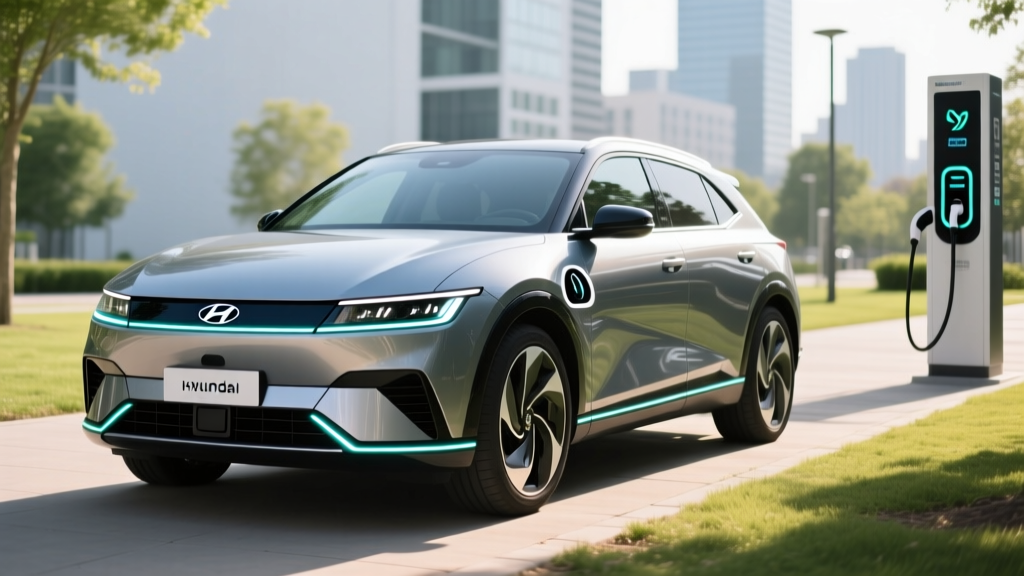
The 2026 Hyundai Ioniq 9 electric car arrives as a full-size, three-row battery-electric SUV built on the E-GMP platform's larger sibling — a dedicated EV architecture that prioritizes interior volume, flat-floor packaging, and 800V-class fast charging. With up to 311 miles of EPA-estimated range, a usable battery north of 110 kWh, and a cabin that genuinely fits adults in all three rows, Hyundai is aiming squarely at the Tesla Model X, Kia EV9, and Rivian R1S buyer who wants space without sacrificing efficiency.
But spec sheets don't tell the whole story. After spending time analyzing Hyundai's published data, EPA filings, and real-world driving dynamics of the E-GMP family, here's what actually matters for buyers considering this electric car for their garage.
Range, Battery, and Real-World Efficiency
The 2026 Ioniq 9 is offered with a single large battery pack across all trims: a 110.3 kWh gross capacity unit (approximately 105 kWh usable) using NMC (nickel-manganese-cobalt) chemistry. Hyundai chose NMC over LFP here to maximize energy density in a vehicle this large — a necessary trade-off to hit 300+ miles without making the pack prohibitively heavy.
| Trim / Drivetrain | EPA Range | MPGe (Combined) | kWh/100 mi |
|---|---|---|---|
| SE / SEL RWD (Single Motor) | 311 mi | ~89 MPGe | ~38 |
| SE / SEL AWD (Dual Motor) | ~280 mi | ~82 MPGe | ~41 |
| Limited / Calligraphy AWD | ~270 mi | ~79 MPGe | ~43 |
The EPA 311-mile figure applies to the RWD Long Range model under mixed driving. In practice:
• Highway driving (70-75 mph): Expect ~255–275 miles on the RWD model; AWD drops to ~230–250 miles.
• Cold weather (below 32°F): Range loss of 20–30% is typical for NMC packs without consistent preconditioning — plan for ~215–250 miles on the RWD in winter.
• City / moderate temps: You can match or slightly exceed the EPA sticker thanks to regenerative braking recovery.
Hyundai's heat pump (standard on most trims) mitigates cold-weather cabin energy draw, but the physics of a 5,500+ lb SUV moving at highway speeds still dominate.
Efficiency figures place the Ioniq 9 in a respectable but not class-leading position. The Kia EV9 with its smaller 100.0 kWh pack achieves similar range with slightly better efficiency, while the Rivian R1S (Dual-Motor, Max Pack) posts comparable numbers with a larger battery. For a vehicle of this footprint, ~38 kWh/100 mi in RWD form is competitive — just don't expect Ioniq 5-level efficiency in a three-row hauler.
Charging Speed: DC Fast, Level 2, and the 800V Advantage
The Ioniq 9 inherits the E-GMP platform's 800V electrical architecture, which enables significantly faster DC fast charging than the 400V systems used in most competitors. This is one of the Ioniq 9's strongest practical advantages for road-trippers and apartment dwellers who rely on public chargers.
| Charging Level | Power / Rate | Speed / Time | Connector |
|---|---|---|---|
| DC Fast Charge (Peak) | ~240 kW peak | 10–80% in ~24 min | NACS (native) |
| DC Fast Charge (Sustained Avg) | ~170–190 kW avg (10-80%) | Adds ~170 mi in 20 min | NACS |
| Level 2 (Home / Public AC) | 10.9 kW (48A) | ~32 mi/hr; 0–100% in ~10.5 hrs | NACS / J1772 adapter |
| Level 1 (120V Household) | ~1.4 kW | ~3–4 mi/hr; 72+ hrs for full charge | Standard outlet |
Understanding the charge curve: The 240 kW peak is just that — a peak. On a 350 kW-capable Electrify America or Tesla Supercharger stall, the Ioniq 9 will ramp to ~230–240 kW between roughly 10–30% state of charge, then progressively taper. By 60% SoC, expect ~150–160 kW; above 80%, the rate drops sharply to protect battery longevity, falling below 50 kW. This taper is normal for all lithium-ion packs but is especially important to understand with a 110 kWh battery — the last 20% can take as long as the first 60%.
Home charging reality: At 10.9 kW on a Level 2 home charger (requiring a 60A circuit / 48A continuous draw), a full charge takes about 10.5 hours. For most owners, plugging in overnight replenishes 200–250 miles in 7–8 hours, which covers nearly all daily needs. If your home electrical panel is older or maxed at 100A, you may need a panel upgrade to support a 60A dedicated circuit — budget $1,500–$3,500 for that electrical work, installed by a licensed electrician.
Hyundai has adopted the NACS (North American Charging Standard) connector natively for the 2026 Ioniq 9, meaning direct access to the Tesla Supercharger network (now open to non-Tesla EVs via NACS) as well as Electrify America and other networks deploying NACS stalls. CCS adapter needs are minimal for this model year.
Performance and Drivetrain
The Ioniq 9 offers two powertrain configurations:
- Single Motor (RWD): 215 horsepower, 258 lb-ft of torque. 0–60 mph in approximately 7.7 seconds. This is the efficiency-oriented choice and the range leader.
- Dual Motor (AWD): 378 horsepower, 516 lb-ft of torque combined. 0–60 mph in approximately 5.2 seconds. Significantly more capable in inclement weather and when towing.
| Spec | RWD (Single Motor) | AWD (Dual Motor) |
|---|---|---|
| Horsepower | 215 hp | 378 hp |
| Torque | 258 lb-ft | 516 lb-ft |
| 0–60 mph | ~7.7 sec | ~5.2 sec |
| Top Speed | ~115 mph | ~124 mph |
| Towing Capacity | ~2,000 lbs | ~4,500 lbs |
Neither variant is a performance SUV in the Model X Plaid sense, but the AWD dual-motor setup provides confident highway merging and respectable acceleration for a vehicle of this mass. The RWD model is perfectly adequate for commuting and highway cruising — it just feels deliberate rather than eager when you floor it from a stop.
Regenerative braking offers multiple levels selectable via steering-wheel paddles, including a true one-pedal driving mode (i-Pedal) that brings the vehicle to a complete stop without touching the brake pedal. The transition between regen and friction braking is among the smoothest in the segment.
Interior Space, Cargo, and Technology
Where the Ioniq 9 genuinely differentiates itself is interior volume. Built on a stretched wheelbase (~125.6 inches), this three-row SUV offers adult-usable space in all seating positions — a claim many competitors can't honestly make.
- First-row legroom: ~42.0 inches
- Second-row legroom: ~39.5 inches (captain's chairs or bench)
- Third-row legroom: ~32.0 inches — sufficient for adults on shorter trips, competitive with the EV9 and significantly better than the Model X's third row
- Cargo behind 3rd row: ~14 cu ft
- Cargo behind 2nd row (3rd row folded): ~44 cu ft
- Cargo behind 1st row (all rear rows folded): ~84 cu ft
- Front trunk (frunk): ~2.0 cu ft (small, fits a charging cable bag or emergency kit)
The flat floor (no transmission tunnel) and Hyundai's "Universal Island" center console — which slides fore and aft on a track — give the front cabin a lounge-like feel. Second-row captain's chairs with power recline and available relaxation mode are a highlight for long road trips.
Infotainment & tech: The Ioniq 9 features a curved panoramic display setup with a 12.3-inch digital instrument cluster and a 12.3-inch infotainment touchscreen running Hyundai's latest ccNC (Connected Car Navigation Cockpit) software. Wireless Apple CarPlay and Android Auto are standard. Over-the-air (OTA) updates are supported for powertrain calibration, infotainment, and ADAS improvements.
Driver assistance: Hyundai SmartSense is standard across all trims and includes:
- Highway Driving Assist 2 (HDA-2) — adaptive cruise with lane-centering and lane-change assist (SAE Level 2 — driver must remain engaged at all times)
- Forward collision-avoidance assist with pedestrian/cyclist detection
- Blind-spot collision-avoidance assist
- Rear cross-traffic collision-avoidance assist
- Remote Smart Parking Assist (available on upper trims — the vehicle can park/unpark itself while you stand outside)
Highway Driving Assist 2 is an SAE Level 2 system. It does NOT make the Ioniq 9 a self-driving vehicle. You must keep your hands on the wheel (or demonstrate attentiveness via the capacitive steering wheel) and eyes on the road at all times. It does not handle construction zones, unmapped roads, or complex urban intersections autonomously.
Pricing, Trims, and Federal Tax Credit Eligibility
The 2026 Hyundai Ioniq 9 is offered in four primary trims. Pricing below reflects MSRP before destination charges (~$1,495) and before any federal or state incentives.
| Trim | Drivetrain | MSRP | Est. After §30D Credit |
|---|---|---|---|
| SE Standard Range | RWD | ~$52,500 | ~$45,000* |
| SEL | RWD / AWD | ~$56,000 – $59,500 | ~$48,500 – $52,000* |
| Limited | AWD | ~$65,500 | ~$58,000* |
| Calligraphy | AWD | ~$71,500 | ~$64,000* |
*Estimated after §30D credit assumes full eligibility. Actual credit amount ($0–$7,500) depends on battery component and critical-mineral sourcing requirements, which are phased in under the Inflation Reduction Act. Verify current-year rules at IRS.gov §30D.
- ✅ Vehicle MSRP cap: SUVs/vans/pickups must be ≤ $80,000 MSRP — all Ioniq 9 trims qualify
- ⚠️ Buyer income cap: AGI must not exceed $150,000 (single) / $300,000 (joint) / $225,000 (head of household)
- ⚠️ Battery sourcing: Critical minerals and battery components must meet phased percentage thresholds for North American or FTA-partner sourcing — the credit may be $3,750 (partial) or $7,500 (full) depending on compliance
- ⚠️ FEOC exclusion: Vehicles with battery components from a "foreign entity of concern" (e.g., certain Chinese suppliers) may be disqualified entirely
- ✅ Point-of-sale transfer: Eligible buyers can transfer the credit to the dealer at purchase, reducing the purchase price upfront rather than waiting for a tax refund
- ⚠️ Final assembly: Must be assembled in North America — the Ioniq 9 is assembled at Hyundai's Metaplant in Ellabell, Georgia ✅
Rules are subject to change. Consult a tax professional and verify at fueleconomy.gov before purchasing.
Warranty Coverage and Long-Term Ownership
Hyundai backs the Ioniq 9 with one of the strongest warranty packages in the EV segment:
- Battery warranty: 10 years / 100,000 miles (whichever comes first), guaranteeing a minimum of 70% capacity retention. If the battery degrades below 70% within this window, Hyundai will repair or replace it.
- Powertrain warranty: 10 years / 100,000 miles — covers the electric motors, reduction gear, and power electronics.
- New vehicle limited warranty: 5 years / 60,000 miles (bumper-to-bumper).
- Roadside assistance: 5 years / unlimited miles.
- Complimentary maintenance: 3 years / 36,000 miles (limited to scheduled items — EVs require very little).
The 10-year battery warranty is a significant confidence builder, especially for buyers concerned about long-term degradation of a 110 kWh NMC pack. Real-world data from the Ioniq 5 and Ioniq 6 (both NMC, both on E-GMP) suggests degradation of approximately 5–8% over the first 100,000 miles under normal use — well within the 70% retention threshold. The Ioniq 9's larger pack, operating at lower average C-rates (less stress per cell), should see similar or better longevity.
Pros, Cons, and Who Should Buy the Ioniq 9
✅ Pros
- Class-leading three-row interior space — genuine adult usability in row three
- 800V architecture enables ~240 kW DC fast charging (10–80% in ~24 min)
- 311-mile EPA range (RWD) is competitive for the segment
- 10-year / 100,000-mile battery and powertrain warranty
- NACS native connector — direct Tesla Supercharger access
- Strong standard ADAS suite (HDA-2) across all trims
- Assembled in Georgia — strong §30D tax credit eligibility
- Flat floor and Universal Island create premium cabin feel
❌ Cons
- Heavy (~5,500 lbs) — efficiency suffers at highway speeds vs lighter EVs
- AWD models lose 30–40 miles of range vs RWD
- Frunk is tiny (~2 cu ft) — barely useful
- Third row still tight for tall adults on long trips
- No air suspension available (ride quality is good but not adaptive)
- Upper trims (Calligraphy) push past $70,000 — premium territory
- Large footprint makes tight urban parking challenging
- Real-world winter range can drop below 220 miles (AWD)
- Growing families who need three rows but want to eliminate gasoline — the Ioniq 9 is the most practical all-electric alternative to the Kia Telluride or Hyundai Palisade
- Home-charging-capable buyers with a garage or driveway where a Level 2 charger can be installed — overnight charging makes the 311-mile range feel effortless
- Road trippers who value fast DC charging (800V architecture means shorter stops at Electrify America and NACS Superchargers)
- Tax-credit-maximizing buyers — Georgia assembly and sub-$80K MSRP make §30D eligibility strong across all trims
- Urban apartment dwellers without reliable charging access — the 110 kWh battery is impractical to fill on Level 1 alone
- Performance-focused buyers — the Rivian R1S Tri-Motor or Model X offer significantly more power
- Buyers wanting maximum range above all else — the RWD is great, but a Lucid Gravity (when available) may offer more
How the Ioniq 9 Stacks Up Against Key Competitors
The three-row electric SUV segment is growing fast. Here's how the Ioniq 9 compares to its most direct rivals on the specs that matter:
| Attribute | Hyundai Ioniq 9 (RWD) | Kia EV9 (RWD LR) | Tesla Model X (LR) |
|---|---|---|---|
| EPA Range | 311 mi | 304 mi | 335 mi |
| Battery (usable) | ~105 kWh (NMC) | ~95 kWh (NMC) | ~100 kWh (NMC) |
| DC Fast Charge Peak | ~240 kW | ~210 kW | ~250 kW |
| 10–80% DC Time | ~24 min | ~24 min | ~22 min |
| 3rd-Row Legroom | ~32.0 in | ~32.0 in | ~30.5 in |
| Starting MSRP | ~$52,500 | ~$55,500 | ~$79,990 |
| Battery Warranty | 10 yr / 100k mi | 10 yr / 100k mi | 8 yr / 120k mi |
| §30D Credit Eligible | Yes (GA-built) | Yes (GA-built) | Yes (CA-built) |
The Ioniq 9 and EV9 share corporate DNA and are remarkably close in capability — the Ioniq 9 edges ahead on battery capacity and range, while the EV9 launched earlier with more established dealer inventory. The Model X offers more range and performance but costs $25,000+ more before incentives and has a less usable third row.
Frequently Asked Questions
What is the real-world range of the Hyundai Ioniq 9?
The RWD model carries an EPA-estimated 311 miles. In real-world highway driving at 70–75 mph, expect 255–275 miles. In cold weather (below freezing), plan for 215–250 miles depending on cabin heating use and whether you precondition the battery. AWD models see real-world highway range of roughly 230–250 miles in moderate temps.
How fast does the Ioniq 9 charge at home and on the road?
On a DC fast charger, the Ioniq 9 peaks at approximately 240 kW and charges from 10–80% in about 24 minutes, adding roughly 170 miles in 20 minutes of charging. At home on a Level 2 charger (10.9 kW / 48A), it gains about 32 miles of range per hour, fully charging in roughly 10.5 hours. Level 1 (standard 120V outlet) adds just 3–4 miles per hour and is only practical for emergency top-offs or very low-mileage drivers.
How much does the Hyundai Ioniq 9 cost after tax credits?
The base SE RWD starts at approximately $52,500 MSRP. If you qualify for the full $7,500 §30D federal tax credit (based on income, battery sourcing, and MSRP requirements), the effective price drops to roughly $45,000. Higher trims like the Limited AWD (~$65,500) come to ~$58,000 after the credit. The credit can be transferred to the dealer at point of sale, reducing your out-of-pocket cost immediately. State incentives may stack on top — check AFDC's state incentive database for your area.
Does the Ioniq 9 qualify for the $7,500 federal EV tax credit?
The Ioniq 9 is assembled in Ellabell, Georgia, and all trims fall under the $80,000 SUV MSRP cap — both requirements are met. However, the actual credit amount ($3,750 or $7,500) depends on the percentage of battery components and critical minerals sourced from North America or FTA-partner nations, which changes annually under IRA rules. Your personal eligibility also depends on adjusted gross income limits ($150K single / $300K joint). Verify the current status at IRS.gov and consult a tax professional before relying on the credit in your purchase decision.
Is the Hyundai Ioniq 9 worth buying over the Kia EV9 or Tesla Model X?
If you prioritize value, interior space, fast charging, and a strong warranty, the Ioniq 9 (and its platform-mate, the EV9) is the best choice in the three-row EV segment. The Ioniq 9 offers slightly more range and a larger battery than the EV9 at a similar or lower price point. The Tesla Model X provides more range and significantly more performance but at a $25,000+ premium, and its third row is less practical. For most families shopping in this segment, the Ioniq 9 represents the best balance of price, practicality, and charging infrastructure access — especially with native NACS and Tesla Supercharger compatibility.
Sources: EPA fuel economy data via fueleconomy.gov; Hyundai Motor America official specifications; IRS §30D clean vehicle credit guidance at irs.gov. All specifications reflect 2026 model year data available at time of publication. Pricing and credit eligibility are subject to change.