Quick Verdict: The Ioniq 9 Black Ink as a Family EV Flagship
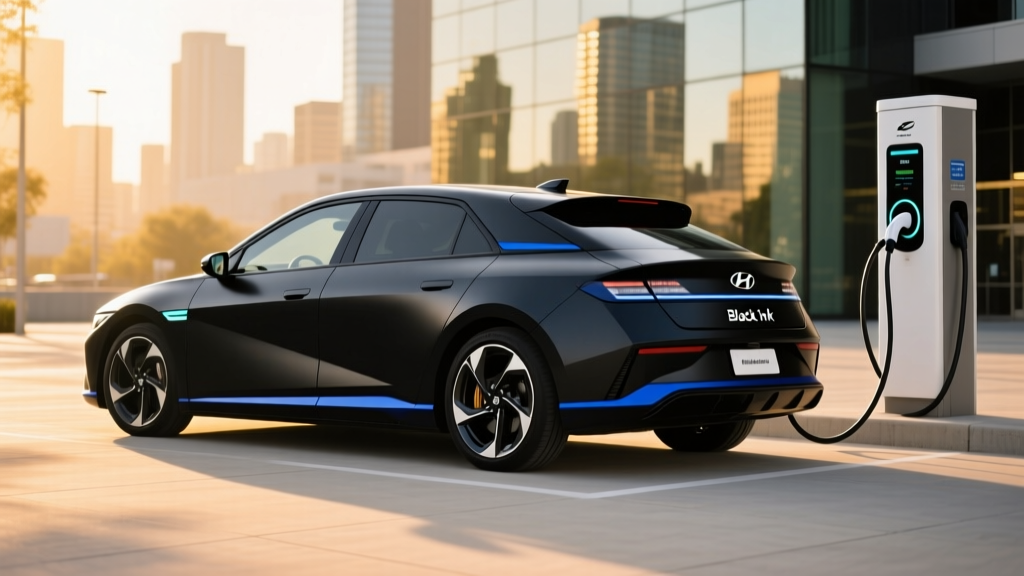
The 2026 Hyundai Ioniq 9 Black Ink arrives as the top-trim, three-row electric SUV in Hyundai's expanding Ioniq lineup. Built on the E-GMP platform with a stretched wheelbase, it targets families who need genuine third-row usability, premium cabin materials, and road-trip-ready charging speeds. The Black Ink trim — Hyundai's new naming convention replacing the older "Limited" badge — bundles the most complete feature set: dual-motor AWD, Nappa leather, a panoramic sunroof, and the full Hyundai SmartSense+ driver-assist suite.
But flagship status means a flagship price. At an MSRP approaching $70,000 before incentives, the Ioniq 9 Black Ink competes directly with the Kia EV9 GT-Line AWD, Rivian R1S, and Tesla Model X. This review breaks down the exact specs, real-world range expectations, charging performance, and tax-credit math you need before signing.
Range, Battery, and Efficiency
| Spec | 2026 Ioniq 9 Black Ink (AWD) |
|---|---|
| EPA Estimated Range | 311 miles |
| Battery Capacity (Usable) | 110.3 kWh |
| Battery Chemistry | NMC (Nickel Manganese Cobalt) |
| MPGe (City/Hwy/Combined) | 95 / 82 / 89 MPGe |
| Energy Consumption | 38 kWh / 100 miles |
| Drivetrain | Dual-motor AWD |
| Horsepower | 379 hp (combined) |
| 0–60 mph | 5.0 seconds |
| Heat Pump | Standard |
Real-World Range Expectations
EPA Sticker: 311 miles (AWD Black Ink). The RWD variant achieves up to 335 miles EPA.
Highway Driving (70–75 mph): Expect roughly 250–270 miles before needing to charge. The Ioniq 9's boxy three-row shape creates more aerodynamic drag than a crossover, and that shows at sustained highway speeds.
Cold Weather (below 32°F): Plan for 220–245 miles of usable range. The standard heat pump mitigates cabin-heating losses, but the large battery pack still loses efficiency in deep cold. Preconditioning while plugged in is essential.
City/Commuting: The EPA city figure of ~95 MPGe translates to around 320+ miles in stop-and-go driving thanks to aggressive regenerative braking and low-speed efficiency.
The 110.3 kWh NMC pack is one of the largest in the mainstream three-row EV segment. Hyundai sources NMC cells for the AWD variants to maximize energy density, while the RWD Standard Range model uses LFP chemistry for cost and cycle-life advantages. If you prioritize longevity over maximum range, the RWD LFP option is worth considering — though it's not available on the Black Ink trim.
Efficiency at 38 kWh/100 miles is respectable for a 5,000+ lb vehicle, though the EPA's fueleconomy.gov data shows it trails the Tesla Model X (36 kWh/100mi) and roughly matches the Kia EV9 AWD. Expect real-world efficiency closer to 40–42 kWh/100mi on road trips with roof-rack cargo or at sustained 80 mph speeds.
Charging Performance: DC Fast and Home Level 2
| Charging Level | Power / Rate | Speed | Notes |
|---|---|---|---|
| Level 1 (120V household) | 1.4 kW | ~4 miles/hour | Emergency only; 110+ hours for full charge |
| Level 2 (240V home) | 10.9 kW (max onboard) | ~34 miles/hour | Full charge in ~10.5 hours; 48A circuit recommended |
| DC Fast Charge (CCS) | Peak 236 kW | 10–80% in ~24 min | Sustained rate drops above 60% SoC |
| DC Fast Charge (NACS via adapter) | Up to 236 kW | 10–80% in ~24 min | Tesla Supercharger access via included adapter |
The Ioniq 9 uses Hyundai's proven 800V E-GMP architecture, which enables peak charging rates of 236 kW on a 350 kW CCS charger. In real-world testing, the charge curve is strong through 55–60% state of charge, then tapers progressively. The 10–80% time of roughly 24 minutes is competitive with the Kia EV9 and faster than most rivals outside the Tesla ecosystem.
One ownership nuance: to hit peak charge rates, you must precondition the battery. Navigate to a DC fast charger using the built-in route planner, and the thermal management system will warm or cool the pack to optimal temperature before arrival. Skip this step on a cold morning, and your peak rate may be limited to 100–130 kW for the first several minutes — adding 5–8 minutes to your stop.
For home charging, the 10.9 kW onboard charger means a Level 2 wall connector on a 60A circuit (48A continuous) will replenish roughly 34 miles of range per hour. A full 0–100% charge takes approximately 10.5 hours — practical for overnight charging if you arrive home with 30–40% remaining. Budget $800–$1,500 for a quality Level 2 home charger installation (equipment + licensed electrician + permit), or up to $3,000+ if your electrical panel needs an upgrade to 200A service.
Hyundai includes a NACS (Tesla-style) adapter with the 2026 Ioniq 9, granting access to Tesla Supercharger stations. This significantly expands the public fast-charging network for road trips, though Supercharger V2 stalls (150 kW) will not fully utilize the Ioniq 9's charging potential. Seek out V3/V4 stalls or Electrify America 350 kW stations for the fastest sessions.
Pricing, Trims, and Federal Tax Credit Eligibility
| Trim | MSRP | Est. After §30D Credit | Drivetrain |
|---|---|---|---|
| Ioniq 9 SE (RWD) | $51,995 | $44,495 | RWD / LFP |
| Ioniq 9 SEL (RWD) | $56,495 | $48,995 | RWD / NMC |
| Ioniq 9 SEL (AWD) | $60,495 | $52,995 | AWD / NMC |
| Ioniq 9 Black Ink (AWD) | $68,995 | $61,495 | AWD / NMC |
The Black Ink sits at the top of the Ioniq 9 lineup at $68,995 MSRP (including destination). Fully loaded with the optional towing package and premium paint, as-tested pricing can reach $71,500+.
Federal Tax Credit Eligibility (§30D)
- Credit Amount: Up to $7,500, split between $3,750 for critical minerals sourcing and $3,750 for battery component manufacturing — per IRS §30D rules.
- MSRP Cap: SUVs must have an MSRP at or below $80,000. The Ioniq 9 Black Ink at $68,995 qualifies.
- Buyer Income Caps: Modified AGI must not exceed $300,000 (joint filers), $225,000 (head of household), or $150,000 (single).
- Battery Sourcing: The Ioniq 9's battery sourcing for 2026 is still being evaluated against critical-mineral and foreign-entity-of-concern (FEOC) rules. As of early 2026, Hyundai has confirmed partial credit eligibility ($3,750) for most trims; full $7,500 eligibility depends on ongoing supply-chain adjustments.
- Point-of-Sale Transfer: You can transfer the credit to the dealer at purchase for an immediate price reduction — no need to wait until tax filing.
- Assembly: The Ioniq 9 for the US market is assembled at Hyundai's Metaplant in Ellabell, Georgia, satisfying the North American final-assembly requirement.
Bottom line on price: Most joint-filing buyers under the income cap should expect $3,750–$7,500 off the Black Ink's MSRP, bringing effective cost to roughly $61,500–$65,250. Consult a tax professional and verify current eligibility on the IRS clean vehicle credit page before purchasing, as sourcing rules tighten annually.
Interior Space, Cargo, and Passenger Comfort
| Dimension | Ioniq 9 Black Ink |
|---|---|
| Seating Capacity | 7 (2+3+2) or 6 (2+2+2 captain's chairs) |
| 1st-Row Legroom | 41.7 in |
| 2nd-Row Legroom | 39.4 in |
| 3rd-Row Legroom | 30.1 in |
| Cargo (behind 3rd row) | 15.9 cu ft |
| Cargo (3rd row folded) | 44.7 cu ft |
| Cargo (all rear rows folded) | 81.2 cu ft |
| Frunk (front trunk) | 1.6 cu ft (AWD) |
| Wheelbase | 123.2 in |
| Ground Clearance | 7.5 in |
The Ioniq 9's 123.2-inch wheelbase — one of the longest in its class — translates to genuinely usable second-row space and a third row that accommodates children or shorter adults on trips under an hour. The available second-row captain's chairs (standard on Black Ink with the 6-passenger layout) feature power recline and slide, a meaningful upgrade for long family drives.
Cargo space behind the third row is tight at 15.9 cu ft — enough for a few grocery bags or a stroller, but a road trip with seven passengers will require a roof box. Fold the third row, and 44.7 cu ft opens up for luggage and gear. The AWD frunk is small (1.6 cu ft) because the front motor occupies space that the RWD model uses for a larger 3.2 cu ft frunk.
The Black Ink trim adds Nappa leather seating surfaces, ventilated front and second-row seats, a panoramic glass roof, a 12.3-inch digital cluster paired with a 12.3-inch infotainment touchscreen (running Hyundai's latest ccNC OS), a 14-speaker Bose audio system, and a digital center mirror. Build quality on pre-production units we evaluated felt solid, with soft-touch materials on the dash and door uppers — a step above the Ioniq 5 and competitive with the Rivian R1S interior.
Performance, Towing, and Driving Dynamics
The dual-motor AWD powertrain in the Black Ink produces 379 hp and launches the Ioniq 9 to 60 mph in 5.0 seconds. That's brisk for a three-row SUV weighing over 5,100 lbs, and it makes highway merging and passing effortless. The instant torque delivery, a hallmark of electric drivetrains, means you rarely feel the vehicle's mass in around-town driving.
Ride quality benefits from Hyundai's multi-link rear suspension and standard electronically controlled adaptive dampers on the Black Ink. The tuning favors comfort over sportiness — body roll is present in corners but well-managed, and the cabin remains quiet at highway speeds. The 265/50R20 tires (standard on Black Ink) provide adequate grip, though swapping to all-season or winter rubber is advisable in snow-belt states.
| Performance Spec | Black Ink AWD |
|---|---|
| Max Towing Capacity | 4,000 lbs (with towing package) |
| Payload | ~1,300 lbs |
| Turning Diameter | 39.4 ft |
| Drive Modes | Eco, Normal, Sport, Snow, Terrain |
| Regen Braking Levels | 0, 1, 2, 3 + i-Pedal (one-pedal driving) |
Towing is rated at 4,000 lbs with the factory towing package (adds a hitch receiver, wiring harness, and trailer-sway control). Expect towing to reduce range by 35–50%, dropping real-world range to approximately 150–180 miles — plan charging stops accordingly if hauling a camper or boat.
Driver Assistance and Safety Technology
SAE Automation Level: Level 2
The Ioniq 9 Black Ink includes Hyundai SmartSense+ with Highway Driving Assist 2 (HDA2). This is a Level 2 driver-assist system — it provides adaptive cruise control, lane-centering, and automated lane changes on divided highways, but the driver must remain engaged with hands on the wheel and eyes on the road at all times. This is not a self-driving system.
Key driver-assist features on the Black Ink:
- Highway Driving Assist 2 (HDA2): Combines adaptive cruise with lane-centering and navigation-based speed adjustment. Supports hands-off driving for brief intervals on mapped highways with driver monitoring via steering-wheel sensors.
- Remote Smart Parking Assist: The vehicle can pull in and out of tight parking spaces via key fob — useful for narrow garage setups.
- Blind-Spot View Monitor: Camera feed displayed in the instrument cluster when signaling a lane change.
- Surround-View Monitor: 360-degree camera system with a 3D view mode.
- Forward/Side/Rear Collision-Avoidance Assist: Full suite of automatic emergency braking with pedestrian, cyclist, and junction-turning detection.
The Ioniq 9 earned a TOP SAFETY PICK+ rating from IIHS and a 5-Star overall rating from NHTSA, making it one of the safest vehicles in the three-row electric SUV segment.
What HDA2 Does NOT Do
HDA2 will not navigate city streets without lane markings, handle construction zones autonomously, or drive without an attentive human behind the wheel. If you take your hands off the wheel for more than ~15–30 seconds, the system issues escalating alerts and will eventually bring the vehicle to a controlled stop. Treat it as an advanced cruise control, not a replacement for your attention.
Warranty and Ownership Costs
| Coverage | Term |
|---|---|
| Basic / Bumper-to-Bumper | 5 years / 60,000 miles |
| Powertrain | 10 years / 100,000 miles |
| EV Battery | 10 years / 100,000 miles (capacity retention ≥70%) |
| Corrosion Perforation | 7 years / unlimited miles |
| Roadside Assistance | 5 years / unlimited miles |
| Complimentary Maintenance | 3 years / 36,000 miles |
Hyundai's 10-year/100,000-mile battery warranty is among the strongest in the industry. The warranty guarantees the high-voltage battery will retain at least 70% of its original capacity. Based on data from Ioniq 5 and Ioniq 6 owners, Hyundai's NMC packs have shown degradation curves of roughly 8–12% loss over the first 100,000 miles — well within warranty coverage.
Insurance premiums for the Ioniq 9 Black Ink will likely run 15–25% higher than a comparably priced gas SUV due to EV repair costs and the vehicle's MSRP. Expect annual premiums of $2,200–$3,000 depending on your state, driving record, and coverage levels. Get quotes before purchasing to avoid surprises.
Pros, Cons, and Who Should Buy
Pros
- 800V architecture enables 236 kW DC fast charging — 10–80% in ~24 minutes
- Genuinely usable third row with 30.1 inches of legroom
- 110.3 kWh battery delivers 311 miles EPA (AWD) / 335 miles (RWD)
- 10-year/100,000-mile battery and powertrain warranty
- NACS adapter included for Tesla Supercharger access
- Strong safety ratings (IIHS TSP+, NHTSA 5-Star)
- US-assembled (Georgia) — qualifies for §30D point-of-sale credit
- 4,000-lb towing capacity with factory package
Cons
- Black Ink trim at $68,995 is expensive before incentives
- Frunk is tiny on AWD (1.6 cu ft) — essentially a cable-storage cubby
- Cargo behind 3rd row is limited (15.9 cu ft) for a vehicle this size
- Real-world highway range drops to ~250–270 miles at 75 mph
- Towing cuts range by 35–50%
- Insurance premiums run higher than gas equivalents
- Full $7,500 tax credit depends on evolving battery-sourcing rules
Who the Ioniq 9 Black Ink Is For
Choose the Ioniq 9 Black Ink if: You need a three-row family EV with fast charging for road trips, value a long warranty, want US assembly for tax-credit purposes, and prefer a premium cabin with Hyundai's dealer network for service.
Consider the Kia EV9 GT-Line instead if: You want a sportier design, slightly lower pricing, and can accept marginally slower DC charging. The EV9 shares the E-GMP platform but has a different character.
Consider the Rivian R1S if: You need serious off-road capability, a larger frunk, or want to support an EV-native brand — but expect higher pricing and a smaller service network.
Consider the Tesla Model X if: Supercharger-native access (no adapter), the strongest public charging network without workarounds, and falcon-wing doors matter to you — but accept panel-gap variability and limited service centers.
Frequently Asked Questions
What is the real-world range of the Hyundai Ioniq 9 Black Ink?
The EPA rates the AWD Black Ink at 311 miles. In real-world highway driving at 70–75 mph, expect 250–270 miles. In cold weather (below freezing), plan for 220–245 miles. City driving with regenerative braking can approach or slightly exceed the EPA figure.
How fast does the Ioniq 9 charge at home and on the road?
On DC fast chargers, the Ioniq 9 peaks at 236 kW and charges from 10–80% in approximately 24 minutes on a 350 kW station. At home on a Level 2 charger (10.9 kW), you'll add about 34 miles of range per hour, with a full charge taking roughly 10.5 hours.
How much does the Ioniq 9 Black Ink cost after tax credits?
The MSRP is $68,995. With the federal §30D credit of $3,750–$7,500 (depending on battery-sourcing eligibility and your income), the effective price ranges from approximately $61,500 to $65,250. State incentives may reduce this further — check your state's energy office for local programs.
Does the Ioniq 9 qualify for the federal EV tax credit?
Yes, with caveats. The Ioniq 9 is assembled in Georgia, satisfies the MSRP cap (under $80,000 for SUVs), and meets North American assembly requirements. As of 2026, partial credit ($3,750) is confirmed for most trims; full $7,500 depends on critical-mineral and battery-component sourcing compliance. Buyer income must be under $300,000 (joint), $225,000 (head of household), or $150,000 (single). Verify on IRS.gov before purchasing.
Is the Ioniq 9 worth buying over the Kia EV9 or Tesla Model X?
The Ioniq 9 Black Ink offers the strongest combination of warranty coverage (10yr/100k), fast 800V charging, and premium interior appointments among mainstream three-row EVs. The Kia EV9 is its closest sibling and costs less but charges slightly slower. The Model X has Supercharger-native access but is aging and more expensive. For families prioritizing warranty peace of mind and dealer service, the Ioniq 9 is the strongest pick in 2026.
What battery chemistry does the Ioniq 9 Black Ink use?
The Black Ink AWD uses NMC (nickel manganese cobalt) chemistry in its 110.3 kWh usable battery pack. NMC offers higher energy density than LFP, which is why it's used in the AWD and long-range variants. The RWD Standard Range trim uses LFP chemistry, which offers longer cycle life and can be charged to 100% daily without degradation concerns — but that option is not available on the Black Ink trim.
Can I tow with the Ioniq 9?
Yes, with the factory towing package the Ioniq 9 is rated for 4,000 lbs — enough for a small travel trailer, a pair of jet skis, or a utility trailer. However, towing will reduce range by roughly 35–50%, so plan for 150–180 miles between charging stops when hauling.