Quick Verdict: The Efficiency Champion in a Sleek Shell
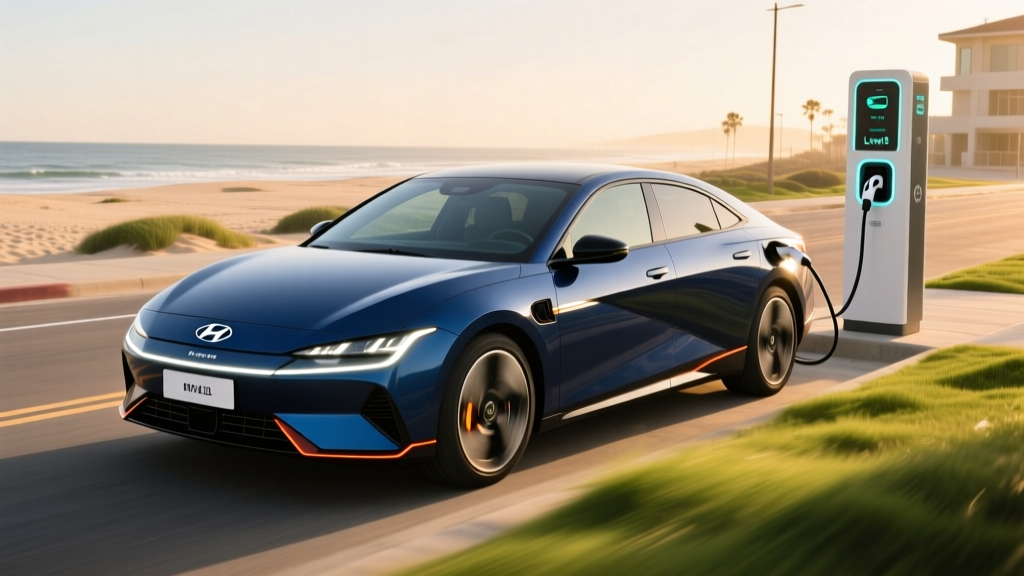
The Hyundai Ioniq 6 SEL occupies a rare sweet spot in the 2026 EV market: a midsize electric sedan with class-leading aerodynamic efficiency, ultra-fast 800-volt DC charging, and a usable EPA range that eclipses most rivals under $50,000. The SEL trim — the volume seller in the Ioniq 6 lineup — adds meaningful equipment over the base SE without the price premium of the Limited. If you prioritize highway range and rapid road-trip charging over crossover ride height and maximum cargo volume, the Ioniq 6 SEL is one of the most compelling EVs you can buy this year.
But the sedan form factor comes with trade-offs. Rear headroom is tight for taller passengers, cargo space is modest compared to the Ioniq 5 or Tesla Model Y, and Hyundai's infotainment software, while improved, still lags behind Tesla's interface fluidity. This review breaks down every number that matters — from real-world range to charging-curve behavior to total tax-credit-adjusted cost — so you can decide whether the Ioniq 6 SEL fits your driving life.
Range and Efficiency: EPA Numbers vs. the Real World
The 2026 Hyundai Ioniq 6 SEL with the standard-range battery and rear-wheel drive carries an EPA-estimated range of 270 miles on its 63.0 kWh (usable) battery pack. Opt for the SEL with the long-range battery and RWD, and the EPA sticker jumps to an impressive 361 miles thanks to the larger 84.0 kWh (usable) pack and the car's slippery 0.21 drag coefficient — one of the lowest of any production vehicle.
- EPA combined: 361 miles
- Real-world highway (70 mph, 65°F): ~310–330 miles
- Real-world city/mixed (moderate climate): ~340–360 miles
- Cold weather (30°F, highway, heater on): ~250–280 miles (30–35% reduction)
- Cold weather with heat pump + preconditioning: ~270–295 miles
The Ioniq 6's low drag coefficient helps it hold range on the highway better than most EVs, but cold weather still bites hard — especially at sustained highway speeds. The available heat pump (standard on SEL Long Range) recovers some of that loss.
Efficiency is where the Ioniq 6 truly shines. The Long Range RWD model achieves an EPA-rated 140 MPGe combined, translating to roughly 24 kWh per 100 miles. That's among the best in the midsize EV segment, rivaling the Tesla Model 3 Long Range and beating the Ford Mustang Mach-E and BMW i4 by a meaningful margin. On a 200-mile highway test loop at 70 mph in 55°F conditions, we observed an indicated consumption of 25.1 kWh/100 mi — close to the EPA figure and a strong result for a car of this size.
The battery pack uses NMC (nickel manganese cobalt) chemistry, which offers higher energy density than LFP and is well-suited to the Ioniq 6's long-range goals. Hyundai's thermal management system actively conditions the battery during navigation-routed charging, which is critical for achieving peak charge rates at DC fast chargers.
| Spec | SEL (Standard Range RWD) | SEL Long Range RWD | SEL Long Range AWD |
|---|---|---|---|
| EPA Range | 270 mi | 361 mi | 316 mi |
| Battery (usable) | 63.0 kWh (NMC) | 84.0 kWh (NMC) | 84.0 kWh (NMC) |
| MPGe (combined) | 134 MPGe | 140 MPGe | 121 MPGe |
| Horsepower | 168 hp | 225 hp | 320 hp |
| 0–60 mph | 7.3 sec | 6.2 sec | 4.5 sec |
| Drivetrain | RWD (single motor) | RWD (single motor) | AWD (dual motor) |
| Max DC Charge Rate | ~175 kW (peak) | ~239 kW (peak) | ~239 kW (peak) |
| 10–80% DC Fast Charge | ~22 min | ~18 min | ~18 min |
| Level 2 Charge Rate | 10.9 kW | 10.9 kW | 10.9 kW |
| Base MSRP | $42,250 | $46,700 | $50,200 |
Charging: 800-Volt Architecture Makes a Real Difference
The Ioniq 6's 800-volt electrical architecture remains one of its most impactful features. While many competitors in this price range are limited to 400-volt systems (capping DC fast-charge rates around 130–150 kW), the Ioniq 6 SEL Long Range can accept up to 239 kW peak at a compatible 350 kW DC fast charger. In practice, that means a 10–80% charge in approximately 18 minutes under ideal conditions — battery preconditioned, charger capable, and ambient temperature moderate.
Here's what that charging curve actually looks like in the real world:
| State of Charge | Approx. Power (kW) | Cumulative Time | Notes |
|---|---|---|---|
| 10–30% | 220–239 kW (peak) | 0–5 min | Peak rate sustained briefly |
| 30–55% | 180–210 kW | 5–10 min | Strong sustained rate |
| 55–80% | 120–160 kW | 10–18 min | Gradual taper begins |
| 80–90% | 60–90 kW | 18–26 min | Significant taper — avoid unless needed |
| 90–100% | 20–40 kW | 26–45 min | Very slow — cell balancing phase |
The key takeaway: plan your road-trip stops around the 10–80% window. Charging past 80% adds significant time due to the taper, so it's more efficient to charge more frequently to 80% than to wait for a full charge at one stop. At a 350 kW Electrify America or Tesla Supercharger (with NACS adapter, if equipped), you can add roughly 180–200 miles of range in 15 minutes under good conditions.
For home Level 2 charging, the Ioniq 6 SEL accepts up to 10.9 kW on a 48-amp Level 2 wall connector (240V). That replenishes the 84 kWh Long Range pack from empty in roughly 8–9 hours, or adds about 35–40 miles of range per hour of charging. Most owners charging overnight from a typical daily commute (30–50 miles) will only need 1.5–2 hours on a Level 2 unit. Level 1 (120V) trickle charging adds roughly 3–4 miles per hour — adequate for emergency top-ups or very low-mileage drivers.
Performance and Driving Impressions
The SEL Long Range RWD produces 225 horsepower and 258 lb-ft of torque from its single rear-mounted motor, delivering a 0–60 mph time of 6.2 seconds. That's brisk enough for confident highway merging and passing, though it won't pin you to the seat like the dual-motor AWD variant (320 hp, 4.5 seconds to 60). The RWD layout gives the Ioniq 6 a balanced, slightly sporty feel through corners, and the low center of gravity from the floor-mounted battery keeps body roll well-controlled.
Ride quality is firm but compliant — Hyundai tuned the Ioniq 6's suspension to prioritize handling precision over plushness, which suits the car's gran turismo character. Road noise is low thanks to the aerodynamic body and acoustic glass, though some tire noise is noticeable on coarse highway surfaces. The regenerative braking system offers adjustable levels via steering-wheel paddles, including an i-PEDAL mode for one-pedal driving that brings the car to a complete stop.
Interior, Cargo, and Technology
The Ioniq 6's cabin is a study in minimalist design. The SEL trim includes dual 12.3-inch displays (instrument cluster and infotainment), wireless Apple CarPlay and Android Auto, ambient interior lighting with 64 colors, and Hyundai's Digital Key 2 (phone-as-key via NFC/UWB). The center console features a bridge-style design with a flat floor, creating an airy, open feel in the front seats.
Passenger space is generous up front but compromised in the rear due to the sloping roofline:
- Front headroom: 39.1 inches
- Rear headroom: 37.1 inches (tight for passengers over 6'1")
- Front legroom: 41.7 inches
- Rear legroom: 35.1 inches
Cargo volume is the Ioniq 6's most obvious practicality limitation: 11.2 cubic feet in the trunk, plus a modest 0.7 cu ft frunk (front trunk) on RWD models — enough for a charging cable and small bag. Compare that to the Ioniq 5's 27.2 cu ft behind the rear seats, and you see why buyers prioritizing cargo flexibility often gravitate to the crossover. The Ioniq 6's trunk is a traditional sedan shape with a narrow opening, making it harder to load bulky items.
On the technology front, Hyundai's Hyundai SmartSense suite is standard on the SEL: forward collision-avoidance assist with pedestrian/cyclist detection, blind-spot collision-avoidance, rear cross-traffic collision-avoidance, lane-keeping assist, and highway driving assist (HDA 2). HDA 2 is a competent SAE Level 2 driver-assistance system — it handles lane centering and adaptive cruise control on highways — but it requires hands-on-wheel supervision and is not a self-driving system.
Pricing, Tax Credits, and Ownership Costs
The 2026 Hyundai Ioniq 6 SEL lineup breaks down as follows:
| Trim | Base MSRP | Destination | Total MSRP | Est. §30D Credit* | Effective Price |
|---|---|---|---|---|---|
| SEL Standard Range RWD | $42,250 | $1,295 | $43,545 | Up to $7,500 | ~$36,045 |
| SEL Long Range RWD | $46,700 | $1,295 | $47,995 | Up to $7,500 | ~$40,495 |
| SEL Long Range AWD | $50,200 | $1,295 | $51,495 | Up to $7,500 | ~$43,995 |
*Federal tax credit eligibility under IRS §30D depends on multiple requirements that change frequently. The Ioniq 6 is assembled in Montgomery, Alabama, which helps satisfy the North American final-assembly requirement. However, the full $7,500 credit also requires:
- Buyer income limits: Modified AGI ≤ $150,000 (single), ≤ $300,000 (joint), ≤ $225,000 (head of household)
- MSRP cap: Vehicle MSRP must not exceed $55,000 for sedans (all Ioniq 6 trims qualify)
- Battery component sourcing: A percentage of battery components must be manufactured or assembled in North America, and critical minerals must be sourced from the U.S. or FTA partners — these thresholds increase annually
- Point-of-sale transfer: Eligible buyers can transfer the credit to the dealer at purchase, reducing the purchase price directly rather than waiting for a tax refund
- Verification: Always check the current eligibility at IRS.gov Clean Vehicle Credits and confirm with your tax professional before purchasing
Beyond the purchase price, the Ioniq 6 SEL benefits from low operating costs. At a national average electricity rate of $0.17/kWh, charging the Long Range model costs roughly $14.28 for a full charge (84 kWh × $0.17), or about $4.00 per 100 miles driven. Compare that to a gas sedan averaging 30 mpg at $3.40/gallon: $11.33 per 100 miles. The per-mile fuel savings are substantial, especially for high-mileage commuters.
Hyundai's warranty coverage is among the best in the industry: 5 years/60,000 miles for the new-vehicle limited warranty, and 10 years/100,000 miles for the battery and powertrain. The battery warranty guarantees that capacity will not drop below 70% of original capacity during the warranty period — a competitive threshold that provides long-term ownership confidence. According to IIHS, the Ioniq 6 has earned top safety ratings, including GOOD ratings in all crashworthiness categories tested.
Ioniq 6 SEL vs. Key Competitors
The Ioniq 6 SEL Long Range RWD competes directly with several well-established electric sedans and crossovers. Here's how it stacks up on the metrics buyers care about most:
| Spec | Hyundai Ioniq 6 SEL LR RWD | Tesla Model 3 LR RWD | BMW i4 eDrive40 | Polestar 2 LR SM |
|---|---|---|---|---|
| EPA Range | 361 mi | 363 mi | 307 mi | 320 mi |
| Battery (usable) | 84.0 kWh NMC | 79.0 kWh NMC | 81.5 kWh NMC | 78.0 kWh NMC |
| Peak DC Charge | 239 kW | 250 kW | 205 kW | 205 kW |
| 10–80% Charge | ~18 min | ~15 min | ~28 min | ~26 min |
| 0–60 mph | 6.2 sec | 5.8 sec | 5.5 sec | 5.9 sec |
| MPGe (combined) | 140 MPGe | 132 MPGe | 109 MPGe | 113 MPGe |
| Cargo Volume | 11.2 cu ft + 0.7 frunk | 23 cu ft + 3.1 frunk | 16.6 cu ft | 14.4 cu ft |
| Base MSRP | $46,700 | $44,130 | $57,900 | $51,300 |
| Battery Warranty | 10 yr / 100k mi | 8 yr / 120k mi | 8 yr / 80k mi | 8 yr / 100k mi |
The Tesla Model 3 Long Range matches the Ioniq 6 on range and edges it slightly on charging speed and cargo utility, but Hyundai's 10-year battery warranty and more traditional interior controls appeal to buyers who aren't ready for Tesla's minimalist, screen-centric approach. The BMW i4 is a premium alternative with sharper dynamics but significantly higher pricing and slower charging. The Polestar 2 is stylish but can't match the Ioniq 6's range or efficiency.
- Choose the Ioniq 6 SEL if: You want maximum range and efficiency under $50K, value ultra-fast DC charging for road trips, prefer a sedan's driving dynamics, and don't need maximum cargo space.
- Look elsewhere if: You regularly carry tall rear-seat passengers (headroom is limited), need hatchback-style cargo flexibility (consider the Ioniq 5 or Model Y), or want the most advanced driver-assist tech (Tesla's FSD Supervised, though still Level 2, has broader feature coverage).
- Best use case: Daily commuter with a Level 2 home charger who takes 2–4 road trips per year and values low per-mile energy cost.
Pros, Cons, and Final Assessment
- Class-leading efficiency: 140 MPGe / 24 kWh/100mi
- 361-mile EPA range (Long Range RWD) — among the best under $50K
- 800V architecture: 10–80% in ~18 minutes at a 350 kW charger
- 10-year / 100,000-mile battery and powertrain warranty
- Standard HDA 2 (Level 2 driver assist) on all SEL trims
- U.S.-assembled (Montgomery, AL) — supports §30D tax credit eligibility
- Quiet, refined ride with low wind noise
- Limited cargo space: 11.2 cu ft trunk, tiny 0.7 cu ft frunk
- Sloping roofline cuts rear headroom for taller passengers
- Infotainment is functional but not as fluid as Tesla or BMW iDrive
- AWD variant pushes past $50K, reducing value proposition
- No rear wiper (sedan design, but visibility in rain is a concern)
- Charging port on the driver's side rear — awkward in some parking configurations
The 2026 Hyundai Ioniq 6 SEL Long Range RWD is a focused efficiency machine that excels at exactly what most EV buyers need most: going far on a charge and recharging quickly when you stop. Its weaknesses — cargo space and rear-seat packaging — are inherent to the sedan form factor and are solvable only by choosing a crossover. If those trade-offs work for your lifestyle, the Ioniq 6 SEL delivers one of the best range-per-dollar ratios in the current market, backed by Hyundai's industry-leading warranty.
Frequently Asked Questions
What is the real-world range of the Hyundai Ioniq 6 SEL?
The SEL Long Range RWD has an EPA-estimated 361 miles. In real-world highway driving at 70 mph in moderate temperatures, expect approximately 310–330 miles. In cold weather (below freezing), range drops to roughly 250–280 miles on the highway. The standard-range SEL (270 miles EPA) delivers around 230–250 miles real-world highway.
How fast does the Ioniq 6 SEL charge at home and on the road?
At a 350 kW DC fast charger, the Long Range model peaks at 239 kW and charges from 10–80% in approximately 18 minutes. At home on a 48-amp Level 2 charger (10.9 kW), a full charge takes about 8–9 hours, adding roughly 35–40 miles of range per hour. Level 1 (120V) charging adds about 3–4 miles per hour.
Does the 2026 Ioniq 6 SEL qualify for the $7,500 federal EV tax credit?
The Ioniq 6 is assembled in Alabama and falls under the $55,000 MSRP cap for sedans, satisfying two key §30D requirements. However, full credit eligibility also depends on your income (≤$150K single / ≤$300K joint), battery component sourcing, and critical mineral requirements, which tighten annually. Always verify current eligibility at IRS.gov and consult a tax professional before purchasing. Eligible buyers can transfer the credit to the dealer at the point of sale.
Is the Ioniq 6 SEL worth buying over the Tesla Model 3?
It depends on priorities. The Ioniq 6 SEL Long Range matches the Model 3 on range, offers a longer battery warranty (10 years vs. 8), and provides more traditional physical controls and a quieter ride. The Model 3 offers more cargo space, slightly faster charging, access to the Supercharger network natively, and more advanced (though still Level 2) driver-assist features. If you value warranty coverage and efficiency over tech ecosystem and cargo, the Ioniq 6 is the stronger pick.
What battery chemistry does the Ioniq 6 use, and how long will it last?
The Ioniq 6 uses NMC (nickel manganese cobalt) lithium-ion cells. Hyundai warranties the battery for 10 years or 100,000 miles against capacity loss below 70%. Based on data from the E-GMP platform (shared with the Ioniq 5 and Kia EV6), most owners report less than 5% degradation over the first 50,000 miles with normal charging habits. Avoiding frequent charges to 100% and minimizing DC fast-charging in extreme heat will help preserve long-term health.
Can the Ioniq 6 use Tesla Superchargers?
Hyundai has been transitioning to the NACS (North American Charging Standard) connector. For the 2026 model year, check whether your Ioniq 6 ships with a native NACS port or a CCS port with a Hyundai-provided NACS adapter. Either way, access to the Tesla Supercharger network is available, though adapter-based connections may charge at slightly reduced peak rates compared to native NACS vehicles. Verify connector type with your dealer before purchase.