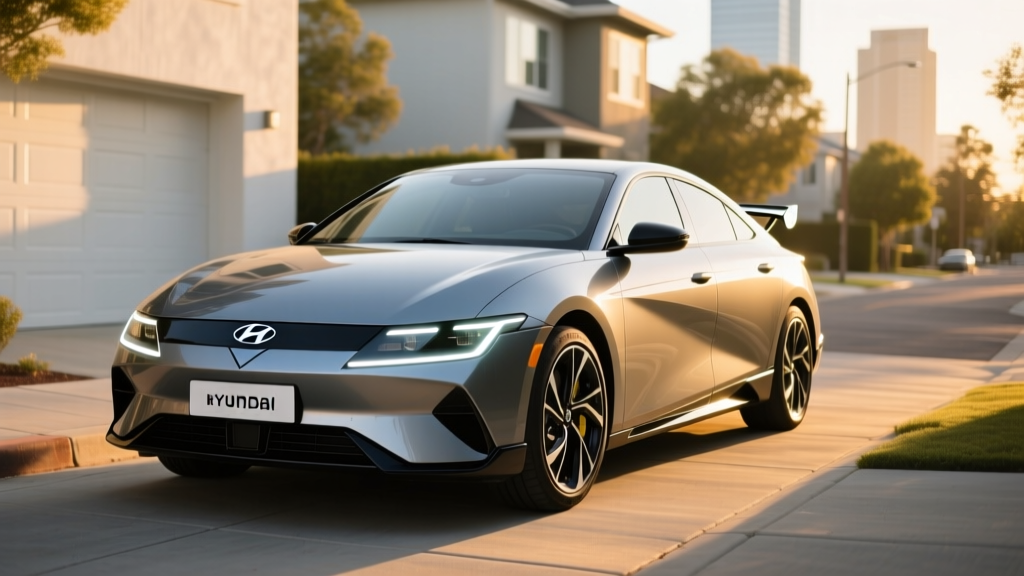
The Hyundai Ioniq 6 SE occupies a rare spot in the electric-sedan market: it delivers over 340 miles of EPA-rated range, charges at up to 350 kW on DC fast chargers, and undercuts most rivals on price — all wrapped in one of the most aerodynamic production car bodies ever sold in the US. If you've been cross-shopping the Tesla Model 3, BMW i4, or Polestar 2, the Ioniq 6 SE deserves a serious look. Here's the data-driven breakdown you need before signing any paperwork.
2026 Hyundai Ioniq 6 SE: Key Specifications at a Glance
| Spec | SE Standard Range | SE Long Range |
|---|---|---|
| EPA Range | 270 mi | 361 mi |
| Battery (Usable / Gross) | 54.0 kWh / 58.0 kWh | 74.0 kWh / 77.4 kWh |
| Battery Chemistry | NMC (Nickel Manganese Cobalt) | NMC (Gen 4) |
| Drivetrain | RWD (single motor) | RWD (single motor) |
| Horsepower / Torque | 149 hp / 258 lb-ft | 225 hp / 258 lb-ft |
| 0–60 mph | ~7.0 sec | ~5.1 sec |
| Peak DC Fast Charge | 350 kW | 350 kW |
| 10–80% DC Charge Time | ~18 min | ~18 min |
| Level 2 Home Charge Rate | 10.9 kW | 10.9 kW |
| MPGe (Combined) | 140 MPGe | 140 MPGe |
| Efficiency (kWh/100 mi) | 24 kWh | 24 kWh |
| Base MSRP | ~$38,650 | ~$43,100 |
| Warranty (Battery / Powertrain) | 10 yr / 100,000 mi | 10 yr / 100,000 mi |
Range & Efficiency: EPA Sticker vs. the Real World
The Long Range Ioniq 6 SE posts an EPA-estimated 361 miles of range — one of the highest figures in its price class. The Standard Range variant drops to 270 miles. Both achieve an impressive 140 MPGe combined (24 kWh per 100 miles), thanks in large part to the car's 0.21 drag coefficient, which is among the lowest of any production sedan on sale.
- Mixed city/suburban driving (65–75°F): Expect 330–355 miles — close to the EPA sticker thanks to strong regenerative braking and low-speed efficiency.
- Sustained highway driving (70–80 mph, 75°F): Plan for 280–310 miles. Aerodynamic drag dominates at speed, and the Ioniq 6's efficiency edge narrows.
- Cold weather (20–35°F, cabin heat on): Expect 240–290 miles — a 20–35% reduction typical of NMC chemistry without a heat pump engaged. The Ioniq 6 includes a heat pump on most trims; confirm your build includes it, as it significantly reduces winter range loss.
Source: fueleconomy.gov — verify specific trim and model year.
Efficiency is where the Ioniq 6 SE quietly excels. At 24 kWh/100 miles, it sips less energy than the Tesla Model 3 Long Range (25 kWh/100 mi) and significantly less than the Ford Mustang Mach-E (32–34 kWh/100 mi). Over 12,000 miles of annual driving, that translates to roughly 2,880 kWh — approximately $430–$580 per year at the national average electricity rate of $0.15–$0.20/kWh. Compare that to a 30-MPG gas sedan at $3.40/gallon: roughly $1,360 per year. The energy cost savings are substantial.
Charging Speed: 800-Volt Architecture Pays Off
Hyundai's E-GMP platform uses an 800-volt electrical architecture — the same found in the Kia EV6 and Genesis GV60 — enabling DC fast charging at up to 350 kW when paired with a compatible station. This is a genuine hardware advantage: most competitors in this price bracket (including the Tesla Model 3 and BMW i4) peak between 170–250 kW.
| Charge Level | Power / Voltage | Speed (Miles Added) | Notes |
|---|---|---|---|
| Level 1 (120V household) | ~1.4 kW | ~4–5 mi/hr | Emergency/top-up only; full charge takes days |
| Level 2 (240V home) | 10.9 kW | ~35–40 mi/hr | Full 0–100% in ~8–9 hours; ideal overnight |
| DC Fast (50 kW) | 50 kW | ~140 mi/hr | Common at older stations; 10–80% in ~50 min |
| DC Fast (150 kW) | 150 kW | ~380 mi/hr | Common Electrify America rate; 10–80% in ~30 min |
| DC Fast (350 kW) | Up to 350 kW | ~600+ mi/hr (peak) | 10–80% in ~18 min; requires 350-kW-capable station |
Charging curve reality check: The Ioniq 6 SE hits peak charge rate only between roughly 10–40% State of Charge. Above 60%, the curve tapers significantly — a characteristic of NMC chemistry and thermal management protecting the cells. Plan your road-trip stops around the 10–80% window for the fastest sessions. Pushing from 80–100% at a DC fast charger is painfully slow and wastes money; save that for Level 2 overnight charging at home.
Home charging setup: To unlock the full 10.9 kW Level 2 rate, you'll need a 48-amp hardwired wall charger on a 60-amp dedicated circuit. Budget $800–$1,500 for a quality Level 2 unit (ChargePoint Home Flex, Emporia Vue, or Wallbox Pulsar Plus) plus $500–$2,000 for electrician installation depending on your panel's capacity and distance from the garage. If your home has a 100-amp main panel, a panel upgrade to 200 amps could add $1,500–$3,000. Always get a licensed electrician's assessment before purchasing equipment.
The Ioniq 6 SE ships with a NACS (Tesla-style) charge port for the 2026 model year, granting native access to Tesla Supercharger stations without an adapter — a major practical advantage for road-trip charging. CCS adapter compatibility is also available for legacy networks.
Performance & Driving Dynamics
The SE Long Range's single rear motor produces 225 horsepower and 258 lb-ft of torque, delivering a 0–60 mph time of approximately 5.1 seconds. That's quick enough for confident highway merging and passing, though it won't pin you to the seat like a dual-motor AWD variant (which drops 0–60 to around 4.5 seconds on higher trims).
The Standard Range SE makes do with 149 hp and a roughly 7.0-second 0–60. It's adequate for commuting but noticeably less eager when you need passing power at speed.
Ride quality is a highlight. The Ioniq 6's multi-link rear suspension delivers composed, quiet highway manners that rival entry-level luxury sedans. Road noise is well-suppressed — noticeably quieter than the Model 3 at 70+ mph. The steering is precise if somewhat numb, and the regenerative braking system offers four levels of intensity (adjustable via steering wheel paddles), including a true one-pedal-driving mode (i-Pedal) that brings the car to a full stop without touching the brake pedal.
Interior, Cargo & Technology
Step inside and the Ioniq 6 SE presents a minimalist, dual-screen cockpit with two 12.3-inch displays (instrument cluster and infotainment) running Hyundai's latest software. Wireless Apple CarPlay and Android Auto are standard — no cable needed. The center console features a bridge-style design with useful lower storage, and ambient lighting runs across the dashboard and doors.
Passenger space is generous in front (41.7 inches of legroom) but tighter in the rear (32.7 inches) due to the sloping roofline. Adults over 5'10" will find rear headroom snug on longer trips. This is a sedan designed primarily for one or two occupants with occasional rear-seat use.
Cargo volume is the Ioniq 6's most-cited weakness: just 11.2 cubic feet in the trunk. That's roughly half the cargo space of a Tesla Model 3 (which offers 23 cu ft including its front trunk) and significantly less than the Model Y or Mach-E. The Ioniq 6 has a small front trunk (frunk) on RWD models adding about 0.5 cu ft — useful for charging cables but not much else. If you regularly haul luggage, gear, or a stroller, this is a genuine limitation.
Driver assistance: Hyundai's Highway Driving Assist 2 (HDA 2) is standard on the SE. This is an SAE Level 2 system — it handles lane centering, adaptive cruise control, and lane-change assist on highways, but the driver must keep hands on the wheel and remain fully attentive at all times. It is not autonomous driving. HDA 2 is competent and smooth, though it doesn't match the hands-free capability of GM's Super Cruise or Ford's BlueCruise on mapped highways.
Pricing, Trims & Federal Tax Credit Eligibility
The 2026 Ioniq 6 SE starts at approximately $38,650 (Standard Range RWD) and $43,100 (Long Range RWD), including destination charges. The SE is the value-oriented entry point; higher SEL and Limited trims add AWD, more power, premium interiors, and advanced tech at progressively higher prices.
| Trim | MSRP (incl. destination) | Est. §30D Credit | Effective Price |
|---|---|---|---|
| SE Standard Range RWD | ~$38,650 | Up to $7,500* | ~$31,150 |
| SE Long Range RWD | ~$43,100 | Up to $7,500* | ~$35,600 |
| SEL Long Range AWD | ~$48,500 | Up to $7,500* | ~$41,000 |
*Federal tax credit (§30D) eligibility is not automatic. Under current IRS rules, the Ioniq 6 must satisfy several conditions to qualify for the full $7,500 credit:
- MSRP cap: The vehicle's base MSRP must not exceed $55,000 (sedans). The Ioniq 6 SE and SEL clear this bar; the Limited AWD may push close — verify your build.
- Buyer income cap: Modified adjusted gross income must not exceed $150,000 (single), $225,000 (head of household), or $300,000 (joint filers).
- Battery sourcing: A percentage of critical minerals and battery components must be sourced from the US or free-trade-agreement countries. These thresholds tighten annually. Hyundai has been progressively shifting Ioniq 6 battery sourcing to the US (via the Georgia plant), but eligibility can change mid-year.
- Point-of-sale transfer: As of 2024, eligible buyers can transfer the credit to the dealer at purchase, receiving it as an immediate price reduction rather than waiting to claim it on their tax return.
Always verify current eligibility on IRS.gov's qualified vehicle list before purchasing. Rules and eligible models can change. Consult a tax professional for your specific situation.
How the Ioniq 6 SE Compares to Key Rivals
The Ioniq 6 SE doesn't exist in a vacuum. Here's how it stacks up against the sedans and crossovers most buyers cross-shop:
| Attribute | Hyundai Ioniq 6 SE LR | Tesla Model 3 LR | BMW i4 eDrive40 | Polestar 2 LR SM |
|---|---|---|---|---|
| EPA Range | 361 mi | 341 mi | 307 mi | 320 mi |
| Peak DC Charge | 350 kW | 250 kW | 205 kW | 205 kW |
| 10–80% DC Time | ~18 min | ~25 min | ~31 min | ~30 min |
| 0–60 mph | 5.1 sec | 4.2 sec | 5.5 sec | 5.9 sec |
| Cargo Space | 11.2 cu ft | 23 cu ft | 16.6 cu ft | 14.4 cu ft |
| Base MSRP | ~$43,100 | ~$44,130 | ~$52,200 | ~$49,900 |
| Warranty | 10 yr / 100k mi | 8 yr / 120k mi | 8 yr / 80k mi | 8 yr / 100k mi |
The verdict: The Ioniq 6 SE Long Range wins on EPA range, peak charging speed, and warranty coverage at a lower entry price than the BMW i4 and Polestar 2. The Tesla Model 3 Long Range offers more cargo space, quicker acceleration, and access to the mature Supercharger network (though Hyundai's NACS adoption narrows this gap in 2026). If cargo capacity is a deal-breaker, the Model 3 or a crossover like the Ioniq 5 will serve you better. If maximum range, the fastest DC charging in class, and long-term warranty peace of mind top your list, the Ioniq 6 SE makes a compelling case.
Pros, Cons & Who Should Buy the Ioniq 6 SE
- Class-leading 361-mile EPA range (Long Range)
- 350-kW DC fast charging — 10–80% in ~18 minutes on capable stations
- Excellent efficiency at 140 MPGe / 24 kWh per 100 miles
- 10-year/100,000-mile battery & powertrain warranty
- Quiet, composed highway ride quality
- NACS charge port standard — native Tesla Supercharger access
- Competitive MSRP with potential $7,500 federal credit
- Tight cargo space (11.2 cu ft) — worst in class
- Sloping roofline cuts rear headroom for taller passengers
- Single-motor SE lacks the punch of dual-motor rivals
- HDA 2 is capable but not hands-free like Super Cruise or BlueCruise
- Real-world cold-weather range loss can reach 30–35%
- Some infotainment functions buried in touch-capacitive menus
- Commuters and road-trippers who prioritize maximum range and the fastest DC charging over cargo space.
- Solo drivers or couples without frequent rear-seat passengers or bulky cargo needs.
- Value-conscious EV buyers who want luxury-adjacent efficiency and ride quality without luxury-badge pricing.
- You regularly carry rear-seat adults or need serious cargo volume (consider the Ioniq 5, Model Y, or Mach-E).
- You want hands-free highway driving (look at GM Super Cruise or Ford BlueCruise vehicles).
- You need AWD for severe winter conditions — step up to the SEL or Limited AWD trims.
Frequently Asked Questions
What is the real-world range of the Hyundai Ioniq 6 SE?
The Long Range SE is EPA-rated at 361 miles. In real-world mixed driving at moderate temperatures, expect 330–355 miles. Sustained highway driving at 75+ mph drops this to 280–310 miles. In freezing weather with cabin heat, plan for 240–290 miles — a 20–35% reduction typical of NMC batteries.
How fast does the Ioniq 6 SE charge at home and on the road?
At home on a 240V Level 2 charger (10.9 kW), the Long Range SE adds roughly 35–40 miles per hour and charges fully overnight in 8–9 hours. On a 350-kW DC fast charger, it peaks at 350 kW and reaches 10–80% in approximately 18 minutes — among the fastest in its class.
How much does the Ioniq 6 SE cost after the federal tax credit?
The Long Range SE starts at approximately $43,100. If you qualify for the full $7,500 §30D federal tax credit (meeting income, MSRP, and battery-sourcing requirements), the effective price drops to roughly $35,600. Verify current eligibility on IRS.gov before purchasing, as sourcing rules and eligible models can change.
Does the Ioniq 6 SE qualify for the federal EV tax credit?
It can, but eligibility depends on current IRS rules. The vehicle must be on the IRS qualified vehicles list, your income must fall below the caps ($150K single / $300K joint), and the MSRP must not exceed $55,000 for sedans. Hyundai's shift to US battery production has improved eligibility, but confirm your specific build before relying on the credit.
Is the Ioniq 6 SE worth buying over a Tesla Model 3?
It depends on your priorities. The Ioniq 6 SE offers more EPA range (361 vs. 341 mi), faster peak DC charging (350 vs. 250 kW), and a longer warranty (10 yr vs. 8 yr) at a slightly lower price. The Model 3 counters with significantly more cargo space, quicker acceleration, a more mature software ecosystem, and a broader Supercharger network. With Hyundai's 2026 NACS adoption, the charging-access gap has narrowed considerably.
What is the Ioniq 6 SE's battery warranty?
Hyundai covers the battery and powertrain for 10 years or 100,000 miles, whichever comes first. The warranty guarantees the battery will retain a minimum level of capacity (typically 70% State of Health). This is one of the strongest battery warranties in the industry and a significant long-term ownership advantage.
Does the Ioniq 6 have a heat pump?
A heat pump is available on the Ioniq 6, though its inclusion varies by trim and market. The heat pump significantly improves cold-weather efficiency by warming the cabin using waste heat rather than resistive heating, reducing winter range loss. Confirm heat pump inclusion on your specific build sheet.
Sources: fueleconomy.gov, Hyundai News, IRS.gov §30D qualified vehicles, IIHS.