The Ioniq 6 Paradox: World-Class Efficiency Meets Showroom Struggles
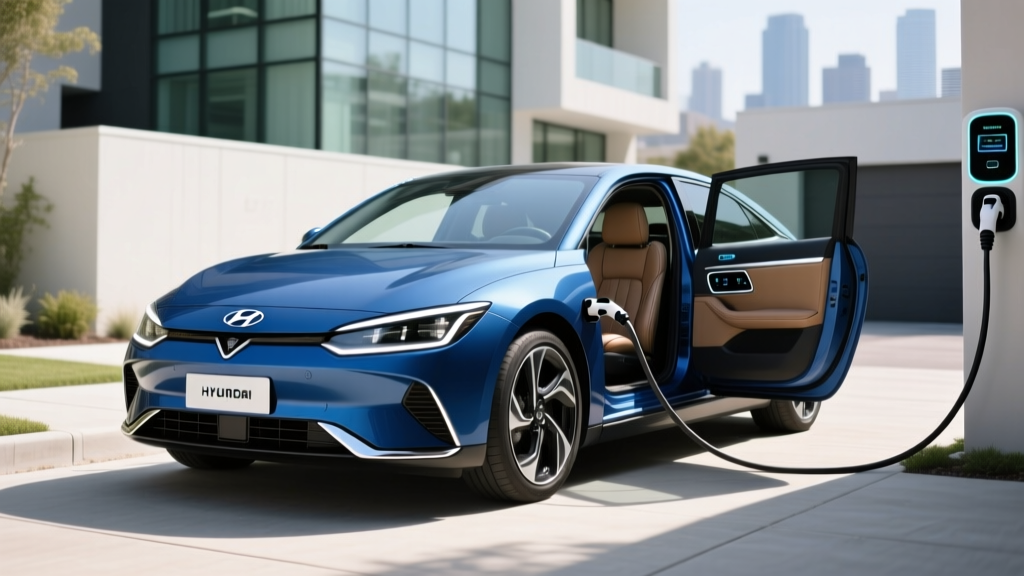
The Hyundai Ioniq 6 is one of the most aerodynamically efficient electric vehicles ever built, yet it continues to face a persistent Hyundai Ioniq 6 sales slump that puzzles industry analysts. Despite earning top safety ratings, delivering class-leading range, and offering some of the fastest DC charging on the market, the Ioniq 6 has struggled to match the sales velocity of its crossover sibling, the Ioniq 5, or segment rivals like the Tesla Model 3 and BMW i4.
After spending extended time with the 2026 Ioniq 6 across multiple trims, the reasons become clearer. It isn't a bad car — far from it. But a combination of polarizing styling, a snug rear cabin, a rapidly shifting tax-credit landscape, and an SUV-obsessed market have conspired against this sedan. For the right buyer, however, that sales slump translates into serious leverage: aggressive dealer discounts, strong lease incentives, and a compelling value proposition that deserves a second look.
Below, we break down every number that matters — range, charging, pricing, credits, and ownership realities — so you can decide whether the Ioniq 6's market struggles are your opportunity.
Range and Efficiency: The Ioniq 6's Strongest Argument
The Ioniq 6's teardrop shape (a drag coefficient of just 0.21) pays massive dividends on the highway. The EPA rates the SE Standard Range (RWD, 18-inch wheels) at 361 miles of combined range, making it one of the most efficient EVs sold in the United States. The Long Range AWD with 20-inch wheels drops to an EPA-estimated 270 miles.
| Trim / Config | EPA Range | Real-World Highway (70 mph) | Cold Weather (20°F) |
|---|---|---|---|
| SE Standard Range RWD (18") | 361 mi | ~310-325 mi | ~250-275 mi |
| SEL/Limited RWD LR (18") | 342 mi | ~290-310 mi | ~235-260 mi |
| SEL/Limited AWD LR (20") | 270 mi | ~230-245 mi | ~185-210 mi |
Efficiency leader or not, physics still applies. Sustained 70+ mph highway driving, headwinds, and elevation changes will trim 10-15% from the sticker. In sub-freezing temperatures without preconditioning, expect a 25-35% reduction. The heat pump (standard on Long Range trims) helps, but it doesn't eliminate cold-weather losses.
On the efficiency side, the SE Standard Range achieves an EPA-rated 140 MPGe combined (24 kWh/100 mi), which is exceptional. Even the AWD Long Range manages 111 MPGe combined (30 kWh/100 mi). For comparison, the Tesla Model 3 Long Range AWD sits at 117 MPGe combined. Per fueleconomy.gov, the Ioniq 6 SE Standard Range is the most efficient mainstream EV in its class.
Battery, Platform, and Powertrain Details
The Ioniq 6 rides on Hyundai Motor Group's Electric Global Modular Platform (E-GMP), the same 800-volt architecture shared with the Ioniq 5 and Kia EV6. That 800V system is the key to its charging prowess.
| Spec | Standard Range (RWD) | Long Range (RWD) | Long Range (AWD) |
|---|---|---|---|
| Battery Capacity (usable) | 54.0 kWh | 77.4 kWh | 77.4 kWh |
| Chemistry | NMC (Nickel Manganese Cobalt) | NMC | NMC |
| Drivetrain | RWD, single motor | RWD, single motor | AWD, dual motor |
| Horsepower | 149 hp | 225 hp | 320 hp |
| Torque | 258 lb-ft | 258 lb-ft | 446 lb-ft |
| 0-60 mph | ~7.0 sec | ~6.1 sec | ~4.5 sec |
| EPA Range | 361 mi | 342 mi | 270 mi |
| EPA MPGe (combined) | 140 MPGe | 125 MPGe | 111 MPGe |
| Top Speed | 115 mph | 115 mph | 115 mph |
Both battery packs use NMC chemistry, which offers higher energy density than LFP but requires more careful long-term charging habits. Hyundai recommends keeping NMC packs between 20-80% for daily use and charging to 100% only before long trips. The battery management system includes a buffer (roughly 3-4 kWh) to protect against deep discharge and overcharge degradation.
Charging Speed: 800V Architecture Delivers
This is where the Ioniq 6's E-GMP platform truly shines. The 800V architecture enables DC fast-charging speeds that most competitors — including many newer models — still can't match.
| Charging Level | Power / Rate | Standard Range (54 kWh) | Long Range (77.4 kWh) |
|---|---|---|---|
| Level 1 (120V, 12A) | ~1.4 kW | ~3-4 mi/hr | ~3-4 mi/hr |
| Level 2 (240V, 48A home) | ~10.9 kW | ~32 mi/hr / ~5.5 hr full | ~32 mi/hr / ~8 hr full |
| DC Fast Charge (peak) | Up to 350 kW* | ~18 min (10-80%) | ~18 min (10-80%) |
| DC Fast Charge (50 kW station) | 50 kW | ~55 min (10-80%) | ~75 min (10-80%) |
*Peak 350 kW is achievable only on compatible chargers (e.g., Electrify America 350 kW stalls, IONNA Rechargery) with a preconditioned battery. In real-world testing, the Ioniq 6 Long Range sustains roughly 200-240 kW through the 20-60% SoC window before tapering to ~100 kW near 80%. The 10-80% claim of 18 minutes is realistic under ideal conditions; expect 22-26 minutes on a typical 150-250 kW station.
The Ioniq 6 ships with a NACS (North American Charging Standard) port on 2026 models, granting native access to Tesla Supercharger V3 and V4 stalls without an adapter. It also retains CCS compatibility via adapter for legacy Electrify America and EVgo stations. This dual-network flexibility is a significant practical advantage.
The Ioniq 6 does not automatically precondition the battery when you navigate to a charger via the built-in route planner — unlike Tesla. You must manually enable battery preconditioning in the EV settings menu or use the "Winter Mode" to warm the pack. Arriving at a DC fast charger with a cold battery can double your 10-80% charge time. This is a common owner complaint and a real-world gotcha worth knowing before you buy.
Pricing, Trims, and the Tax Credit Question
The Ioniq 6's pricing is competitive, but the federal tax credit landscape for 2026 is complex. Here's the full trim breakdown with MSRP and credit-adjusted pricing.
| Trim | MSRP (incl. destination) | Est. §30D Credit | Effective Price |
|---|---|---|---|
| SE Standard Range | $38,650 | Up to $3,750* | ~$34,900 |
| SE Long Range | $43,500 | Up to $3,750* | ~$39,750 |
| SEL Long Range | $47,400 | Up to $3,750* | ~$43,650 |
| Limited Long Range | $53,200 | Up to $3,750* | ~$49,450 |
*Critical tax credit caveats: Under current IRS §30D rules, the Ioniq 6 qualifies for a partial credit (typically $3,750) because it meets the critical minerals requirement but does not fully satisfy the battery component sourcing threshold for the full $7,500. This can change as Hyundai shifts sourcing. Additional requirements:
- MSRP cap: Sedans must be under $55,000 — the Limited trim is close to this threshold and may exceed it with options.
- Income cap: Modified AGI must not exceed $150,000 (single), $225,000 (head of household), or $300,000 (joint).
- Point-of-sale transfer: You can transfer the credit to the dealer at purchase for an immediate price reduction (effective Jan 2024 onward).
- Battery sourcing: Requirements tighten annually. Verify current-year eligibility on the IRS clean vehicle credit page before purchasing.
Because the Ioniq 6's battery cells are sourced from SK On (with manufacturing in the U.S. via the BlueOval SK joint venture), partial credit eligibility is likely to persist through 2026, but always confirm with your tax professional and the IRS clean vehicle credit page before signing.
Interior, Cargo, and Daily Livability
The Ioniq 6's cabin is where the sales-slmup narrative gains traction. The interior design is minimalist and futuristic, with dual 12.3-inch displays, ambient lighting with 64 colors, and Hyundai's latest infotainment software with wireless Apple CarPlay and Android Auto. The center console features a bridge-style design with physical buttons for climate and drive mode — a welcome choice in an era of touchscreen-only frustration.
However, the sedan's swooping roofline creates real compromises:
| Dimension | Ioniq 6 | Ioniq 5 (comparison) |
|---|---|---|
| Front Headroom | 39.3 in | 39.7 in |
| Rear Headroom | 37.1 in | 38.7 in |
| Rear Legroom | 35.5 in | 39.4 in |
| Cargo Volume (trunk) | 12.3 cu ft | 27.2 cu ft (behind rear seats) |
| Frunk (front trunk) | 0.5 cu ft (14.5 L) | 0.9 cu ft (24 L) |
The 12.3 cu ft trunk is adequate for a week's groceries or two carry-on suitcases, but the narrow opening and shallow depth make it impractical for bulky items. Rear headroom is tight for passengers over 6 feet tall, and the frunk is essentially a charging-cable cubby rather than usable storage. For families who need cargo versatility, this is the single biggest reason buyers cross-shop the Ioniq 5 instead.
Technology, ADAS, and Safety
The Ioniq 6 comes loaded with Hyundai SmartSense, the brand's Level 2 (SAE) driver-assistance suite. Key features include:
- Highway Driving Assist 2 (HDA 2): Adaptive cruise with lane centering and lane-change assist on divided highways. Competent and smooth, but requires hands on the wheel at all times.
- Navigation-Based Smart Cruise Control: Automatically adjusts speed for curves and speed-limit changes.
- Remote Smart Parking Assist: The car can park and unpark itself in tight spaces via the key fob — a genuinely useful party trick.
- Digital Key 2: Use your smartphone (NFC/UWB) as a key, and share access with family members.
- Over-the-air (OTA) updates: Hyundai pushes firmware updates for powertrain calibration, infotainment, and ADAS improvements.
- V2L (Vehicle-to-Load): Power laptops, camping gear, or appliances via an interior outlet or exterior adapter (up to 3.6 kW on Long Range trims).
HDA 2 is an SAE Level 2 driver-assistance system. You must remain alert, keep your hands on the wheel, and be prepared to take over instantly. It does not navigate city streets autonomously, does not handle construction zones reliably, and is not comparable to Waymo's Level 4 robotaxi service. Treat it as an advanced cruise control, not a replacement for an attentive driver.
Safety ratings are excellent. The Ioniq 6 earned a TOP SAFETY PICK+ from IIHS and a 5-Star overall rating from NHTSA. Standard features include forward collision-avoidance assist with pedestrian/cyclist detection, blind-spot collision-avoidance, rear cross-traffic alert, and safe exit assist.
Warranty and Long-Term Ownership
Hyundai's warranty coverage remains among the best in the industry:
| Coverage | Term |
|---|---|
| New Vehicle Limited | 5 years / 60,000 miles |
| Powertrain (incl. motors) | 10 years / 100,000 miles |
| EV Battery Capacity | 10 years / 100,000 miles (retains ≥70% capacity) |
| Roadside Assistance | 5 years / unlimited miles |
| Complimentary Maintenance | 3 years / 36,000 miles |
The 70% capacity retention threshold over 10 years is standard for the industry. Real-world data from Ioniq 5 owners (same E-GMP platform, similar NMC chemistry) suggests degradation of roughly 5-8% over the first 3 years/60,000 miles under normal use — well within warranty limits. Long-term battery replacement cost, should it ever be needed out of warranty, is estimated at $12,000-$18,000 based on current E-GMP pack pricing, though this figure is expected to decline as battery costs continue falling.
Why the Sales Slump? And Should You Care?
The Ioniq 6's sales struggles stem from identifiable factors, none of which are dealbreakers for the right buyer:
- Sedan stigma: The U.S. market has shifted decisively toward crossovers and SUVs. The Ioniq 5 outsells the Ioniq 6 roughly 3:1 despite sharing the same platform.
- Polarizing design: The "Electrified Streamliner" styling draws strong reactions. Some love it; many find the rear end awkward and the cabin claustrophobic.
- Tesla Model 3 price war: Aggressive Tesla pricing and the refreshed Highland Model 3 have compressed the value proposition for all EV sedans.
- Tax credit uncertainty: Partial credit eligibility ($3,750 vs. $7,500) makes the Ioniq 6 less compelling on paper than vehicles that qualify for the full amount.
- Limited awareness: Hyundai's EV marketing budget has favored the Ioniq 5 and the three-row Ioniq 9, leaving the 6 underpromoted.
For buyers who want a sedan, these market dynamics are actually advantageous. Dealers are more willing to negotiate, lease deals are frequently subsidized by Hyundai Motor Finance, and you're getting a vehicle that is objectively excellent in efficiency, charging, and safety — just not in cargo space or rear-seat comfort.
Choose the Ioniq 6 if: You commute 30-80 miles daily, prioritize efficiency and range above all else, have access to home Level 2 charging, rarely carry more than two passengers, and want one of the fastest-charging EVs on the market at a negotiable price.
Choose the Ioniq 5 (or another EV) if: You need cargo space for a family, regularly carry rear-seat adults over 6 feet tall, want full $7,500 tax credit eligibility, or prefer a crossover ride height and hatchback versatility.
- Class-leading efficiency (140 MPGe, 361 mi EPA on SE Std Range)
- Ultra-fast 800V DC charging (10-80% in ~18 min under ideal conditions)
- NACS port standard on 2026 models — native Tesla Supercharger access
- Excellent safety ratings (IIHS TSP+, NHTSA 5-Star)
- Strong warranty (10 yr/100k mi battery & powertrain)
- Aggressive dealer discounts due to sales pressure
- V2L capability for camping and emergency power
- Tight rear headroom and legroom vs. crossover alternatives
- Small 12.3 cu ft trunk with narrow opening
- Manual battery preconditioning (no automatic nav-based warm-up)
- Partial federal tax credit ($3,750 vs. full $7,500)
- NMC chemistry requires 20-80% daily discipline
- Low resale value projections due to weak demand
- Polarizing exterior design limits broad appeal
Frequently Asked Questions
What is the real-world range of the Hyundai Ioniq 6?
The EPA rates the SE Standard Range at 361 miles and the Long Range AWD at 270 miles. In real-world highway driving at 70 mph, expect roughly 310-325 miles from the Standard Range and 230-245 miles from the AWD Long Range. In cold weather (below 30°F), reduce those figures by 25-35% unless you precondition the battery while plugged in.
How fast does the Ioniq 6 charge at home and on the road?
At home on a 48-amp Level 2 charger (240V), the Ioniq 6 adds roughly 32 miles of range per hour, fully charging the Long Range pack in about 8 hours. On a 350 kW DC fast charger with a preconditioned battery, it can charge from 10-80% in approximately 18 minutes — one of the fastest in its class thanks to 800V architecture.
How much does the Ioniq 6 cost after tax credits?
The 2026 Ioniq 6 starts at $38,650 for the SE Standard Range and goes up to $53,200 for the Limited Long Range. With the current partial §30D federal credit of up to $3,750 (subject to income and sourcing requirements), effective prices range from roughly $34,900 to $49,450. Always verify eligibility with the IRS and your tax professional before purchasing.
Is the Ioniq 6 worth buying vs. the Tesla Model 3 or Ioniq 5?
If you want maximum range and efficiency in a sedan, the Ioniq 6 SE Standard Range is hard to beat at 361 EPA miles and 140 MPGe. The Tesla Model 3 Long Range AWD offers more rear space, a more mature Supercharger network experience (though the gap has narrowed with NACS adoption), and full self-driving hardware (Level 2). The Ioniq 5 offers vastly more cargo room and rear-seat comfort on the same platform. The Ioniq 6 wins on efficiency; the others win on practicality.
Does the Hyundai Ioniq 6 qualify for the full $7,500 federal EV tax credit?
No. Under current IRS §30D rules, the Ioniq 6 qualifies for a partial credit of up to $3,750 because it meets the critical minerals requirement but does not fully satisfy the battery component sourcing threshold. Eligibility also depends on your income (capped at $150K/$300K depending on filing status), the vehicle's MSRP (sedans must be under $55,000), and annual sourcing rule changes. Confirm on IRS.gov before committing.
How long will the Ioniq 6 battery last?
Hyundai warranties the battery for 10 years or 100,000 miles with a minimum 70% capacity retention guarantee. Based on E-GMP platform data from the Ioniq 5, real-world degradation is approximately 5-8% over the first 60,000 miles with normal charging habits (20-80% daily, occasional 100% for trips). With proper care, the pack should deliver well over 200,000 miles before approaching the warranty threshold.
Why is the Ioniq 6 selling poorly compared to the Ioniq 5?
The primary factors are the U.S. market's strong preference for crossovers over sedans, the Ioniq 6's polarizing design, tighter rear-seat and cargo space, and partial rather than full federal tax credit eligibility. None of these reflect fundamental vehicle quality — the Ioniq 6 is objectively excellent in efficiency, charging, and safety. The sales slump is more about market positioning than product failure.