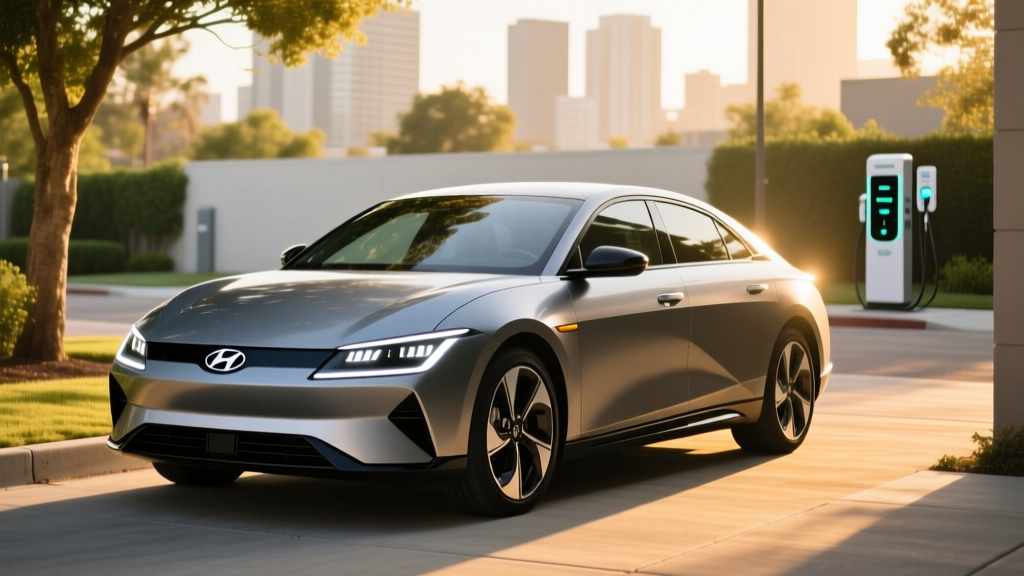
The Hyundai Ioniq 6 pairs a striking aerodynamic silhouette with one of the most efficient powertrains in the midsize electric-sedan segment. But for family buyers and daily commuters alike, the question that often tops the research list isn't just range — it's crash protection. This review digs into the Hyundai Ioniq 6 safety ratings from both the IIHS and NHTSA, then layers in the real-world range, charging speed, pricing, and ownership data you need before signing a lease or purchase agreement in 2026.
2026 Hyundai Ioniq 6 at a Glance: Key Specs
| Spec | SE/SEL RWD | SEL/Limited AWD |
|---|---|---|
| EPA Range | 361 mi (SE Light Long Range) | 316 mi (Limited AWD) |
| Battery (usable) | 77.4 kWh (NMC) | 77.4 kWh (NMC) |
| Peak DC Fast Charge | Up to 350 kW (800V architecture) | |
| 10–80% DC Charge Time | ~18 minutes (at 350 kW station) | |
| Level 2 Home Charge (11 kW) | ~7 hr 10 min (0–100%) | |
| Horsepower | 225 hp (single motor) | 320 hp (dual motor) |
| 0–60 mph | ~6.1 sec | ~4.5 sec |
| MPGe (combined) | 140 MPGe | 111 MPGe |
| EPA Efficiency | 24 kWh/100 mi | 30 kWh/100 mi |
| Base MSRP | ~$37,500 | ~$46,500 (Limited) |
| Battery Warranty | 10 yr / 100,000 mi | |
| Basic Warranty | 5 yr / 60,000 mi | |
Hyundai Ioniq 6 Safety Ratings: IIHS and NHTSA Results
Hyundai engineered the Ioniq 6 on the E-GMP (Electric Global Modular Platform), which positions the heavy battery pack low in the chassis for a favorable center of gravity and uses hot-stamped ultra-high-strength steel around the passenger cell. The results from the two major U.S. testing bodies reflect that engineering investment.
NHTSA 5-Star Overall Rating
The National Highway Traffic Safety Administration (NHTSA) awarded the Ioniq 6 its top 5-Star Overall Safety Rating, with 5 stars in frontal crash, 5 stars in side crash, and 4 stars in rollover resistance. That 4-star rollover score is typical for sedans with a low roofline and is not a concern for real-world driving — the Ioniq 6's battery placement gives it an exceptionally low rollover risk compared to tall-riding EV SUVs.
IIHS Top Safety Pick+
The Insurance Institute for Highway Safety (IIHS) named the Ioniq 6 a Top Safety Pick+ — the organization's highest honor. The sedan earned "Good" ratings across every crashworthiness test, including the updated moderate overlap front test (which now evaluates rear-seat occupant protection) and the side crash test with the heavier moving barrier. The standard LED projector headlights scored "Acceptable" on base trims and "Good" when equipped with the curve-adaptive lighting on higher trims, while the forward collision warning system earned a "Superior" rating for both daytime and nighttime pedestrian detection.
Standard Hyundai SmartSense ADAS Features
Every Ioniq 6 ships with a comprehensive Level 2 driver-assistance suite. Remember: SAE Level 2 means the driver must remain fully engaged — hands on or near the wheel, eyes on the road. The system assists but does not replace you. Key standard features include:
- Forward Collision-Avoidance Assist (FCA) with pedestrian, cyclist, and junction-turning detection
- Highway Driving Assist 2 (HDA 2) — adaptive cruise with lane centering and lane-change assist
- Blind-Spot Collision-Avoidance Assist with rear cross-traffic braking
- Rear Occupant Alert — reminds you to check the back seat
- Safe Exit Warning — alerts if a cyclist or car approaches as you open a door
Real-World Range: What the EPA Number Doesn't Tell You
Real-world expectation: ~290–320 mi highway at 70 mph; ~230–260 mi in sub-30°F cold weather
The Ioniq 6 SE Light Long Range achieves its headline 361-mile EPA figure thanks to a remarkably low drag coefficient of 0.21 — the slipstream bodywork, flush door handles, and camera-based digital side mirrors (where equipped) all contribute. In practice, you'll see this efficiency on mixed suburban driving at moderate speeds.
On sustained highway runs at 70–75 mph, expect to use roughly 26–28 kWh/100 mi in mild weather, translating to approximately 290–320 miles of real range from a full charge. The AWD Limited trim, with its larger 20-inch wheels and dual-motor drivetrain, dips closer to 30–32 kWh/100 mi on the highway, yielding around 250–280 real-world miles.
Cold weather (below 30°F) remains the great equalizer for all EVs. The Ioniq 6's standard heat pump helps mitigate cabin-heating energy draw, but battery chemistry slows in the cold. Expect a 20–30% range reduction in deep winter — so that 361-mile SE becomes roughly 250–280 miles on a frigid January morning. Preconditioning the battery while plugged in (using the Hyundai app) recovers some of that loss.
Charging Speed: 800V Architecture Pays Off
The Ioniq 6 uses Hyundai Motor Group's 800V electrical architecture — the same platform underpinning the Ioniq 5 and Kia EV6. This enables DC fast charging at up to 350 kW when paired with a capable station, which is among the fastest in the segment.
| Charging Level | Power | Speed / Time |
|---|---|---|
| Level 1 (120V household) | ~1.4 kW | ~3–4 mi/hr added |
| Level 2 (240V home, 48A) | ~10.9 kW | ~35–38 mi/hr; 0–100% in ~7 hr |
| DC Fast Charge (350 kW station) | Peak 235–250 kW sustained | 10–80% in ~18 min |
| DC Fast Charge (150 kW station) | ~130–150 kW sustained | 10–80% in ~25 min |
A critical nuance: while the Ioniq 6 can connect to a 350 kW charger, the peak rate it actually draws is closer to 235–250 kW in the 10–50% state-of-charge window, tapering significantly above 80% as the battery management system protects cell longevity. This is normal charge-curve behavior, not a flaw. The 18-minute 10–80% figure is achievable at Electrify America or similar 350 kW-capable stations in moderate temperatures with battery preconditioning active.
For home charging, a Level 2 wallbox on a 240V/60A circuit (delivering ~48A to the car) replenishes the 77.4 kWh battery overnight. Most owners who plug in each evening never need to think about public charging for daily driving. According to fueleconomy.gov, home Level 2 charging costs roughly $0.12–0.16 per kWh on average U.S. residential rates, making a full charge approximately $9–12 — dramatically cheaper than a tank of gasoline.
Pricing, Trims, and Federal Tax Credit Eligibility
The 2026 Ioniq 6 is offered across several trims. Pricing below reflects base MSRP before destination charges:
| Trim | Drivetrain | Base MSRP | Est. After §30D Credit* |
|---|---|---|---|
| SE Standard Range | RWD | ~$37,500 | ~$30,000 |
| SE Light Long Range | RWD | ~$42,500 | ~$35,000 |
| SEL | RWD or AWD | ~$44,000 | ~$36,500 |
| Limited | AWD | ~$51,000 | ~$43,500 |
*Tax credit estimates assume full $7,500 eligibility. Actual credit depends on individual circumstances.
Does the Ioniq 6 Qualify for the §30D Federal Tax Credit?
The Hyundai Ioniq 6's eligibility for the IRS §30D New Clean Vehicle Credit requires careful attention, because the rules involve several overlapping requirements:
- MSRP cap: Sedans must have an MSRP at or below $55,000. The SE, SEL, and most SEL AWD trims qualify. The Limited AWD at ~$51,000 clears the cap, but adding packages could push it above — verify on the window sticker.
- Buyer income limits: Adjusted gross income must not exceed $150,000 (single), $225,000 (head of household), or $300,000 (joint filers).
- Battery sourcing & critical minerals: The percentage of battery components manufactured in North America and critical minerals sourced from FTA partners must meet escalating annual thresholds. Hyundai has shifted some Ioniq 6 production to the U.S. (via the Metaplant in Georgia), improving eligibility — but exact qualification can change throughout the year.
- Point-of-sale transfer: As of 2024, you can transfer the credit to the dealer at purchase, reducing your out-of-pocket cost immediately rather than waiting to claim it on your tax return.
Interior Space, Cargo, and Daily Practicality
The Ioniq 6's teardrop shape creates an airy cabin with a flat floor (no transmission tunnel), but the sloping roofline does eat into rear headroom and trunk space compared to a boxy SUV.
- Front headroom: 40.2 inches
- Front legroom: 41.7 inches
- Rear headroom: 37.4 inches (noticeably less than the Ioniq 5's 38.7 in)
- Rear legroom: 38.2 inches
- Cargo volume (trunk): 12.3 cu ft
- Frunk (front trunk): 0.5 cu ft (RWD) / 0.2 cu ft (AWD) — enough for charging cables only
The trunk's 12.3 cubic feet is tight for a sedan this size — blame the fastback design. It'll handle two carry-on bags and a few grocery bags, but a family road trip requires packing discipline. The frunk is essentially a cable cubby, not usable storage. If cargo versatility matters, the Ioniq 5 or Kia EV6 offer significantly more with their hatchback designs.
Up front, the dual 12-inch displays (instrument cluster and infotainment) run Hyundai's latest software with wireless Apple CarPlay and Android Auto. Physical climate-control buttons below the screen are a welcome usability improvement over the touch-capacitive sliders on earlier models. Over-the-air updates keep the system current, and the available Digital Key 2 lets you use your phone as a key fob.
Pros, Cons, and Who Should Buy the Ioniq 6
Pros
- Top Safety Pick+ with 5-star NHTSA rating
- Best-in-class efficiency at 140 MPGe (SE LR)
- Ultra-fast 800V DC charging (~18 min 10–80%)
- 10-year/100,000-mile battery warranty
- Low drag coefficient (0.21) aids real-world highway range
- Strong standard ADAS suite (HDA 2, FCA, blind-spot)
Cons
- Small trunk (12.3 cu ft) and tiny frunk
- Rear headroom compromised by fastback roofline
- No rear wiper (visibility issue in rain)
- NACS adapter needed for Tesla Supercharger access (native CCS1 port)
- Infotainment can lag; no physical volume knob
- Limited trim may exceed MSRP cap for tax credit
Who the Ioniq 6 Suits Best
Buy it if: You're a commuter or couple prioritizing efficiency, top-tier crash safety, and fast road-trip charging over cargo space. The SE Long Range RWD is the sweet spot — 361 miles of EPA range, 140 MPGe, and it comfortably clears the §30D MSRP cap.
Look elsewhere if: You regularly haul kids in car seats (rear access is tighter than a crossover), need serious cargo space (Ioniq 5 or EV6), or rely exclusively on Tesla Superchargers without wanting to carry a NACS adapter.
How the Ioniq 6 Stacks Up Against Key Rivals
| Spec | Hyundai Ioniq 6 SE LR | Tesla Model 3 LR | BMW i4 eDrive40 |
|---|---|---|---|
| EPA Range | 361 mi | 363 mi | 307 mi |
| Battery | 77.4 kWh (NMC) | ~79 kWh (NMC) | 83.9 kWh (NMC) |
| Peak DC Charge | ~250 kW (350 station) | ~250 kW | ~205 kW |
| 10–80% DC Time | ~18 min | ~25 min | ~31 min |
| MPGe (combined) | 140 | 132 | 109 |
| Base MSRP | ~$42,500 | ~$42,500 | ~$52,200 |
| §30D Credit Eligible | Yes (most trims) | Yes (qualifying builds) | No (MSRP > $55K) |
| IIHS Rating | Top Safety Pick+ | Top Safety Pick+ | Not yet rated (2026) |
| Cargo | 12.3 cu ft | 23 cu ft (hatch) | 17 cu ft (hatch) |
The Ioniq 6 trades punches with the Model 3 Long Range on efficiency and range but wins on DC charging speed and standard warranty coverage. The Model 3's hatchback trunk is far more practical, and its native NACS connector grants seamless Supercharger access — an advantage that's shrinking as Hyundai offers a NACS adapter and the Supercharger network opens to CCS vehicles via Magic Dock. The BMW i4 is a premium option but costs significantly more and charges slower.
Frequently Asked Questions
What is the real-world range of the Hyundai Ioniq 6?
The EPA rates the SE Light Long Range RWD at 361 miles and the Limited AWD at 316 miles. In real-world highway driving at 70 mph in mild weather, expect roughly 290–320 miles from the RWD and 250–280 from the AWD. In sub-30°F cold, subtract 20–30%. Preconditioning while plugged in helps recover range in winter.
How fast does the Ioniq 6 charge at home and on the road?
On a Level 2 home charger (240V, ~11 kW), a full charge takes about 7 hours — easily overnight. On a 350 kW DC fast charger, the 10–80% charge takes approximately 18 minutes, with peak draw around 235–250 kW. At a more common 150 kW station, plan on about 25 minutes for the same 10–80% session. The 800V architecture gives the Ioniq 6 a meaningful charging advantage over 400V competitors.
How much does the Ioniq 6 cost after the federal tax credit?
The SE Light Long Range starts around $42,500. With the full $7,500 §30D credit applied at point of sale, your effective cost drops to roughly $35,000 before destination, taxes, and dealer fees. Eligibility depends on your income (≤$150K single / ≤$300K joint), the vehicle's MSRP (≤$55K for sedans), and battery-sourcing requirements that change annually. Always verify with the IRS or a tax professional before purchasing.
Is the Ioniq 6 worth buying vs. the Tesla Model 3 or Ioniq 5?
If crash safety, efficiency, and fast DC charging top your list, the Ioniq 6 is an outstanding choice — its Top Safety Pick+ rating and 140 MPGe are hard to beat. If you prioritize cargo versatility and rear-seat space, the Ioniq 5 or Model 3 (with its hatchback trunk) are more practical. The Model 3 also has native Supercharger access, though the gap is narrowing with adapters.
What are the biggest drawbacks of the Ioniq 6?
The fastback design creates a small 12.3 cu ft trunk and compromised rear headroom. The frunk is barely usable. There's no rear wiper, which hurts wet-weather visibility. The native CCS1 port requires a NACS adapter for Tesla Supercharger access. And the Limited trim's price creeps close to the $55,000 MSRP cap for tax credit eligibility.
Does the Hyundai Ioniq 6 qualify for the federal EV tax credit in 2026?
Most trims of the Ioniq 6 qualify for the §30D credit (up to $7,500), provided you meet income limits and the vehicle's battery sourcing satisfies current-year thresholds. Hyundai's shift of Ioniq 6 production to its Georgia Metaplant has improved North American component sourcing. However, rules tighten annually — confirm eligibility on irs.gov or with your dealer before signing.