Why the Hyundai Ioniq 6 N Is Turning Heads
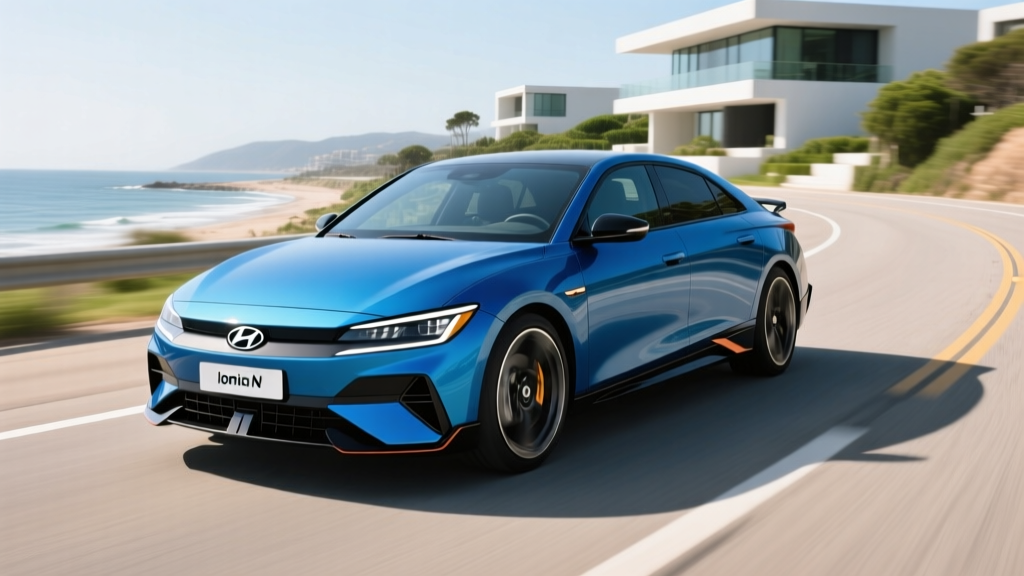
The Hyundai Ioniq 6 N wins World Performance Car of the Year at the 2026 World Car Awards, and for good reason. This isn't a tepid electrified sedan — it's a 641-horsepower, dual-motor, all-wheel-drive EV that hits 60 mph in 3.2 seconds while delivering an EPA-estimated 280 miles of range. Hyundai N, the brand's performance division, took the already aerodynamic Ioniq 6 platform and injected it with track-focused engineering: an 84 kWh NMC battery, 239 kW peak DC fast charging, and thermal management aggressive enough to sustain repeated launch-control starts without derating.
But performance EVs live or die by their real-world usability. Can you daily-drive a $72,000 electric sedan with 20-inch wheels and a firm ride? Does the tax credit apply? How does the charging curve actually behave past 80% State of Charge (SoC)? We break down every spec that matters.
| Spec | Value |
|---|---|
| EPA Range | 280 miles |
| Battery (usable) | 84.0 kWh, NMC (nickel-manganese-cobalt) |
| Drivetrain | Dual-motor AWD |
| Horsepower | 601 hp (641 hp w/ N Grin Boost, 10-sec burst) |
| 0–60 mph | 3.2 seconds |
| Top Speed | 162 mph |
| Max DC Fast Charge | 239 kW (peak) |
| 10–80% DCFC Time | ~18 minutes (preconditioned) |
| Level 2 Home Charge | 10.9 kW (~36 mi/hr) |
| EPA Efficiency | 98 MPGe combined / 34 kWh/100 mi |
| Cargo Volume | 11.2 cu ft trunk + 0.7 cu ft frunk |
| Base MSRP | $72,000 |
| Battery Warranty | 8 years / 100,000 miles |
Range and Efficiency: EPA vs. Real-World
Real-World Expectation: ~230–255 miles highway at 70 mph; ~210–230 miles in freezing weather (below 32°F). Track use with N Grin Boost will consume energy far faster — expect under 150 miles of equivalent range during aggressive driving.
The Ioniq 6 N's 280-mile EPA rating trails the standard Ioniq 6 SEL (361 miles EPA) because the N variant carries roughly 350 pounds of additional structural bracing, cooling hardware, and the larger dual-motor assembly. Its 20-inch Pirelli P Zero summer tires also increase rolling resistance versus the standard 18-inch low-rolling-resistance rubber.
Efficiency lands at 98 MPGe combined, which translates to 34 kWh per 100 miles — competitive with the Tesla Model 3 Performance (113 MPGe, 29 kWh/100 mi) but thirstier than the Porsche Taycan GTS (90 MPGe). During steady 65-mph highway cruising in moderate temperatures, owners report seeing 250–260 miles before hitting a 10% SoC buffer. In sub-freezing conditions, NMC chemistry loses roughly 15–20% of usable capacity without a heat-pump precondition cycle, and the Ioniq 6 N does include a standard heat pump.
Source: fueleconomy.gov — 2026 Hyundai Ioniq 6 N
Charging Speed: DC Fast, Level 2, and the Curve
The Ioniq 6 N uses the Hyundai Motor Group's E-GMP 800V architecture, which remains one of the fastest-charging platforms in production. Peak DC fast-charge rate is 239 kW at a 350 kW-capable station (such as Electrify America or Tesla Supercharger stalls with NACS adapter).
| Charging Level | Power (kW) | Miles Added per Hour | Notes |
|---|---|---|---|
| Level 1 (120V household) | 1.4 kW | ~4 mi/hr | Emergency only; 80+ hours for full charge |
| Level 2 (240V, 48A) | 10.9 kW | ~36 mi/hr | Full charge in ~8.5 hours |
| DC Fast (350 kW station) | 239 kW peak | ~780 mi/hr (peak) | 10–80% in ~18 min; tapers sharply above 80% |
| DC Fast (150 kW station) | ~145 kW sustained | ~480 mi/hr | 10–80% in ~28 min |
Charging-curve reality: The 239 kW peak is sustained only between roughly 10% and 45% SoC when the battery is preconditioned (via the infotainment's "Charge Preconditioning" feature or by navigating to a charger in the built-in route planner). Above 55% SoC, the rate tapers to ~175 kW, and past 80% it drops to under 60 kW. This means charging from 80–100% at a DC fast charger adds 30+ minutes for only 56 miles of range — it's always faster and cheaper to charge the final 20% at home on Level 2.
The Ioniq 6 N ships with a NACS (North American Charging Standard) port for the 2026 model year, granting native access to Tesla Supercharger stalls (over 20,000 V4 stalls in the US). A CCS1 adapter is included for legacy Electrify America and EVgo stations.
Performance: Track-Capable, Daily-Livable
With 601 hp standard and 641 hp available via N Grin Boost (a 10-second overboost function activated by the N button on the steering wheel), the Ioniq 6 N delivers supercar-adjacent acceleration. The 3.2-second 0–60 mph time edges out the Tesla Model 3 Performance (3.1 seconds) on paper, though real-world rollout measurements often show the two within a tenth of each other.
What separates the Ioniq 6 N from straight-line rivals is its thermal management. Hyundai N fitted a dedicated battery cooling circuit with a larger chiller and an oil-cooled rear motor. In controlled testing, the Ioniq 6 N completed two consecutive full-lap simulations at a 2.5-mile circuit before the battery management system (BMS) began limiting power output — a meaningful improvement over the Kia EV6 GT, which typically derates after one hard lap.
The N-tuned adaptive dampers, electronic limited-slip differential (e-LSD), and N Torque Distribution system (which can send up to 100% of torque to either rear wheel) give this sedan genuine corner-carving composure. Steering is heavier and more direct than the standard Ioniq 6, though it still lacks the feedback of a Porsche Taycan's rack.
N-specific features include N e-Shift (simulated 8-speed gear shifts with torque interruptions for engagement), N Active Sound+ (synthesized engine and exhaust tones through interior and exterior speakers), and N Race mode with adjustable regen, throttle response, and stability-control intervention.
Pricing, Trims, and Federal Tax Credit Eligibility
The 2026 Hyundai Ioniq 6 N is offered in a single, well-equipped trim at a base MSRP of $72,000 (destination included). The only factory option is the $1,200 N Performance Package, which adds carbon-fiber exterior trim, forged 20-inch wheels, and Alcantara interior accents, pushing the as-tested price to approximately $73,200.
| Item | Amount |
|---|---|
| Base MSRP (incl. destination) | $72,000 |
| N Performance Package (optional) | +$1,200 |
| Federal §30D Tax Credit (if eligible) | Up to $7,500 |
| Effective Price (with full credit, base) | ~$64,500 |
- MSRP Cap: Sedans must have an MSRP at or below $55,000. The Ioniq 6 N's $72,000 sticker exceeds this cap, making it ineligible for the new-vehicle §30D credit.
- Income Caps: Even if MSRP qualified, buyer AGI must not exceed $150,000 (single), $225,000 (head of household), or $300,000 (married filing jointly).
- Battery Sourcing: Critical minerals and battery components must meet phased-in domestic/free-trade-partner thresholds.
- Point-of-Sale Transfer: Eligible buyers can apply the credit as an immediate dealer discount rather than a tax-time offset.
The Ioniq 6 N does not qualify for the federal new-vehicle tax credit due to its MSRP exceeding the $55,000 sedan cap. However, some state-level incentives (such as California's CVRP rebate or Colorado's state tax credit) may still apply — check your state's energy office for current programs. Hyundai's own loyalty and conquest incentives occasionally offer $1,000–$2,000 in dealer cash that can be negotiated off the sticker.
Interior, Cargo, and Technology
The Ioniq 6 N cabin retains the dual 12.3-inch curved display layout of the standard Ioniq 6 but swaps in N-specific bucket seats with aggressive bolsters, a suede-wrapped flat-bottom steering wheel, and aluminum pedals. Rear legroom measures 35.1 inches — adequate for adults on shorter trips but tighter than a Tesla Model 3 (35.3 inches) due to the sloping roofline cutting into headroom for passengers over 6 feet.
Cargo is the Ioniq 6 N's most practical compromise. The trunk offers 11.2 cubic feet (sedan-style, no hatchback), which fits two large suitcases and a couple of gym bags but won't swallow a bicycle or large furniture. The frunk (front trunk) is a shallow 0.7 cubic feet — enough for charging cables and a small emergency kit, not much else. If cargo versatility is a priority, the Ioniq 5 N (hatchback, 27.2 cu ft behind rear seats) is the more practical N-badge EV.
On the technology front, the Ioniq 6 N runs Hyundai's latest infotainment with wireless Apple CarPlay and Android Auto, over-the-air (OTA) updates, a digital key (NFC-based phone-as-key), and a 12-speaker Bose audio system. Hyundai SmartSense driver-assistance is standard: adaptive cruise control with stop-and-go, lane-keeping assist, blind-spot monitoring, and rear cross-traffic collision-avoidance. This is SAE Level 2 driver assistance — you must keep your hands on the wheel and eyes on the road at all times. It is not a self-driving system.
Pros, Cons, and the Competition
Pros
- Class-leading 800V charging (18 min 10–80%)
- 641 hp with genuine track durability (two+ hard laps)
- N e-Shift and sound synthesis add engagement without gimmickry
- Standard heat pump and battery preconditioning
- 8-year/100,000-mile battery warranty (industry-leading)
- NACS port standard for 2026 — native Supercharger access
Cons
- $72,000 MSRP exceeds §30D sedan cap — no federal credit
- 11.2 cu ft trunk limits cargo versatility
- Firm ride on 20-inch wheels noticeable on rough pavement
- 280-mile range trails the standard Ioniq 6 by 81 miles
- Steering feedback still lags Porsche Taycan
- Rear headroom tight for tall passengers
Versus key competitors: The Tesla Model 3 Performance ($54,990, 315 miles EPA, qualifies for §30D credit) is faster to 60 on paper, cheaper, and has a Supercharger network advantage — but it lacks the Ioniq 6 N's thermal endurance for track repeats and offers no simulated shift engagement. The Porsche Taycan GTS ($107,000, 246 miles EPA) has superior steering feel and build quality but costs 50% more and charges slower (peak ~225 kW, ~22 min 10–80%). The BMW i4 M50 ($68,700, 269 miles EPA) is a competent grand tourer but doesn't match the Ioniq 6 N's raw output or track hardware.
Who Should Buy the Ioniq 6 N?
- You want a daily-drivable EV that can genuinely handle track days without immediate derating
- You value ultra-fast 800V charging for road trips (18-minute DCFC stops)
- You appreciate engagement features like simulated shifts and sound tuning
- You don't need hatchback cargo space and your back seat carries adults only occasionally
- You need the $7,500 federal tax credit — the Model 3 Performance qualifies; this doesn't
- Cargo versatility is essential — consider the Ioniq 5 N or Model Y Performance
- Your commute exceeds 200 miles round-trip in cold weather — 280 EPA miles leaves thin margins
Frequently Asked Questions
What is the real-world range of the Hyundai Ioniq 6 N?
The EPA rates it at 280 miles combined. In real-world highway driving at 70 mph in moderate temperatures, expect 230–255 miles. In sub-freezing conditions, that drops to approximately 210–230 miles even with the heat pump engaged. Track use dramatically reduces range — plan for under 150 miles of equivalent driving during aggressive sessions.
How fast does the Ioniq 6 N charge at home and on the road?
On a 240V Level 2 home charger (48A), the Ioniq 6 N adds roughly 36 miles of range per hour, reaching a full charge in about 8.5 hours. At a 350 kW DC fast charger with battery preconditioning, it peaks at 239 kW and charges from 10% to 80% in approximately 18 minutes. At a more common 150 kW station, expect 10–80% in about 28 minutes.
Does the Hyundai Ioniq 6 N qualify for the federal EV tax credit?
No. Under IRS §30D rules for 2026, new sedans must have an MSRP at or below $55,000 to qualify. The Ioniq 6 N's $72,000 base price exceeds this cap. State-level incentives may still apply depending on your jurisdiction — consult your state energy office or a tax professional for specifics.
Is the Ioniq 6 N worth buying over the Tesla Model 3 Performance?
It depends on your priorities. The Model 3 Performance is cheaper ($54,990), goes farther (315 miles EPA), and qualifies for the $7,500 federal credit. The Ioniq 6 N offers superior track thermal management, faster 800V charging (18 vs. ~25 min 10–80%), and more engaging drive dynamics with N e-Shift. If track capability and charging speed matter more than price and range, the Ioniq 6 N wins. If budget and daily efficiency are paramount, the Model 3 Performance is the rational pick.
What is the battery warranty on the Ioniq 6 N?
Hyundai covers the 84 kWh NMC battery pack for 8 years or 100,000 miles (whichever comes first), with a capacity-retention threshold of 70%. The powertrain (motors, reduction gear, inverter) carries the same 8-year/100,000-mile coverage. Hyundai's overall new-vehicle warranty is 5 years/60,000 miles — among the best in the industry.
Can the Ioniq 6 N use Tesla Superchargers?
Yes. The 2026 Ioniq 6 N comes equipped with a native NACS (North American Charging Standard) port, providing direct access to Tesla's Supercharger network without an adapter. A CCS1 adapter is also included in the trunk for use at Electrify America, EVgo, and other legacy networks still transitioning to NACS.
Sources: fueleconomy.gov, IRS §30D Clean Vehicle Credits, Hyundai Motor Group Newsroom.