Quick Verdict: A Track Sedan That Commutes
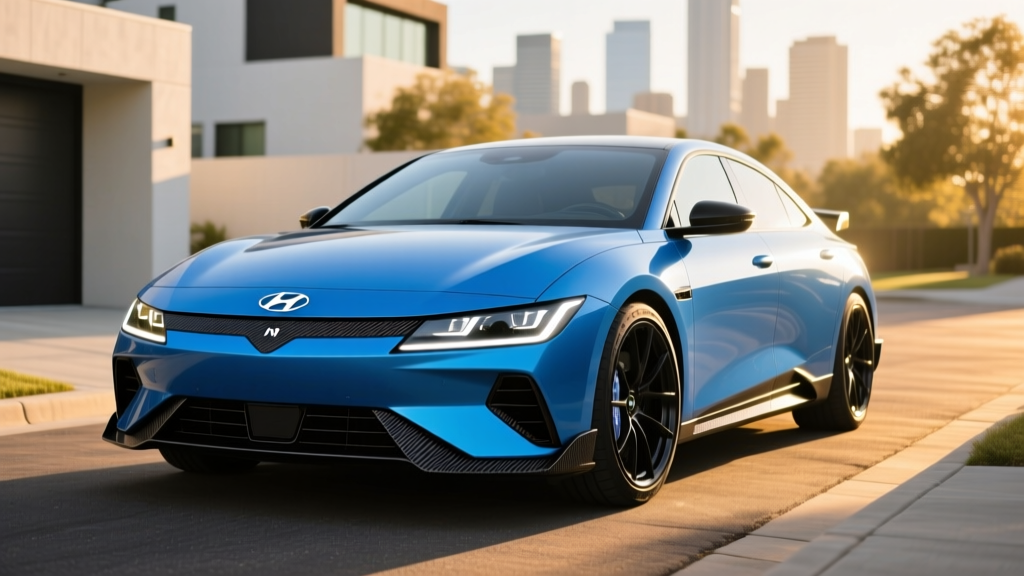
The Hyundai Ioniq 6 N is the performance variant of Hyundai's aerodynamic electric sedan, engineered by the N division with a dual-motor all-wheel-drive powertrain producing up to 641 horsepower with N Grin Boost engaged. It trades some of the standard Ioniq 6's class-leading efficiency for brute acceleration, track-capable thermal management, and an 84.0 kWh battery that still manages a respectable EPA range. If you want a four-door EV that can genuinely hold its own on a road course and then commute 40 miles round-trip without breaking a sweat, this is one of the few options under $70,000 that does both.
| Spec | Value |
|---|---|
| Base MSRP | $66,000 (destination included) |
| Horsepower (N Grin Boost) | 641 hp / 568 lb-ft torque |
| Drivetrain | Dual-motor AWD |
| 0-60 mph | 3.2 seconds |
| Battery (usable) | 84.0 kWh, NMC lithium-ion |
| EPA Range | 220 miles |
| Efficiency | 98 MPGe combined / 34 kWh/100 mi |
| Max DC Fast Charge | 233 kW (peak) |
| 10-80% DC Charge Time | ~18 minutes (preconditioned) |
| Level 2 Home Charge Rate | 10.9 kW (~36 mi/hr) |
| Battery Warranty | 10 years / 100,000 miles |
| Federal Tax Credit (§30D) | Up to $7,500 (eligibility varies) |
Hyundai Ioniq 6 N Horsepower and Performance Breakdown
The headline number — 641 horsepower — is achieved only when N Grin Boost is activated, which temporarily raises output from the standard 601 hp for 10-second bursts. Both front and rear permanent-magnet synchronous motors work in concert through Hyundai's e-Disconnector, which can decouple the front motor under light-load cruising to reduce drag losses and eke out a few extra miles of range.
The 3.2-second 0-60 mph time places the Ioniq 6 N squarely in Tesla Model 3 Performance and BMW i4 M50 territory. But unlike many fast EVs that overheat after two hot laps, Hyundai equipped the N variant with an enhanced cooling system featuring a larger radiator, dedicated battery chiller, and N-specific thermal management software that preconditions the battery more aggressively when Navi-linked route data detects a track or spirited driving route ahead.
The N division also added mechanically locking electronic limited-slip differentials (e-LSD) on both axles, an N Torque Distribution system that can shift torque front-to-rear in milliseconds, and a simulated 8-speed N e-Shift that introduces artificial shift shock and rev-matching through the cabin speakers. The e-Shift is polarizing — enthusiasts either appreciate the engagement or find it gimmicky — but it's fully defeatable.
Real-World Range vs. EPA Sticker
EPA Estimated Range: 220 miles
Real-World Expectation: Plan for ~175-195 miles on highway road trips at 70-80 mph. In cold weather (below 30°F), expect 150-170 miles before needing a charge stop. City driving with regenerative braking can push closer to the 220-mile sticker, and some owners report 230+ miles in mild-weather urban commuting.
The standard Ioniq 6 SE with its smaller 18-inch wheels and single-motor RWD layout achieves an EPA 361 miles. The N variant's 220-mile rating reflects the trade-off of 20-inch forged alloy wheels wrapped in Pirelli P Zero summer performance tires, a heavier dual-motor setup, and performance-oriented tuning that prioritizes power delivery over efficiency.
The 84.0 kWh NMC (nickel-manganese-cobalt) battery pack sits in Hyundai's E-GMP skateboard platform. NMC chemistry offers higher energy density than LFP, which is why Hyundai chose it for the performance variant — you need the watt-hours to feed 641 hp without making the car prohibitively heavy. The trade-off is that NMC cells degrade slightly faster over thousands of cycles compared to LFP, though Hyundai's 10-year/100,000-mile battery warranty (covering capacity loss below 70% state of health) provides substantial peace of mind.
Source: EPA Fuel Economy — verify current figures as model-year updates may shift ratings.
Charging Speed: DC Fast and Home Level 2
| Charging Level | Power / Rate | Miles Added per Hour | Notes |
|---|---|---|---|
| Level 1 (120V household) | ~1.4 kW | ~4 mi/hr | Emergency/trickle only |
| Level 2 (240V home) | 10.9 kW | ~36 mi/hr | Full charge in ~8 hours |
| DC Fast Charge (350 kW station) | 233 kW peak | ~250+ mi/hr (at peak) | 10-80% in ~18 min |
The Ioniq 6 N uses Hyundai's E-GMP 800-volt architecture, which is the same platform underpinning the Ioniq 5 and Kia EV6. This 800V system allows the car to accept up to 233 kW at a 350 kW-capable DC fast charger, though the charging curve tapers meaningfully above 80% state of charge — this is normal physics, not a flaw. Expect 80-100% to take an additional 12-15 minutes, which is why road-trip strategy should target 10-80% charges with 15-20 minute stops.
At home on a 48-amp Level 2 circuit (the typical installation for a hardwired wall connector), the 10.9 kW onboard charger replenishes the 84 kWh pack in roughly 8 hours from near-empty. Most owners will plug in at 30-50% remaining and wake up to a full battery every morning.
One practical note: the Ioniq 6 N ships with a NACS (Tesla-style) charge port for the 2025 model year in North America, giving it native access to Tesla Superchargers without an adapter. This is a significant infrastructure advantage over CCS-only competitors.
Pricing, Trims, and Federal Tax Credit Eligibility
| Item | Amount |
|---|---|
| Base MSRP (single trim) | $66,000 |
| Destination charge | Included |
| As-tested (with Performance Blue matte paint) | ~$67,500 |
| Potential §30D Federal Credit | Up to $7,500 |
| Effective price after max credit | ~$58,500 |
The Ioniq 6 N is offered in a single, well-equipped trim. Standard equipment includes the N e-Shift, N Active Sound+, 20-inch forged wheels, N-tuned adaptive suspension, heated and ventilated N Light sport bucket seats, a 12.3-inch dual-screen infotainment cluster, wireless Apple CarPlay and Android Auto, and Hyundai's full SmartSense ADAS suite (forward collision avoidance, lane-keeping assist, adaptive cruise with stop-and-go, blind-spot monitoring).
Federal tax credit eligibility (§30D): The Ioniq 6 N's $66,000 MSRP falls below the $55,000 sedan cap... wait — it does not. The IRS §30D credit caps sedans at $55,000 MSRP. At $66,000, the Ioniq 6 N exceeds this threshold and does not qualify for the new-vehicle §30D federal tax credit. This is a critical distinction that some early marketing materials glossed over.
However, buyers should check two alternative pathways:
- Lease loophole (§45W commercial credit): If you lease the Ioniq 6 N through Hyundai Motor Finance, the leasing company may pass through a $7,500 commercial clean vehicle credit as a capitalized-cost reduction, effectively lowering your monthly payment. Confirm with your dealer whether this is currently offered.
- State and local incentives: Some states (California's CVRP, Colorado's state credit, New York's Charge NY) offer additional rebates that are not subject to the federal MSRP cap. Check your state energy office for current programs.
For the latest IRS rules, see IRS.gov §30D guidance. Income caps also apply: $150,000 single / $300,000 joint modified AGI.
Interior Space, Tech, and Daily Livability
The Ioniq 6's "Electrified Streamliner" silhouette gives it one of the lowest drag coefficients of any production sedan (Cd 0.21 for the standard model; slightly higher for the N with its larger wheels and aero add-ons). That teardrop shape creates a spacious cabin but a controversially sloped roofline that cuts into rear headroom for taller passengers.
Key interior dimensions:
- Front headroom: 40.2 inches
- Rear headroom: 37.1 inches (tight for 6'+ passengers)
- Front legroom: 41.7 inches
- Rear legroom: 35.1 inches
- Trunk volume: 12.3 cubic feet (sedan trunk, not hatchback)
- Frunk: 0.5 cubic feet (very small — fits a charging cable bag)
The trunk is the Ioniq 6's most common complaint. Unlike the Model 3's liftback or the Ioniq 5's hatchback, the Ioniq 6 has a traditional sedan trunk lid with a relatively narrow opening. It swallows two carry-on suitcases and a week's groceries, but loading bulky items like a bicycle or large dog crate requires creativity. The 12.3 cu ft figure is competitive with a Toyota Camry's trunk, but the opening shape limits practical utility.
The dual 12.3-inch curved displays run Hyundai's latest infotainment software with over-the-air update capability. The N-specific display modes include a G-meter, battery temperature readout, lap timer, and torque-distribution graphic. Physical buttons for climate control are a welcome carryover — no touchscreen-only HVAC frustration here.
The SmartSense ADAS suite is an SAE Level 2 driver-assist system. It includes Highway Driving Assist 2 (HDA2), which provides lane-centering and adaptive cruise on divided highways, but it requires continuous driver supervision. This is not a hands-off or self-driving system.
Pros, Cons, and Who Should Buy
Pros
- 641 hp and 3.2-sec 0-60 for under $67,000
- 800V architecture enables 233 kW DC fast charging
- Track-capable thermal management (rare at this price)
- NACS port = native Supercharger access
- 10-year/100,000-mile battery warranty
- Engaging N e-Shift and sound customization
Cons
- 220-mile EPA range limits road-trip flexibility
- Small sedan trunk (12.3 cu ft) and tiny frunk
- Rear headroom tight for tall passengers
- Exceeds $55K MSRP cap — no §30D federal credit (purchase)
- Performance tires wear faster and cost $300+ each to replace
- Firm ride quality on rough pavement (N-tuned suspension)
Who This EV Suits Best
Buy it if: You're an enthusiast who wants a daily-drivable track sedan, you have home Level 2 charging, your commute is under 80 miles round-trip, and you value acceleration and handling over maximum range and cargo space.
Skip it if: You regularly road-trip more than 300 miles in a day, you need hatchback utility for kids/gear/dogs, or you're counting on the $7,500 federal tax credit at purchase (consider leasing instead).
Key Competitor Comparison
The Ioniq 6 N's natural rivals are the Tesla Model 3 Performance ($54,990, ~315 mi range, 3.0-sec 0-60) and the BMW i4 M50 ($67,795, ~270 mi range, 3.7-sec 0-60). The Model 3 wins on range, price, and Supercharger network breadth (though the gap is closing with NACS adoption). The i4 M50 offers more traditional luxury materials and a hatchback liftgate. The Ioniq 6 N differentiates with its track-focused thermal package, N e-Shift engagement, and Hyundai's industry-leading warranty.
Frequently Asked Questions
What is the real-world range of the Hyundai Ioniq 6 N?
The EPA rates it at 220 miles. In real-world highway driving at 70-80 mph, expect 175-195 miles. Cold weather (below 30°F) can reduce that to 150-170 miles. City driving with regen braking can approach or slightly exceed the EPA figure in mild weather.
How fast does the Ioniq 6 N charge?
On a 350 kW DC fast charger, it peaks at 233 kW and charges from 10-80% in approximately 18 minutes when the battery is preconditioned. At home on a 240V Level 2 charger (10.9 kW), a full charge takes about 8 hours.
Does the Ioniq 6 N qualify for the federal EV tax credit?
Not for outright purchase — its $66,000 MSRP exceeds the IRS §30D sedan cap of $55,000. However, leasing may unlock a $7,500 credit passed through as a cap-cost reduction via the §45W commercial clean vehicle credit. Confirm with your dealer and review current IRS guidance.
Is the Ioniq 6 N worth it vs. the Tesla Model 3 Performance?
If range, price, and cargo versatility are your top priorities, the Model 3 Performance wins. If you value track-day thermal endurance, a more engaging drive experience (e-Shift, sound customization, torque-vectoring), and Hyundai's 10-year warranty, the Ioniq 6 N is the stronger enthusiast pick. Both are excellent — they simply prioritize different things.
How much horsepower does the Hyundai Ioniq 6 N have?
The Ioniq 6 N produces 601 hp in standard driving and 641 hp with N Grin Boost activated (10-second bursts). Torque peaks at 568 lb-ft. The dual-motor AWD system sends power through both axles with an electronic limited-slip differential on each.
What is the battery warranty on the Ioniq 6 N?
Hyundai covers the 84.0 kWh battery pack for 10 years or 100,000 miles, whichever comes first. The warranty covers capacity loss below 70% state of health. The broader powertrain is also covered for 10 years/100,000 miles, and the vehicle limited warranty runs 5 years/60,000 miles.