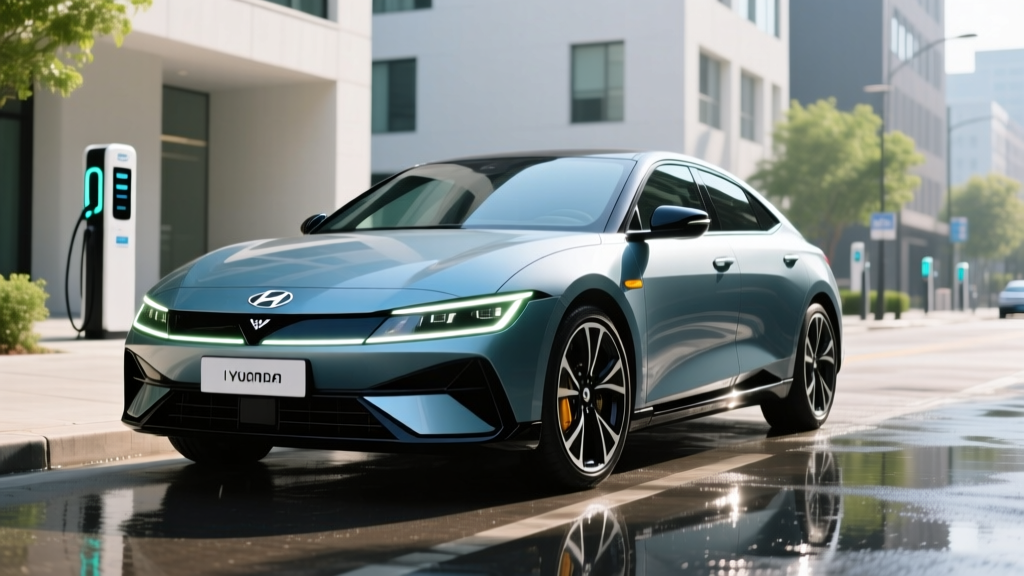
The Hyundai Ioniq 6 remains one of the most aerodynamically efficient electric sedans on the market, and for 2026, it continues to offer a compelling mix of range, rapid 800-volt charging, and a starting price that undercuts many rivals. But with federal tax credit rules tightening and lease incentives shifting, the math around getting into an Ioniq 6 requires careful calculation. This profile covers everything you need to evaluate a Hyundai Ioniq 6 lease or purchase — from real-world range to charging logistics to the total cost picture.
2026 Hyundai Ioniq 6: At a Glance
| Spec | SE/SEL RWD (Long Range) | SEL/Limited AWD | SE Standard Range RWD |
|---|---|---|---|
| EPA Range | 361 miles | 316 miles | 240 miles |
| Battery (usable) | 77.4 kWh (NMC) | 77.4 kWh (NMC) | 53.0 kWh (LFP) |
| Drivetrain | RWD, single motor | AWD, dual motor | RWD, single motor |
| Horsepower | 225 hp | 320 hp | 149 hp |
| 0–60 mph | 7.1 sec | 5.1 sec | 8.8 sec |
| Max DC Fast Charge | ~240 kW (800V) | ~240 kW (800V) | ~175 kW |
| 10–80% DCFC Time | ~18 min | ~18 min | ~24 min |
| Level 2 Charge Rate | 10.9 kW (~44 mi/hr) | 10.9 kW (~44 mi/hr) | 10.9 kW (~44 mi/hr) |
| MPGe (combined) | 140 MPGe | 111 MPGe | 135 MPGe |
| Base MSRP | $38,650 | $47,300 | $35,650 |
Sources: EPA fueleconomy.gov, Hyundai USA spec sheets. Prices reflect 2026 model year; destination charge additional (~$1,150).
Real-World Range: What the EPA Sticker Doesn't Tell You
Real-World Expectation: ~290–320 miles on mixed highway driving; ~220–260 miles in sustained cold weather (below 32°F)
The Ioniq 6's teardrop shape — a drag coefficient of just 0.21 — is the secret behind its class-leading efficiency. On the EPA cycle, which blends low-speed city and moderate-speed highway driving, the SE RWD Long Range achieves 361 miles. That number is legitimate and achievable in mild conditions with city-heavy driving.
However, real-world highway range tells a different story. At sustained 70–75 mph speeds, aerodynamic drag dominates even on a slippery shape like this. Expect roughly 290–320 miles from the Long Range RWD in temperate highway conditions. In winter, when the battery must heat itself and cabin demands increase, that figure drops to approximately 220–260 miles. The AWD variants lose about 12–15% range compared to their RWD counterparts due to the added weight and drivetrain losses of the front motor.
The Ioniq 6 does include a heat pump on all trims, which helps mitigate cold-weather losses compared to EVs without one. Still, if you live in northern climates where temperatures routinely drop below freezing, budget for a 25–35% range reduction in winter months.
Charging Speed: The 800V Advantage
The Ioniq 6 shares Hyundai Motor Group's E-GMP platform with the Ioniq 5 and Kia EV6, which means native 800-volt architecture. This is a meaningful hardware advantage: while most competitors in this price range operate on 400V systems (capping around 150 kW), the Ioniq 6 can accept up to roughly 240 kW at a compatible 350 kW DC fast charger.
| Charging Level | Power (kW) | Speed (miles of range added per hour) | Notes |
|---|---|---|---|
| Level 1 (120V household) | ~1.4 kW | ~5–6 mi/hr | Emergency/top-up only |
| Level 2 (240V home) | 10.9 kW | ~44 mi/hr | Full charge in ~8 hours (Long Range) |
| DC Fast (800V, 350 kW station) | Peak ~240 kW | ~650+ mi/hr equivalent | 10–80% in ~18 min (Long Range) |
| DC Fast (400V, 150 kW station) | Peak ~100–120 kW | ~350 mi/hr equivalent | 10–80% in ~30–35 min |
A critical nuance: the 240 kW peak is just that — a peak. The charging curve tapers significantly above 80% state of charge (SoC). You'll see maximum pull between roughly 10–55% SoC, after which the rate progressively drops to protect the battery. This is why the 10–80% metric matters more than peak kW alone. At ~18 minutes for the Long Range, the Ioniq 6 is among the fastest-charging EVs in its class, rivaling the Porsche Taycan and outpacing the Tesla Model 3 and Ford Mustang Mach-E at comparable price points.
One practical note: to achieve peak charge rates, you need a CCS-equipped 350 kW station (Electrify America, EVgo, or similar). Hyundai includes two years of complimentary 30-minute DC fast charging sessions on the Electrify America network with new purchases.
Interior Space, Cargo, and Daily Practicality
The Ioniq 6 is a mid-size sedan with a focus on aerodynamic efficiency, and that design priority creates some trade-offs in interior volume.
- Front legroom: 41.7 inches
- Rear legroom: 35.4 inches
- Front headroom: 38.2 inches
- Rear headroom: 37.1 inches (the sloping roofline cuts into this — taller passengers may notice)
- Cargo volume (trunk): 12.3 cubic feet
- Frunk (front trunk): 0.8 cubic feet (RWD) / 0.5 cu ft (AWD) — enough for a charging cable, not much more
The trunk is the Ioniq 6's most cited weakness. At 12.3 cubic feet, it's smaller than a Honda Civic's trunk and significantly less practical than a hatchback like the Ioniq 5 (27.2 cu ft behind the rear seats) or the Tesla Model 3 (23 cu ft including the frunk). The sedan's trunk opening is narrow, making it difficult to load bulky items. If you regularly haul cargo, groceries for a family, or road-trip luggage for four, this is a genuine limitation.
Passenger space is more reasonable. Front-seat comfort is excellent, with supportive seats and generous adjustability on higher trims. Rear legroom is adequate for adults on shorter trips but not generous — the Tesla Model 3 offers slightly more. The low roofline and high floor (battery underneath) mean rear passengers sit in a somewhat knees-up position.
Technology and Driver Assistance
The Ioniq 6 features dual 12.3-inch displays (instrument cluster and infotainment) running Hyundai's latest interface. Wireless Apple CarPlay and Android Auto are standard on SE and SEL trims; the Limited trim uses a wired connection due to its navigation system integration. The system is responsive, logically organized, and includes physical shortcut buttons — a welcome choice in an era of all-touchscreen interiors.
Hyundai's Highway Driving Assist 2 (HDA2) is standard across all trims. This is a Level 2 SAE driver-assistance system that combines adaptive cruise control with lane-centering, including automatic lane-change assist when you activate the turn signal. It works well on divided highways but requires continuous driver engagement — hands on the wheel, eyes on the road. This is not a hands-free system like GM's Super Cruise or Ford's BlueCruise.
Notable tech features include vehicle-to-load (V2L) capability, which allows you to power external devices (up to 3.6 kW) from the car's battery using an adapter — useful for camping, tailgating, or emergency backup power. Digital side mirrors (camera-based) are available on the Limited trim in select markets, though conventional mirrors remain standard in the US.
Pricing, Lease Deals, and Federal Tax Credit Eligibility
For 2026, the Ioniq 6 lineup spans four primary trims:
| Trim | Base MSRP | Est. Price After §30D Credit | Federal Credit Eligible? |
|---|---|---|---|
| SE Standard Range RWD | $35,650 | ~$28,150 | Up to $7,500 (verify sourcing) |
| SE Long Range RWD | $38,650 | ~$31,150 | Up to $7,500 (verify sourcing) |
| SEL AWD | $47,300 | ~$39,800 | Up to $7,500 (verify sourcing) |
| Limited AWD | $53,300 | ~$45,800 | Up to $7,500 (verify sourcing) |
Critical tax credit caveats: Under IRS §30D rules, the $7,500 federal tax credit is subject to multiple requirements that change periodically. Key eligibility factors include:
- MSRP cap: Sedans must be priced at or below $55,000 (the Limited AWD at $53,300 qualifies; option packages can push it over — check your build sheet)
- Buyer income limits: Modified AGI cannot exceed $150,000 (single), $225,000 (head of household), or $300,000 (joint filing)
- Battery sourcing: Critical minerals and battery components must meet phased-in domestic/free-trade-partner sourcing thresholds — Hyundai's supply chain has been evolving, and eligibility can change mid-year
- Point-of-sale transfer: As of 2024+, you can transfer the credit to the dealer at purchase, reducing your out-of-pocket cost immediately rather than waiting for tax filing
Leasing vs. buying: When you lease an Ioniq 6, the §30D credit technically goes to the lessor (the financing company), not to you. However, many Hyundai dealerships and Hyundai Motor Finance pass the credit through as a "lease cash" incentive, effectively reducing your monthly payment. Always confirm with the dealer whether the lease quote reflects the federal credit pass-through. The commercial clean vehicle credit (§45W) may also apply to leased vehicles through a different mechanism — consult IRS guidelines and a tax professional for your specific situation.
Battery, Warranty, and Long-Term Ownership
The Long Range trims use a 77.4 kWh (usable) nickel-manganese-cobalt (NMC) battery pack. The Standard Range uses a 53.0 kWh lithium iron phosphate (LFP) pack. This chemistry distinction matters:
| Factor | NMC (Long Range) | LFP (Standard Range) |
|---|---|---|
| Energy density | Higher — more range per kg | Lower — heavier for same capacity |
| Recommended daily SoC | 80% (charge to 100% only for trips) | 100% daily is fine — LFP tolerates full charges better |
| Cycle life | ~1,000–1,500 cycles | ~2,000–3,000+ cycles |
| Cold performance | Better in cold weather | More range loss in freezing temps |
| Cost | Higher | Lower — reflected in trim pricing |
Hyundai's warranty coverage is among the best in the industry:
- Battery: 10 years / 100,000 miles (capacity retention above 70%)
- Powertrain: 10 years / 100,000 miles
- New vehicle limited: 5 years / 60,000 miles
- Roadside assistance: 5 years / unlimited miles
The 10-year/100,000-mile battery warranty is a strong signal of Hyundai's confidence in its pack longevity. Independent data from fleet operators suggests E-GMP batteries are retaining 90%+ capacity at 60,000 miles, which projects well for long-term ownership. However, if you're considering a lease (typically 36 months / 36,000 miles), battery degradation is unlikely to affect you during the lease term.
Ioniq 6 vs. Key Competitors: Is It Worth the Lease?
The Ioniq 6 competes in a crowded mid-size EV sedan segment. Here's how it stacks up against the three most cross-shopped alternatives:
| Spec | Hyundai Ioniq 6 SE LR RWD | Tesla Model 3 LR RWD | BMW i4 eDrive40 | Polestar 2 LR SM |
|---|---|---|---|---|
| EPA Range | 361 mi | 363 mi | 301 mi | 320 mi |
| Battery | 77.4 kWh NMC | ~75 kWh NMC | 81.5 kWh NMC | 82 kWh NMC |
| Max DCFC | ~240 kW (800V) | ~250 kW | ~205 kW | ~200 kW |
| 10–80% DCFC | ~18 min | ~20 min | ~31 min | ~30 min |
| 0–60 mph | 7.1 sec | 5.8 sec | 5.5 sec | 5.9 sec |
| Cargo | 12.3 cu ft | 23 cu ft | 16.6 cu ft | 14.4 cu ft |
| Base MSRP | $38,650 | $38,990 | $52,200 | $49,950 |
| MPGe (combined) | 140 | 132 | 109 | 107 |
Choose the Tesla Model 3 if: You need more cargo space (hatchback), want access to the Supercharger network (though NACS adoption is expanding access for all EVs), or prefer faster acceleration at a similar price.
Choose the BMW i4 if: You want a premium badge, sportier driving dynamics, and a more conventional (less polarizing) design — and are willing to pay a $13,000+ premium.
Choose the Polestar 2 if: You prefer Scandinavian design, want a hatchback form factor, and value Google Built-in infotainment.
For a Hyundai Ioniq 6 lease specifically, the value proposition often comes down to dealer incentives. Hyundai frequently offers aggressive lease cash (sometimes $7,500–$10,000 in combined federal pass-through and manufacturer incentives), which can make monthly payments competitive with vehicles that cost significantly more to purchase outright. Always get itemized lease quotes that separate the money factor, residual, and incentive pass-through.
Pros and Cons
Pros
- Class-leading 361-mile EPA range (SE LR RWD)
- 800V architecture enables ~18-minute 10–80% DC fast charging
- 140 MPGe combined — among the most efficient EVs sold
- 10-year/100,000-mile battery and powertrain warranty
- Aggressive lease incentives often reduce effective cost
- Heat pump standard on all trims
- V2L capability for external power use
- Physical buttons complement touchscreen — practical UX
Cons
- 12.3 cu ft trunk is small for the class; narrow opening
- Rear headroom compromised by sloping roofline
- Frunk is tiny (0.8 cu ft) — barely fits a charge cable
- HDA2 requires hands-on-wheel; no hands-free driving option
- AWD trims are significantly more expensive and lose range
- Design is polarizing — some buyers love it, others find it awkward
- Standard Range (LFP) model has limited range for road trips
- No NACS port native — CCS with NACS adapter required for Tesla Superchargers
Who Should Lease the Ioniq 6?
The Hyundai Ioniq 6 is best suited for efficiency-focused commuters and road-trippers who don't need large cargo capacity. If your typical week involves a 30–60 mile round-trip commute with occasional weekend drives of 200+ miles, the Long Range RWD's combination of 361-mile range and 18-minute fast charging covers your needs without range anxiety. The sedan form factor works well for singles, couples, or small families who travel light.
It is less ideal for families who regularly haul strollers, sports equipment, or bulk groceries — the trunk simply can't compete with a hatchback or crossover. If cargo matters, the Ioniq 5 (same platform, hatchback body) is the more practical Hyundai. The Ioniq 6 is also not a towing vehicle (not rated for towing in the US).
For lease shoppers specifically, the Ioniq 6 often punches above its weight because Hyundai uses lease incentives to compete with Tesla's brand pull. If you can secure a lease with the full federal credit passed through, the effective monthly cost can undercut vehicles that sticker for $10,000+ more.
Frequently Asked Questions
What is the real-world range of the Hyundai Ioniq 6?
The EPA rates the SE Long Range RWD at 361 miles. In real-world highway driving at 70–75 mph, expect 290–320 miles. In sustained freezing temperatures, plan for 220–260 miles. The AWD trims rate at 316 miles EPA, with real-world highway figures around 260–290 miles.
How fast does the Ioniq 6 charge at home and on the road?
At home on a 240V Level 2 charger (10.9 kW), you'll add approximately 44 miles of range per hour — a full charge of the Long Range battery takes about 8 hours overnight. On a 350 kW DC fast charger using its 800V architecture, the Ioniq 6 peaks at ~240 kW and charges from 10–80% in roughly 18 minutes. At older 50–150 kW stations, expect 30–45 minutes for the same 10–80% session.
Does the Hyundai Ioniq 6 qualify for the federal EV tax credit?
It may qualify for up to $7,500 under IRS §30D, but eligibility depends on your income (capped at $150K/$225K/$300K by filing status), the vehicle's MSRP (sedans must be at or below $55,000), and current battery-sourcing compliance. Hyundai's credit eligibility has fluctuated as supply chains shift. Always verify current status on fueleconomy.gov and consult a tax professional before relying on the credit in your purchase decision.
Is it better to lease or buy the Ioniq 6?
Leasing can be advantageous if Hyundai is offering strong lease cash incentives (which they frequently do), as the lessor receives the tax credit and typically passes it through as a reduced capitalized cost. Buying makes more sense if you plan to keep the car 5+ years, want to benefit from the full 10-year warranty, and qualify for the §30D credit directly. Run both scenarios with your dealer — the break-even point varies by state, incentives, and money factor.
How does the Ioniq 6 compare to the Tesla Model 3?
The Ioniq 6 SE LR matches the Model 3 Long Range on EPA range (361 vs. 363 miles) and beats it on efficiency (140 vs. 132 MPGe). The Model 3 is quicker to 60 mph (5.8 vs. 7.1 sec), has nearly double the cargo space (23 vs. 12.3 cu ft), and offers access to Tesla's Supercharger network natively. The Ioniq 6 charges faster on non-Tesla DC networks thanks to 800V architecture and comes with a longer warranty (10yr/100K vs. 8yr/120K battery). It's a close match — cargo space and acceleration favor Tesla; charging speed, efficiency, and warranty favor Hyundai.
What connector does the Ioniq 6 use?
The 2026 Ioniq 6 uses a CCS1 connector for DC fast charging and a J1772 connector for Level 1/2 AC charging. It does not have a native NACS (Tesla) port. However, Hyundai has begun offering a NACS adapter that enables access to Tesla Supercharger V3 and V4 stations with the Magic Dock. Confirm adapter availability with your dealer at the time of purchase or lease.