The Real Math Behind a Hyundai Ioniq 6 EV Lease Deal
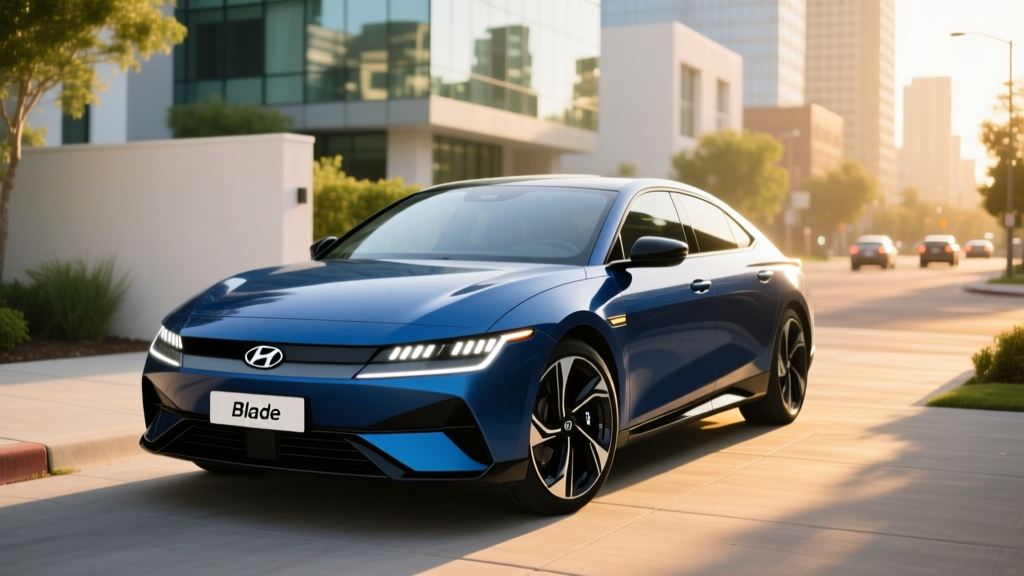
If you've been watching the EV market, you've likely noticed aggressive lease offers on the Hyundai Ioniq 6. The aerodynamic sedan (drag coefficient of just 0.21) pairs a sleek design with competitive efficiency and fast charging. But a low monthly payment only tells part of the story.
Before signing a Hyundai Ioniq 6 EV lease deal, you need to understand the full ownership equation: how the federal tax credit flows through the lease, what you'll actually pay per mile to charge versus fueling a gas car, where insurance costs land, and how depreciation affects your wallet even on a lease. This guide runs every number so you can decide with your calculator, not just the brochure.
2026 Ioniq 6 Specs: What You're Leasing
For context, here are the core specifications for the 2026 Hyundai Ioniq 6 (carried over from the refreshed 2025 model year):
| Attribute | SE/SEL Standard Range | SE/SEL/Limited Long Range |
|---|---|---|
| EPA Range | 240 miles | 361 miles (RWD) / 316 miles (AWD) |
| Battery (usable) | 54.0 kWh (LFP) | 77.4 kWh (NMC) |
| Peak DC Fast Charge | ~175 kW | ~240 kW |
| 10–80% DC Charge Time | ~24 min | ~18 min |
| Level 2 (240V) Charge Rate | 10.9 kW | 10.9 kW |
| 0–60 mph | ~6.5 sec (RWD) | 5.1 sec (RWD) / 4.5 sec (AWD) |
| Horsepower | 149 hp | 225 hp (RWD) / 320 hp (AWD) |
| EPA Efficiency | 140 MPGe | 140 MPGe (RWD Long Range) |
| Base MSRP | ~$38,650 | ~$43,500–$52,600 |
| Battery/Powertrain Warranty | 10 years / 100,000 miles | |
How the Federal Tax Credit Works on a Lease
Here's the critical nuance most buyers miss: when you purchase an EV, the §30D federal tax credit is subject to buyer income caps, MSRP caps, and battery critical-mineral sourcing requirements. But when you lease, the credit technically goes to the leasing company (the legal owner of the vehicle), which can then pass the savings to you as a capitalized-cost reduction — lowering your monthly payment.
As of 2026, Hyundai has generally structured Ioniq 6 lease deals to pass through the full $7,500 credit. This is why lease offers often look dramatically better than purchase offers for the same vehicle.
- Vehicle MSRP Cap: Sedans must be ≤ $55,000 (the Ioniq 6 qualifies across most trims)
- Buyer Income Cap (purchase): AGI ≤ $150K single / $225K head of household / $300K joint
- Battery Sourcing: Requires qualifying percentages of critical minerals and battery components from US/FTA partners (varies by model year — verify with dealer)
- Point-of-Sale Transfer: Eligible buyers can apply the credit as a down-payment reduction at purchase
- Lease Loophole: Income caps and MSRP caps do not apply to the leasing entity — the lessee benefits from passthrough without those restrictions
Source: IRS §30D Clean Vehicle Credit. Rules are subject to legislative change — verify current eligibility with a tax professional.
On a 36-month Ioniq 6 lease, a $7,500 cap-cost reduction translates to roughly $208/month in savings — a meaningful difference that often makes leasing the most cost-effective path to driving this car.
5-Year Total Cost of Ownership: Ioniq 6 vs. Gas Sedan Baseline
To understand the real financial picture, let's compare a 5-year / 60,000-mile ownership scenario. For the gas baseline, we'll use a comparable midsize sedan averaging 30 MPG combined at $3.50/gallon.
| Cost Category | 2026 Ioniq 6 (Long Range RWD) | Gas Sedan (30 MPG) |
|---|---|---|
| Purchase/Lease (5-yr net) | $24,600 (lease: $350/mo × 36 + buyout est.) | $22,000 (purchase after trade-in) |
| Federal Tax Credit | −$7,500 (lease passthrough) | $0 |
| Fuel/Energy (60K mi) | $3,420 (home charging at $0.14/kWh) | $7,000 (gas at $3.50/gal) |
| Maintenance (5 yr) | $1,200 | $3,500 |
| Insurance (5 yr) | $11,400 | $8,400 |
| Depreciation / Resale Impact | Higher (EV depreciation steeper — see below) | Moderate |
| Estimated 5-Year Net Cost | ~$33,120 | ~$40,900 |
Key takeaway: Even with higher insurance and steeper depreciation, the Ioniq 6 comes out roughly $7,000–$8,000 ahead over 5 years, driven primarily by the tax credit, fuel savings, and maintenance savings. However, this math assumes home charging. Public DC fast charging at $0.35–$0.50/kWh erodes the fuel-cost advantage significantly.
Charging Cost vs. Gas: The Per-Mile Breakdown
| Scenario | Cost per Mile | Annual Cost (12K mi) |
|---|---|---|
| Ioniq 6 — Home Level 2 ($0.14/kWh, 3.5 mi/kWh) | $0.04 | $480 |
| Ioniq 6 — Public DCFC ($0.40/kWh avg) | $0.11 | $1,320 |
| Gas Sedan (30 MPG, $3.50/gal) | $0.12 | $1,400 |
| Gas Sedan (30 MPG, $4.50/gal) | $0.15 | $1,800 |
At the Ioniq 6 Long Range RWD's real-world efficiency of approximately 3.5 miles per kWh (aligned with its EPA-rated 140 MPGe), home charging at the US average residential rate of ~$0.14/kWh costs just 4 cents per mile. That's roughly one-third the cost of fueling a 30-MPG gas sedan.
The caveat: if you rely exclusively on public DC fast charging networks (Electrify America, EVgo, etc.) at $0.35–$0.50/kWh, your per-mile cost nearly triples and can approach or exceed gasoline costs in some regions. Home charging access is the single biggest variable in EV operating economics.
Maintenance Savings: Fewer Parts, Less Wear
| Maintenance Item | Ioniq 6 (EV) | Gas Sedan |
|---|---|---|
| Oil Changes | None | 2×/year (~$80–$150 each) |
| Transmission Fluid | None (single-speed reducer) | Every 30–60K mi |
| Brake Pads | 80–120K+ mi (regen braking) | 30–50K mi |
| Air Filter / Spark Plugs | Cabin filter only | Both required periodically |
| Coolant | Check/replace at intervals | Similar intervals |
| Tire Rotation | Every 8–10K mi (EVs wear tires faster due to torque + weight) | Every 5–7K mi |
The Ioniq 6's regenerative braking system handles the majority of deceleration, meaning the physical brake pads and rotors see minimal use. Many EV owners report original brake pads lasting well past 100,000 miles. The trade-off: EVs tend to wear tires 10–20% faster than gas cars due to instant torque and higher curb weight (the Ioniq 6 Long Range weighs ~4,500 lbs). Budget for tire replacement at ~35,000–45,000 miles instead of the 50,000+ you might get on a lighter gas sedan.
Insurance Reality: Expect to Pay More
This is where EV ownership stings. The Ioniq 6 typically costs 20–35% more to insure than a comparable gas sedan. According to industry data, average annual premiums for the Ioniq 6 land between $2,100 and $2,500 depending on your state, driving record, and coverage level.
Why the premium? Three factors:
- Higher repair costs: EV-specific components (battery pack, power electronics, heat pump) are expensive to replace after a collision
- Specialized labor: Fewer body shops have high-voltage-certified technicians, raising labor rates
- Higher vehicle value: Insurers base premiums partly on replacement cost, and EVs carry higher MSRPs
Before signing a lease, run quotes from at least three insurers. Some carriers (Geico, Progressive, State Farm) now offer EV-specific discounts that can narrow the gap by 5–10%. If you have a clean record and bundle home/auto, you may land closer to $1,800–$2,000/year.
Depreciation and Resale Value Trends
EV depreciation has been steeper than gas-car depreciation over the past several years, and the Ioniq 6 is no exception. Industry data from sources like iSeeCars and Kelley Blue Book shows that mainstream EVs have depreciated 40–55% over three years, compared to 30–40% for comparable gas sedans.
Several factors drive this:
- Rapid price cuts on new EVs (Tesla's aggressive repricing cascaded across the market in 2023–2025)
- Battery degradation concerns among used buyers, even though most modern packs retain 90%+ capacity at 100K miles
- Shifting tax credit rules that change demand dynamics year over year
- Lease returns flooding the used market — high lease volumes from 2023–2025 are increasing used EV supply
What this means for your lease: On a lease, depreciation is the lessor's problem, not yours — but it's already baked into your monthly payment. A steep depreciation forecast means higher lease payments than a gas car with the same MSRP. The $7,500 tax credit passthrough offsets much of this, which is precisely why the Ioniq 6 lease deal often pencils out better than purchasing.
If you plan to buy out the lease at the end, you may benefit from lower residual values — the buyout price could be below market, giving you equity. If you plan to walk away, you're insulated from resale risk entirely.
State, Local, and Utility Incentives
- California: Up to $2,000 via the Clean Fuel Rebate (income-dependent)
- Colorado: State tax credit up to $5,000 for EVs under $80,000 MSRP
- New York: Drive Clean Rebate up to $2,000 (point-of-sale)
- Utility rebates: Many utilities (PG&E, ConEdison, Xcel Energy, etc.) offer $500–$1,500 rebates for home Level 2 charger installation, plus time-of-use rates that cut charging costs by 30–50%
- HOV lane access: Several states grant solo carpool-lane access to EVs regardless of occupancy
Always verify current incentive availability with your state energy office, utility provider, and the Alternative Fuels Data Center before committing.
Frequently Asked Questions
How much does it really cost to own a Hyundai Ioniq 6 over 5 years?
Based on our analysis, a 5-year / 60,000-mile ownership scenario for the Ioniq 6 Long Range RWD nets out to approximately $33,000–$35,000 after accounting for the federal tax credit, home charging, maintenance, and insurance. That's roughly $7,000–$8,000 less than a comparable 30-MPG gas sedan over the same period — assuming you charge primarily at home.
Do I qualify for the federal EV tax credit on an Ioniq 6 lease?
On a lease, the §30D credit goes to the leasing company, which passes savings to you via a lower capitalized cost. Unlike a purchase, there are no buyer income caps or MSRP caps applied to you personally on a lease. The Ioniq 6's MSRP (under $55,000 for most trims) qualifies on the purchase side as well, but the lease path is simpler and accessible to more buyers. Verify current IRS §30D rules before signing.
How much do I save on fuel and maintenance with the Ioniq 6?
At 12,000 miles per year and $0.14/kWh home charging, you'll spend roughly $480/year on electricity versus $1,400/year on gasoline for a 30-MPG sedan — a savings of about $920/year. Maintenance savings add another $400–$500/year (no oil changes, minimal brake wear). Combined, that's $1,300–$1,400 in annual operating savings.
Are EVs more expensive to insure?
Yes, typically 20–35% more than comparable gas vehicles. For the Ioniq 6, expect annual premiums of $2,100–$2,500 depending on your profile. Higher repair costs, specialized labor, and elevated replacement values drive the difference. Shop multiple insurers and ask about EV-specific discounts.
How well does the Ioniq 6 hold its value?
EVs have depreciated faster than gas cars in recent years — roughly 40–55% over three years for mainstream models. On a lease, this doesn't directly impact you (depreciation is priced into the payment and offset by the tax credit). If you buy out the lease, you may actually benefit from a lower residual price. Hyundai's 10-year/100,000-mile battery warranty also supports long-term value confidence.
Is a Hyundai Ioniq 6 EV lease deal better than buying?
For most buyers in 2026, leasing the Ioniq 6 is the more financially advantageous path. The $7,500 federal tax credit flows through without income or MSRP restrictions on a lease, technology obsolescence risk stays with the lessor, and you avoid exposure to steeper EV depreciation. If you drive under 12,000–15,000 miles per year and prefer a new car every 3 years, leasing is the clear winner. If you drive high miles, plan to keep the car 8+ years, or want to build equity, purchasing with the point-of-sale credit may make more sense — provided you meet the income requirements.