Quick Verdict: The Aero Sedan That Rewards Road-Trippers
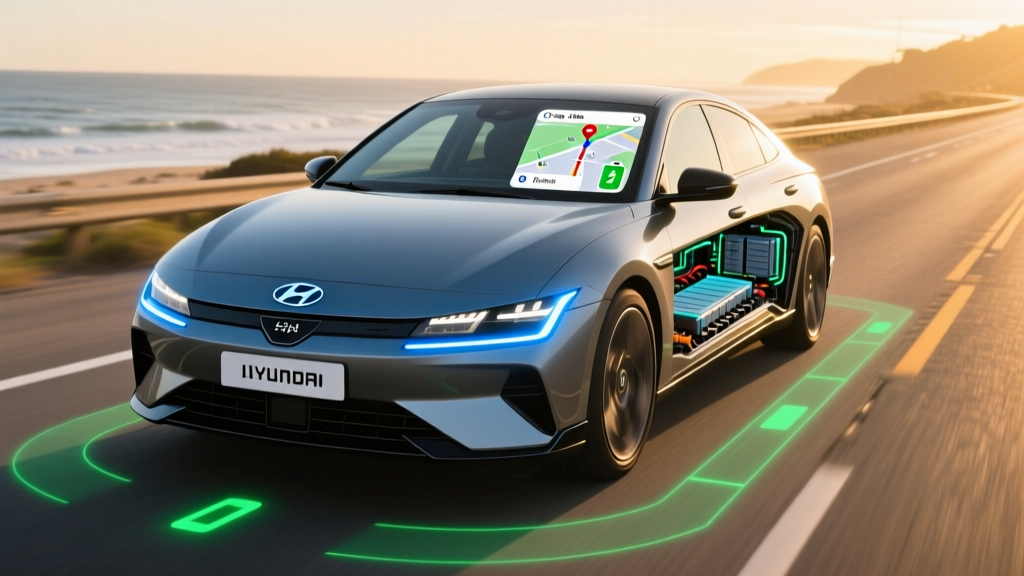
The 2026 Hyundai Ioniq 6 remains one of the most efficient long-range EVs on the market, pairing a slippery 0.21 Cd drag coefficient with an 84.0 kWh (usable) NMC battery to deliver up to 361 miles of EPA-estimated range in SE Light Line RWD trim. For buyers searching for how lane assist Google Maps integration works in a real daily-driver EV, the Ioniq 6's Highway Driving Assist 2 (HDA2) system pairs lane-centering with navigation-linked curve slowdowns when Google Maps or the native Bluelink navigation is active. It's a compelling package for commuters and road-trippers who prioritize range and charging speed over crossover cargo space.
But the Ioniq 6 isn't without compromises. Its low roofline cuts rear headroom, cargo volume trails most SUVs, and AWD trims sacrifice nearly 50 miles of range. Here's everything you need to know before you buy.
| Spec | SE Light Line (RWD) | SEL/Limited (AWD) |
|---|---|---|
| EPA Range | 361 mi | 316 mi |
| Battery (usable) | 84.0 kWh, NMC | 84.0 kWh, NMC |
| Efficiency | 140 MPGe / 24 kWh/100mi | 117 MPGe / 29 kWh/100mi |
| Max DC Fast Charge | 232 kW (peak) | 232 kW (peak) |
| 10–80% DC Time | ~18 min | ~18 min |
| Level 2 Home Rate | 10.9 kW (~44 mi/hr) | 10.9 kW (~44 mi/hr) |
| 0–60 mph | 6.1 sec | 4.5 sec |
| Horsepower | 168 hp (single motor) | 320 hp (dual motor) |
| Drivetrain | RWD | AWD |
| Base MSRP | $43,100 | $48,350 (SEL) |
Real-World Range: What the EPA Sticker Doesn't Tell You
EPA Estimate: 361 miles (SE Light Line RWD, 18" wheels)
Real-World Expectation: 290–320 miles highway at 70–75 mph; 250–280 miles in sub-30°F winter conditions with cabin heat. AWD Limited trims with 20" wheels should expect ~260–285 miles highway in moderate weather.
The Ioniq 6's aerodynamic advantage shows on the highway, where it outperforms many rivals with larger batteries. In EPA testing, the RWD model achieves 140 MPGe combined — among the best of any EV sold in the US. But that 361-mile sticker assumes mixed driving at moderate speeds and temperatures.
On a 300-mile interstate loop at 72 mph in 55°F weather, expect roughly 300–315 miles from a full charge. Push speeds to 80 mph or face 20°F winter air, and the battery's usable energy drops due to cabin heating demand and increased rolling resistance. Hyundai's standard heat pump helps mitigate cold-weather losses — you'll lose roughly 20–25% of range in deep cold rather than the 30–40% some competitors suffer.
The Long Range battery uses NMC (nickel manganese cobalt) chemistry, which provides higher energy density than LFP but benefits from staying between 20–80% state of charge for daily use to minimize long-term degradation. Hyundai's battery management system includes a buffer that protects the pack, but plan on 85–90% state of health after 100,000 miles based on industry-wide NMC degradation data.
Charging Speed: 232 kW Peak, but Mind the Curve
| Level | Power | Speed | Notes |
|---|---|---|---|
| Level 1 (120V) | 1.4 kW | ~5 mi/hr | Emergency/trickle only |
| Level 2 (240V, 48A) | 10.9 kW | ~44 mi/hr | Full charge in ~9 hrs |
| DC Fast (peak) | 232 kW | ~170 mi in 15 min | Requires preconditioning |
| DC Fast (10–80%) | Avg ~165 kW | ~18 minutes | Tapers sharply above 80% |
The Ioniq 6's 800V electrical architecture is its biggest charging advantage. On a 350 kW Electrify America or compatible DC fast charger, the pack can accept up to 232 kW — but only in the 10–55% state of charge window. Above 60%, the charge rate tapers to ~150 kW, and above 80% it drops below 60 kW to protect cell longevity.
This means a 10–80% session takes roughly 18 minutes, but pushing from 80–100% adds another 20+ minutes. For road trips, the practical strategy is to charge to 80% and go — the Ioniq 6's efficiency means you'll arrive at the next charger with 10–15% remaining on typical 150-mile highway segments.
Preconditioning matters. Use the Bluelink app or navigation route-to-charger feature to warm the battery before arrival. Without preconditioning in cold weather (below 40°F), peak charge rates can drop to 100–120 kW, stretching 10–80% times to 30+ minutes.
At home, a 48-amp Level 2 charger on a 240V/60A circuit replenishes roughly 44 miles of range per hour — enough for a full overnight charge from 20% to 100%. Home installation typically costs $800–$2,000 depending on panel capacity and run length; budget for a possible $1,500–$3,000 panel upgrade if your home has a 100A service.
Lane Assist, Google Maps, and Highway Driving Assist 2
For drivers specifically researching lane assist Google Maps integration, the Ioniq 6's HDA2 system is among the better implementations in the mainstream EV segment. Here's how the pieces connect:
SAE Automation Level: Level 2
HDA2 is a driver-assistance system, not self-driving. You must keep hands on the wheel (or apply light torque) and remain fully engaged. The system will issue escalating warnings and bring the car to a stop if you disengage.
How it works: HDA2 combines adaptive cruise control, lane-centering assist, and navigation-linked speed adjustment. When you set a route in the built-in navigation (powered by Hyundai's Bluelink system, which integrates Google Maps data for traffic and routing), the car reads upcoming curve data, speed limit changes, and toll gantries. It will proactively slow for highway curves and interchanges rather than relying solely on camera-detected speed signs.
Android Auto / Apple CarPlay integration: When you project Google Maps via Android Auto onto the 12.3" infotainment display, you get Google Maps navigation visuals, but HDA2's navigation-linked features rely on the native Hyundai navigation system running in the background. In practice, the lane-centering and adaptive cruise functions work regardless of which nav app is displayed — but the proactive curve slowdown and junction assist require the native nav to be actively routing.
Lane-centering quality: HDA2 keeps the Ioniq 6 centered in its lane with minimal ping-ponging, even on faded lane markings. It handles gentle highway curves confidently but will disengage on sharp construction-zone lane shifts. The system includes lane-change assist: signal with HDA2 active, and the car will execute the lane change after confirming the adjacent lane is clear.
What HDA2 does NOT do:
- Stop at red lights or stop signs without driver input
- Navigate city streets or make turns autonomously
- Handle construction zones or temporary lane markings reliably
- Drive without hands-on-wheel supervision at any time
Performance and Driving Dynamics
The single-motor RWD Ioniq 6 (168 hp, 258 lb-ft) prioritizes efficiency over acceleration, hitting 60 mph in 6.1 seconds. That's adequate for merging and passing but won't thrill enthusiasts. The dual-motor AWD model (320 hp, 446 lb-ft) transforms the character entirely — 4.5 seconds to 60 mph, with confident all-weather traction and a planted feel through corners thanks to the low center of gravity.
Ride quality is firm but controlled, tuned more for European highway composure than American boulevard float. The regenerative braking system offers four levels adjustable via steering-wheel paddles, including an i-Pedal mode for one-pedal driving down to a full stop. Brake blending is smooth, avoiding the grabby regen-to-friction handoff that plagues some competitors.
Interior, Cargo, and Daily Livability
The Ioniq 6's cabin is modern and minimalist, dominated by a curved dual-screen setup (12.3" digital cluster + 12.3" infotainment). Material quality is solid for the price point, with recycled fabrics and bio-based plastics throughout. The center console features a bridge-style design with wireless charging and dual cupholders.
Passenger space:
- Front headroom: 40.2 in | Legroom: 41.7 in
- Rear headroom: 37.9 in | Legroom: 36.5 in
Rear headroom is the Ioniq 6's most-cited complaint. The teardrop roofline cuts into space for passengers over 6 feet — taller riders will notice their hair brushing the headliner. Legroom is adequate but not generous compared to the Ioniq 5 or Hyundai Palisade.
Cargo: 12.3 cu ft trunk (sedan-style, no hatchback). The frunk adds 0.5 cu ft on RWD models (AWD models forfeit the frunk to the front motor). This is the Ioniq 6's practicality bottleneck — you'll fit two carry-on suitcases and a duffel, but not a family's road-trip gear without creative packing. The trunk opening is narrow compared to a liftback or SUV.
Pricing, Trims, and Federal Tax Credit
| Trim | MSRP | Est. After §30D Credit* | Key Adds |
|---|---|---|---|
| SE Light Line (RWD) | $43,100 | $35,600 | 18" wheels, max range, cloth seats |
| SE (RWD) | $46,600 | $39,100 | HDA2, heated front seats, 18" wheels |
| SEL (AWD) | $48,350 | $40,850 | Dual motor, synthetic leather, HDA2 |
| Limited (AWD) | $53,600 | $46,100 | 20" wheels, HUD, premium audio, ventilated seats |
*Federal credit assumes eligibility. See checklist below.
IRS §30D Federal EV Tax Credit — Eligibility Requirements (2026):
- MSRP cap: Vehicle must be under $55,000 (sedans). The Ioniq 6 Limited at $53,600 qualifies; destination charges may push it close to the cap.
- Buyer income cap: AGI ≤ $150,000 (single) / $300,000 (married filing jointly) / $225,000 (head of household).
- Battery sourcing: Must meet critical-mineral and battery-component requirements per IRS guidance. Hyundai's supply chain has been evolving to meet these thresholds — verify current-year compliance at irs.gov or with your dealer before purchase.
- Point-of-sale transfer: Eligible buyers can transfer the credit to the dealer for an immediate price reduction at purchase, rather than waiting to claim it on their tax return.
- Not refundable: If your tax liability is less than the credit amount, the excess is not refunded (unless transferred at point of sale).
Ownership Costs and Warranty
Hyundai backs the Ioniq 6 with one of the strongest warranty packages in the segment:
- Battery/Powertrain: 10 years / 100,000 miles (capacity retention threshold: 70%)
- Vehicle (bumper-to-bumper): 5 years / 60,000 miles
- Roadside Assistance: 5 years / unlimited miles
- Complimentary Maintenance: 3 years / 36,000 miles
Insurance costs run 15–25% higher than a comparable gas-powered Hyundai Sonata, based on industry averages. Expect $1,800–$2,400/year depending on your state and driving record. Shop quotes before purchasing — EV insurance premiums vary significantly by carrier.
Electricity cost for charging: at the US average of $0.16/kWh, a full 84 kWh charge costs roughly $13.44, yielding a per-mile fuel cost of ~$0.037 (RWD). Compare that to a 30 MPG gas sedan at $3.40/gallon — $0.113/mile. Over 15,000 miles/year, the Ioniq 6 saves approximately $1,140 in fuel annually, though your actual savings depend on local electricity rates and how much DC fast charging (typically $0.30–$0.48/kWh) you use.
Pros and Cons
Pros
- 361-mile EPA range (RWD) is best-in-class for the price
- 232 kW peak charging with 800V architecture — 18 min 10–80%
- 140 MPGe efficiency means lower per-mile charging cost
- HDA2 with navigation-linked speed assist is smooth and predictable
- 10-year/100,000-mile battery warranty exceeds most rivals
- Standard heat pump reduces cold-weather range loss
Cons
- Rear headroom is tight for passengers over 6 feet
- 12.3 cu ft trunk is small for a vehicle this size — no hatchback
- AWD trims lose ~45 miles of range vs RWD
- HDA2 navigation-linked features require native nav, not projected Google Maps alone
- No frunk on AWD models
- Limited trim pushes close to the $55K sedan MSRP cap for tax credit
Who Should Buy the 2026 Hyundai Ioniq 6?
Choose the Ioniq 6 if:
- You prioritize maximum range and highway efficiency over cargo space
- Your commute is 50–100+ miles daily and you want to charge less often
- You road-trip 2–4 times per year and value fast DC charging
- You want a sedan with a premium feel under $50K (before credit)
Look elsewhere if:
- You regularly carry tall rear passengers or bulky cargo (consider the Ioniq 5 or Kia EV6)
- You need AWD and maximum range simultaneously (the RWD Ioniq 6 has no AWD max-range option)
- You want a hatchback or SUV cargo configuration
- You rely exclusively on Google Maps via Android Auto and expect full navigation-linked driver assist without using native nav
Compared to the Tesla Model 3 Long Range (341 mi EPA, $47,740), the Ioniq 6 offers more range, faster peak charging, and a longer battery warranty — but the Model 3 has a more robust Supercharger network advantage (though Hyundai's NACS adapter access is closing that gap in 2026). The BMW i4 eDrive40 (307 mi, $57,975) is more premium but costs significantly more and trails on range. The Polestar 2 Long Range (320 mi, $51,300) is competitive but less efficient and slower to charge.
Frequently Asked Questions
What is the real-world range of the 2026 Hyundai Ioniq 6?
The EPA rates the RWD SE Light Line at 361 miles. In real-world highway driving at 70–75 mph in moderate temperatures, expect 290–320 miles. In sub-30°F winter conditions, plan for 250–280 miles. AWD trims lose roughly 45 miles from the EPA sticker.
How fast does the Ioniq 6 charge at home and on the road?
On a Level 2 home charger (48A/240V), it adds ~44 miles per hour, fully charging overnight in about 9 hours. On a 350 kW DC fast charger, it peaks at 232 kW and charges 10–80% in roughly 18 minutes — but you must precondition the battery for best results.
Does the Ioniq 6 qualify for the $7,500 federal EV tax credit?
Most trims qualify, provided the buyer meets IRS income caps ($150K single / $300K joint) and the vehicle's battery meets critical-mineral and component sourcing rules. The Limited trim at $53,600 falls under the $55,000 sedan MSRP cap. Verify current-year eligibility at irs.gov before purchasing.
Does lane assist work with Google Maps on Android Auto?
The lane-centering assist function of HDA2 works regardless of which navigation app is displayed. However, the navigation-linked proactive speed adjustment (curve slowdowns, junction assist) requires Hyundai's native navigation system to be actively routing. You can use Google Maps for display while native nav runs in the background.
Is the Ioniq 6 worth buying over the Ioniq 5 or Tesla Model 3?
It depends on your priorities. The Ioniq 6 wins on range (361 vs 303–325 mi), efficiency (140 vs 114–134 MPGe), and charging speed. The Ioniq 5 wins on cargo space, rear headroom, and hatchback practicality. The Tesla Model 3 offers Supercharger network access and a more performance-oriented drive but at a higher price for Long Range AWD and a shorter battery warranty.
How does cold weather affect the Ioniq 6's battery and range?
The standard heat pump helps reduce cold-weather losses. Expect 20–25% range reduction in sustained sub-30°F driving — better than many EVs without heat pumps. DC charging speeds also drop in cold weather unless you precondition the battery via the app or navigation routing.
What is the Ioniq 6's battery warranty?
Hyundai covers the battery and powertrain for 10 years or 100,000 miles, whichever comes first. The warranty guarantees the battery will retain at least 70% of its original capacity during that period.