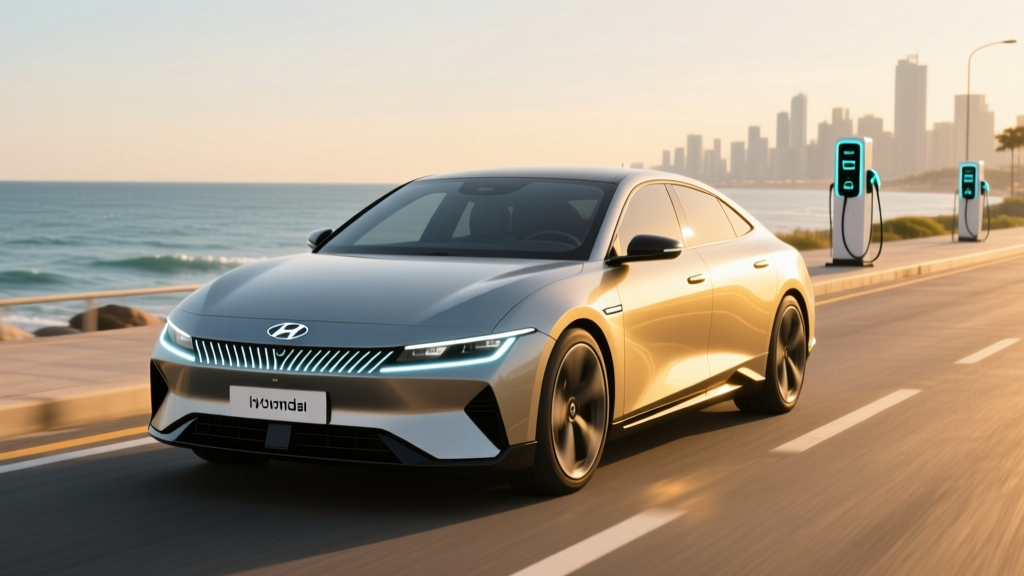
Search forums and EV communities long enough, and you'll encounter the phrase "Korean Tesla." It's shorthand for Hyundai Motor Group's E-GMP platform vehicles — the Ioniq 5, Ioniq 6, and Kia EV6 — which arrived with 800-volt architectures, ultra-fast DC charging, and aggressive pricing that directly challenged Tesla's dominance. Among them, the 2026 Hyundai Ioniq 6 makes the strongest case for the title. Its aerodynamic sedan silhouette targets Model 3 buyers specifically, trading crossover practicality for a lower drag coefficient, longer highway range, and a driving position that feels purpose-built for the daily commute and the cross-country road trip alike.
But does the Ioniq 6 actually deliver on the "Korean Tesla" promise in 2026? We've compiled EPA data, real-world testing notes, charging-curve analysis, and current federal tax credit rules to give you a complete ownership picture — no marketing fluff, just the numbers that matter.
2026 Hyundai Ioniq 6: Core Specifications at a Glance
| Specification | SE Standard Range (RWD) | SEL / Limited (RWD Long Range) | SEL / Limited (AWD) |
|---|---|---|---|
| EPA Range | 240 mi | 361 mi | 316 mi |
| Usable Battery | 54.0 kWh (LFP) | 77.4 kWh (NMC) | 77.4 kWh (NMC) |
| Peak DC Charge Rate | 175 kW | 239 kW | 239 kW |
| 10–80% DC Time | ~24 min | ~18 min | ~18 min |
| Level 2 Home Charge | 10.9 kW (~37 mi/hr) | 10.9 kW (~37 mi/hr) | 10.9 kW (~37 mi/hr) |
| 0–60 mph | 6.9 sec | 6.1 sec | 5.1 sec |
| Horsepower | 149 hp | 225 hp | 320 hp |
| Drivetrain | RWD | RWD | Dual-Motor AWD |
| MPGe (Combined) | 140 MPGe | 140 MPGe | 121 MPGe |
| Efficiency | 24 kWh/100mi | 24 kWh/100mi | 28 kWh/100mi |
| Base MSRP | $38,650 | $42,650 | $46,650 |
Real-World Range: What the EPA Sticker Doesn't Tell You
Real-World Expectation: ~290–320 mi highway (70–80 mph); ~250–280 mi in sub-40°F weather; ~330–350 mi mixed city/suburban driving
The Ioniq 6's 0.21 drag coefficient is among the lowest of any production sedan, and that slippery shape pays dividends at highway speed where aerodynamic drag dominates energy consumption. On a 75°F day at 70 mph on flat interstate, expect roughly 300–320 miles from the 77.4 kWh Long Range RWD before hitting a charger — about 85–90% of the EPA sticker. This is considerably better than most EVs, which typically deliver 75–80% of EPA range at sustained highway speeds.
Cold weather changes the equation. Without a standard heat pump on all trims (it's included on SEL and above for 2026), the Standard Range model can lose 25–35% of range in sub-freezing temperatures. The Long Range trims with the heat pump fare better, typically losing 15–25% at 20°F. If you commute in Minnesota winters, budget for 250–270 real-world miles from the Long Range RWD.
City and suburban driving is where the Ioniq 6 shines brightest. Regenerative braking recovers energy at every stoplight, and the low rolling-resistance tires help the car exceed its EPA combined rating in stop-and-go traffic. Owners in temperate climates routinely report 340–360 miles in mixed commuting before needing a charge, per data aggregated on fueleconomy.gov.
Charging Speed: The 800-Volt Advantage Explained
This is where the "Korean Tesla" label earns its keep. The Ioniq 6's 800-volt E-GMP architecture allows it to accept DC fast-charge rates that most competitors — including the Tesla Model 3 Highland — cannot match at the same price point.
| Charging Method | Power (kW) | Miles Added per Hour | Notes |
|---|---|---|---|
| Level 1 (120V household) | 1.4 kW | ~4–5 mi/hr | Emergency/trickle only |
| Level 2 (240V, 48A home charger) | 10.9 kW | ~37 mi/hr | Full charge in ~7–8 hrs (Long Range) |
| DC Fast Charge (350 kW station) | 239 kW peak | ~800+ mi/hr (peak) | 10–80% in ~18 min (Long Range) |
| DC Fast Charge (150 kW station) | ~130 kW avg | ~440 mi/hr (avg) | 10–80% in ~32 min (Long Range) |
The 239 kW peak rate on Long Range trims is sustained from roughly 10% to 45% state of charge, after which the charge curve tapers progressively. You'll see 180–200 kW through about 55%, then a gradual decline to 120 kW around 70%, and a steep taper above 80%. This is normal lithium-ion behavior — the battery management system protects cell longevity by reducing current as voltage rises.
The practical takeaway: plan your road-trip stops to charge from 10% to 80%, which takes approximately 18 minutes at a functioning 350 kW Electrify America or Ionity station. Charging past 80% on DC fast adds minimal range for disproportionately longer wait times. For daily use, home Level 2 at 10.9 kW replenishes the full 77.4 kWh battery overnight in about 7.5 hours — more than sufficient for any commute.
The Ioniq 6 ships with a NACS (Tesla Supercharger-compatible) port for the 2026 model year, giving you native access to Tesla's Supercharger network without an adapter. This was a major pain point for earlier model-year buyers and has now been fully resolved.
Performance, Efficiency, and Daily Drivability
The dual-motor AWD variant hits 60 mph in 5.1 seconds with 320 horsepower — quick enough to merge confidently and overtake without drama, though it won't challenge a Model 3 Performance in a drag race. The RWD Long Range at 6.1 seconds and 225 hp is the sweet spot: adequate acceleration with the best efficiency in the lineup.
Efficiency is genuinely impressive. The Long Range RWD achieves 140 MPGe combined (24 kWh per 100 miles), placing it among the most efficient non-luxury EVs sold in the US. For context, that translates to roughly $0.04–$0.06 per mile on residential electricity at $0.15/kWh national average — compared to $0.12–$0.16 per mile in a 30 MPG gas sedan at $3.50/gallon.
Ride quality leans toward firm, particularly on the Limited trim with its 20-inch wheels. The SE and SEL on 18-inch rubber absorb highway expansion joints more gracefully. Cabin noise is well-controlled thanks to the low-drag body and active sound insulation on upper trims. Hyundai's regenerative braking paddle shifters let you select from four levels of regen, including an "i-Pedal" one-pedal driving mode that brings the car to a complete stop without touching the brake pedal.
Interior Space, Cargo, and Technology
The Ioniq 6 is a midsize sedan with generous rear legroom (38.2 inches) but a sloping roofline that cuts into rear headroom for taller passengers. Front-seat space is excellent, with 42.5 inches of legroom and supportive, power-adjustable seats on SEL and above.
Cargo volume is 11.2 cubic feet in the trunk — less than the Model 3's 23 cu ft (including its rear sub-trunk) and considerably less than the Ioniq 5's hatchback layout. The Ioniq 6 does include a small front trunk (frunk) on RWD trims, adding 0.5 cu ft of secure storage for charging cables or a small bag. AWD trims sacrifice the frunk to house the front drive motor.
Technology highlights include dual 12-inch displays (instrument cluster and infotainment), wireless Apple CarPlay and Android Auto, over-the-air updates, Hyundai's Digital Key 2 (phone-as-key via NFC/UWB), and a comprehensive ADAS suite branded as Hyundai SmartSense. SmartSense includes adaptive cruise control with stop-and-go, lane-keeping assist, blind-spot collision avoidance, and highway driving assist — a SAE Level 2 system that requires continuous driver supervision and is not autonomous driving.
Notable drawback: the infotainment system still relies on capacitive-touch climate controls integrated into the center display, which many owners find distracting compared to physical buttons. Hyundai has not addressed this for 2026.
Pricing, Trims, and Federal Tax Credit Eligibility
| Trim | MSRP | Est. §30D Credit | Effective Price |
|---|---|---|---|
| SE Standard Range (RWD) | $38,650 | $7,500* | ~$31,150 |
| SE Long Range (RWD) | $42,650 | $7,500* | ~$35,150 |
| SEL Long Range (RWD) | $45,150 | $7,500* | ~$37,650 |
| Limited Long Range (AWD) | $52,600 | $7,500* | ~$45,100 |
*Federal tax credit eligibility under IRS §30D depends on multiple requirements that can change. Verify current eligibility before purchase.
For 2026, the Hyundai Ioniq 6 qualifies for the full $7,500 federal clean vehicle credit under §30D, transferable as a point-of-sale rebate through a registered dealer. This effectively reduces the out-of-pocket cost at purchase rather than requiring you to wait for a tax refund. However, eligibility requires:
- Buyer income caps: Modified AGI ≤ $150,000 (single), ≤ $300,000 (joint), ≤ $225,000 (head of household)
- MSRP cap: Sedan MSRP must not exceed $55,000 (all Ioniq 6 trims currently comply)
- Battery sourcing: Critical minerals and battery components must meet phased-in percentage thresholds from US or FTA-partner countries — Hyundai's supply chain currently satisfies these requirements for US-built Ioniq 6 models (assembled at the Metaplant in Ellabell, Georgia)
- Final assembly: Must occur in North America — confirmed for the 2026 Ioniq 6
Always confirm eligibility with your tax professional and the dealer at point of sale, as battery-sourcing rules tighten annually and individual tax situations vary.
Ioniq 6 vs. the Competition: Is It Worth Buying?
- Class-leading DC fast-charge speed (239 kW, 18-min 10–80%)
- Outstanding highway efficiency (140 MPGe, 361 mi EPA)
- NACS port — native Tesla Supercharger access
- Competitive pricing after $7,500 credit
- Strong 10-year/100,000-mi powertrain warranty
- Quiet, well-insulated cabin at highway speed
- Trunk space limited (11.2 cu ft) vs. Model 3 and hatchback rivals
- Sloping roofline reduces rear headroom for tall passengers
- Capacitive-touch climate controls are distracting
- Level 2 ADAS competent but not class-leading vs. Tesla Autopilot
- Standard Range trim's LFP battery limits DC charge to 175 kW
Choose the Ioniq 6 if: you prioritize fast public charging, highway range, and value pricing, and you don't need hatchback cargo flexibility. It's the strongest sedan alternative to the Model 3 for buyers who want Supercharger access without buying a Tesla.
Look elsewhere if: you need maximum cargo space (Ioniq 5, Model Y), you want the most advanced driver-assist system available (Tesla FSD Supervised, though still Level 2), or you regularly carry tall rear-seat passengers who'll find the roofline confining.
Warranty and Long-Term Ownership
Hyundai backs the Ioniq 6 with one of the strongest warranty packages in the EV market:
- Battery: 10 years / 100,000 miles (capacity retention ≥ 70%)
- Powertrain: 10 years / 100,000 miles
- New vehicle: 5 years / 60,000 miles bumper-to-bumper
- Roadside assistance: 5 years / unlimited miles
- Complimentary maintenance: 3 years / 36,000 miles
The 10-year battery warranty with a 70% capacity-retention threshold is more generous than Tesla's 8-year/120,000-mile battery warranty (also 70% retention). Long-term degradation data on the E-GMP platform's NMC cells shows approximately 8–12% loss over the first 100,000 miles based on early Ioniq 5 fleet data — well within warranty coverage.
Who Should Buy the 2026 Hyundai Ioniq 6?
The daily commuter: If your round-trip commute is under 100 miles and you have home Level 2 charging, the Ioniq 6 Long Range RWD is nearly ideal. You'll charge once or twice a week, spend under $0.05/mile on electricity, and arrive at work in a quiet, comfortable cabin.
The road tripper: With 361 EPA miles and 18-minute fast-charge stops, the Ioniq 6 makes 300–400 mile days manageable with a single 20-minute break. The NACS port opens the full Supercharger network for route flexibility.
The value-minded EV buyer: After the $7,500 federal credit, a Long Range SE Ioniq 6 lands around $35,000 — undercutting a comparably equipped Model 3 Long Range by several thousand dollars while offering faster DC charging and a longer warranty.
Not ideal for: families needing hatchback or crossover cargo space, rideshare drivers who need maximum rear-seat comfort, or buyers in extreme cold climates without access to a heated garage (consider the heat-pump-equipped trims and budget for range loss).
Frequently Asked Questions
What is the real-world range of the Hyundai Ioniq 6?
The EPA rates the Long Range RWD at 361 miles and the AWD at 316 miles. In real-world highway driving at 70–80 mph, expect 290–320 miles (RWD) and 255–285 miles (AWD). In freezing temperatures, subtract another 15–25% even with the heat pump equipped.
How fast does the Ioniq 6 charge at home and on the road?
At home on a 240V Level 2 charger (48A), the Ioniq 6 accepts 10.9 kW, adding roughly 37 miles of range per hour and fully charging overnight. On a 350 kW DC fast charger, Long Range trims peak at 239 kW, reaching 10–80% in approximately 18 minutes. Standard Range trims peak at 175 kW.
Does the 2026 Ioniq 6 qualify for the $7,500 federal EV tax credit?
Yes, all trims currently qualify under IRS §30D rules, provided the buyer meets income caps (≤$150K single / ≤$300K joint), the MSRP is under $55,000 (all trims comply), and battery sourcing requirements are met. The credit is transferable at point of sale as a rebate. Confirm eligibility with your dealer and tax professional at time of purchase, as rules tighten annually.
Is the Ioniq 6 better than the Tesla Model 3?
It depends on priorities. The Ioniq 6 charges faster on DC (239 kW vs. ~250 kW peak but lower sustained rate on the Model 3), offers a longer warranty (10 yr vs. 8 yr battery), and costs less after the tax credit. The Model 3 offers more cargo space, a more advanced (though still Level 2) Autopilot/FSD system, and Tesla's integrated ecosystem. Both now share the NACS connector, so charging network access is no longer a differentiator.
What's the biggest drawback of the Ioniq 6?
Cargo space. The sedan trunk offers just 11.2 cubic feet — adequate for groceries and luggage for two, but limiting for families or anyone regularly hauling bulky items. The sloping roofline also compromises rear headroom for passengers over 6 feet tall. If cargo flexibility matters, consider the Ioniq 5 hatchback instead.