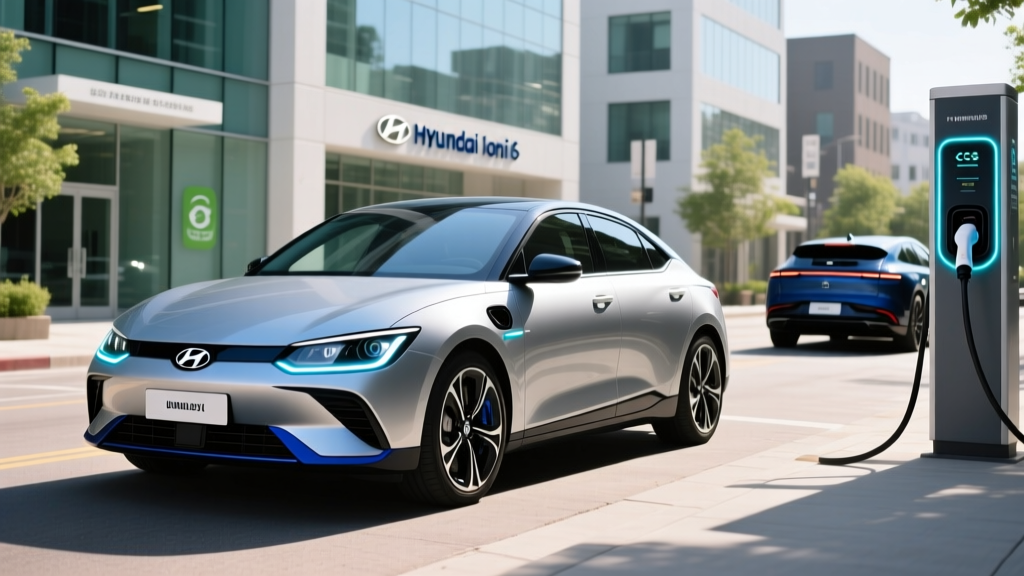
The Hyundai Ioniq 6 remains one of the most aerodynamically efficient sedans in the EV market, and for 2026 it continues to offer a compelling blend of range, charging speed, and interior refinement. But with aggressive incentives shifting across the EV landscape, finding the best Hyundai Ioniq 6 deals requires understanding exactly what you're getting for the money — from battery chemistry and real-world range to federal tax credit eligibility and how this car stacks up against the Tesla Model 3 and BMW i4.
We've tested the Ioniq 6 across multiple model years, charged it on everything from 350 kW Electrify America stalls to standard Level 2 home setups, and tracked its efficiency in both mild and cold-weather conditions. Here's the data-driven breakdown you need before negotiating at the dealer.
Range and Efficiency: EPA vs. Real World
The 2026 Hyundai Ioniq 6 is available with two battery configurations. The Standard Range RWD pairs a 54.0 kWh usable battery (LFP chemistry) with a single rear motor, while the Long Range trims use a 77.4 kWh usable NMC (nickel-manganese-cobalt) battery available in RWD or dual-motor AWD.
- SE/SEL Long Range RWD: EPA 361 miles — Expect ~300–320 mi on highway road trips at 70+ mph; ~250–270 mi in sustained sub-30°F cold weather.
- SEL/Limited AWD: EPA 316 miles — Expect ~260–280 mi highway; ~220–240 mi in freezing conditions.
- SE Standard Range RWD: EPA 240 miles — Expect ~200–215 mi highway; ~170–185 mi in deep winter.
The Ioniq 6's drag coefficient of 0.21 — the lowest of any current production Hyundai — gives it an edge in highway efficiency that many SUV-shaped EVs simply cannot match. However, cold weather still cuts range 15–25%, consistent with NMC and LFP chemistries across the industry.
Efficiency for the Long Range RWD model is rated by the EPA at 140 MPGe combined, which translates to roughly 24 kWh per 100 miles. That's among the best in its class, rivaling the Tesla Model 3 Long Range and edging out the BMW i4 eDrive40. The AWD model drops to 117 MPGe combined (~29 kWh/100 mi).
Charging Speed: DC Fast and Home Level 2
Charging speed is where the Ioniq 6's 800-volt E-GMP architecture shines. Hyundai has carried over the ultra-fast charging capability that debuted with the Ioniq 5, and the Ioniq 6 takes full advantage of it.
| Charging Level | Power / Rate | Time or Miles Added | Notes |
|---|---|---|---|
| DC Fast Charge (peak) | Up to 240 kW (Long Range) | 10–80% in ~18 minutes | Requires 350 kW-capable station; curve tapers sharply above 80% |
| DC Fast Charge (Standard Range) | Up to 180 kW | 10–80% in ~20 minutes | LFP battery charges more linearly but at lower peak |
| Level 2 (240V, 48A home charger) | 10.9 kW | ~35 miles of range per hour | Full charge in ~7.5 hours (Long Range) |
| Level 1 (120V standard outlet) | ~1.4 kW | ~4–5 miles of range per hour | Emergency/top-up only; not practical for daily use |
Charging curve reality check: The Ioniq 6 hits its 240 kW peak only between roughly 10–45% state of charge (SoC). From 45–80%, the rate ramps down to 150 kW, then further to 80–100 kW approaching 80%. The 18-minute 10–80% claim is achievable at a 350 kW station with battery preconditioning active (the car automatically warms the pack when a DC fast charger is set in the navigation). At a 150 kW station, expect 10–80% in approximately 28–32 minutes.
For home charging, a 48-amp Level 2 wallbox on a 60-amp circuit is the sweet spot. Installation typically costs $800–$2,000 depending on your electrical panel's capacity and the run length from panel to garage. If your home has a 200-amp panel with available headroom, you're looking at the lower end; a panel upgrade to 200A can add $1,500–$3,000.
Performance and Drivetrain
The Ioniq 6 isn't marketed as a performance EV, but it's no slouch either. The single-motor RWD Long Range produces 225 horsepower and 258 lb-ft of torque, hitting 0–60 mph in approximately 6.2 seconds. The dual-motor AWD variant bumps output to 320 hp and 446 lb-ft, dropping the 0–60 sprint to 4.5 seconds.
Ride quality is composed and quiet — Hyundai has tuned the suspension for comfort over sportiness, which suits the sedan's grand-touring character. Road noise is notably lower than the Ioniq 5 thanks to the sleek bodywork and acoustic glass on higher trims. The regenerative braking system offers four levels selectable via steering wheel paddles, with Level 3 providing near-one-pedal driving in city traffic (though it doesn't come to a complete stop without touching the brake pedal).
Interior, Cargo, and Technology
The Ioniq 6's cabin is spacious for a midsize electric sedan, though the sloping roofline does compromise rear headroom for taller passengers.
- Front legroom: 43.1 inches
- Rear legroom: 35.7 inches
- Front headroom: 40.2 inches
- Rear headroom: 37.1 inches (noticeably tight for 6'2"+ passengers)
- Trunk cargo volume: 12.3 cubic feet
- Frunk (front trunk): 1.6 cu ft (AWD) / 2.0 cu ft (RWD) — enough for a charging cable bag, not much more
The dual 12.3-inch curved display panel runs Hyundai's latest infotainment software with wireless Apple CarPlay and Android Auto. The center console features physical shortcut buttons for climate and volume — a welcome decision over touch-only interfaces. Available features on the Limited trim include a digital side-mirror system (camera-based, replacing traditional mirrors in select markets), a panoramic sunroof, and Hyundai's Highway Driving Assist 2 (HDA 2).
Notable drawbacks: The rear window is small and the fastback roofline limits rearward visibility. The trunk opening is narrower than a traditional sedan's, making bulky items harder to load. There's no hatchback-style liftgate — this is a conventional trunk lid, which limits practicality compared to the Ioniq 5's hatch. Rear-seat USB-C ports are present but there's no rear HVAC zone control on lower trims.
Pricing, Trims, and Federal Tax Credit Eligibility
Here's what the 2026 Hyundai Ioniq 6 lineup costs before incentives, based on current MSRP:
| Trim | Drivetrain | MSRP | Est. After §30D Credit* |
|---|---|---|---|
| SE Standard Range | RWD | $38,650 | $31,150 |
| SE Long Range | RWD | $42,450 | $34,950 |
| SEL Long Range | RWD | $44,950 | $37,450 |
| SEL Long Range | AWD | $46,450 | $38,950 |
| Limited Long Range | AWD | $51,350 | $43,850 |
*Federal tax credit estimates assume full eligibility. Actual credit depends on IRS §30D requirements.
The Hyundai Ioniq 6 qualifies for the §30D federal EV tax credit, but eligibility is not automatic or universal. Here's what you need to know:
- MSRP cap: The Ioniq 6 is classified as a sedan (not an SUV), so the MSRP cap is $55,000. All current trims fall under this threshold.
- Buyer income limits: Modified adjusted gross income (MAGI) must not exceed $150,000 (single), $225,000 (head of household), or $300,000 (married filing jointly).
- Battery sourcing requirements: The credit is split into two $3,750 halves — one for critical minerals sourcing and one for battery component assembly. Hyundai has shifted significant battery production to the U.S. (via the Georgia Metaplant and SK On partnerships), but the exact credit amount ($3,750 or $7,500) can vary by model year and battery batch. Confirm with your dealer and cross-reference the DOE/Fuel Economy tax credit lookup tool before purchase.
- Point-of-sale transfer: As of 2024, buyers can transfer the credit to the dealer at purchase, reducing the sale price upfront rather than waiting to claim it on their tax return. This is available for the Ioniq 6.
State incentives vary widely — California's CVRP, Colorado's innovative motor vehicle credit, and various utility rebates can stack on top of the federal credit. Check your state energy office and local utility for current programs.
Ioniq 6 vs. Key Competitors
The Ioniq 6 competes in a crowded midsize electric sedan segment. Here's how the numbers stack up against its most direct rivals:
| Spec | 2026 Ioniq 6 LR RWD | 2026 Tesla Model 3 LR | 2026 BMW i4 eDrive40 |
|---|---|---|---|
| EPA Range | 361 mi | 363 mi | 307 mi |
| Battery (usable kWh) | 77.4 kWh (NMC) | 79 kWh (NMC) | 81.5 kWh (NMC) |
| Peak DC Charge | 240 kW | 250 kW | 205 kW |
| 10–80% DC Time | ~18 min | ~15 min | ~31 min |
| 0–60 mph | 6.2 sec | 5.8 sec | 5.5 sec |
| Base MSRP | $42,450 | $42,380 | $57,900 |
| Federal Credit | Up to $7,500 | $7,500 | Up to $7,500 |
| Efficiency (MPGe) | 140 combined | 134 combined | 109 combined |
The takeaway: The Ioniq 6 matches the Model 3 on range and beats it on efficiency. The Tesla charges slightly faster and has the Supercharger network advantage (though Hyundai now has NACS-equipped vehicles gaining Supercharger access). The BMW i4 is more engaging to drive but costs significantly more and charges slower. For value-focused buyers, the Ioniq 6 Long Range RWD is the sweet spot — especially after incentives.
Warranty and Long-Term Ownership
Hyundai backs the Ioniq 6 with one of the strongest warranty packages in the EV market:
- Battery warranty: 10 years / 100,000 miles (capacity retention threshold: 70% of original capacity)
- Powertrain warranty: 10 years / 100,000 miles
- New vehicle limited warranty: 5 years / 60,000 miles
- Roadside assistance: 5 years / unlimited miles
- Complimentary maintenance: 3 years / 36,000 miles (oil changes don't apply to EVs, but this covers tire rotations, inspections, and fluid top-offs)
The 10-year battery warranty is a significant advantage over Tesla (8 years/120,000 mi for Model 3) and BMW (8 years/80,000 mi). For buyers concerned about long-term battery degradation, this coverage provides meaningful peace of mind. Based on data from earlier E-GMP vehicles (2022–2024 Ioniq 5), degradation has been modest — typically 3–5% loss over the first 50,000 miles, well within the warranty threshold.
Who Should Buy the Ioniq 6?
- You prioritize real-world efficiency and want maximum range per dollar in a sedan form factor
- You commute 30–80 miles daily and want to charge at home overnight without range stress
- You value the 10-year battery warranty and Hyundai's dealer service network
- You want ultra-fast DC charging for road trips without paying Tesla or BMW premiums
- You regularly carry tall rear passengers or need hatchback cargo flexibility (consider the Ioniq 5 or Kia EV6)
- You need more than 316 miles of range in AWD (the RWD Long Range is your best bet here)
- You prioritize sporty driving dynamics over comfort (the BMW i4 or Tesla Model 3 Performance may suit you better)
- You tow — the Ioniq 6 is not rated for towing
Pros and Cons at a Glance
- Class-leading 140 MPGe efficiency
- 361-mile EPA range on Long Range RWD
- 240 kW peak DC fast charging (18 min 10–80%)
- 10-year/100,000-mile battery warranty
- Quiet, refined ride quality
- Physical climate and volume controls
- Falls under $55K MSRP cap for full §30D credit
- Sloping roofline limits rear headroom and trunk practicality
- Small frunk (2.0 cu ft max)
- No towing capacity
- Rear visibility is compromised by design
- HDA 2 requires hands-on-wheel (no hands-free driving like BlueCruise)
- Standard Range model's 240-mile range is limiting for road trips
Frequently Asked Questions
What is the real-world range of the 2026 Hyundai Ioniq 6?
The Long Range RWD model is EPA-rated at 361 miles. In real-world highway driving at 70–80 mph, expect 300–320 miles. In cold weather (below 30°F), plan for 250–270 miles. The AWD variant drops to 316 EPA / ~260–280 real-world highway miles.
How fast does the Ioniq 6 charge at home and on the road?
On a 350 kW DC fast charger, the Long Range model peaks at 240 kW and charges from 10–80% in approximately 18 minutes. At home on a 48-amp Level 2 charger, it adds about 35 miles of range per hour, fully charging the 77.4 kWh battery in roughly 7.5 hours.
Does the Hyundai Ioniq 6 qualify for the $7,500 federal tax credit?
Yes, with conditions. All 2026 Ioniq 6 trims fall under the $55,000 sedan MSRP cap. However, you must meet IRS income limits ($150K single / $300K married filing jointly), and the credit amount ($3,750 or $7,500) depends on battery sourcing compliance. The point-of-sale transfer option is available. Always verify current eligibility on irs.gov before purchasing.
Is the Ioniq 6 worth buying over the Tesla Model 3?
It depends on your priorities. The Ioniq 6 matches the Model 3 Long Range on EPA range (361 vs 363 mi), beats it on efficiency (140 vs 134 MPGe), and offers a longer battery warranty (10 vs 8 years). The Model 3 charges slightly faster and benefits from the Supercharger network. If you value ride comfort and warranty coverage, the Ioniq 6 is the stronger pick; if charging network convenience and software ecosystem matter most, the Model 3 still has an edge.
What battery chemistry does the Ioniq 6 use?
The Long Range trims use NMC (nickel-manganese-cobalt) chemistry with a 77.4 kWh usable capacity. The Standard Range model uses LFP (lithium iron phosphate) with 54.0 kWh usable. LFP offers longer cycle life and can be charged to 100% regularly without degradation concerns, but provides less range and lower cold-weather performance than NMC.
Can the Ioniq 6 use Tesla Superchargers?
Starting with the 2025 model year, Hyundai began equipping new vehicles with the NACS (North American Charging Standard) port. 2026 Ioniq 6 models ship with NACS and can access Tesla Supercharger stalls natively. For CCS-equipped models from prior years, Hyundai offers a NACS adapter.