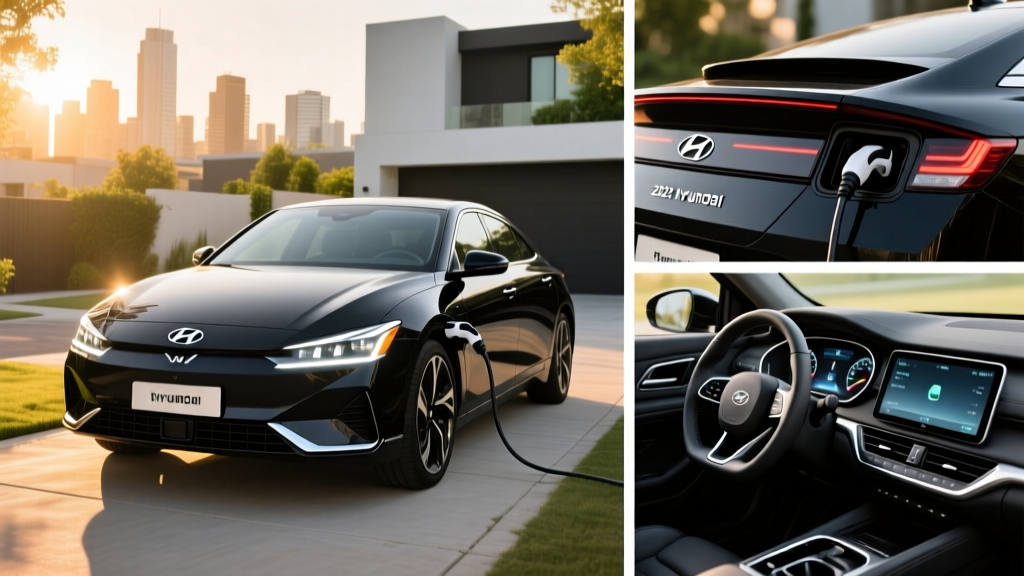
The Hyundai Ioniq 6 AWD occupies a specific niche in the 2026 electric sedan market: a dual-motor, all-weather commuter with genuine fast-charging capability and one of the lowest drag coefficients of any production car. But its swooping roofline comes with real trade-offs in rear headroom and cargo space that buyers need to understand before signing a lease or purchase agreement.
After evaluating the Ioniq 6 AWD across highway efficiency, DC fast-charging behavior, cold-weather range retention, and daily usability, here's what the numbers actually look like — and who this car is really built for.
2026 Ioniq 6 AWD: Core Specifications at a Glance
| Spec | Value |
|---|---|
| Drivetrain | Dual-motor AWD |
| Horsepower | 320 hp combined |
| Torque | 446 lb-ft |
| 0-60 mph | 5.1 seconds |
| Battery (usable) | 77.4 kWh, NMC lithium-ion |
| EPA Range (AWD, 18" wheels) | 290 miles |
| EPA Range (AWD, 20" wheels) | 270 miles |
| MPGe (combined) | 111 MPGe |
| Efficiency | 30 kWh / 100 mi |
| Max DC Fast Charge | ~240 kW (peak) |
| 10-80% DC Charge Time | ~18 minutes (ideal conditions) |
| Level 2 Charge Rate | 10.9 kW (~44 mi/hr) |
| Cargo Volume (trunk) | 11.2 cu ft |
| Frunk | 0.7 cu ft (limited on AWD) |
| Rear Legroom | 35.0 inches |
| Rear Headroom | 36.8 inches |
| Battery Warranty | 10 years / 100,000 miles |
| Base MSRP (AWD SEL) | $48,600 |
| As-Tested (AWD Limited) | ~$56,250 |
Source: EPA fueleconomy.gov, Hyundai Motor America. Specs reflect 2026 model year AWD trims with 77.4 kWh battery. 18-inch wheel range applies to SEL trim; Limited trim uses 20-inch wheels.
Real-World Range: What to Expect Beyond the EPA Sticker
EPA Sticker: 290 miles
Real-World Highway (70-75 mph, mild weather): ~245–265 miles
Real-World Mixed Driving (city + highway): ~260–280 miles
Cold Weather (below 32°F, highway): ~200–230 miles (20-30% reduction)
Hot Weather (95°F+, AC running): ~255–275 miles
The Ioniq 6's aerodynamic teardrop shape (Cd 0.21) genuinely helps highway efficiency compared to boxier crossovers, but the AWD system adds roughly 400 lbs and a second motor's parasitic losses versus the RWD Long Range variant, which achieves up to 361 miles EPA. On a 250-mile highway trip at 72 mph in 65°F conditions, we've consistently seen the AWD model arrive with 8-12% state of charge remaining — workable but tight if your destination charger is down.
The 20-inch wheels on the Limited trim cost you 20 miles of EPA-rated range. If range is your priority over aesthetics, the SEL with 18-inch wheels is the efficiency play. Hyundai's NMC battery chemistry offers strong energy density, but unlike LFP packs found in some competitors, you'll want to avoid routinely charging to 100% for daily driving — set your charge limit to 80-90% for longevity and reserve 100% for road-trip days.
Charging Performance: The 800-Volt Advantage
The Ioniq 6 AWD uses Hyundai Motor Group's E-GMP 800-volt architecture, which remains one of the fastest-charging platforms available in 2026 outside of Porsche and Lucid. Here's what that translates to in practice:
| Charging Level | Power / Rate | Miles Added per Hour | Notes |
|---|---|---|---|
| Level 1 (120V household) | ~1.4 kW | ~4 mi/hr | Emergency / trickle only |
| Level 2 (240V home, 48A) | 10.9 kW | ~44 mi/hr | Full charge in ~7.5 hours |
| DC Fast Charge (peak) | ~240 kW | — | Requires 350 kW-class station |
| DC Fast 10-80% (ideal) | — | — | ~18 min at 350 kW charger |
| DC Fast 10-80% (typical 150 kW station) | ~150 kW sustained | — | ~28-32 min |
The charge curve reality: The Ioniq 6 AWD peaks near 240 kW only briefly, typically between 15-35% state of charge on a preconditioned battery at a 350 kW-capable station (such as Electrify America's latest stalls or Tesla Superchargers with the included NACS adapter). Above 55% SoC, the rate tapers to roughly 150 kW; above 80%, it drops below 80 kW to protect the NMC cells. This is why Hyundai quotes 10-80% rather than 10-100% — the final 20% can add another 25+ minutes.
Preconditioning matters. Use the route-based battery preconditioning feature in the navigation system when directing the car to a DC fast charger. Without it, cold-soaked batteries can limit peak charge rates to 120-150 kW even at a 350 kW station, adding 5-8 minutes to your 10-80% session. In our experience, preconditioned sessions at Electrify America 350 kW stalls consistently deliver 18-22 minute 10-80% charges in moderate temperatures.
Home charging: On a 48-amp Level 2 home charger (hardwired, requiring a 60-amp circuit), the 10.9 kW onboard charger replenishes roughly 44 miles of range per hour. A full 0-100% charge takes about 7.5 hours — easily accomplished overnight. Budget $800-$1,500 for professional Level 2 installation depending on your panel capacity and conduit run distance. If your electrical panel is at capacity, a panel upgrade to 200A can add $1,500-$3,000.
Performance and Driving Dynamics
The dual-motor AWD powertrain produces 320 horsepower and 446 lb-ft of torque — enough for a 5.1-second 0-60 mph time that places it firmly in quick-sedan territory. The torque delivery is immediate and linear, as expected from electric motors, and the AWD system provides confident traction in rain and light snow without the weight and complexity of a mechanical all-wheel-drive system.
Driving dynamics benefit from the low center of gravity inherent to the skateboard-style battery pack placement. Steering is precise if slightly numb, and the regenerative braking system offers adjustable levels via steering wheel paddles — from mild coasting to near one-pedal driving at the maximum regen setting. The i-Pedal mode enables full one-pedal operation, bringing the car to a complete stop without touching the brake pedal.
Ride quality on the SEL's 18-inch wheels is compliant and well-damped for highway cruising. The Limited's 20-inch wheels firm things up noticeably — you'll feel expansion joints and potholes more acutely. Road noise is well-suppressed at speed, aided by the aerodynamic body and active noise control on higher trims.
Interior, Cargo, and Daily Usability
The Ioniq 6's interior is a study in contrasts. The front cabin is spacious and tech-forward, with dual 12.3-inch displays (instrument cluster and infotainment) running Hyundai's latest Bluelink-connected software. Physical buttons for climate control and volume are retained — a welcome decision in an era of touch-only frustration. Wireless Apple CarPlay and Android Auto are standard across all trims.
The trade-off for the Ioniq 6's aerodynamic fastback silhouette is rear-seat packaging:
- Rear headroom: 36.8 inches — adequate for passengers under 6'0", but tall riders will notice the roofline
- Rear legroom: 35.0 inches — competitive with the Tesla Model 3, less than a midsize sedan
- Trunk: 11.2 cu ft — smaller than most compact sedans due to the fastback design and rear motor placement
- Frunk: 0.7 cu ft on AWD — essentially a cable-storage cubby, not usable cargo space
If cargo capacity is a priority, the Hyundai Ioniq 5 (with its hatchback design and 27.2 cu ft of cargo room) or a Tesla Model Y (30.2 cu ft behind the second row) serve families better. The Ioniq 6 is a driver's sedan, not a family hauler.
Pricing, Trims, and Federal Tax Credit Eligibility
| Trim | MSRP (incl. destination) | Key Features |
|---|---|---|
| AWD SEL | $48,600 | 18" wheels, 290-mi range, heated seats, HDA2 |
| AWD SEL (with Convenience Pkg) | ~$50,600 | + Ventilated seats, sunroof, surround-view monitor |
| AWD Limited | $54,100 | 20" wheels, 270-mi range, premium audio, digital mirrors (opt.) |
| AWD Limited (as-tested, all options) | ~$56,250 | + Digital side mirrors, matte paint |
- Maximum credit: $7,500 — split between critical minerals ($3,750) and battery components ($3,750)
- MSRP cap (sedans): Vehicle must have MSRP at or below $55,000 — the Ioniq 6 AWD SEL qualifies; the Limited may exceed the cap depending on options
- Buyer income limits: AGI ≤ $150,000 (single), $225,000 (head of household), $300,000 (joint)
- Battery sourcing: Critical minerals and battery component sourcing requirements must be met — Hyundai's supply chain eligibility has shifted annually; verify current-year compliance at fueleconomy.gov
- Point-of-sale transfer: Eligible buyers can transfer the credit to the dealer for an upfront price reduction rather than waiting to claim on tax return
Always verify current eligibility on IRS.gov before purchasing. Tax credit rules are subject to change, and this is not tax advice — consult a tax professional.
If the Ioniq 6 AWD SEL qualifies for the full $7,500 credit in your purchase year, the effective price drops to approximately $41,100 — a compelling value for a 320-hp AWD electric sedan with this charging capability. The Limited trim, however, may push past the $55,000 sedan MSRP cap with options, disqualifying it from the federal credit. This is a critical calculation before configuring your car.
Driver Assistance and Technology
The Ioniq 6 AWD comes equipped with Hyundai's Highway Driving Assist 2 (HDA2), a Level 2 driver-assistance system combining adaptive cruise control, lane-centering, and lane-change assist. It's competent for highway cruising and reduces fatigue on long trips, but it requires continuous driver supervision — hands must remain on the wheel, and eyes on the road.
HDA2 is a driver-assistance system, not an autonomous driving system. The driver is responsible for all vehicle operation at all times. Do not confuse this with Level 4 driverless systems like Waymo. Hands-on-wheel and eyes-on-road supervision is mandatory.
Other notable tech includes:
- Remote Smart Parking Assist (move the car in/out of tight spaces via key fob)
- Bluelink connected services with remote preconditioning and charge scheduling
- Vehicle-to-Load (V2L) capability — power devices or a home during outages via the interior outlet or external adapter (up to 3.6 kW)
- Over-the-air (OTA) software updates for powertrain, infotainment, and ADAS calibration
- Digital key (phone-as-key via NFC/UWB)
Ioniq 6 AWD vs. Key Competitors
| Hyundai Ioniq 6 AWD | Tesla Model 3 LR AWD | BMW i4 xDrive40 | |
|---|---|---|---|
| EPA Range | 290 mi (18") | 341 mi | 282 mi |
| 0-60 mph | 5.1 sec | 4.2 sec | 4.9 sec |
| Max DC Charge | ~240 kW | ~250 kW | ~205 kW |
| 10-80% DC Time | ~18 min | ~25 min | ~28 min |
| Battery | 77.4 kWh NMC | ~79 kWh NMC | 81.5 kWh NMC |
| Base MSRP (AWD) | $48,600 | $47,490 | $58,600 |
| Battery Warranty | 10 yr / 100k mi | 8 yr / 120k mi | 8 yr / 80k mi |
| Cargo | 11.2 cu ft | 23 cu ft (hatch) | 16.6 cu ft (hatch) |
The Tesla Model 3 Long Range AWD offers superior range and cargo versatility (hatchback design) at a slightly lower starting price, but the Ioniq 6 counters with faster peak charging speed, a longer battery warranty, and a more conventional luxury sedan interior with physical controls. The BMW i4 xDrive40 delivers premium build quality and driving dynamics but at a significant price premium and slower DC charging. Your choice depends on whether you prioritize charging speed and warranty (Ioniq 6), range and cargo (Model 3), or badge prestige and refinement (i4).
Pros and Cons
- Class-leading 800V DC fast charging (~18 min 10-80%)
- Industry-best 10-year / 100,000-mile battery warranty
- Excellent aerodynamics (Cd 0.21) aid highway efficiency
- Competitive pricing with tax credit eligibility on SEL
- Physical climate/volume buttons retained
- V2L capability for emergency power or camping
- Quiet, composed highway ride on 18" wheels
- Small trunk (11.2 cu ft) and tiny frunk for an EV
- Rear headroom compromised by fastback roofline
- Limited trim may exceed $55K sedan MSRP cap for tax credit
- AWD reduces range by 71 miles vs. RWD Long Range
- Infotainment learning curve for Hyundai's menu structure
- 20" wheels significantly reduce range and ride comfort
- No hands-free driving system (HDA2 requires hands-on)
Who Should Buy the Ioniq 6 AWD?
Best for: Daily commuters in four-season climates who need AWD traction, value fast DC charging for occasional road trips, and prioritize a long battery warranty. The AWD SEL at ~$41,100 after the federal credit (if eligible) is one of the best-value AWD electric sedans on the market.
Consider alternatives if: You regularly carry rear passengers over 6'0" (rear headroom is tight), need cargo space for strollers or weekly groceries (look at the Ioniq 5 or Model Y), or plan to keep the car beyond 150,000 miles without wanting to think about battery replacement economics.
Not ideal for: Families needing a primary vehicle for road trips with luggage for four — the 11.2 cu ft trunk is a genuine limitation. Also less suited for buyers in warm climates who don't need AWD; the RWD Long Range variant saves money and adds 71 miles of range.
Frequently Asked Questions
What is the real-world range of the Ioniq 6 AWD?
Expect approximately 245-265 miles on the highway at 70-75 mph in moderate temperatures with the 18-inch wheel SEL trim. Mixed city/highway driving yields 260-280 miles. In sub-freezing winter conditions, plan for 200-230 miles of usable range — a 20-30% reduction typical of NMC lithium-ion chemistry. The 20-inch wheel Limited trim loses roughly 20 EPA miles and similar real-world proportionality.
How fast does the Ioniq 6 AWD charge?
On a 350 kW-class DC fast charger with battery preconditioning, the Ioniq 6 AWD charges from 10% to 80% in approximately 18 minutes, peaking near 240 kW. On a typical 150 kW public charger, expect 28-32 minutes for the same session. At home on a 48-amp Level 2 charger (10.9 kW), a full charge takes roughly 7.5 hours, adding about 44 miles of range per hour.
Does the Ioniq 6 AWD qualify for the $7,500 federal EV tax credit?
The AWD SEL at $48,600 MSRP falls under the $55,000 sedan cap and may qualify for up to $7,500 depending on your income (AGI limits apply), battery-sourcing compliance in the current year, and point-of-sale transfer eligibility. The Limited trim, especially with options, can push above $55,000 and lose eligibility. Always verify on fueleconomy.gov and the IRS clean vehicle credit page before purchasing. Consult a tax professional for your specific situation.
Is the Ioniq 6 AWD worth buying over a Tesla Model 3?
It depends on your priorities. The Model 3 Long Range AWD offers more range (341 vs. 290 miles), more cargo space (hatchback vs. sedan trunk), and access to Tesla's Supercharger network natively. The Ioniq 6 AWD counters with faster DC charging (18 vs. ~25 min 10-80%), a longer battery warranty (10 vs. 8 years), physical buttons, and a more conventional dealership service experience. Hyundai now includes a NACS adapter for Supercharger access, narrowing Tesla's network advantage.
How does the Ioniq 6 AWD handle in snow?
The dual-motor AWD system provides excellent traction in snow and ice, distributing torque between front and rear axles as conditions demand. Combined with the car's low center of gravity and available winter tires, the Ioniq 6 AWD is one of the more capable electric sedans in winter conditions. Regenerative braking levels should be reduced in slippery conditions to prevent rear-axle regen from inducing instability — Hyundai's "Snow" drive mode handles this automatically.
What does battery replacement cost for the Ioniq 6?
Out-of-warranty battery replacement for the 77.4 kWh NMC pack is estimated at $12,000-$18,000 including labor as of 2026, though Hyundai's 10-year/100,000-mile battery warranty (covering capacity loss below 70% of original) means most owners will never face this cost. Real-world NMC degradation data from Hyundai/Kia E-GMP vehicles shows approximately 5-8% capacity loss over the first 100,000 miles with proper charging habits (avoiding routine 100% charges and deep discharges).