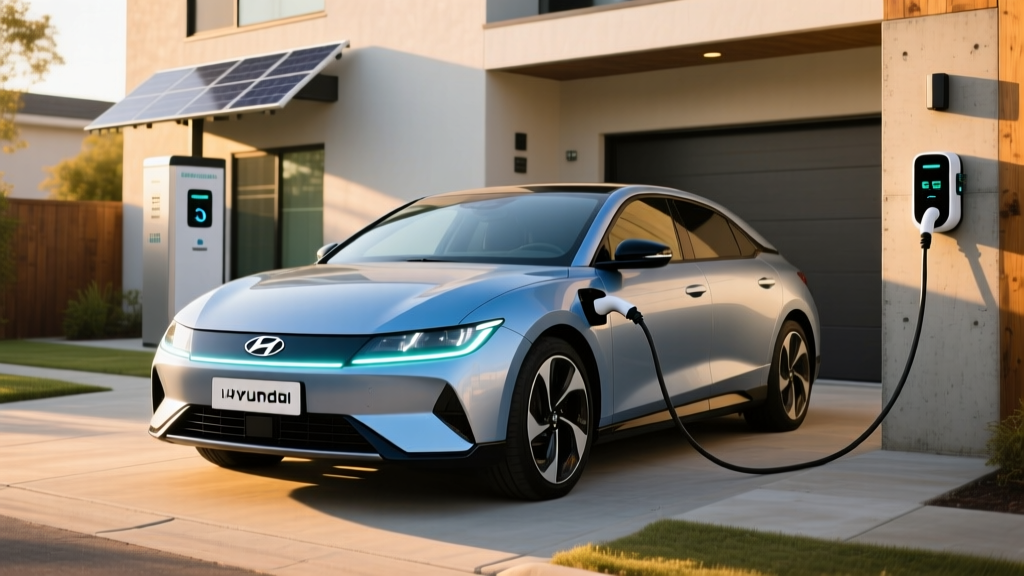
The Hyundai Ioniq 6 enters the 2026 model year as one of the most aerodynamically efficient electric sedans on the market, and its numbers reflect that engineering focus. With an EPA-estimated range reaching 361 miles, 800-volt DC fast-charging architecture, and a starting MSRP that undercuts many rivals, it occupies a specific niche: the efficiency-obsessed commuter who still wants respectable road-trip capability. But its swooping roofline comes with real trade-offs in cargo space and rear visibility. Here's what the data actually shows after examining EPA figures, real-world driving behavior, and Hyundai's current pricing structure.
Range and Efficiency: The Ioniq 6's Strongest Argument
The 2026 Ioniq 6 carries over its powertrain lineup from the prior model year with two battery options and rear-wheel or all-wheel drive configurations. The efficiency champion is the SE/SEL RWD Long Range with the 77.4 kWh usable battery pack (NMC lithium-ion chemistry), which earns an EPA-estimated 361 miles of range. That figure places it among the top-tier EVs for range-per-dollar.
EPA Estimate: 361 miles (SE/SEL RWD Long Range)
Real-World Highway (70-80 mph): Expect approximately 290–320 miles. The Ioniq 6's low drag coefficient (Cd 0.21) helps at highway speeds, but sustained high-speed driving still consumes 15–20% more energy than the EPA combined cycle assumes.
Cold Weather (below 32°F): Plan for 250–280 miles. The heat pump (standard on Long Range trims) mitigates cabin-heating energy draw, but lithium-ion chemistry inherently loses efficiency in cold temperatures. Preconditioning the battery while plugged in recovers some of this loss.
City/Commuter Driving: 340–360+ miles achievable with frequent regenerative braking opportunities.
The Standard Range RWD model uses a smaller 53.0 kWh battery and delivers an EPA-estimated 240 miles. The AWD Long Range drops to 316 miles EPA due to the energy cost of powering the front motor. Efficiency ratings across the lineup are exceptional, with the RWD Long Range achieving an EPA-rated 140 MPGe combined (24 kWh/100 miles) — that translates to roughly $0.04–$0.06 per mile depending on your local electricity rate, compared to $0.12–$0.16 per mile in a 30 MPG gas sedan at current fuel prices.
| Configuration | Battery (kWh usable) | EPA Range (mi) | MPGe Combined | kWh/100 mi |
|---|---|---|---|---|
| SE/SEL RWD Standard Range | 53.0 | 240 | 117 | 29 |
| SE/SEL RWD Long Range | 77.4 | 361 | 140 | 24 |
| SEL/Limited AWD Long Range | 77.4 | 316 | 123 | 27 |
Charging Speed: 800V Architecture Makes a Difference
The Ioniq 6 uses Hyundai's E-GMP platform with native 800-volt charging capability — the same architecture found in the Ioniq 5 and Kia EV6. This is a meaningful hardware advantage: most competitors in this price range (Tesla Model 3, Chevrolet Bolt, Nissan Ariya) use 400V systems that physically cannot accept the same charge rate without overheating the battery.
| Charge Level | Power / Rate | Time / Miles Added | Connector |
|---|---|---|---|
| Level 1 (120V household) | ~1.4 kW | ~3–4 miles per hour | J1772 (NACS adapter included) |
| Level 2 (240V home, 48A) | 10.9 kW | ~32–36 miles per hour; full charge in ~7.5 hrs (Long Range) | J1772 / NACS |
| DC Fast Charge (350 kW station) | Peak ~235 kW | 10–80% in approximately 18 minutes | CCS1 / NACS |
A few real-world charging notes based on the E-GMP platform's behavior: the 235 kW peak rate is achievable at 350 kW chargers (Electrify America, EVgo) but only when the battery is preconditioned and between roughly 10–55% state of charge. Above 60%, the charge curve tapers significantly — expect 50–80 kW between 60–80%, and under 30 kW above 90%. This means a 10–80% session takes about 18 minutes, but 10–95% stretches closer to 40 minutes. For road trips, the practical strategy is to charge to 80% and go rather than wait for a full battery.
Hyundai has transitioned the 2026 Ioniq 6 to the NACS (Tesla-style) charge port as standard in North America, with a CCS adapter available for legacy stations. This grants access to Tesla's Supercharger network (over 25,000 stalls in the US) via the included adapter or native NACS plug at newer Superchargers that have opened to non-Tesla vehicles — a significant expansion of available fast-charging infrastructure.
Performance and Drivetrain
The Ioniq 6 is tuned for efficiency rather than outright performance, but it's no slouch. The RWD Long Range model produces 225 horsepower from its rear-mounted permanent-magnet synchronous motor, reaching 0–60 mph in approximately 6.2 seconds. The AWD Long Range adds a front induction motor for a combined 320 horsepower and a 0–60 time of roughly 5.1 seconds.
Neither figure will challenge a Tesla Model 3 Performance (3.1 seconds), but the Ioniq 6 isn't competing in that segment. Its strengths are composed highway manners, low cabin noise (acoustic laminated glass on front and rear doors), and a well-damped ride that absorbs road imperfections without feeling floaty. The regenerative braking system offers four levels selectable via steering-wheel paddles, with Level 3 providing near one-pedal driving capability in city traffic.
Pricing, Trims, and Federal Tax Credit Eligibility
The 2026 Ioniq 6 lineup spans four primary trims, and pricing remains competitive within the electric sedan segment. Here's the current MSRP structure before destination charges:
| Trim | Drivetrain | MSRP (est.) | Est. §30D Credit | Effective Price |
|---|---|---|---|---|
| SE Standard Range | RWD | $37,500 | Up to $7,500* | ~$30,000 |
| SE Long Range | RWD | $42,500 | Up to $7,500* | ~$35,000 |
| SEL Long Range | RWD | $45,000 | Up to $7,500* | ~$37,500 |
| SEL Long Range | AWD | $47,500 | Up to $7,500* | ~$40,000 |
| Limited Long Range | AWD | $52,000 | Up to $7,500* | ~$44,500 |
*Federal tax credit eligibility under IRS §30D is subject to multiple requirements for 2026:
- MSRP cap: Sedans must be priced at or below $55,000 — all Ioniq 6 trims qualify.
- Buyer income cap: Modified AGI must not exceed $150,000 (single), $225,000 (head of household), or $300,000 (joint filing).
- Battery sourcing: The full $7,500 requires meeting both critical-minerals and battery-component sourcing thresholds set by the Treasury Department. These thresholds tighten annually. As of early 2026, Hyundai has worked to localize battery supply chains (partnering with SK On's Georgia plant), but buyers should verify current sourcing compliance at the point of sale.
- Point-of-sale transfer: Eligible buyers can transfer the credit to the dealer at purchase, reducing the purchase price directly rather than waiting for a tax refund.
Because sourcing rules change and are model-specific, always confirm eligibility with your dealer and consult a tax professional before relying on the credit in your purchase decision.
Interior Space, Cargo, and Daily Practicality
This is where the Ioniq 6's design choices generate the most trade-offs. The sedan's dramatic fastback roofline creates a cabin that feels spacious in the front but compromises rear headroom and cargo utility compared to hatchback rivals like the Ioniq 5 or Tesla Model Y.
- Front legroom: 41.7 inches
- Rear legroom: 35.7 inches (adequate for adults under 6'0", tight for taller passengers)
- Rear headroom: 37.1 inches — noticeably reduced by the roofline
- Cargo volume (trunk): 12.3 cubic feet — smaller than a Honda Civic's trunk and significantly less than the Ioniq 5's 27.2 cu ft hatch area
- Frunk (front trunk): Approximately 1.6 cu ft (RWD) / 0.9 cu ft (AWD) — useful for charging cables, not luggage
The cabin materials are above average for the price point, with recycled fabric upholstery on SE/SEL trims and leatherette on Limited. Dual 12.3-inch displays (instrument cluster and infotainment) run Hyundai's latest software with wireless Apple CarPlay and Android Auto. Physical climate controls remain — a welcome choice versus touch-only interfaces — though the center console's touch-capacitive buttons can be finicky with gloved hands.
Driver-Assist Technology and Safety
The Ioniq 6 comes equipped with Hyundai SmartSense, a comprehensive Level 2 (SAE classification) driver-assistance suite. This includes:
- Adaptive cruise control with stop-and-go and curve-speed adjustment
- Lane-keeping assist with centering
- Highway Driving Assist 2 (HDA2) — combines adaptive cruise and lane centering on divided highways with lane-change assist
- Forward collision-avoidance assist with pedestrian, cyclist, and junction-turning detection
- Blind-spot collision-avoidance assist
- Rear cross-traffic collision-avoidance assist
HDA2 is an SAE Level 2 system, meaning the driver must remain fully engaged, hands on or near the wheel, and eyes on the road at all times. The system assists with steering, acceleration, and braking but cannot handle construction zones, unmapped roads, severe weather, or unexpected obstacles without driver intervention. It is a convenience and fatigue-reduction tool, not an autonomous driving system.
The Ioniq 6 has earned top safety marks, including an IIHS TOP SAFETY PICK+ rating (when equipped with specific headlights) and a 5-star overall NHTSA safety rating.
Warranty and Ownership Costs
Hyundai backs the Ioniq 6 with one of the strongest warranty packages in the EV segment:
- New vehicle limited warranty: 5 years / 60,000 miles
- Powertrain warranty: 10 years / 100,000 miles
- EV battery warranty: 10 years / 100,000 miles (covers capacity loss below 70% of original)
- Complimentary maintenance: 3 years / 36,000 miles
- Roadside assistance: 5 years / unlimited miles
The 10-year battery warranty with a 70% capacity retention threshold is competitive with or exceeds most rivals (Tesla offers 8 years/120,000 miles at the same 70% threshold). Hyundai's track record with the E-GMP platform and NMC chemistry suggests minimal degradation under normal use — early Ioniq 5 data shows approximately 5–8% capacity loss over 60,000 miles, well within warranty protection.
Who Should Buy the 2026 Ioniq 6?
- Class-leading efficiency (140 MPGe RWD Long Range)
- 361-mile EPA range at a sub-$43K starting price (Long Range)
- 800V fast charging — 10–80% in ~18 minutes at capable stations
- NACS port with Supercharger network access
- Quiet, refined highway ride quality
- Strong warranty coverage (10-year battery/powertrain)
- Physical climate controls retained
- Small trunk (12.3 cu ft) limits cargo versatility vs hatchbacks
- Rear headroom compromised by fastback roofline
- Rear visibility is poor — relies heavily on camera and sensors
- No single-pedal driving at max regen without coming to full stop
- Infotainment touch-capacitive controls lack tactile feedback
- AWD performance (5.1s 0–60) trails Model 3 and Polestar 2
- Tax credit eligibility depends on evolving battery-sourcing rules
- You commute 30–80 miles daily and want to charge at home just 2–3 times per week
- Road-trip charging speed matters to you (800V architecture is a real advantage)
- You prefer a sedan's driving dynamics over an SUV/crossover ride height
- Efficiency and cost-per-mile are top purchase criteria
- You regularly carry rear-seat passengers over 6'0" or need hatchback cargo space (consider the Ioniq 5 or Model Y)
- You want sports-sedan acceleration (Tesla Model 3 Performance, BMW i4 M50)
- You lack home charging access and depend entirely on public infrastructure in an area with limited DC fast chargers
Frequently Asked Questions
What is the real-world range of the 2026 Ioniq 6?
The EPA rates the RWD Long Range at 361 miles, but real-world highway driving at 70–80 mph typically yields 290–320 miles. In cold weather (below freezing), expect 250–280 miles even with the standard heat pump. City commuters using regenerative braking can approach or slightly exceed the EPA number.
How fast does the Ioniq 6 charge on DC fast chargers and at home?
On a 350 kW DC fast charger with battery preconditioning, the Ioniq 6 peaks at approximately 235 kW and charges from 10–80% in about 18 minutes. At home on a Level 2 (240V, 48-amp) charger, it adds roughly 32–36 miles of range per hour, fully recharging the 77.4 kWh Long Range battery in approximately 7.5 hours.
Does the 2026 Ioniq 6 qualify for the $7,500 federal EV tax credit?
All Ioniq 6 trims fall under the $55,000 MSRP sedan cap, making them price-eligible. However, the full $7,500 credit also requires the buyer to meet income thresholds (under $150K single / $300K joint) and the vehicle to meet battery critical-mineral and component sourcing requirements under IRS §30D. Hyundai has been localizing battery production, but sourcing compliance changes — verify with your dealer at purchase. The credit can be transferred at point of sale to reduce the purchase price directly.
Is the Ioniq 6 worth buying over the Tesla Model 3 or Ioniq 5?
It depends on priorities. The Ioniq 6 offers more EPA range and better efficiency than the Model 3 Long Range at a lower starting price, but the Model 3 provides more cargo space (hatchback), faster acceleration, and a more mature software/supercharger ecosystem (though NACS adoption narrows this gap). Compared to its sibling, the Ioniq 5, the 6 trades cargo versatility and rear headroom for approximately 50 additional miles of range and a quieter, more aerodynamic highway ride. If cargo space is a priority, the Ioniq 5 is the more practical choice; if range and efficiency dominate your decision, the Ioniq 6 wins.
What battery chemistry does the Ioniq 6 use, and how long will it last?
The Ioniq 6 uses NMC (nickel-manganese-cobalt) lithium-ion cells supplied by SK On. NMC offers higher energy density than LFP (lithium iron phosphate), enabling the 361-mile range in a relatively compact pack. Hyundai warrants the battery for 10 years or 100,000 miles against capacity loss below 70%. Real-world data from the E-GMP platform suggests approximately 5–8% degradation over 60,000 miles under normal charging habits (avoiding consistent 100% charges and DC fast-charging only when needed).
Can I use Tesla Superchargers with the 2026 Ioniq 6?
Yes. The 2026 Ioniq 6 comes with a NACS (Tesla-style) charge port as standard equipment for North America. This provides access to Tesla Superchargers that have been opened to non-Tesla EVs (a growing subset of the network) as well as all other NACS-equipped charging networks. A CCS adapter is also available for legacy Electrify America and other CCS-only stations.
| Specification | SE/SEL RWD Long Range | SEL/Limited AWD Long Range |
|---|---|---|
| Battery (usable) | 77.4 kWh (NMC) | 77.4 kWh (NMC) |
| EPA Range | 361 mi | 316 mi |
| Horsepower | 225 hp | 320 hp |
| 0–60 mph | ~6.2 sec | ~5.1 sec |
| MPGe Combined | 140 | 123 |
| DC Fast Charge Peak | ~235 kW | ~235 kW |
| 10–80% DC Fast Charge | ~18 min | ~18 min |
| Level 2 Charge Rate | 10.9 kW | 10.9 kW |
| Cargo Volume | 12.3 cu ft | 12.3 cu ft |
| Battery Warranty | 10 yr / 100,000 mi | 10 yr / 100,000 mi |
| Starting MSRP (est.) | $42,500 | $47,500 |
Sources: EPA fuel economy data via fueleconomy.gov; Hyundai Motor America specifications; IRS §30D clean vehicle credit guidance at irs.gov; IIHS and NHTSA safety ratings. Pricing reflects estimated 2026 model-year MSRP and is subject to change. Always verify final specs and tax-credit eligibility with your dealer and a qualified tax professional.