Quick Verdict: The Aero Sedan That Out-Efficiencies Almost Everything
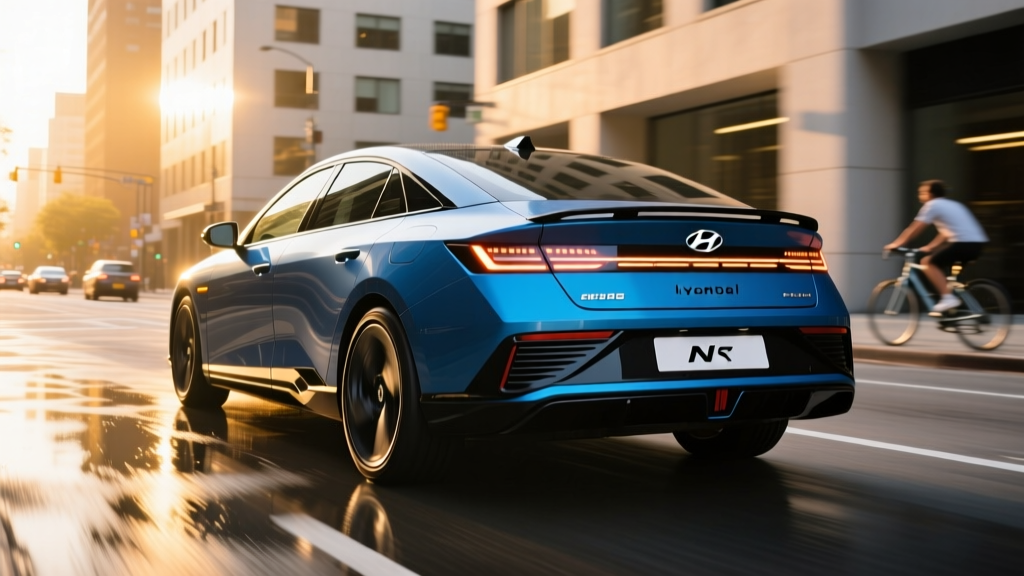
The 2024 Hyundai Ioniq 6 remains one of the most aerodynamically efficient electric vehicles on sale, with a drag coefficient of just 0.21. That slippery shape translates directly into real-world results: the SE Long Range RWD model achieves an EPA-estimated 361 miles of range — a number that still outpaces most competitors in the midsize electric sedan segment. Built on Hyundai's Electric-Global Modular Platform (E-GMP) with an 800V architecture, it also charges at speeds that rival vehicles costing twice as much.
But the Ioniq 6's polarizing fastback styling and modest cargo space mean it isn't the right EV for every buyer. This review breaks down every number that matters — range, charging curves, pricing, tax credit eligibility — so you can decide if it fits your driving life.
Range, Efficiency, and Real-World Expectations
Real-World Expectation: ~290–320 miles on highway road trips at 70–75 mph; ~240–270 miles in freezing temperatures (below 30°F) without consistent preconditioning. City driving with regenerative braking can match or slightly exceed the EPA sticker.
The 2024 Ioniq 6 lineup splits into two battery configurations. The Standard Range RWD pairs a 58.0 kWh battery (NMC chemistry) with a single rear motor for an EPA 240-mile range. The Long Range models — available in both RWD and AWD — use a 77.4 kWh usable-capacity NMC (nickel-manganese-cobalt) pack.
| Trim | Battery (kWh) | Drivetrain | EPA Range | MPGe (City/Hwy/Combined) | kWh/100 mi |
|---|---|---|---|---|---|
| SE Standard Range | 58.0 | RWD | 240 mi | 140/120/130 | 26 |
| SE Long Range | 77.4 | RWD | 361 mi | 140/120/130 | 25 |
| SEL / Limited LR | 77.4 | RWD | 342 mi | 134/113/124 | 27 |
| SEL / Limited AWD | 77.4 | Dual-motor AWD | 316 mi | 117/100/109 | 30 |
Efficiency is where the Ioniq 6's teardrop shape pays dividends. The SE Long Range RWD achieves a remarkable 25 kWh/100 miles — meaning you're using less electricity per mile than nearly any other EV in its class. For context, the Tesla Model 3 Long Range RWD sits at 26 kWh/100 mi. According to EPA data on fueleconomy.gov, the Ioniq 6 SE LR RWD is among the most efficient non-compact EVs available.
Expect the standard highway range penalty: sustained 75 mph driving reduces range to roughly 80–85% of the EPA sticker. In winter conditions, lithium-ion chemistry slows and cabin heating draws power — plan for 25–35% range reduction in sub-freezing weather if you can't precondition the battery while plugged in.
Charging Speed: 800V Architecture Makes a Difference
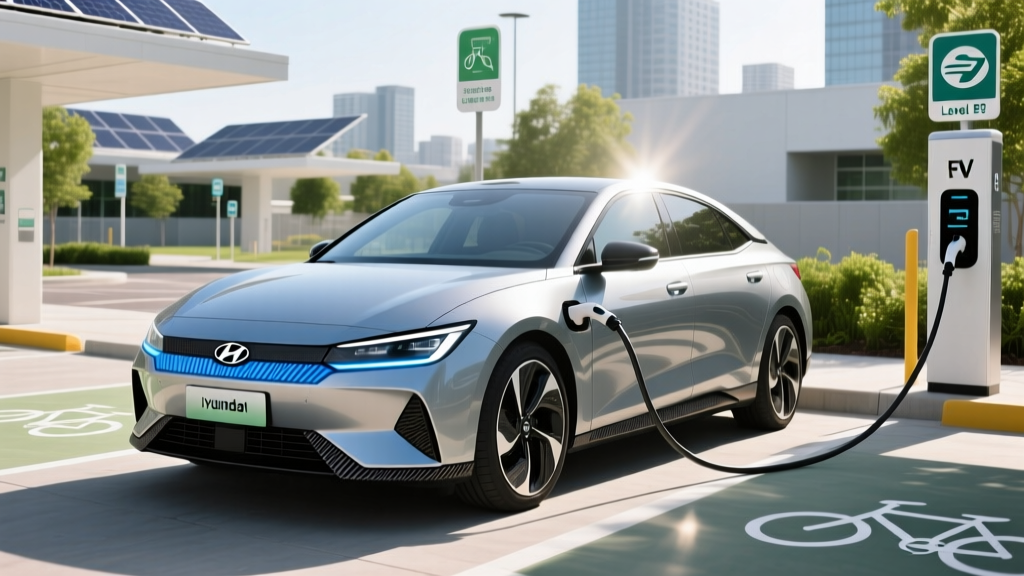
The Ioniq 6's 800V electrical architecture is one of its strongest engineering advantages. While most EVs in this price range still use 400V systems limited to 150 kW peak charging, the Ioniq 6 can accept up to 239 kW peak on DC fast charging — putting it in the same league as the Porsche Taycan and its corporate cousin, the Kia EV6.
| Charging Level | Power | Speed / Time | Notes |
|---|---|---|---|
| Level 1 (120V) | ~1.4 kW | ~4–5 mi/hr | Emergency/top-off only |
| Level 2 (240V, home) | 10.9 kW | ~35–40 mi/hr; full charge in ~7.5 hr | Requires 48A circuit on 60A breaker |
| DC Fast Charge (peak) | 239 kW | 10–80% in ~18 min | Requires 350 kW-class station |
| DC Fast Charge (50 kW station) | ~50 kW | 10–80% in ~60 min | Common at older stations |
The 10–80% time of approximately 18 minutes assumes you've preconditioned the battery (the Ioniq 6 does this automatically when you set a DC charger as your navigation destination) and are at a 350 kW-capable station like Electrify America's newest stalls. The charge curve is aggressive through 55% State of Charge, then tapers significantly above 80% — this is normal lithium-ion behavior to protect cell longevity, but it means charging from 80–100% at DC is painfully slow. Plan your road-trip stops to charge to 80%, then move on.
For home charging, the onboard 10.9 kW charger means a full overnight replenishment is realistic with a Level 2 wallbox. A 48-amp Level 2 charger on a dedicated 60-amp circuit adds roughly 35–40 miles of range per hour of charging — enough to fully replenish even the Long Range overnight.
Connector note: The 2024 Ioniq 6 uses the CCS1 connector for DC fast charging and the J1772 connector for Level 2. Hyundai has committed to transitioning to the NACS (Tesla) connector starting with 2025 models, so 2024 buyers will need a CCS-to-NACS adapter for access to Tesla Supercharger stalls — Hyundai provides one with new vehicle purchases.
Performance: Quick, Refined, and Rear-Biased
| Metric | SE Std Range RWD | Long Range RWD | Long Range AWD |
|---|---|---|---|
| Horsepower | 149 hp | 225 hp | 320 hp |
| Torque | 258 lb-ft | 258 lb-ft | 446 lb-ft |
| 0–60 mph | ~8.5 sec | ~6.2 sec | ~4.5 sec |
| Drivetrain | Single-motor RWD | Single-motor RWD | Dual-motor AWD |
The Long Range AWD model's 4.5-second 0–60 time is genuinely quick — it'll surprise passengers at stoplights and merge onto highways with authority. The RWD models trade acceleration for range, but 225 hp and 258 lb-ft of instant torque still make the Long Range RWD feel responsive in daily driving.
Ride quality is a highlight. The multi-link rear suspension and well-tuned damping give the Ioniq 6 a composed, near-luxury feel that outclasses its MSRP. Road noise is minimal at highway speeds — aided by the smooth underbody paneling that contributes to that 0.21 drag coefficient. The steering is precise but light, which suits the grand-tourer character more than sporty driving.
Pricing, Trim Levels, and Federal Tax Credit
| Trim | MSRP | Est. After §30D Credit* | Key Additions |
|---|---|---|---|
| SE Standard Range | $37,500 | ~$29,500–$37,500 | Base features, 12.3" displays, HDA |
| SE Long Range | $42,500 | ~$35,000–$42,500 | 361-mi range, heated seats, wireless CarPlay |
| SEL Long Range | $45,500 | ~$38,000–$45,500 | Leatherette, sunroof, HDA2, ambient lighting |
| Limited AWD | $52,600 | ~$45,100–$52,600 | Ventilated seats, premium audio, parking assist, HUD |
*§30D credit eligibility depends on buyer income, battery-component sourcing, and MSRP caps. See checklist below.
The 2024 Ioniq 6 qualifies for the federal EV tax credit under IRS §30D, but eligibility isn't automatic for every buyer. As of the 2024 tax year, the credit can be transferred at point-of-sale to the dealer — effectively reducing your purchase price on the spot — provided you meet the requirements:
- MSRP cap: Sedans must have an MSRP at or below $55,000. The SE, SEL, and Limited RWD trims all qualify. The Limited AWD at $52,600 also clears the cap. (SUVs have a higher $80,000 cap, but the Ioniq 6 is classified as a sedan.)
- Income limits: Modified adjusted gross income must not exceed $150,000 (single), $225,000 (head of household), or $300,000 (married filing jointly).
- Battery sourcing: The credit splits into two halves — $3,750 for meeting critical-mineral requirements and $3,750 for battery-component sourcing from North America or FTA partners. Hyundai has worked to localize battery supply, but the exact credit amount ($3,750 or full $7,500) varies by build date and supply chain status. Check the fueleconomy.gov tax credit database for your specific VIN.
- Point-of-sale transfer: As of 2024, you can elect to transfer the credit to the dealer at purchase, reducing your out-of-pocket cost immediately rather than waiting to claim it on your tax return.
Always confirm current eligibility with your dealer and consult a tax professional — rules are subject to legislative change. For official IRS guidance, see irs.gov clean vehicle credits.
Interior, Cargo, and Daily Livability
The Ioniq 6's cabin is a study in minimalist design. Dual 12.3-inch displays sit behind a flat dashboard with ambient lighting that runs across the doors — Hyundai calls it "dual-color ambient lighting" with 64 color options. Build quality is solid, with soft-touch materials on the dash and upper door panels, though hard plastics appear on lower surfaces (typical for this price point).
| Dimension | Measurement |
|---|---|
| Front legroom | 42.9 in |
| Rear legroom | 36.2 in |
| Front headroom | 39.3 in |
| Rear headroom | 37.1 in |
| Cargo volume (behind rear seats) | 12.3 cu ft |
| Frunk (front trunk) | 0.7 cu ft (AWD) / 1.6 cu ft (RWD) |
Front passengers enjoy generous space, and the flat floor (no transmission tunnel) makes the cabin feel airy. Rear legroom is adequate for adults under 6 feet, but the sloping roofline cuts into rear headroom — taller passengers will notice their hair brushing the headliner on bumpy roads.
The biggest livability trade-off is cargo. At 12.3 cubic feet, the trunk is smaller than a Toyota Camry's (15.1 cu ft) and significantly smaller than the Hyundai Ioniq 5's 27.2 cu ft. The trunk opening is also narrow, limiting what you can load. If you regularly haul strollers, luggage for four, or Costco runs, the Ioniq 5 or a crossover EV will serve you better. The frunk is nearly useless — 0.7 cu ft on AWD models barely fits a charging cable bag.
Technology, Driver Assistance, and Standout Features
The Ioniq 6 comes well-equipped with Hyundai's SmartSense safety suite as standard on every trim:
- Highway Driving Assist (HDA/HDA2): Combines adaptive cruise control with lane-centering and navigation-linked speed adjustment. HDA2 (SEL and above) adds lane-change assist. This is a competent SAE Level 2 system — it requires your hands on the wheel and your full attention. It is not self-driving.
- Navigation-based smart cruise control: Automatically slows for curves and speed-limit changes.
- Remote Smart Parking Assist (Limited): Moves the car in and out of tight spots via key fob.
- V2L (Vehicle-to-Load): An outlet under the rear seat and an external port (with adapter) let you power devices or appliances — up to 3.6 kW output. Useful for camping or emergency backup.
- Digital side mirrors (Limited, select markets): Camera-based mirrors that reduce drag and improve night visibility, though they take adjustment.
The infotainment system supports wireless Apple CarPlay and Android Auto (on SE/SEL trims; Limited uses wired for its larger screen configuration). Hyundai's Bluelink connected services include remote start, climate preconditioning, and charge scheduling via smartphone — essential for maximizing efficiency and range in cold weather.
Ownership: Warranty, Insurance, and Running Costs
Hyundai backs the Ioniq 6 with one of the strongest warranty packages in the EV market:
- New vehicle warranty: 5 years / 60,000 miles
- Powertrain warranty: 10 years / 100,000 miles
- Battery warranty: 10 years / 100,000 miles (covers capacity below 70% State of Health)
- Roadside assistance: 5 years / unlimited miles
The 10-year battery warranty with a 70% SoH threshold is competitive with industry norms (Tesla uses 70% as well). Real-world degradation data from Ioniq 5 owners on the same E-GMP platform suggests roughly 5–8% capacity loss after 100,000 miles with typical charging habits — well within the warranty buffer.
Running costs are low. At the US average electricity rate of ~$0.17/kWh, charging the Long Range from 10–80% at home costs roughly $9.50 — equating to about $0.04 per mile. Compare that to a 30 MPG gas car at $3.50/gallon: $0.12 per mile. Over 15,000 annual miles, the Ioniq 6 saves roughly $1,200 in energy costs alone. Insurance premiums, however, tend to run 10–15% higher than equivalent gas sedans due to repair costs — get quotes before buying.
Pros, Cons, and Who Should Buy
Pros
- Class-leading 361-mi EPA range (SE LR RWD)
- 239 kW DC fast charging — 10–80% in ~18 min
- Exceptional efficiency (25 kWh/100 mi)
- 800V architecture future-proofs charging access
- 10-year/100,000-mi battery warranty
- Quiet, composed ride quality
- V2L capability for off-grid power
- Federal tax credit eligible (up to $7,500)
Cons
- Small trunk (12.3 cu ft) and tiny frunk
- Sloping roofline limits rear headroom for tall passengers
- CCS connector requires adapter for Tesla Superchargers
- No one-pedal driving mode (i-PEDAL stops short of full stop)
- Infotainment learning curve; touch-capacitive buttons
- AWD Limited trim pushes past $52K before options
Look elsewhere if: You need family-friendly cargo room (consider the Ioniq 5 or Kia EV6), want the Tesla Supercharger network without an adapter, or prefer a crossover ride height.
Frequently Asked Questions
What is the real-world range of the 2024 Hyundai Ioniq 6?
The SE Long Range RWD achieves an EPA-estimated 361 miles. In real-world highway driving at 70–75 mph, expect roughly 290–320 miles. In freezing weather without preconditioning, plan for 240–270 miles. City driving with regenerative braking can match or slightly exceed the EPA figure.
How fast does the Ioniq 6 charge at home and on the road?
On DC fast charging at a 350 kW-capable station, the Ioniq 6 peaks at 239 kW and charges from 10–80% in approximately 18 minutes with battery preconditioning. At home on a Level 2 (240V, 48A) charger, it charges at 10.9 kW — adding about 35–40 miles per hour, with a full charge in roughly 7.5 hours.
Does the 2024 Ioniq 6 qualify for the $7,500 federal EV tax credit?
It can, depending on your income, the vehicle's MSRP (must be ≤$55,000 for sedans), and battery-component/critical-mineral sourcing compliance. Many Ioniq 6 trims qualify for the full or partial credit. Check your VIN on fueleconomy.gov and consult a tax professional. The credit can be transferred at point of sale to reduce your purchase price directly.
Is the Ioniq 6 worth buying over the Tesla Model 3 or Hyundai Ioniq 5?
The Ioniq 6 offers superior range and efficiency versus the Model 3 Long Range (341 mi) and a quieter, more comfortable ride. However, the Tesla has access to the Supercharger network natively (2024 Ioniq 6 needs an adapter), a more mature software ecosystem, and more rear cargo space. Versus the Ioniq 5, the Ioniq 6 trades cargo room and headroom for ~50 extra miles of range and better highway efficiency. If cargo space matters, the Ioniq 5 wins. If range and aero efficiency are priorities, the Ioniq 6 is the pick.
What connector does the 2024 Ioniq 6 use?
The 2024 model uses CCS1 for DC fast charging and J1772 for Level 2 AC charging. Hyundai provides a NACS adapter for Tesla Supercharger access with new purchases, and the aftermarket adapter ecosystem is expanding.
How long will the Ioniq 6 battery last?
Hyundai warranties the battery for 10 years / 100,000 miles against capacity loss below 70% State of Health. Based on E-GMP platform data, expect roughly 5–8% degradation over 100,000 miles with normal use (avoiding frequent 100% charges and extreme heat). Many owners report the battery outlasting the car's useful life.