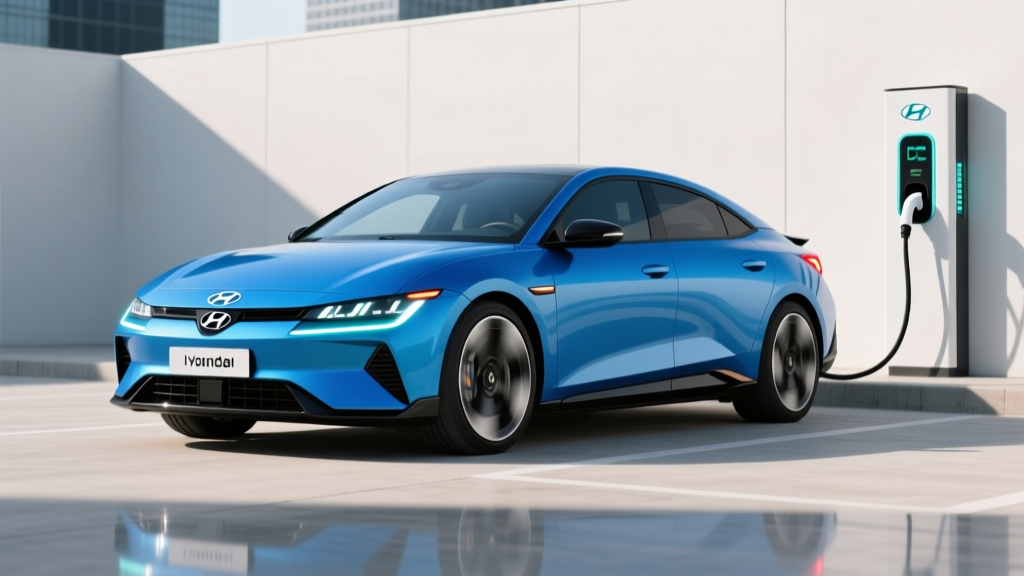
The Hyundai Ioniq 6 has always been the aerodynamic outlier in the midsize electric sedan segment. Its teardrop silhouette isn't just styling for styling's sake — a drag coefficient of 0.21 Cd directly translates to highway efficiency and real-world range. But buyers searching for Hyundai Ioniq 6 0-60 times and performance specs are often surprised by how much variation exists across the trim lineup. The single-motor RWD model is an efficiency champion, while the dual-motor AWD version delivers genuine sports-sedan acceleration. This review breaks down every performance, range, charging, and ownership metric you need before signing the paperwork.
Hyundai Ioniq 6 0-60 Times and Powertrain Breakdown
The Ioniq 6 is offered with two distinct powertrains for the 2026 model year, and the acceleration gap between them is substantial. The standard-range and long-range RWD models use a single rear-mounted permanent-magnet synchronous motor producing 168 horsepower and 258 lb-ft of torque. The dual-motor AWD variant pairs front and rear motors for a combined 320 horsepower and 446 lb-ft.
| Specification | SE/SEL/Limited RWD (Long Range) | SE/SEL/Limited AWD |
|---|---|---|
| 0-60 mph | 6.9 seconds | 4.5 seconds |
| Horsepower | 168 hp | 320 hp |
| Torque | 258 lb-ft | 446 lb-ft |
| Drivetrain | Rear-Wheel Drive | Dual-Motor AWD |
| Top Speed | 115 mph (electronically limited) | 115 mph (electronically limited) |
| Battery (usable) | 77.4 kWh (NMC) | 77.4 kWh (NMC) |
| EPA Range | 361 miles (SE w/ 18" wheels) | 316 miles (SE w/ 18" wheels) |
| MPGe (combined) | 140 MPGe | 111 MPGe |
| kWh/100 mi | 24 kWh | 30 kWh |
The 4.5-second 0-60 time in the AWD model places the Ioniq 6 firmly in sports-sedan territory — it's quicker than a base Porsche Taycan and only a few tenths behind the Tesla Model 3 Performance. The RWD model's 6.9 seconds is perfectly adequate for daily driving and highway merging, but it's clearly tuned for efficiency over excitement. Throttle response in both variants is immediate, as you'd expect from an EV, and the Ioniq 6's low center of gravity keeps body roll well-controlled through corners.
Range and Efficiency: EPA vs. Real World
The Ioniq 6's party trick is efficiency. Its ultra-slippery body and available 77.4 kWh NMC (nickel-manganese-cobalt) battery pack produce an EPA-estimated 361 miles of range in the SE RWD trim with 18-inch wheels — one of the highest figures in the segment. However, wheel size, drivetrain, and real-world conditions all compress that number.
EPA Estimate: 361 miles (SE RWD, 18" wheels) / 316 miles (SE AWD, 18" wheels)
Highway driving (70-75 mph): Expect ~290-310 miles RWD; ~255-275 miles AWD
Cold weather (below 32°F): Reduce all figures by 20-30% depending on cabin heating use
Mixed commuting: Real-world figures typically land within 5-8% of EPA for the RWD model
The 20-inch wheels available on SEL and Limited trims reduce EPA range by roughly 20-30 miles compared to the 18-inch setup. If maximizing range is your priority, stick with the SE trim and smaller wheels. The Ioniq 6's heat pump (standard on all trims) helps mitigate cold-weather range loss compared to EVs without active thermal management, but physics still wins in sub-freezing temperatures. According to fueleconomy.gov, the RWD model achieves 140 MPGe combined, translating to just 24 kWh per 100 miles — among the most efficient EVs sold in the U.S.
Charging Speed: 800V Architecture Advantage
Hyundai's E-GMP platform uses an 800-volt electrical architecture, which is the same technology found in the Porsche Taycan and significantly more advanced than the 400V systems used by most competitors. This translates directly to faster DC fast-charging speeds without excessive battery heat buildup.
| Charging Level | Power / Rate | Time / Speed | Connector |
|---|---|---|---|
| Level 1 (120V household) | ~1.4 kW | ~3-4 miles per hour | NACS (native, 2026) |
| Level 2 (240V home) | 10.9 kW (max onboard) | ~34 miles per hour / ~7 hrs (10-100%) | NACS |
| DC Fast Charge (peak) | Up to 240 kW | 10-80% in ~18 minutes | NACS |
| DC Fast Charge (sustained) | ~150-180 kW avg to 80% | Tapers significantly above 80% | NACS |
For 2026, the Ioniq 6 ships with a native NACS (North American Charging Standard) port, meaning direct access to the Tesla Supercharger network without an adapter — a major practical advantage over CCS-equipped rivals that still require dongles. At a 350 kW-capable charger (such as Electrify America or Ionity stalls), the Ioniq 6 peaks near 240 kW and sustains strong charging rates through the 10-80% window in approximately 18 minutes.
Understanding the charge curve is essential: the Ioniq 6 holds strong charging speeds between 10% and roughly 55% SoC, then gradually tapers. Above 80%, charging slows dramatically to protect the NMC battery chemistry — expect 80-100% to take nearly as long as 10-80%. For road trips, plan your stops around the 10-80% window and you'll spend less time charging than you would stopping for gas and a meal.
Pricing, Trims, and Federal Tax Credit Eligibility
The 2026 Ioniq 6 lineup spans four trims, and pricing has remained competitive despite the addition of NACS as standard equipment.
| Trim | Drivetrain | MSRP | Est. After §30D Credit* |
|---|---|---|---|
| SE Standard Range | RWD | $38,650 | Varies — see eligibility note |
| SE | RWD / AWD | $42,750 / $46,250 | Varies — see eligibility note |
| SEL | RWD / AWD | $46,000 / $49,500 | Varies — see eligibility note |
| Limited | RWD / AWD | $51,100 / $54,600 | Varies — see eligibility note |
*Federal tax credit amounts depend on your individual eligibility. Consult a tax professional.
- MSRP Cap: Sedars must have an MSRP at or below $55,000. The Ioniq 6 Limited AWD ($54,600) just clears this threshold; any dealer-installed options pushing it over will disqualify the credit.
- Buyer Income Caps: Modified AGI must not exceed $150,000 (single), $225,000 (head of household), or $300,000 (joint filers).
- Battery Sourcing: The credit is split into two halves ($3,750 each) — one for critical minerals sourcing and one for battery component manufacturing. The Ioniq 6's eligibility for each half depends on current-year battery supply chain compliance. Hyundai has been working to shift battery sourcing to qualify, but always verify current status at IRS.gov before purchasing.
- Point-of-Sale Transfer: Eligible buyers can transfer the credit to the dealer at purchase, reducing the upfront price rather than waiting for a tax refund.
Interior, Cargo, and Technology
The Ioniq 6's cabin is a study in minimalist design. Dual 12.3-inch displays (instrument cluster and infotainment) sit behind a flat, bridge-style dashboard. Physical buttons are kept to a minimum — most climate and vehicle functions are routed through the touchscreen or steering wheel controls. The center console floats above an open lower shelf, a practical spot for a purse or laptop bag.
Passenger Space:
- Front headroom: 40.2 inches
- Front legroom: 41.7 inches
- Rear headroom: 38.0 inches (the sloping roofline cuts into this noticeably)
- Rear legroom: 35.1 inches
Cargo Volume: 12.3 cubic feet in the trunk, which is modest for a midsize sedan. The fastback design creates a trunk opening rather than a true hatchback, so loading bulky items requires more maneuvering than in an Ioniq 5 or a Tesla Model S. There is a small front trunk (frunk) on RWD models only — approximately 0.5 cubic feet, enough for a charging cable kit but not much more. AWD models sacrifice the frunk for the front drive motor.
Standout Tech Features:
- Dual 12.3" panoramic displays with wireless Apple CarPlay and Android Auto
- Highway Driving Assist 2 (HDA-2): adaptive cruise with lane-centering and lane-change assist — this is a SAE Level 2 system requiring full driver attention
- Remote Smart Parking Assist (on Limited): the car can park and unpark itself in tight spaces while you stand outside
- Digital key via NFC smartphone
- Over-the-air (OTA) software updates for powertrain, ADAS, and infotainment
- Vehicle-to-Load (V2L): power external devices up to 3.6 kW using an adapter plugged into the charge port or the interior outlet
Warranty and Long-Term Ownership
Hyundai backs the Ioniq 6 with one of the strongest warranty packages in the EV segment:
- Battery warranty: 10 years / 100,000 miles (capacity retention above 70% of original)
- Powertrain warranty: 10 years / 100,000 miles
- New vehicle limited warranty: 5 years / 60,000 miles
- Roadside assistance: 5 years / unlimited miles
- Complimentary maintenance: 3 years / 36,000 miles (scheduled service visits)
The 10-year/100,000-mile battery warranty is a standout. Hyundai defines a warranty claim as the battery falling below 70% state of health (SoH), which aligns with industry standards. Independent data from EV fleet monitoring services suggests that NMC batteries in Hyundai-Kia E-GMP vehicles typically retain 90-93% capacity after 100,000 miles under normal use patterns — well above the warranty threshold. The Ioniq 6's liquid-cooled thermal management system is a key factor in long-term battery longevity.
How the Ioniq 6 Stacks Up Against Rivals
| Metric | Hyundai Ioniq 6 SE RWD | Tesla Model 3 LR RWD | BMW i4 eDrive40 |
|---|---|---|---|
| 0-60 mph | 6.9 sec | 5.8 sec | 5.5 sec |
| EPA Range | 361 mi | 363 mi | 301 mi |
| DC Fast Charge (10-80%) | ~18 min (240 kW peak) | ~25 min (250 kW peak) | ~31 min (205 kW peak) |
| Base MSRP | $42,750 | $44,130 | $57,975 |
| MPGe (combined) | 140 | 132 | 109 |
| Battery Warranty | 10 yr / 100k mi | 8 yr / 120k mi | 8 yr / 80k mi |
The Ioniq 6 trades acceleration for efficiency and charging speed. If 0-60 times are your top priority, the Model 3 and i4 are quicker — and the Ioniq 6 AWD closes that gap substantially at 4.5 seconds. Where the Ioniq 6 wins decisively is the combination of range, charge speed, and price. Its 800V architecture delivers meaningfully faster 10-80% charging than the Model 3's 400V-equivalent system, and its MPGe rating tops the segment. The BMW i4 offers a more premium interior and sharper handling but at a significant price premium and with less range.
- Class-leading efficiency (140 MPGe)
- Ultra-fast 800V DC charging (~18 min 10-80%)
- Native NACS — direct Supercharger access
- 361-mile EPA range (SE RWD)
- 10-year/100,000-mile battery warranty
- AWD model hits 4.5 sec 0-60
- V2L capability for camping/emergency power
- RWD model's 6.9-sec 0-60 is unremarkable
- Small trunk (12.3 cu ft) and no hatchback opening
- Cramped rear headroom due to roofline
- Minimal frunk space (RWD only, ~0.5 cu ft)
- Touch-heavy interior controls take adaptation
- AWD trims reduce range significantly
- Limited AWD price sits near $55K MSRP cap for tax credit
Who Should Buy the Hyundai Ioniq 6?
Choose the Ioniq 6 SE RWD if: You want maximum range and efficiency for a daily commute or frequent long-distance travel, and you don't need blistering acceleration. This is the value and efficiency sweet spot.
Choose the Ioniq 6 AWD if: You need all-weather traction, want a sub-5-second 0-60, and are willing to trade ~45 miles of range for the performance upgrade.
Look elsewhere if: You need hatchback cargo versatility (consider the Ioniq 5 or Kia EV6), you regularly carry tall rear-seat passengers, or you want Level 3+ autonomous features (no current production vehicle offers this for consumer use).
Frequently Asked Questions
What is the Hyundai Ioniq 6's real-world highway range?
The SE RWD with 18-inch wheels is EPA-rated at 361 miles. On sustained highway driving at 70-75 mph in moderate temperatures, expect approximately 290-310 miles before needing to charge. In cold weather (below freezing), that figure drops to roughly 230-260 miles. The AWD model sees further reductions due to its higher energy consumption.
How fast does the Ioniq 6 charge at home and on the road?
On a home Level 2 charger (240V, 48A circuit), the Ioniq 6 accepts up to 10.9 kW, adding roughly 34 miles of range per hour or a full charge in about 7 hours. At a DC fast charger, it peaks at approximately 240 kW and charges from 10-80% in about 18 minutes, thanks to its 800V architecture. Actual speeds depend on charger capability, battery temperature, and state of charge.
Does the 2026 Hyundai Ioniq 6 qualify for the $7,500 federal tax credit?
It depends on your income, the specific trim's MSRP, and current battery-sourcing compliance. The sedan MSRP cap is $55,000, which most Ioniq 6 trims fall under. Buyer income caps are $150,000 (single), $225,000 (head of household), and $300,000 (joint). Battery component and critical mineral sourcing requirements must also be met — verify current eligibility at IRS.gov or with a qualified tax professional before purchasing.
Is the Ioniq 6 worth buying over the Tesla Model 3?
If charging speed and range-per-dollar are your priorities, the Ioniq 6 has a compelling case. Its 800V architecture charges faster in real-world conditions than the Model 3, and its efficiency is slightly better. The Model 3 counters with a more established Supercharger network experience (though the Ioniq 6 now has native NACS access), quicker acceleration in comparable trims, and a more mature software ecosystem. Test-drive both — the Ioniq 6's ride quality and cabin quietness often win the comfort comparison.
What is the Ioniq 6 battery replacement cost?
Out-of-warranty battery replacement for the Ioniq 6's 77.4 kWh pack is estimated between $12,000 and $16,000 including labor, based on current Hyundai-Kia E-GMP platform pricing. However, Hyundai's 10-year/100,000-mile battery warranty and the demonstrated longevity of NMC cells in this platform make a full replacement unlikely for most original owners.
Is Hyundai's Highway Driving Assist self-driving?
No. HDA-2 is an SAE Level 2 driver-assistance system. It provides adaptive cruise control, lane-centering, and assisted lane changes, but the driver must remain fully attentive and in control at all times. Hands-off driving is not supported or legal with this system.