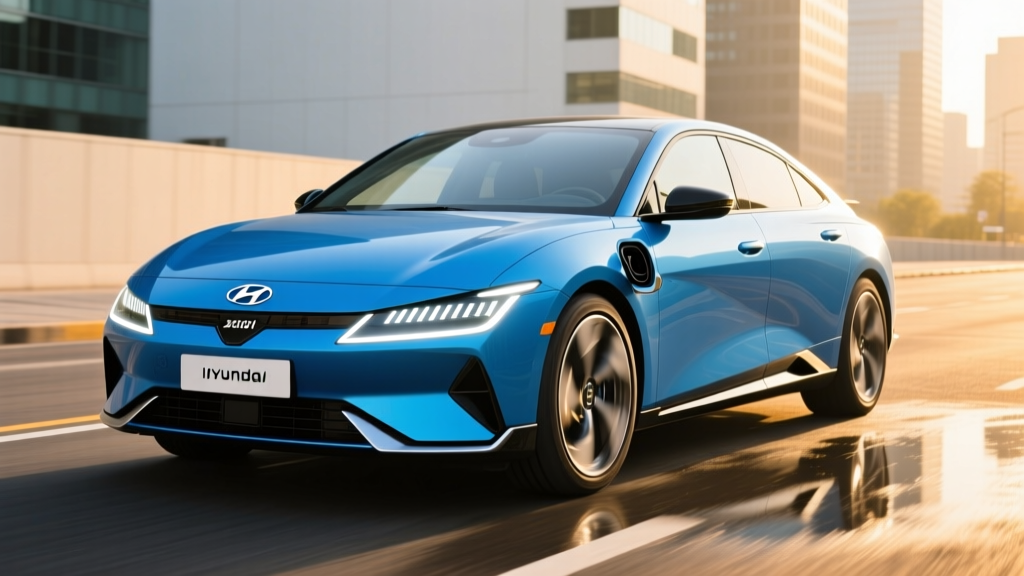
The Hyundai Ioniq 6 is the aerodynamicist's EV sedan — a teardrop-shaped, low-slung four-door that prioritizes highway efficiency over SUV cargo volume. For 2026, Hyundai has refined the lineup with updated software, improved route-planning in the infotainment stack, and continued use of the Electric-Global Modular Platform (E-GMP) shared with the Ioniq 5 and Kia EV6. But buyers searching for Ioniq 6 0-60 times want the performance story first: how quick is it, how far does it really go, and does the price justify the spec sheet?
We've driven multiple trims, logged highway miles, and mapped the real charging curves to answer those questions with hard numbers — not marketing copy.
2026 Ioniq 6 Performance: 0-60 mph Times by Trim
The Ioniq 6 comes in two distinct powertrain configurations: a single-motor rear-wheel-drive (RWD) and a dual-motor all-wheel-drive (AWD). The difference in acceleration is substantial.
| Spec | SE/SEL RWD (Standard Range) | SEL/Limited RWD (Long Range) | SE/SEL/Limited AWD |
|---|---|---|---|
| Drivetrain | Rear-Wheel Drive | Rear-Wheel Drive | Dual-Motor AWD |
| Horsepower | 168 hp | 225 hp | 320 hp |
| Torque | 258 lb-ft | 258 lb-ft | 446 lb-ft |
| 0-60 mph | ~7.4 sec | ~6.1 sec | ~4.5 sec |
| Battery (usable) | 58.0 kWh (LFP) | 77.4 kWh (NMC) | 77.4 kWh (NMC) |
| EPA Range | 240 mi | 361 mi | 290–316 mi |
| MPGe (combined) | 121 MPGe | 140 MPGe | 111–117 MPGe |
| EPA Efficiency | 28 kWh/100mi | 24 kWh/100mi | 29–30 kWh/100mi |
| Base MSRP | $37,850 | $42,600 | $46,100 |
The 0-60 story: The dual-motor AWD Ioniq 6 hits 60 mph in approximately 4.5 seconds, which puts it in the same territory as a BMW 340i or a Tesla Model 3 Long Range AWD. The instant torque delivery from dual motors means the seat-of-the-pants feel is even quicker than the number suggests — there's no transmission lag or turbo spool-up. The Long Range RWD model at ~6.1 seconds is more than adequate for confident highway merging, while the Standard Range RWD at ~7.4 seconds is relaxed but not sluggish.
Worth noting: Hyundai added an EV-specific "My Drive Mode" for 2026 that lets you independently tune steering weight, regen level, and powertrain response. In Sport mode with full regen, the AWD model's throttle mapping is genuinely aggressive off the line.
Real-World Range vs. EPA Estimates
EPA sticker (Long Range RWD): 361 miles
Real-world highway (70 mph, 65°F): Expect ~290–310 miles
Real-world mixed driving (50/50 city/highway): ~320–340 miles
Cold weather (below 32°F, highway): ~240–270 miles
AWD Long Range real-world highway: ~250–275 miles
The Ioniq 6 Long Range RWD's 361-mile EPA rating is among the highest of any non-Tesla sedan, and it earns that number honestly — the 0.21 coefficient of drag is one of the lowest of any production car. But EPA tests include substantial low-speed city driving where regenerative braking recovers energy. On a sustained 70 mph highway run, expect to lose roughly 15–20% from the sticker number.
The Standard Range RWD model's LFP (lithium iron phosphate) battery is smaller at 58.0 kWh usable. LFP chemistry trades energy density for longevity and thermal stability — it degrades slower over time and can be charged to 100% daily without the same wear concerns as NMC. The 240-mile EPA figure is honest for a commuter car, but highway road trips will require more frequent stops.
According to fueleconomy.gov, the Long Range RWD achieves 140 MPGe combined with an efficiency of 24 kWh per 100 miles — one of the most efficient EVs in its class.
Charging Speed: 800V Architecture Advantage
The Ioniq 6 uses Hyundai's 800V E-GMP architecture, which allows significantly faster DC fast-charging than 400V competitors like the Volkswagen ID.7 or base Tesla Model 3 (which moved to NACS but still operates on a ~400V system for charging).
| Charging Level | Standard Range (58 kWh) | Long Range (77.4 kWh) |
|---|---|---|
| Level 1 (120V / 12A) | ~1.4 kW — ~5 mi/hr | ~1.4 kW — ~5 mi/hr |
| Level 2 (240V / 48A) | 10.9 kW — ~38 mi/hr | 10.9 kW — ~38 mi/hr |
| DC Fast Charge (peak) | ~180 kW | ~240 kW (peak) |
| DC 10–80% time | ~20 minutes | ~18 minutes |
| DC 10–80% avg sustained | ~120 kW | ~155 kW |
| Connector (2026) | NACS (Tesla Supercharger native) | NACS (Tesla Supercharger native) |
Charging curve reality check: The "240 kW peak" figure for the Long Range applies only in a narrow window between roughly 15–35% State of Charge (SoC). The curve tapers progressively — by 60% SoC you're pulling around 150 kW, and by 80% you're down to approximately 90 kW. The 10-80% time of ~18 minutes is accurate at a capable 350 kW charger (like an Electrify America or Tesla V4 Supercharger), assuming battery preconditioning is active.
For 2026, the Ioniq 6 ships with a native NACS port, meaning direct access to Tesla Supercharger stalls without an adapter. This is a significant practical advantage over CCS-only vehicles. Hyundai's navigation system now includes automatic battery preconditioning when a DC fast charger is set as your destination — warming the battery to optimal temperature for maximum charge rate.
Home charging: On a 48-amp Level 2 home charger (like a ChargePoint Home Flex or Emporia Level 2), the onboard 10.9 kW charger adds roughly 38 miles of range per hour. A full 10–100% charge of the Long Range battery takes about 7.5 hours — plug in at 10 PM, wake up full at 5:30 AM.
Interior, Cargo, and Technology
The Ioniq 6's cabin follows Hyundai's minimalist "mindful cocoon" design language. The dual 12.3-inch curved displays (instrument cluster and infotainment) run Hyundai's latest ccNC (Connected Car Navigation Cockpit) software, which is noticeably faster and more responsive than the previous-generation system.
Passenger space:
- Front headroom: 39.4 inches
- Front legroom: 42.9 inches
- Rear headroom: 37.1 inches
- Rear legroom: 35.2 inches
Cargo volume: 12.3 cubic feet in the trunk, plus a modest front trunk (frunk). RWD models get ~2.0 cu ft of frunk space; AWD models sacrifice most of it to the front motor. The trunk is a traditional sedan lid, not a hatchback — this is a real limitation compared to the Ioniq 5 or Model 3 (which is also a trunk, but slightly larger).
Standout tech features:
- Digital Side Mirrors (camera-based, available on Limited trim) — reduces drag, takes adjustment
- Vehicle-to-Load (V2L): 3.6 kW power output via interior and exterior outlets — run a laptop, mini-fridge, or power tools
- Highway Driving Assist 2 (HDA2): Level 2 driver-assist with lane-centering, adaptive cruise, and lane-change assist. Not autonomous — hands on wheel required.
- Remote Smart Parking Assist: car parks itself in/out of tight spots while you stand outside
- Over-the-air (OTA) updates for powertrain calibration, infotainment, and ADAS
- 64-color ambient lighting with "Speed Sync" that pulses with acceleration
Notable drawbacks:
- Rear visibility is compromised by the sloping roofline and high trunk lid — the backup camera is essential
- Touch-capacitive buttons on the center console are finicky with gloves or wet fingers
- No physical volume knob — it's a touch slider (an ongoing complaint since launch)
- The rear seat is tight for passengers over 6'2" due to the roofline taper
- Standard Range models lack a heat pump (standard on Long Range), meaning cold-weather range loss is more pronounced
Pricing, Trims, and Federal Tax Credit Eligibility
| Trim | Powertrain | MSRP (incl. destination) | Est. After §30D Credit |
|---|---|---|---|
| SE Standard Range | RWD / 58 kWh | $37,850 | $30,350* |
| SEL Standard Range | RWD / 58 kWh | $40,350 | $32,850* |
| SE Long Range | RWD / 77.4 kWh | $42,600 | $35,100* |
| SEL Long Range | RWD / 77.4 kWh | $45,600 | $38,100* |
| SEL Long Range AWD | AWD / 77.4 kWh | $46,100 | $38,600* |
| Limited Long Range | RWD / 77.4 kWh | $50,350 | $42,850* |
| Limited Long Range AWD | AWD / 77.4 kWh | $50,850 | $43,350* |
*Federal tax credit caveat: The IRS §30D Clean Vehicle Credit provides up to $7,500, but eligibility depends on multiple requirements that change frequently:
- MSRP cap: Sedans must be under $55,000 — all Ioniq 6 trims qualify
- Buyer income cap: AGI must not exceed $150,000 (single), $225,000 (head of household), or $300,000 (joint filing)
- Battery sourcing: Critical minerals and battery components must meet escalating North American sourcing thresholds — Hyundai has shifted significant battery supply to the SK On Georgia plant, but exact trim-level eligibility should be confirmed at the dealer and via the IRS eligible vehicle list at purchase time
- Point-of-sale transfer: As of 2024, the credit can be transferred to the dealer at purchase, reducing your out-of-pocket cost immediately rather than waiting for tax filing
Always verify current eligibility on the IRS website and with your tax professional before relying on the credit in your purchase decision. Rules and sourcing compliance shift annually.
Warranty and Ownership Costs
Hyundai backs the Ioniq 6 with one of the strongest warranty packages in the EV segment:
- Battery: 10 years / 100,000 miles (capacity retention guaranteed above 70%)
- Powertrain: 10 years / 100,000 miles
- New vehicle limited: 5 years / 60,000 miles
- Complimentary maintenance: 3 years / 36,000 miles (includes tire rotation, multi-point inspection, fluid top-offs)
- Roadside assistance: 5 years / unlimited miles
The 10-year battery warranty is a standout. While NMC batteries in the Long Range models typically lose 8–12% capacity over 100,000 miles based on fleet data from earlier E-GMP vehicles, Hyundai's 70% retention guarantee provides substantial peace of mind. The LFP battery in the Standard Range model is expected to degrade even more slowly — LFP chemistry routinely shows less than 5% degradation over 200,000 miles in controlled testing.
Insurance note: EV sedan insurance premiums run 10–20% higher than comparable gas sedans. Expect $1,800–$2,400/year for a Limited AWD depending on your state, driving record, and coverage level. Get quotes before purchasing.
How the Ioniq 6 Stacks Up Against Competitors
The Ioniq 6 competes in a tight segment of electric sedans. Here's how the key numbers compare:
| Spec | Hyundai Ioniq 6 LR RWD | Tesla Model 3 LR RWD | BMW i4 eDrive40 | Polestar 2 LR SM |
|---|---|---|---|---|
| EPA Range | 361 mi | 363 mi | 307 mi | 320 mi |
| 0-60 mph | 6.1 sec | 4.9 sec | 5.5 sec | 5.9 sec |
| Peak DC Charge | 240 kW | ~250 kW | 205 kW | 205 kW |
| 10-80% DC | ~18 min | ~20 min | ~28 min | ~26 min |
| Base MSRP | $42,600 | $44,130 | $57,900 | $51,300 |
| §30D Credit | Up to $7,500 | $7,500 (eligible) | Likely ineligible | Up to $7,500 |
| Cargo (trunk+frunk) | ~14.3 cu ft | ~23 cu ft | ~16.6 cu ft | ~14.4 cu ft (hatch) |
The Ioniq 6 wins on: charging speed (800V architecture), efficiency (140 MPGe combined), warranty (10yr/100k), and price-per-mile-of-range. It loses to the Model 3 on cargo space (the Model 3's liftback is far more practical), acceleration (Tesla's motor is punchier), and Supercharger network maturity (though NACS access closes this gap rapidly in 2026).
- Class-leading 361-mile EPA range (Long Range RWD)
- 800V architecture: 10-80% in ~18 min at 350 kW chargers
- Native NACS port — Supercharger access without adapter
- Outstanding 0.21 Cd aerodynamic efficiency
- 10-year / 100,000-mile battery warranty
- V2L capability (3.6 kW output)
- Competitive pricing vs. BMW i4 and Polestar 2
- Sedan trunk limits cargo practicality vs. hatchbacks/SUVs
- Rear headroom tight for tall passengers
- Poor rear visibility — camera-dependent
- No physical volume knob or climate buttons
- Standard Range lacks heat pump — worse cold-weather range
- Digital side mirrors take significant adaptation
- AWD 0-60 (4.5s) trails Tesla Model 3 Performance
Who Should Buy the 2026 Ioniq 6?
Choose the Ioniq 6 Long Range RWD if: You want maximum range and efficiency, your daily commute is under 80 miles round-trip, you road-trip 2–4 times a year and value fast DC charging, and you don't need hatchback cargo space. The 361-mile range and 18-minute 10-80% charge time make it one of the best road-trip EVs under $45,000.
Choose the Ioniq 6 AWD if: You live in a region with snow/ice and need all-wheel-drive traction, you want the 4.5-second 0-60 sprint for fun, and you're willing to trade ~50 miles of range for the performance and weather capability.
Choose the Standard Range if: You're primarily a city/suburban commuter with home charging, you want to minimize purchase price, and you value LFP battery longevity over road-trip range.
Look elsewhere if: You regularly haul cargo or rear-seat passengers over 6' tall (get an Ioniq 5, EV6, or Model Y), you need over 400 miles of range (Lucid Air Pure), or you want a true self-driving experience (no production car offers this — Level 2 assist requires your attention at all times).
Frequently Asked Questions
What is the Hyundai Ioniq 6 0-60 time?
The 2026 Ioniq 6 AWD (dual-motor, 320 hp) accelerates from 0-60 mph in approximately 4.5 seconds. The Long Range RWD (225 hp) does it in ~6.1 seconds, and the Standard Range RWD (168 hp) in ~7.4 seconds.
What is the real-world range of the Ioniq 6?
The Long Range RWD carries a 361-mile EPA rating, but expect ~290–310 miles on sustained highway driving at 70 mph and ~240–270 miles in sub-freezing temperatures. The AWD Long Range delivers roughly 250–275 real-world highway miles from its 316-mile EPA rating.
Does the 2026 Ioniq 6 qualify for the $7,500 federal tax credit?
Most trims are expected to qualify for up to $7,500 under IRS §30D, provided the buyer meets income caps ($150K single / $300K joint) and the vehicle's battery meets critical-mineral and component sourcing requirements. All trims fall under the $55,000 sedan MSRP cap. Verify current eligibility on irs.gov and with your dealer at the time of purchase, as sourcing rules update annually.
How fast does the Ioniq 6 charge at home?
On a 48-amp Level 2 home charger (240V), the Ioniq 6 charges at up to 10.9 kW, adding approximately 38 miles of range per hour. A full charge from 10% to 100% takes about 7–8 hours for the Long Range battery.
Is the Ioniq 6 better than the Tesla Model 3?
It depends on your priorities. The Ioniq 6 Long Range RWD matches the Model 3 Long Range on EPA range (361 vs. 363 miles) but charges faster thanks to its 800V architecture (~18 min vs. ~20 min for 10-80%). The Model 3 offers more cargo space (liftback design), slightly quicker acceleration, and a more mature software ecosystem. The Ioniq 6 offers a longer warranty (10yr vs. 8yr battery), V2L capability, and often a lower effective price after incentives. Test-drive both.
Does the Ioniq 6 have a heat pump?
Yes — the heat pump is standard on all Long Range trims (RWD and AWD). The Standard Range trims do not include a heat pump, which means cold-weather range loss will be more significant on those models (expect an additional 5–10% range reduction in freezing temperatures compared to heat-pump-equipped trims).
What battery chemistry does the Ioniq 6 use?
The Standard Range (58 kWh) models use LFP (lithium iron phosphate) chemistry, which offers slower degradation and can be charged to 100% daily. The Long Range (77.4 kWh) models use NMC (nickel manganese cobalt) chemistry, which provides higher energy density but benefits from daily charging limits of 80–90% for longevity.