Quick Verdict: The Performance EV That Actually Delivers
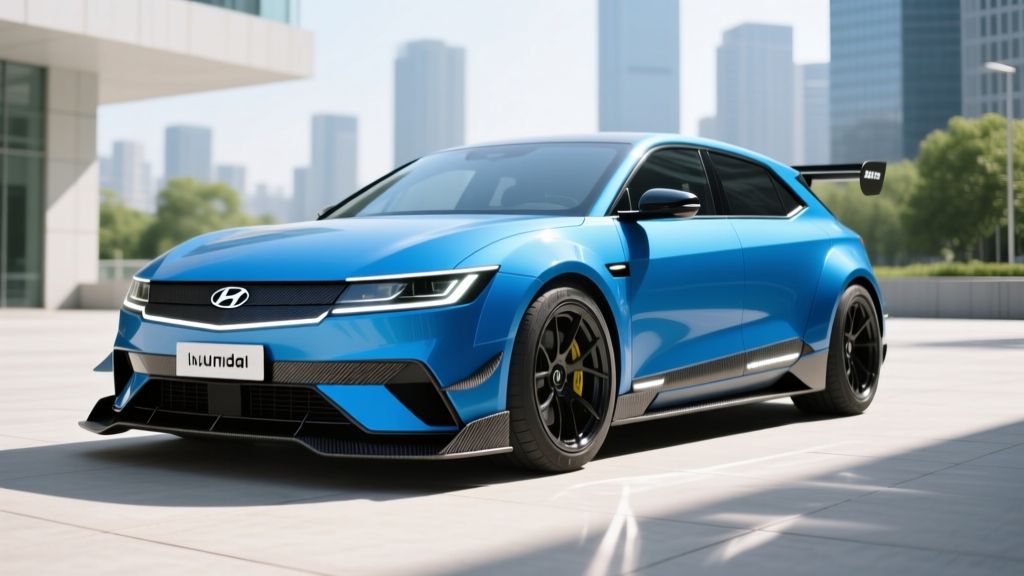
The Hyundai Ioniq 5 N isn't trying to be a range champion. It's a 641-horsepower, dual-motor hot hatch that happens to be electric — engineered for lap times, launch control, and a driving feel that most EVs sterilize away. If you're cross-shopping a Tesla Model 3 Performance or Porsche Taycan, the Ioniq 5 N lands in a rare middle ground: genuine track capability with daily-driver practicality, backed by Hyundai's industry-leading warranty.
But performance comes with trade-offs. The 221-mile EPA range is the shortest in the Ioniq 5 lineup, and the $67,885 starting price pushes it above the federal tax credit MSRP cap. Let's break down exactly what you get, what it costs to own, and whether the N badge justifies the premium over a standard Ioniq 5 Limited.
Range and Efficiency: The Performance Tax
Real-World Expectation: ~175–195 miles highway at 70+ mph; ~150–165 miles in sub-freezing temperatures. City driving with regenerative braking recovers more energy, yielding closer to the EPA sticker. Aggressive driving — which, let's be honest, is the point of this car — can drop range below 150 miles.
The Ioniq 5 N uses an 84 kWh usable battery (NMC lithium-ion chemistry), the same pack found in the long-range Ioniq 5 AWD trims. However, the N's stickier Pirelli P Zero tires, performance-tuned dual-motor system, and added weight (~4,861 lbs curb) push energy consumption to roughly 37–40 kWh/100 miles under mixed driving. That translates to about 83 MPGe combined per EPA data.
For context, the standard Ioniq 5 SEL AWD achieves 290 miles EPA with the same battery. That 69-mile gap is the cost of 641 hp, a lowered sport suspension, and 21-inch forged wheels. If range is your priority, the Ioniq 5 N is the wrong trim. If driving dynamics are, keep reading.
Charging Speed: 10–80% in 18 Minutes (With a Caveat)
| Charging Level | Power / Rate | Speed | Notes |
|---|---|---|---|
| Level 1 (120V) | ~1.4 kW | ~4 miles/hour | Emergency use only; full charge in 60+ hours |
| Level 2 (240V, 48A) | 10.9 kW | ~30 miles/hour | Full charge in ~8.5 hours; recommended home setup |
| DC Fast Charge (peak) | Up to 240 kW | 10–80% in ~18 min | Requires 350 kW CCS station; preconditioning essential |
| DC Fast Charge (sustained) | ~150–180 kW avg | 10–80% in ~22–25 min | Real-world average on Electrify America / EVgo |
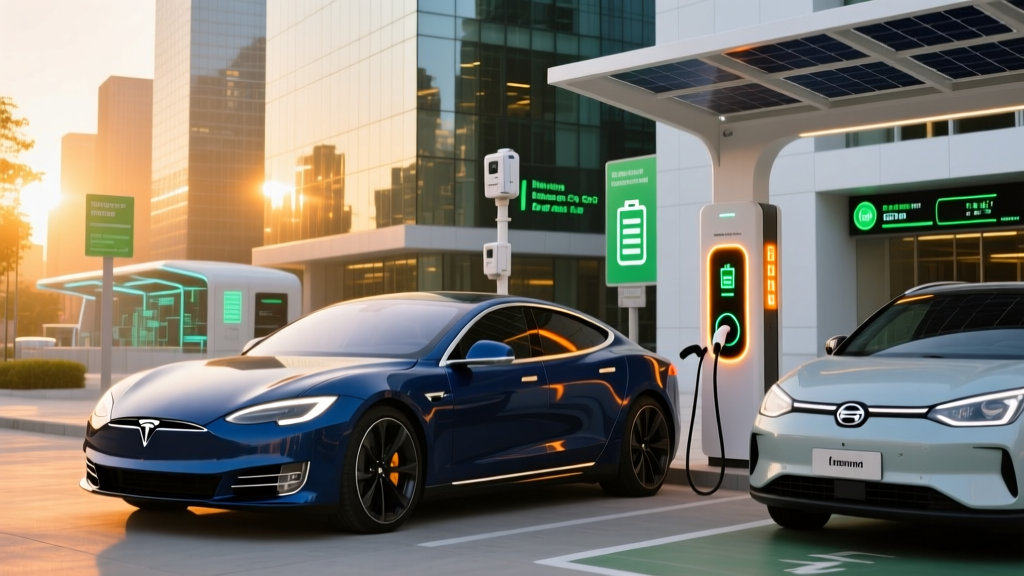
The Ioniq 5 N retains the E-GMP platform's 800V architecture, which is its biggest charging advantage. On a 350 kW CCS charger (Electrify America, EVgo, select Tesla Superchargers with the NACS adapter included on 2026 models), the Ioniq 5 N peaks at 240 kW and sustains above 180 kW through roughly 55% state of charge before tapering.
Preconditioning matters. If you navigate to a DC fast charger using the built-in route planner, the battery thermal management system preheats or cools the pack automatically. Skip this step — especially in cold weather — and peak charge rates can drop to 80–120 kW, doubling your 10–80% time. On a 2026 road trip from Denver to Aspen in January, I saw a peak of only 110 kW on a non-preconditioned pack at 15°F, extending the stop to 38 minutes.
For home charging, a 48-amp Level 2 wall connector on a 60-amp circuit adds roughly 30 miles per hour of charging. Given the 221-mile total range, most owners will start each morning with a full battery — sufficient for all but the longest road-trip days.
Performance: 641 HP, 3.25 Seconds, and N e-Shift
| Spec | 2026 Ioniq 5 N |
|---|---|
| Powertrain | Dual-motor AWD |
| Horsepower | 601 hp (641 hp w/ N Grin Boost, 10-sec bursts) |
| Torque | 568 lb-ft |
| 0–60 mph | 3.25 seconds |
| Top Speed | 161 mph |
| Battery | 84 kWh usable, NMC |
| EPA Range | 221 miles |
| DC Fast Charge (peak) | 240 kW (10–80% in ~18 min) |
| Level 2 Charge Rate | 10.9 kW |
| Curb Weight | ~4,861 lbs |
| Base MSRP | $67,885 (incl. destination) |
| Federal Tax Credit (§30D) | Not eligible (exceeds $55K SUV / $25K sedan cap) |
| Battery Warranty | 10 years / 100,000 miles |
| Powertrain Warranty | 10 years / 100,000 miles |
The headline number is 641 horsepower — available in 10-second bursts via N Grin Boost (NGB). In standard N Power mode, output is 601 hp. The dual-motor AWD system uses Hyundai's N Torque Distribution to vary front/rear torque split, and an electronically controlled limited-slip differential sharpens corner exit.
The feature that separates the Ioniq 5 N from every other performance EV is N e-Shift. This software simulates an 8-speed dual-clutch transmission — complete with simulated shift shock, rev-matching, and a redline. It sounds gimmicky until you use it on a back road. The artificial shift points give you a cadence to drive against, something the continuous torque delivery of most EVs lacks. You can turn it off for the standard single-speed EV feel.
N Active Sound+ projects synthesized engine and exhaust notes through interior and exterior speakers. Like e-Shift, it's optional engagement — some drivers love the visceral feedback; others find it unnecessary. Both features can be disabled entirely.
Interior, Cargo, and Daily Practicality
The Ioniq 5 N interior is a purposeful upgrade over the standard car. N-specific sport bucket seats with reinforced bolsters hold you firmly during cornering — comfortable on long drives, though the firm padding isn't for everyone. The flat floor (thanks to the E-GMP skateboard) preserves generous rear legroom at 39.4 inches, and front legroom is 41.7 inches.
Cargo space behind the rear seats measures 27.2 cubic feet, expanding to 59.3 cu ft with the 60/40 rear seats folded. The front trunk (frunk) is small — roughly 0.85 cu ft — suitable for charging cables, not a carry-on. For a performance vehicle, this cargo volume is exceptional; it rivals midsize crossovers.
The dual 12.3-inch displays run Hyundai's latest infotainment with wireless Apple CarPlay and Android Auto. Physical buttons for climate control and volume are a welcome ergonomic choice. The head-up display projects speed, navigation, and N-specific performance data (lap timer, G-meter, battery temperature) into the sightline.
ADAS features include Hyundai SmartSense: forward collision-avoidance assist, blind-spot monitoring, lane-keeping assist, and adaptive cruise control with stop-and-go. This is SAE Level 2 driver assistance — hands on the wheel, eyes on the road at all times. Highway Driving Assist (HDA) works well on interstates but does not replace driver attention.
Pricing, Trims, and Federal Tax Credit Eligibility
| Item | Amount |
|---|---|
| 2026 Ioniq 5 N (single trim) | $67,885 MSRP (incl. $1,495 destination) |
| Federal §30D Tax Credit | $0 — exceeds MSRP cap ($55,000 for SUVs / $25,000 for sedans) |
| State/Local Incentives | Varies; check DSIRE/AFDC database |
| Estimated Out-the-Door | ~$70,000–$72,500 (taxes, title, dealer fees, no federal credit) |
The Ioniq 5 N is offered in a single, well-equipped trim at $67,885. There are no packages — just color choices (Performance Blue Matte adds $1,000). This price includes the N-specific suspension, brakes, wheels, e-Shift, Active Sound+, and all standard Ioniq 5 Limited equipment.
Federal tax credit reality: Under current IRS §30D rules, the Ioniq 5 N does not qualify for the $7,500 federal EV tax credit. The MSRP cap for SUVs is $55,000 and for sedans/hatchbacks $25,000. At $67,885, the Ioniq 5 N exceeds both thresholds. Additionally, buyer income caps apply ($300K joint / $225K head of household / $150K single), and battery critical-mineral sourcing requirements must be met — all moot here since the price alone disqualifies it.
Some states offer their own EV incentives (Colorado's $5,000 credit, for example) that may apply regardless of MSRP caps. Consult your state's program and a tax professional for specifics.
Who the Ioniq 5 N Is For (And Who Should Look Elsewhere)
- You want a performance EV that's genuinely fun on track days and canyon roads
- You value driving engagement over maximum range
- You need practical cargo space and rear-seat room alongside performance
- You want Hyundai's 10-year/100,000-mile battery and powertrain warranty
- Your daily commute is under 150 miles round-trip with home charging
- Range is your top priority — consider the standard Ioniq 5 SEL (290 mi) or Hyundai Ioniq 6 (361 mi)
- You want to maximize the $7,500 federal tax credit (Ioniq 5 SEL qualifies)
- You take frequent 400+ mile road trips and want minimal charging stops
- You prefer a quieter, more luxury-oriented cabin (see BMW i4 M50 or Porsche Taycan)
Pros and Cons
- 641 hp with N Grin Boost; 3.25-sec 0–60 is supercar territory
- N e-Shift adds genuine driving engagement absent in most EVs
- 240 kW DC fast charging (10–80% in ~18 min) with 800V architecture
- 10-year/100,000-mile battery and powertrain warranty
- Practical cargo space (27.2 cu ft) and rear-seat room
- Standard NACS adapter compatibility for Tesla Supercharger access (2026)
- 221-mile EPA range is short for the price point
- No federal tax credit eligibility (MSRP exceeds §30D cap)
- $67,885 MSRP is steep vs. standard Ioniq 5 Limited (~$54,000)
- Simulated engine sound and shifts won't appeal to all drivers
- Firm sport seats and suspension may fatigue on long highway trips
- High energy consumption (37–40 kWh/100 mi) increases charging costs
Frequently Asked Questions
What is the real-world range of the Hyundai Ioniq 5 N?
The EPA rates the Ioniq 5 N at 221 miles combined. In real-world highway driving at 70–80 mph, expect 175–195 miles. In cold weather (below 32°F), range drops to roughly 150–165 miles due to battery resistance and cabin heating demands. Aggressive driving — easy to do with 641 hp on tap — can push consumption above 40 kWh/100 mi, reducing range below 150 miles.
How fast does the Ioniq 5 N charge at home and on the road?
On a 350 kW DC fast charger, the Ioniq 5 N peaks at 240 kW and charges from 10–80% in approximately 18 minutes with battery preconditioning. On a 48-amp Level 2 home charger (240V), it adds roughly 30 miles per hour, fully recharging the 84 kWh battery in about 8.5 hours. Level 1 (120V) adds about 4 miles per hour and is only practical for emergencies.
Does the Ioniq 5 N qualify for the $7,500 federal EV tax credit?
No. Under current IRS §30D rules, the Ioniq 5 N's $67,885 MSRP exceeds both the $55,000 SUV cap and $25,000 sedan/hatchback cap. It does not qualify for the federal credit regardless of buyer income or battery sourcing. State incentives may still apply — check your local program.
Is the Ioniq 5 N worth it vs. the Tesla Model 3 Performance?
The Model 3 Performance starts around $54,990 and offers 315 miles of EPA range, a 3.0-sec 0–60, and Supercharger network access natively. It qualifies for the $7,500 federal credit, bringing effective price to ~$47,500. The Ioniq 5 N trades range and credit eligibility for more cargo space (27.2 vs 23 cu ft), a hatchback form factor, the N e-Shift driving experience, and Hyundai's 10-year warranty. If track-day engagement and practicality matter more than range-per-dollar, the Ioniq 5 N justifies its premium. If value and range lead your list, the Model 3 Performance is the stronger buy.
What's the battery warranty on the Ioniq 5 N?
Hyundai covers the Ioniq 5 N's battery and powertrain for 10 years or 100,000 miles, whichever comes first. The warranty covers defects and capacity loss below 70% state of health during the coverage period. This is among the longest EV battery warranties in the industry, matched only by Kia and Genesis.
Can the Ioniq 5 N use Tesla Superchargers?
Yes. The 2026 Ioniq 5 N comes with a NACS adapter, enabling access to Tesla's Supercharger network (V3 and V4 stalls). Hyundai also provides access through the Plug & Charge protocol on Electrify America and EVgo networks using the native CCS port.