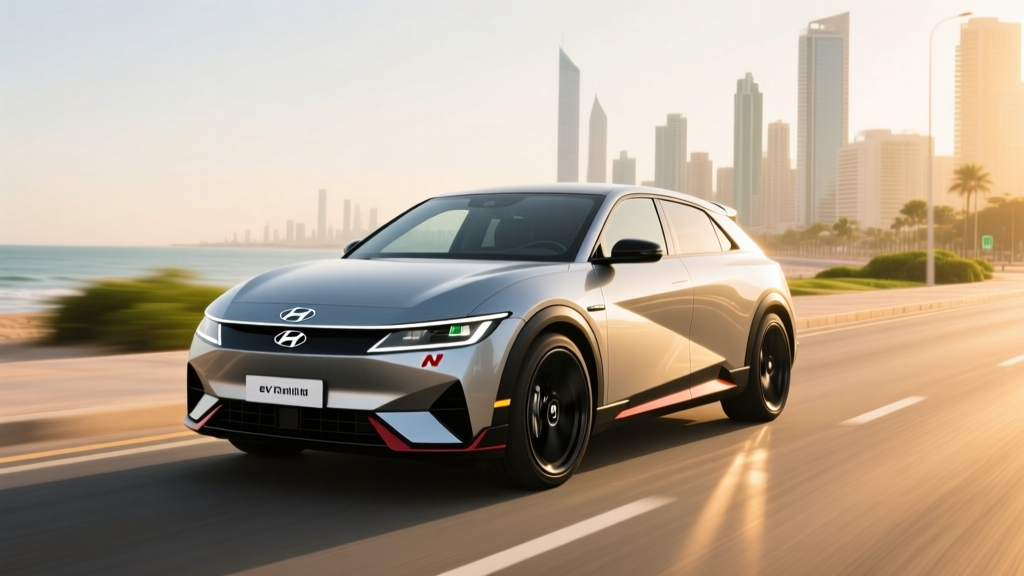
The Hyundai Ioniq 5 N is the rare EV that makes enthusiasts forget they're driving a battery-powered car. With up to 641 horsepower, an 800-volt architecture that enables blistering DC fast-charging, and N-brand track hardware grafted onto Hyundai's E-GMP platform, it's a performance machine first and an EV second. But with a starting MSRP pushing $67,000, many buyers are hunting for a strong Ioniq 5 N lease deal to get behind the wheel without absorbing the full depreciation hit of a high-performance electric car.
This review covers everything you need to evaluate before signing: real-world range expectations, charging speeds, tax-credit math, and how it stacks up against rivals like the Tesla Model 3 Performance and BMW i4 M50.
2026 Ioniq 5 N Specs at a Glance
| Spec | Value |
|---|---|
| EPA Range | 221 miles |
| Battery (usable) | 84.0 kWh, NMC lithium-ion |
| Drivetrain | Dual-motor AWD |
| Horsepower | 601 hp (641 hp w/ N Grin Boost) |
| Torque | 545 lb-ft (568 lb-ft w/ N Grin Boost) |
| 0–60 mph | 3.25 seconds |
| Top Speed | 161 mph |
| Max DC Fast Charge | 238 kW (800V architecture) |
| 10–80% DC Charge Time | ~18 minutes |
| Level 2 Charge Rate | 10.9 kW (~35 mi/hr) |
| EPA Efficiency | 98 MPGe combined (34 kWh/100 mi) |
| Cargo Volume | 27.2 cu ft (rear seats up) / 59.3 cu ft (folded) |
| Rear Legroom | 39.4 inches |
| Base MSRP | $67,675 (incl. $1,175 destination) |
| Battery Warranty | 8 years / 100,000 miles |
| Powertrain Warranty | 10 years / 100,000 miles |
Real-World Range: What 221 EPA Miles Actually Means
Real-World Highway (70 mph, mild weather): ~180–195 miles
Real-World Highway (cold weather, below 32°F): ~145–165 miles
City / Commute (moderate speeds, regen-heavy): ~200–215 miles
The Ioniq 5 N's 221-mile EPA rating is the trade-off for its performance. The same 84.0 kWh NMC battery in the standard Ioniq 5 Limited AWD delivers 290 miles, but the N variant uses stickier Pirelli P Zero tires, a lower ride height, more aggressive aerodynamic drag from its body kit, and significantly more power draw under acceleration. According to the EPA, combined efficiency is 98 MPGe, or 34 kWh per 100 miles — roughly 25% thirstier than the standard dual-motor Ioniq 5.
In practice, that means the Ioniq 5 N is a 180-mile car at highway speeds in good conditions. If your daily round-trip commute is under 100 miles and you charge at home nightly, range is a non-issue. For road trips, plan stops every 150–160 miles to keep a comfort buffer — though the 800V charging architecture means those stops are short.
Charging Speed: 800V Architecture Makes a Difference
The Ioniq 5 N shares Hyundai's E-GMP 800-volt platform, which remains one of the fastest-charging architectures available in any consumer EV. Here's how the charging tiers break down:
| Charging Level | Power | Speed (miles added/hr) | Notes |
|---|---|---|---|
| Level 1 (120V outlet) | ~1.4 kW | ~4 mi/hr | Emergency/trickle only |
| Level 2 (240V home) | 10.9 kW | ~35 mi/hr | Full charge in ~8 hours |
| DC Fast (350 kW station) | Peak 238 kW | ~650 mi/hr (peak) | 10–80% in ~18 min |
| DC Fast (150 kW station) | ~130–145 kW sustained | ~380 mi/hr | 10–80% in ~28 min |
Charge curve reality check: The Ioniq 5 N peaks near 238 kW only when the battery is preconditioned and state of charge (SoC) is low (around 10–30%). By 60% SoC, power tapers to roughly 150 kW, and above 80% it drops sharply to protect the cells. This is standard lithium-ion behavior — the advertised 18-minute 10–80% time assumes a 350 kW-capable charger (like Electrify America's latest stalls) and a preconditioned battery. At a 150 kW station, expect closer to 28 minutes for the same session.
For home charging, a Level 2 wallbox at 10.9 kW (48 amps on a 60-amp circuit) will replenish the 84 kWh battery from empty in roughly 8 hours — easily overnight. If your home panel supports only a 40-amp circuit (common in older homes), you'll get about 7.7 kW and a ~10.5-hour full charge. A licensed electrician can confirm your panel's capacity before installation.
Performance: The N Badge Earns Its Keep
The Ioniq 5 N isn't just a standard Ioniq 5 with more power — it's a fundamentally re-engineered performance vehicle. The dual-motor AWD system produces 601 hp in standard driving and 641 hp when N Grin Boost (NGB) is activated, which temporarily maximizes output for 20-second bursts. The result is a 3.25-second 0–60 mph time that puts it squarely in supercar territory.
But straight-line speed is only part of the story. Hyundai's N division added:
- N Torque Distribution: Variable front/rear torque split with selectable modes for understeer-biased or oversteer-biased handling
- N Drift Optimizer: Dedicated software that modulates torque to sustain controlled slides (track use only)
- N e-Shift: Simulates an 8-speed dual-clutch transmission with tactile "shift" jolts and simulated rev-matching — controversial among EV purists but genuinely engaging
- Enhanced braking: 4-piston front calipers with 15.7-inch rotors, plus aggressive regen blending up to 0.6g of deceleration
- Body rigidity: Additional weld points, reinforced subframes, and a lower, stiffer suspension tune
The N e-Shift and simulated engine sound (N Active Sound+) are the most polarizing features. Some drivers find them gimmicky; others appreciate the sensory feedback during spirited driving. Fortunately, both can be disabled entirely for a more traditional EV experience.
Pricing, Lease Deals, and Federal Tax Credit Eligibility
The 2026 Ioniq 5 N starts at $67,675 (including $1,175 destination). There are no trim levels — it's a single, fully loaded configuration. Optional equipment is limited to paint color ($500 for Matte Gravity Gold or Performance Blue Matte) and an N Road Course package that adds lightweight forged wheels and track-focused brake pads.
| Item | Amount |
|---|---|
| Base MSRP (incl. destination) | $67,675 |
| Federal §30D Tax Credit (if eligible) | Up to $7,500 |
| Effective Price After Credit | ~$60,175 |
| Typical 36-Month Lease (est.) | $699–$849/mo, $4,500–$6,000 due at signing |
Federal Tax Credit: Do You Qualify?
The Ioniq 5 N may qualify for the full $7,500 federal EV tax credit under IRS §30D rules, but eligibility depends on several factors that change periodically:
- MSRP cap: The Ioniq 5 N is classified as an SUV/crossover for §30D purposes, where the cap is $80,000. At $67,675, it clears this threshold.
- Buyer income cap: Modified adjusted gross income (MAGI) must not exceed $300,000 (joint filers), $225,000 (head of household), or $150,000 (single).
- Battery sourcing: A portion of the credit ($3,750) depends on critical minerals sourced from the U.S. or free-trade-agreement partners, and another $3,750 depends on battery components manufactured or assembled in North America. Hyundai sources cells from SK On, and the exact credit amount can shift as sourcing requirements tighten each year. Verify current-year eligibility on fueleconomy.gov before committing.
- Point-of-sale transfer: As of 2024, buyers can transfer the credit to the dealer at purchase, effectively reducing the drive-off price. This also applies to many lease structures.
Leasing vs. Buying the Ioniq 5 N
A strong Ioniq 5 N lease deal can make this EV significantly more accessible. Here's why leasing has an edge for this model:
- Depreciation protection: Performance EVs have historically depreciated faster than mainstream models. A 36-month lease shields you from resale-value risk.
- Lease pass-through credit: Under the "commercial entity" loophole in §45W, automakers can claim the EV credit on leased vehicles and pass savings to the lessee — even if the buyer wouldn't qualify under §30D income or sourcing rules. Hyundai has historically passed this through as a lease cash incentive. Confirm with your dealer whether the $7,500 is being applied to current lease offers.
- Lower monthly commitment: A lease typically runs $699–$849/month with $4,500–$6,000 at signing (varies by region, credit tier, and current incentives), compared to a purchase payment of roughly $950–$1,100/month on a 60-month loan at ~6% APR.
The downside? You don't build equity, you're subject to mileage limits (typically 10,000–12,000 miles/year on performance leases), and you'll pay a disposition fee at turn-in.
Interior, Tech, and Daily Livability
Inside, the Ioniq 5 N retains the dual 12.3-inch panoramic display layout from the standard Ioniq 5 but adds N-specific elements: a thick-rimmed N steering wheel with NGB and drive-mode buttons, N sport bucket seats with heavier bolsters, aluminum pedals, and an N-branded center console with a physical T-bar shifter (a deliberate retro choice over the standard rotary dial).
Technology highlights:
- Wireless Apple CarPlay and Android Auto
- Hyundai Digital Key 2 (NFC/BLE smartphone-as-key)
- Head-up display with N-specific track overlays (lap timer, G-meter, battery temp)
- Highway Driving Assist 2 (Level 2 ADAS — adaptive cruise with lane centering and lane-change assist; not self-driving)
- Remote Smart Parking Assist (car parks itself in tight spaces via key fob)
- Vehicle-to-Load (V2L): 3.6 kW output via interior and exterior outlets — enough to power camping gear, tools, or a home refrigerator during an outage
Space: Cargo volume is 27.2 cubic feet behind the rear seats and 59.3 cubic feet with the 60/40 split folded — competitive with the Tesla Model Y. Rear legroom is a generous 39.4 inches, and the flat floor (no transmission tunnel) makes the middle seat genuinely usable for short trips. The front trunk (frunk) is small at ~0.85 cu ft — just enough for charging cables.
Pros and Cons
- 641 hp and 3.25s 0–60 — genuine supercar acceleration
- 800V architecture: 10–80% in ~18 min on a 350 kW charger
- Track-capable chassis with real mechanical upgrades, not just software
- Class-leading warranty: 10-yr/100,000-mi powertrain
- V2L capability adds practical utility
- Leasing can bypass §30D income/sourcing restrictions
- 221-mile EPA range — shortest in the Ioniq 5 lineup
- $67,675 base price is steep for a Hyundai badge
- Simulated shifts and engine sounds polarize drivers
- No front trunk to speak of (0.85 cu ft)
- Efficiency drops sharply during track or spirited use
- Only one trim — no way to delete options you don't want
Ioniq 5 N vs. Key Competitors
| Spec | Hyundai Ioniq 5 N | Tesla Model 3 Performance | BMW i4 M50 |
|---|---|---|---|
| Base MSRP | $67,675 | $54,990 | $68,295 |
| EPA Range | 221 mi | 315 mi | 227 mi |
| 0–60 mph | 3.25 sec | 2.9 sec | 3.7 sec |
| Horsepower | 641 (NGB) | 510 | 536 |
| Max DC Charge | 238 kW | 250 kW | 205 kW |
| 10–80% Time | ~18 min | ~20 min | ~28 min |
| Track Focus | High (drift, N e-Shift) | Medium (Track Mode) | Medium |
| Federal Credit | Up to $7,500* | Up to $7,500* | Up to $7,500* |
*Credit eligibility depends on buyer income, battery sourcing, and current-year IRS rules. Verify at irs.gov.
The Tesla Model 3 Performance wins on range (315 miles) and price ($54,990), and it's quicker to 60 mph. But it lacks the Ioniq 5 N's chassis depth, drift capability, and 800V charging speed. The BMW i4 M50 is a refined grand tourer but trails in acceleration and charging speed. The Ioniq 5 N is the driver's choice if track engagement matters more than range maximization.
Who Is the Ioniq 5 N For?
- Enthusiasts who want a daily-drivable track car with zero tailpipe emissions
- Current hot-hatch owners (Golf R, Civic Type R) ready to go electric without losing engagement
- Buyers with home Level 2 charging who commute under 100 miles daily
- Those who can leverage a lease deal to avoid depreciation risk and access the full $7,500 incentive
- You regularly drive 250+ miles between charges (range is a real constraint)
- You need maximum cargo space or third-row seating (consider the Kia EV9 or Tesla Model X)
- You prioritize efficiency and low running costs over performance
Frequently Asked Questions
What is the real-world range of the Ioniq 5 N?
The EPA rates it at 221 miles combined. In real-world highway driving at 70 mph, expect 180–195 miles in mild weather and 145–165 miles in freezing conditions. City driving with regenerative braking can stretch it closer to 210 miles.
How fast does the Ioniq 5 N charge at home and on the road?
At home on a Level 2 (240V, 48-amp) charger, it adds roughly 35 miles per hour and fully charges in about 8 hours. On a 350 kW DC fast charger, it peaks at 238 kW and goes from 10–80% in approximately 18 minutes. At a more common 150 kW station, the same session takes about 28 minutes.
Does the Ioniq 5 N qualify for the federal EV tax credit?
It can qualify for up to $7,500 under IRS §30D, but eligibility depends on your income (under $300k joint / $150k single), the vehicle's MSRP (under $80k — it qualifies), and current battery-sourcing requirements. Leasing may bypass some sourcing restrictions via the commercial-entity provision. Always verify current eligibility on fueleconomy.gov and consult a tax professional.
Is the Ioniq 5 N worth buying vs. the Tesla Model 3 Performance?
If you prioritize driving engagement, chassis dynamics, and track capability, the Ioniq 5 N is the stronger driver's car. If range, price, and access to the Supercharger network matter more, the Model 3 Performance is the pragmatic pick. Leasing either can mitigate depreciation risk.
What are the biggest drawbacks of the Ioniq 5 N?
The 221-mile range is the primary limitation for road-trip-heavy buyers. The $67,675 price is high for a Hyundai, and the simulated shift/sound features won't appeal to everyone. It also lacks meaningful front trunk space.
What's the battery warranty?
Hyundai covers the Ioniq 5 N's battery for 8 years or 100,000 miles (whichever comes first), with a capacity retention threshold of 70%. The broader powertrain warranty extends to 10 years or 100,000 miles — one of the best in the EV market.