Quick Verdict: Can the Ioniq 5 Actually Go Off-Road?
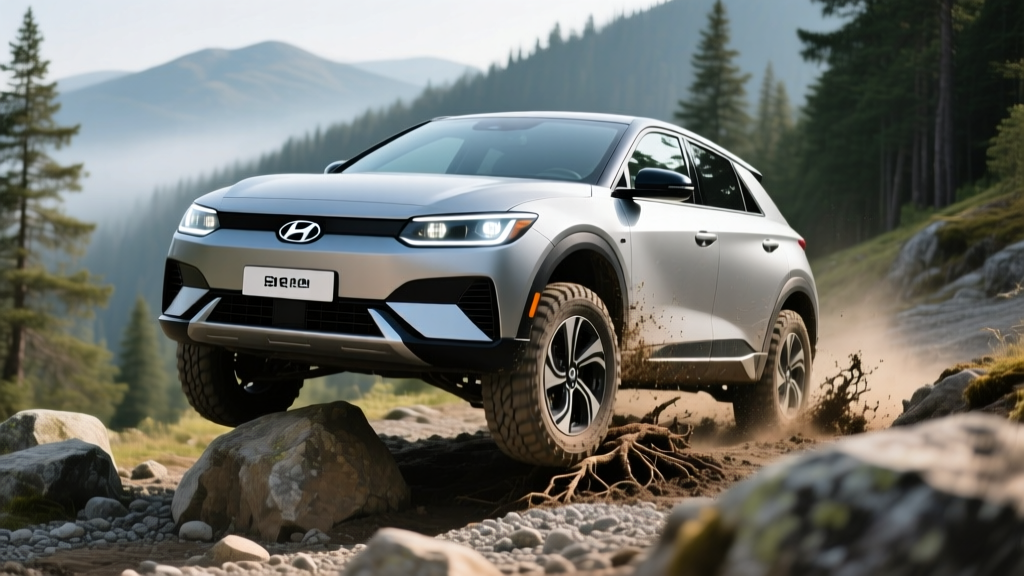
The Hyundai Ioniq 5 XRT arrives as the automaker's answer to a question most EV buyers didn't think to ask: what if your electric crossover could handle a forest service road without flinching? Built on the same E-GMP platform as the standard Ioniq 5, the XRT variant adds raised suspension, all-terrain tires, and rugged body cladding aimed at the overlanding-adjacent crowd. But strip away the matte-black trim and tow hooks, and you're still looking at one of the most capable 800V-architecture EVs on the market — with charging speeds that embarrass competitors costing $20,000 more.
The real question isn't whether the Ioniq 5 XRT can crawl over rocks (it can, within reason). It's whether the off-road upgrades compromise the on-road efficiency and range that made the standard Ioniq 5 an EPA darling. After examining the specs, real-world range data, and ownership economics, the XRT emerges as a compelling — if niche — choice for EV buyers who split time between pavement and dirt.
| Spec | Value |
|---|---|
| EPA Range | 290 miles (AWD, 19" all-terrain) |
| Battery Capacity | 84.0 kWh usable (NMC lithium-ion) |
| Drivetrain | Dual-motor AWD |
| Horsepower | 320 hp combined |
| Torque | 446 lb-ft |
| 0-60 mph | 4.5 seconds |
| Max DC Fast Charge | 270 kW peak (800V architecture) |
| 10-80% DC Charge Time | ~18 minutes (preconditioned) |
| Level 2 Home Charge Rate | 10.9 kW (44 miles/hr) |
| EPA Efficiency | 101 MPGe combined / 33 kWh/100 mi |
| Ground Clearance | 7.8 inches (+1.0" vs standard) |
| Cargo Volume (rear seats up) | 27.2 cu ft |
| Cargo Volume (rear seats folded) | 59.3 cu ft |
| Towing Capacity | 2,300 lbs (braked) |
| Base MSRP | $56,950 (before incentives) |
| Battery/Powertrain Warranty | 10 years / 100,000 miles |
Real-World Range: What the EPA Sticker Doesn't Tell You
The Ioniq 5 XRT carries an EPA-estimated 290 miles of range on its 84.0 kWh NMC battery pack. That's roughly 20 miles fewer than the standard Ioniq 5 SEL AWD — the penalty for all-terrain tires, increased ride height, and the aerodynamic drag of roof rails and underbody protection.
Range Reality Check
EPA Estimate: 290 miles
Real-World Expectations:
- City/suburban mixed driving (65°F): 270-290 miles — regenerative braking in stop-and-go traffic helps recover energy
- Highway cruising (70-75 mph, 65°F): 235-255 miles — the boxy shape and all-terrain tires create noticeable drag at speed
- Cold weather (30°F, highway): 190-220 miles — expect 25-35% range loss without preconditioning; the heat pump helps but can't eliminate the physics of cold NMC chemistry
- Off-road/low-speed trail use: 240-260 miles equivalent — low speeds minimize aero losses, but climbing elevation and soft surfaces increase rolling resistance
Bottom line: Plan for 240 miles of usable range on road trips with a comfort buffer. The XRT's off-road hardware exacts a measurable efficiency toll.
Hyundai's NMC (nickel manganese cobalt) chemistry prioritizes energy density over the cycle-life advantages of LFP (lithium iron phosphate). For buyers who charge to 100% daily, this means slightly faster long-term degradation compared to LFP packs — though Hyundai's generous 10-year/100,000-mile battery warranty (covering capacity below 70%) provides meaningful backstop protection.
Charging Speed: The 800V Architecture Advantage
This is where the Ioniq 5 platform earns its keep. The XRT retains the E-GMP 800V electrical architecture, enabling DC fast-charge speeds that remain among the fastest in the sub-$70,000 EV segment. On a 350 kW Electrify America or Tesla Supercharger (NACS adapter included), the XRT peaks at 270 kW under ideal thermal conditions.
| Charge Level | Power (kW) | Speed (mi/hr added) | Time (10-80%) |
|---|---|---|---|
| Level 1 (120V / 12A) | 1.4 kW | ~4 mi/hr | ~60 hours |
| Level 2 (240V / 48A home) | 10.9 kW | ~44 mi/hr | ~7.5 hours |
| DC Fast (50 kW) | 50 kW | ~150 mi/hr | ~65 minutes |
| DC Fast (150 kW) | 150 kW | ~400 mi/hr | ~30 minutes |
| DC Fast (350 kW station) | 270 kW peak | ~700 mi/hr | ~18 minutes |
Charging curve reality: The 270 kW figure is a peak, not a sustained rate. In practice, the XRT holds above 200 kW from roughly 10-40% state of charge, then tapers progressively. From 60-80%, expect rates closer to 100-130 kW. The 18-minute 10-80% time assumes the battery is preconditioned — either via the route-based preconditioning that activates when a DC fast charger is set as your navigation destination, or by manually initiating it through the infotainment system 15-20 minutes before arrival.
Without preconditioning in cold weather (below 50°F), peak rates may be limited to 120-150 kW until the pack warms, extending 10-80% times to 30-40 minutes. This is standard behavior for NMC packs without the active thermal conditioning sophistication of a Tesla — but Hyundai's system is competitive with most rivals.
For home charging, the 10.9 kW onboard charger means a full charge from empty takes roughly 7.5-8 hours on a 48-amp Level 2 circuit (hardwired, 60-amp breaker). Most owners charging overnight from 20-80% will see a full replenishment in under 5 hours — more than adequate for daily use.
Off-Road Capability: What the XRT Actually Adds
The XRT isn't a body-on-frame rock crawler, and Hyundai doesn't pretend otherwise. The upgrades over the standard Ioniq 5 are meaningful but targeted at the "soft off-road" use case: fire roads, forest service trails, snow-covered passes, sandy beach access, and gravel camping roads.
Key XRT hardware additions:
- Suspension lift: 1.0 inch of additional ground clearance (7.8" total) via retuned springs and dampers
- All-terrain tires: 235/55R19 all-terrain rubber on unique 19" wheels — improved grip on loose surfaces at the cost of roughly 1-2 dB more road noise on pavement
- Underbody protection: Steel skid plates covering the front motor subframe and battery pack approach zone
- Tow hooks: Front and rear recovery points (rated, not cosmetic)
- Drive modes: Dedicated Sand/Mud/Snow mode that remaps torque distribution, regen aggressiveness, and traction control thresholds
- Roof rails: Reinforced crossbar-ready rails rated for 220 lbs dynamic load (roof-top tent compatible with appropriate rack)
What it doesn't have: Low-range gearing (EVs don't need it — instant torque at zero RPM handles low-speed crawling), locking differentials (the dual-motor AWD system provides torque vectoring via independent front/rear motor control), or serious approach/departure angles for rock crawling. The 7.8" ground clearance is competitive with a Subaru Outback but well below a body-on-frame 4Runner.
For the vast majority of "adventure" EV buyers — weekend campers, ski-trip drivers, national forest explorers — the XRT's capability envelope is well-matched to actual use. The instant torque delivery of dual electric motors (446 lb-ft from standstill) is a genuine advantage on loose surfaces, and the low center of gravity from the under-floor battery pack reduces rollover risk compared to lifted ICE vehicles.
Pricing, Trims, and Federal Tax Credit Eligibility
The Ioniq 5 XRT slots near the top of the Ioniq 5 lineup, reflecting its specialized hardware. Here's the pricing picture for the current model year:
| Item | Amount |
|---|---|
| Base MSRP (XRT AWD) | $56,950 |
| Destination charge | $1,495 |
| Typical as-tested (with packages) | $59,500-$62,000 |
| Federal §30D Tax Credit (if eligible) | Up to $7,500 |
| Effective price after max credit | ~$49,450 (before state incentives) |
Federal tax credit eligibility (§30D) requires meeting all of the following criteria, per current IRS rules:
- MSRP cap: Vehicle MSRP must not exceed $80,000 for SUVs/CUVs — the XRT qualifies at $56,950 base
- Buyer income cap: Modified adjusted gross income must not exceed $150,000 (single), $225,000 (head of household), or $300,000 (joint filers)
- Battery sourcing: A percentage of critical minerals and battery components must be sourced from the US or free-trade-agreement countries — Hyundai's supply chain has progressively shifted to meet these thresholds, but eligibility can change by production batch. Verify the specific VIN's eligibility on the IRS qualified vehicles list before purchase
- Point-of-sale transfer: The credit can be applied at purchase as an immediate price reduction (dealer must be IRS-registered), reducing out-of-pocket cost rather than waiting for tax filing
- One credit per vehicle, per taxpayer: You cannot claim the credit if you've already claimed the maximum number of clean vehicle credits in prior years
Important caveat: Battery sourcing requirements tighten annually. A vehicle that qualifies in January may not qualify by December if supply chains shift. Always confirm eligibility at the time of purchase using the DOE's qualified vehicle database and consult a tax professional for your specific situation.
Interior, Tech, and Daily Livability
The XRT cabin carries over the standard Ioniq 5's dual 12.3-inch display layout (instrument cluster + infotainment) with XRT-specific styling: unique seat upholstery with water-resistant fabric, all-weather floor liners, and matte-black interior trim accents. The physical climate control buttons — a Hyundai holdover that many buyers appreciate over touchscreen-only interfaces — remain intact.
Passenger space is generous thanks to the E-GMP platform's flat floor and long 118.1-inch wheelbase:
- Front legroom: 41.7 inches
- Rear legroom: 39.4 inches
- Rear headroom: 37.8 inches (slightly reduced by the panoramic roof option)
- Front row headroom: 39.5 inches
Cargo capacity remains unchanged from the standard Ioniq 5 despite the suspension modifications: 27.2 cubic feet behind the rear seats, expanding to 59.3 cubic feet with the 60/40 split rear seats folded. The front trunk (frunk) on AWD models is a modest 0.85 cubic feet — enough for a charging cable kit but not much else.
Standout tech features:
- Vehicle-to-Load (V2L): The Ioniq 5's internal V2L outlet (120V, up to 3.6 kW) powers camping equipment, laptops, or small appliances directly from the traction battery — a genuine differentiator for off-grid use. A campsite-worthy feature that effectively turns the XRT into a 84 kWh portable power station.
- Digital side mirrors (optional): Camera-based mirror replacement reduces drag but takes acclimation; availability varies by market.
- Highway Driving Assist 2 (HDA2): SAE Level 2 driver-assistance with adaptive cruise, lane centering, and lane-change assist. Competent for highway fatigue reduction, but requires continuous driver supervision — this is not autonomous driving.
- Remote Smart Parking Assist: The vehicle can pull itself into or out of a tight parking space while you stand outside — useful on narrow trail-head parking areas.
- Over-the-air updates: Hyundai continues to push firmware improvements to battery management, infotainment, and drive-mode calibration.
Notable drawbacks:
- No rear wiper (a persistent Ioniq 5 complaint — the aerodynamic design creates a low-pressure zone that deposits road grime on the rear glass)
- Frunk space is minimal on AWD models
- Infotainment lacks a native trail-mapping or off-road telemetry display (you'll rely on phone-based navigation for trail routing)
- Rear visibility is compromised by the thick C-pillars and small rear window — the 360° camera system is essentially mandatory
Efficiency, Ownership Costs, and the Competitor Question
At 101 MPGe combined (33 kWh per 100 miles), the Ioniq 5 XRT trails the standard AWD Ioniq 5's 110 MPGe — a predictable consequence of all-terrain rubber and increased frontal area. In practical terms, this translates to roughly $0.05-$0.06 per mile on the national average electricity rate of $0.17/kWh for home charging, or $0.12-$0.18 per mile on public DC fast chargers at $0.35-$0.55/kWh.
Compare that to a similarly capable gas-powered crossover averaging 24 MPG combined at $3.50/gallon ($0.15/mile), and the XRT's home-charging economics remain favorable — though the gap narrows significantly if you rely heavily on public fast charging.
Who should consider the Ioniq 5 XRT?
- EV-curious outdoor enthusiasts who want trail access without a dedicated off-road vehicle
- Suburban commuters who hit fire roads, ski areas, or beach access points on weekends
- Buyers who want 800V charging speeds for road trips but need more ground clearance than a sedan or low-slung crossover
- Current Ioniq 5 owners who want the same platform with added capability
Who should look elsewhere?
- Serious off-roaders who need 10+ inches of ground clearance, locking differentials, or serious articulation (Rivian R1S, body-on-frame ICE vehicles)
- Buyers prioritizing maximum range over capability (standard Ioniq 5 SEL AWD offers ~310 miles EPA for less money)
- Towing-heavy users — the 2,300-lb capacity is adequate for a small utility trailer but not a camper
Pros
- 800V charging architecture delivers 10-80% in ~18 minutes at 350 kW stations
- Generous 10-year/100,000-mile battery and powertrain warranty
- V2L capability turns the battery into a campsite power source
- Competitive ground clearance for soft off-road and snow use
- Spacious cabin with flat floor and strong rear-seat legroom
- Qualifies for up to $7,500 federal tax credit (verify VIN eligibility)
- Instant dual-motor torque is a genuine off-road advantage
Cons
- All-terrain tires and lifted suspension reduce range by ~20 miles vs standard model
- No rear wiper remains a visibility frustration
- Minimal frunk space on AWD
- Off-road tech is adequate, not exceptional — no rock-crawling hardware
- $57K starting price before options pushes it into premium territory
- No dedicated off-road navigation or trail telemetry in infotainment
- Efficiency penalty (101 MPGe) means higher per-mile cost than standard Ioniq 5
Frequently Asked Questions
What is the real-world range of the Ioniq 5 XRT?
The EPA rates the Ioniq 5 XRT at 290 miles. In real-world mixed driving at moderate temperatures, expect 270-290 miles. Highway-only driving at 70+ mph drops this to 235-255 miles. In cold weather (below freezing), plan for 190-220 miles unless you precondition the battery. The all-terrain tires and raised ride height create measurable efficiency losses compared to the standard Ioniq 5.
How fast does the Ioniq 5 XRT charge at home and on the road?
On a 350 kW DC fast charger with a preconditioned battery, the XRT peaks at 270 kW and charges from 10-80% in approximately 18 minutes. At home on a 48-amp Level 2 charger (240V), it adds about 44 miles of range per hour, reaching a full charge in roughly 7.5 hours. The 800V architecture is the XRT's strongest competitive advantage — most rivals in this price range peak at 150-170 kW on DC fast charging.
How much does the Ioniq 5 XRT cost after tax credits?
The base MSRP is $56,950 plus a $1,495 destination charge. If you qualify for the full $7,500 federal §30D tax credit (subject to income caps of $150K single / $300K joint, MSRP under $80K, and battery sourcing requirements), the effective price drops to approximately $49,450 before any state incentives. Many states offer additional rebates — check your state's energy office for current programs. The credit can now be transferred at point of sale, reducing your out-of-pocket cost immediately rather than waiting until tax filing.
Is the Ioniq 5 XRT worth buying versus competitors?
The XRT occupies a narrow niche. If you want off-road-capable EV crossover performance, the Rivian R1S offers far more serious trail hardware but starts above $75,000. The Subaru Solterra (co-developed with Toyota bZ4X) offers similar soft off-road intent but slower charging (~100 kW peak) and less range. The Tesla Model Y Long Range AWD offers more range and Supercharger access but zero off-road pretension and less ground clearance. The XRT's combination of 800V charging, V2L, and moderate off-road capability at ~$57K is genuinely unique — if that specific combination matches your use case, there's no direct substitute.
Does the Ioniq 5 XRT qualify for the federal EV tax credit?
The XRT meets the MSRP cap ($56,950, well under the $80,000 SUV limit). Whether you qualify depends on your income (under $150K single / $300K joint MAGI) and whether the specific vehicle's battery meets current-year critical mineral and component sourcing thresholds. Hyundai has worked to shift battery supply chains to qualifying sources, but eligibility can vary by production date. Always verify the specific VIN on the IRS qualified vehicles list before committing to purchase, and consult a tax professional to confirm your personal eligibility.
Can the Ioniq 5 XRT tow a trailer or camper?
The XRT is rated for 2,300 lbs of braked towing capacity — enough for a small utility trailer, a pair of jet skis, or a lightweight teardrop camper. It is not rated for larger travel trailers or boat trailers. The E-GMP platform's instant torque makes low-speed trailer maneuvering easy, but sustained highway towing will significantly reduce range (expect 30-40% range loss while towing near maximum capacity).
How does the Ioniq 5 XRT perform in snow?
The combination of dual-motor AWD, all-terrain tires, and 7.8 inches of ground clearance makes the XRT genuinely capable in snow — better than most AWD crossovers on all-season tires. The Snow drive mode remaps throttle response and traction control for low-grip surfaces, and the battery's low center of gravity provides stable handling. Cold-weather range loss is the primary concern: precondition the cabin and battery while plugged in to preserve maximum range.