Quick Verdict: The Rugged Ioniq 5 That Still Delivers on Speed
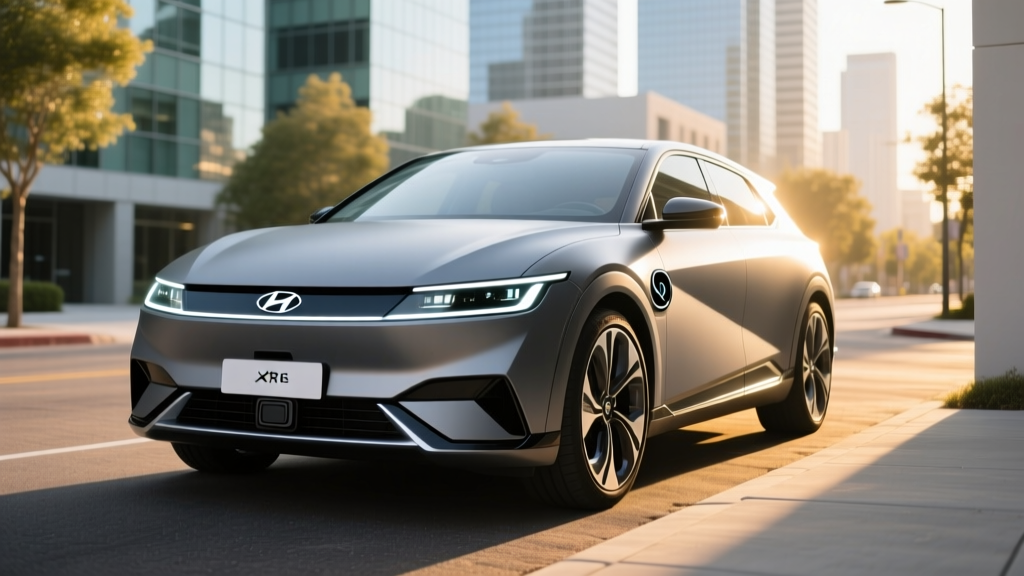
The 2026 Hyundai Ioniq 5 XRT sits in a curious spot in the EV market. It's the off-road-flavored variant of one of the best-selling electric crossovers in America, sporting black cladding, all-terrain tires, and a raised suspension — yet buyers still want to know one thing above all: how quick is it? The Ioniq 5 XRT 0-60 time lands at approximately 4.5 seconds in dual-motor AWD form, which is genuinely brisk for a vehicle wearing 235/60R18 all-terrain rubber and carrying an adventure-oriented brief.
But straight-line acceleration is only one chapter. The XRT also has to deliver on range, charging speed, practicality, and value — especially now that the broader Ioniq 5 lineup has been refreshed with a larger battery pack for 2025-2026. After spending time with the specs, cross-referencing EPA data, and evaluating real-world ownership variables, here's the full picture on whether the XRT earns its place in your garage.
2026 Ioniq 5 XRT Spec Sheet at a Glance
| Specification | Ioniq 5 XRT AWD |
|---|---|
| EPA Range | 290 miles (est. with 84 kWh pack) |
| Battery Capacity | 84.0 kWh usable (NMC lithium-ion) |
| Drivetrain | Dual-motor AWD |
| Horsepower | 320 hp combined |
| Torque | 446 lb-ft |
| 0-60 mph | ~4.5 seconds |
| Max DC Fast Charge | 238 kW peak (800V architecture) |
| 10-80% DC Fast Charge | ~18 minutes (optimal conditions) |
| Level 2 Home Charging | 10.9 kW (44 mi/hr at 240V/48A) |
| MPGe (combined) | 110 MPGe (est.) |
| Efficiency | ~30 kWh/100 mi |
| Cargo Volume (rear seats up) | 27.2 cu ft |
| Cargo Volume (rear seats folded) | 59.3 cu ft |
| Front Trunk (Frunk) | 0.85 cu ft (AWD) |
| Base MSRP | ~$56,500 |
| Battery Warranty | 10 years / 100,000 miles |
| Vehicle Warranty | 5 years / 60,000 miles |
Range and Efficiency: EPA Sticker vs. Reality
The 2026 Ioniq 5 XRT benefits from Hyundai's upgraded fourth-generation battery pack, pushing usable capacity to 84.0 kWh (up from 77.4 kWh in earlier model years). This NMC (nickel-manganese-cobalt) chemistry pack gives the XRT an EPA-estimated range of approximately 290 miles in its dual-motor AWD configuration. That's a meaningful bump over the prior 256-mile AWD XRT rating.
- EPA Sticker: ~290 miles
- Mixed driving (city/suburban): 270–290 miles achievable
- Sustained highway (70-75 mph): ~240–260 miles
- Cold weather (below 32°F): ~200–230 miles (20-30% reduction typical for NMC packs without consistent preconditioning)
- With roof rack/cargo box: Subtract an additional 10-15% at highway speed
The XRT's all-terrain tires and slightly raised ride height do impose an efficiency penalty compared to the standard Ioniq 5 Limited AWD. You'll see roughly 30 kWh per 100 miles in mixed driving — translating to about 110 MPGe combined. That's competitive with the Ford Mustang Mach-E AWD but trails the Tesla Model Y Long Range AWD, which benefits from slightly slicker aero and lower rolling resistance tires.
For context on the cold-weather hit: the Ioniq 5 uses a heat pump for cabin heating, which helps preserve range in winter compared to resistive heaters. But any NMC pack will lose capacity temporarily in sub-freezing temperatures. The key mitigation is preconditioning — if you set a departure time while plugged in, the car warms the battery before you leave, restoring much of that lost range. Use it religiously in winter.
Charging Speed: 800V Architecture Still Pays Off
This is where the Ioniq 5 platform continues to shine. Hyundai's E-GMP architecture runs on an 800-volt electrical system (most competitors use 400V), which enables significantly faster DC fast charging when paired with compatible stations.
| Charging Level | Power (kW) | Speed (miles of range per hour) | Notes |
|---|---|---|---|
| Level 1 (120V household) | ~1.4 kW | ~5 mi/hr | Emergency/trickle only |
| Level 2 (240V, 48A) | 10.9 kW | ~44 mi/hr | Full charge in ~8 hrs; ideal for overnight home charging |
| DC Fast Charge (350 kW station) | 238 kW peak | ~650+ mi/hr equivalent | 10-80% in ~18 min; peak rate tapers above 60% SoC |
| DC Fast Charge (150 kW station) | ~150 kW sustained | ~400 mi/hr equivalent | 10-80% in ~28 min; common EA/EVgo station speed |
| DC Fast Charge (50 kW station) | 50 kW | ~130 mi/hr equivalent | 10-80% in ~75 min; older infrastructure |
A few critical notes on the charging curve, because peak kW numbers are misleading on their own. The Ioniq 5 XRT will pull its peak ~238 kW only when the battery state of charge (SoC) is low (around 10-30%) and the battery is properly preconditioned — either via the car's route planner navigating to a charger or through manual preconditioning. As SoC climbs past 60%, the charge rate tapers significantly. Expect roughly 150 kW at 60% SoC, dropping to under 80 kW by 80%. This is normal physics for lithium-ion cells, not a Hyundai-specific limitation, but it means the advertised 18-minute 10-80% time requires a 350 kW-capable charger (like Electrify America's newest stalls) and a warm battery.
At home on a Level 2 wallbox (240V, 48-amp circuit), the onboard 10.9 kW charger replenishes the 84 kWh pack from empty in roughly 8 hours. Most owners will arrive home with 40-60% remaining and wake up fully charged every morning. Home charging installation typically runs $800–$2,000 for a hardwired Level 2 unit, depending on your panel capacity and run distance — budget for a 60-amp circuit to support 48-amp continuous charging.
The Ioniq 5 XRT comes equipped with the NACS (North American Charging Standard) port for the 2026 model year, giving native access to Tesla Supercharger stations alongside CCS networks like Electrify America, EVgo, and ChargePoint. This dual-network access is a significant practical advantage for road trippers.
Performance: The Ioniq 5 XRT 0-60 Story
The headline number: the dual-motor AWD Ioniq 5 XRT hits 60 mph in approximately 4.5 seconds. That's quick — quicker than a Volkswagen GTI, in fact — and it's achieved despite the XRT's added weight from underbody protection, heavier all-terrain tires, and the 84 kWh battery pack pushing total curb weight near 4,800 pounds.
The 320 combined horsepower (165 hp front motor, 165 hp rear motor with slight variations in tuning) and 446 lb-ft of torque deliver the instant, linear thrust characteristic of dual-motor EVs. There's no turbo lag, no transmission hunting — just immediate response from a standstill. The AWD system can bias torque front or rear depending on traction needs, which matters when you actually take the XRT onto loose surfaces.
Now, the honest caveat about the 0-60 figure: all-terrain tires trade some grip on dry pavement for off-road capability. On a prepped surface with warm tires, 4.5 seconds is repeatable. On cold, wet pavement, expect 4.8-5.0 seconds. If absolute straight-line performance is your priority over the rugged aesthetic and capability, the standard Ioniq 5 Limited AWD on highway tires will shave a few tenths off that time and gain roughly 15-20 miles of EPA range in the process.
Driving dynamics beyond the drag strip: the XRT's suspension tuning is slightly softer than the standard car to absorb off-road impacts, which means marginally more body roll in corners. It's still composed for a crossover — the low center of gravity from the under-floor battery helps — but this is not a canyon carver. It's a comfortable, confident daily driver that can handle a forest service road without drama.
Pricing, Trims, and Federal Tax Credit Eligibility
The 2026 Ioniq 5 XRT is positioned as a mid-to-upper trim in the Ioniq 5 lineup, slotting above the SE and SEL but below (or alongside) the Limited in pricing. Here's the pricing landscape:
| Trim | MSRP (est.) | §30D Credit Potential | Effective Price |
|---|---|---|---|
| Ioniq 5 SE AWD | ~$48,500 | Up to $7,500 | ~$41,000 |
| Ioniq 5 SEL AWD | ~$52,000 | Up to $7,500 | ~$44,500 |
| Ioniq 5 XRT AWD | ~$56,500 | Up to $7,500 | ~$49,000 |
| Ioniq 5 Limited AWD | ~$59,000 | Up to $7,500 | ~$51,500 |
Now, the tax credit requires careful attention. Under current IRS §30D rules, the Ioniq 5 XRT qualifies as an SUV for the credit, meaning the MSRP cap is $80,000 — well above the XRT's price. However, eligibility for the full $7,500 depends on three separate tests:
- Buyer income caps: Modified AGI must not exceed $150,000 (single), $225,000 (head of household), or $300,000 (joint filers).
- Battery sourcing requirements: A percentage of critical minerals and battery components must be sourced from the US or free-trade-agreement countries. These thresholds tighten annually. Hyundai has been working to shift Ioniq 5 battery supply chains to the US (the Metaplant Georgia facility), but confirm the specific VIN's eligibility on the fueleconomy.gov credit lookup before purchasing.
- Point-of-sale transfer: As of 2024+, you can transfer the credit to the dealer at purchase, reducing your out-of-pocket cost immediately rather than waiting for a tax refund. This effectively functions as a down payment reduction.
Because Hyundai now manufactures the Ioniq 5 at its Metaplant Georgia facility, US-built VINs have a much stronger chance of meeting the battery-component and critical-minerals thresholds than the earlier Korean-built models. But always verify your specific vehicle — don't assume eligibility based on model name alone.
Interior, Tech, and Daily Practicality
The Ioniq 5's interior has always been one of its strongest selling points, and the 2026 XRT carries that forward with some rugged-specific touches. You get XRT-branded seats with a durable, water-resistant fabric option, all-weather floor mats, and a flat-load floor that's practical for gear. The dual 12.3-inch displays (instrument cluster and infotainment) run Hyundai's latest infotainment software with wireless Apple CarPlay and Android Auto.
Key tech features on the XRT:
- Hyundai SmartSense suite: forward collision-avoidance assist, blind-spot collision-avoidance, rear cross-traffic collision-avoidance, lane keeping assist, highway driving assist (HDA-2 with lane change assist)
- Highway Driving Assist 2 is a solid Level 2 system — it handles adaptive cruise and lane centering competently on divided highways, but requires hands on the wheel and does not autonomously navigate exits or intersections
- Digital key (NFC + UWB) for phone-as-key entry
- Vehicle-to-load (V2L) capability: power accessories, laptops, or even a small appliance from the car's battery via the interior or exterior V2L adapter (up to 3.6 kW output)
- Heat pump (standard on AWD trims) for improved cold-weather range
- 800V battery preconditioning linked to navigation — set a charger as your destination and the car warms the pack automatically
Space and practicality:
- Front headroom: 39.6 inches
- Front legroom: 41.7 inches
- Rear headroom: 38.7 inches
- Rear legroom: 39.4 inches
- Cargo behind rear seats: 27.2 cu ft
- Cargo with rear seats folded: 59.3 cu ft
- Frunk (AWD): 0.85 cu ft — essentially a glove-box extension; the front motor consumes most of the space
The frunk is disappointingly small on AWD models (the RWD version gets a much larger 2.1 cu ft frunk). If you were hoping to store a charging cable kit and emergency supplies up front, you'll need to use the under-floor cargo compartment in the rear instead.
Pros and Cons: The Honest Scorecard
- 800V architecture enables class-leading DC fast charging (~18 min 10-80%)
- 4.5-second 0-60 is quick for an adventure-oriented crossover
- NACS port gives native Tesla Supercharger + CCS network access
- 10-year/100,000-mile battery warranty leads the industry
- V2L capability is genuinely useful for camping and power outages
- Spacious rear seat with flat floor and generous legroom
- US assembly improves federal tax credit eligibility odds
- All-terrain tires reduce efficiency (~15-20 mi range penalty vs standard Ioniq 5 AWD)
- AWD frunk is nearly useless at 0.85 cu ft
- XRT trim pricing pushes close to Limited territory
- Off-road capability is light-duty (no low-range, limited ground clearance gain)
- Rear visibility is compromised by thick C-pillars; relies heavily on cameras
- Highway Driving Assist requires hands-on-wheel — not a hands-free system like BlueCruise or Super Cruise
Who the Ioniq 5 XRT Is Actually For
The XRT makes the most sense for a specific buyer: someone who wants a daily-drivable electric crossover that can handle gravel forest roads, ski-parking lots, and light trail use without the bulk and inefficiency of a body-on-frame SUV. If your weekends involve camping, hiking, or cabin trips on unpaved roads, and your weekdays involve a 20-40 mile commute, the XRT's blend of 290-mile range, fast charging, and all-terrain capability is well-targeted.
It's less ideal for buyers who prioritize maximum range (the standard Ioniq 5 RWD or a Tesla Model Y Long Range will go further per kWh), hands-free highway driving (look at Ford BlueCruise or GM Super Cruise for that), or serious off-roading (the Rivian R1S or a lifted Wrangler 4xe are more capable, albeit far more expensive or less efficient).
- You want fast DC charging for road trips and have access to 150+ kW stations
- You value the 10-year battery warranty and Hyundai's reliability record
- You need light off-pavement capability without sacrificing daily comfort
- You want NACS Supercharger access without an adapter
- Maximum range per dollar is your top priority (consider Ioniq 5 SE RWD or Model Y)
- You need hands-free highway driving (Ford Mach-E with BlueCruise or Cadillac Lyriq with Super Cruise)
- You tow regularly (the XRT's 2,300-lb tow rating is modest; check the Rivian R1S or F-150 Lightning)
Frequently Asked Questions
What is the real-world range of the 2026 Ioniq 5 XRT?
Expect roughly 270-290 miles in mixed city/suburban driving, 240-260 miles on sustained highway trips at 70-75 mph, and 200-230 miles in cold weather (below freezing). The EPA sticker says approximately 290 miles, but your actual results depend heavily on speed, temperature, terrain, and climate control usage. Preconditioning the battery while plugged in helps recover cold-weather losses.
How fast does the Ioniq 5 XRT charge at home and on the road?
At home on a 240V Level 2 charger (48A), the XRT charges at 10.9 kW, adding roughly 44 miles of range per hour — a full charge takes about 8 hours from empty. On a 350 kW DC fast charger, it peaks at 238 kW and can go from 10-80% in approximately 18 minutes under optimal conditions (warm battery, low initial SoC). On a more common 150 kW station, expect 10-80% in about 28 minutes.
How much does the Ioniq 5 XRT cost after the federal tax credit?
The 2026 Ioniq 5 XRT AWD carries an estimated MSRP of around $56,500. If you qualify for the full $7,500 federal EV tax credit under IRS §30D (meeting income caps, MSRP limits, and battery-sourcing requirements), the effective price drops to approximately $49,000. You can transfer the credit to the dealer at point of sale for an immediate price reduction. Always verify your specific VIN's eligibility on fueleconomy.gov and consult a tax professional for your personal situation.
Does the Ioniq 5 XRT qualify for the federal EV tax credit?
Likely yes for US-built VINs from the Metaplant Georgia facility, but eligibility is not universal. The Ioniq 5 XRT's MSRP falls under the $80,000 SUV cap. Your personal eligibility requires meeting income limits ($150K single / $300K joint), and the vehicle must pass battery-component and critical-minerals sourcing thresholds that tighten each year. Check IRS guidance and the specific VIN on fueleconomy.gov before committing.
Is the Ioniq 5 XRT worth buying over the Ford Mustang Mach-E or Tesla Model Y?
It depends on your priorities. The Ioniq 5 XRT charges faster than the Mach-E (800V vs 400V architecture) and offers a longer battery warranty (10 years vs 8). The Tesla Model Y Long Range AWD delivers more EPA range (~320 miles) and access to the most mature Supercharger network, though the gap narrows now that the Ioniq 5 has a native NACS port. The XRT's unique advantage is its adventure-oriented setup — if you want light off-road capability with fast charging, it occupies a niche neither the Mach-E nor Model Y targets directly.
What is the Ioniq 5 XRT's towing capacity?
The Ioniq 5 XRT AWD is rated to tow up to 2,300 pounds with a braked trailer. That's sufficient for a small utility trailer, a pair of jet skis, or a light teardrop camper, but not enough for a full-size travel trailer. Towing will reduce range by 30-50% depending on trailer weight and aerodynamics.
How does the Ioniq 5 XRT battery hold up over time?
Hyundai covers the Ioniq 5's battery with a 10-year/100,000-mile warranty that guarantees the pack retains at least 70% of its original capacity. Industry data on NMC packs in Hyundai/Kia E-GMP vehicles shows typical degradation of 8-12% over the first 100,000 miles under normal use. Avoiding habitual charging to 100% and frequent DC fast charging in extreme heat can further extend battery life. The 84 kWh pack size provides enough buffer that even 10% degradation still leaves over 250 miles of usable range.