Why the Hyundai Ioniq 5 Is the Tesla Alternative Buyers Keep Cross-Shopping
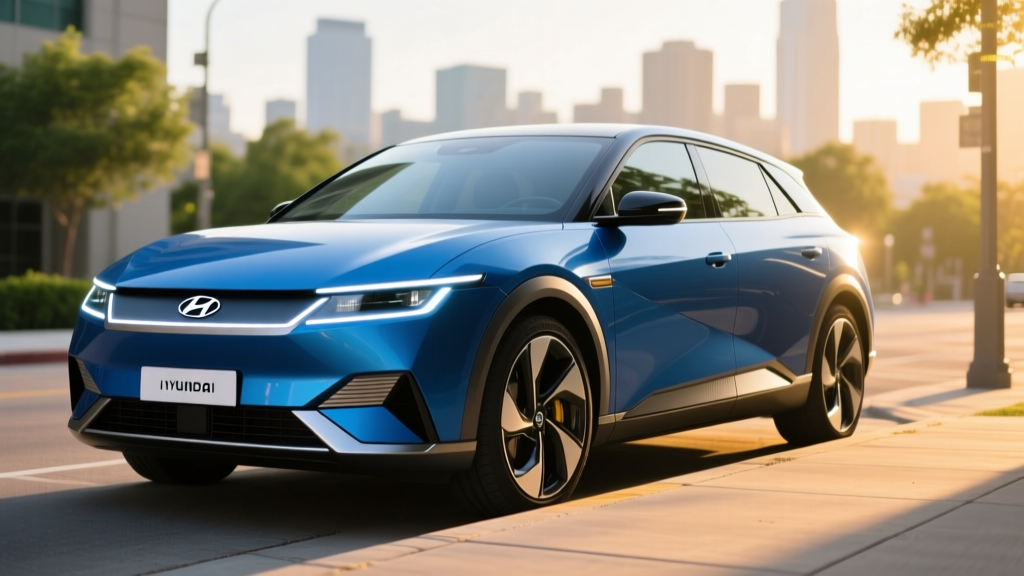
Search forums, Reddit threads, or any EV Facebook group for "tesla alternative" and the Hyundai Ioniq 5 will surface in nearly every thread. The reasons are measurable, not marketing: an 800-volt electrical architecture that enables DC fast charging north of 230 kW, a usable battery north of 80 kWh, a NACS port standard for 2025 and beyond, and a starting price that undercuts the Model Y by several thousand dollars before incentives. For buyers who want a practical crossover EV without the Tesla ecosystem lock-in—or who simply prefer physical controls, a quieter cabin, and Hyundai's dealer network—the Ioniq 5 has quietly become the benchmark.
This review covers the 2026 Hyundai Ioniq 5 lineup with exact specs, real-world range data, charging curves, ownership costs, and current federal tax credit eligibility under IRS §30D. We'll also be direct about where it falls short of the Model Y and where it genuinely wins.
Range, Battery, and Real-World Efficiency
The 2026 Ioniq 5 is offered with two battery packs across four trims. The Standard Range (RWD only) uses a 63.0 kWh usable lithium iron phosphate (LFP) pack, while the Long Range models (RWD and AWD) use an 84.0 kWh usable nickel-manganese-cobalt (NMC) pack. Here's how the EPA numbers break down:
| Trim | Drivetrain | Battery (usable kWh) | Chemistry | EPA Range | MPGe (city/hwy/combined) | kWh/100 mi |
|---|---|---|---|---|---|---|
| SE Standard Range | RWD | 63.0 | LFP | 245 mi | 132 / 108 / 120 | 28 |
| SE / SEL Long Range | RWD | 84.0 | NMC | 318 mi | 134 / 109 / 122 | 27 |
| SEL / Limited AWD | AWD (dual motor) | 84.0 | NMC | 290 mi | 117 / 96 / 107 | 31 |
The LFP chemistry in the Standard Range model is worth highlighting. LFP sacrifices roughly 15% in energy density compared to NMC (hence the shorter range), but it offers significantly longer cycle life—typically 3,000+ full cycles versus 1,500–2,000 for NMC—and can be charged to 100% daily without the degradation concerns that NMC owners manage by capping at 80%. If your daily commute is under 100 miles round-trip and you want maximum battery longevity, the Standard Range is the underrated pick.
Charging Speed: The 800V Advantage Explained
The Ioniq 5's 800-volt architecture is the single biggest reason it appears in every "tesla alternative" conversation. While most EVs in this price segment use 400V systems (limiting DC fast-charge rates to 150 kW or less), the Ioniq 5 can accept up to 240 kW peak on a compatible 350 kW charger. Here's what that translates to in real charging sessions:
| Charging Level | Connector | Max Power (kW) | Rate | Time |
|---|---|---|---|---|
| Level 1 (120V household) | NACS (J1772 adapter) | 1.4 kW | ~4 mi/hr | N/A (overnight top-up only) |
| Level 2 (240V home, 48A) | NACS | 11.5 kW | ~35 mi/hr | 0–100% in ~8.5 hrs (Long Range) |
| DC Fast Charge (350 kW station) | NACS | 240 kW peak | ~180+ mi in 18 min | 10–80% in ~18 min |
| DC Fast Charge (150 kW station) | NACS | ~135 kW sustained | ~110 mi in 18 min | 10–80% in ~28 min |
Charging curve reality check: The 240 kW peak is not sustained across the full session. The Ioniq 5 holds above 200 kW from roughly 10% to 45% state of charge, then tapers to around 150 kW through 65%, and drops further to under 80 kW above 80%. This is normal lithium-ion behavior, but the 800V system means the taper happens at higher absolute power levels than a 400V competitor. On a road trip, the 10–80% session takes about 18 minutes at a 350 kW Electrify America or Tesla Supercharger station (with the NACS port now standard on 2025+ Ioniq 5 models). That's roughly 5–7 minutes faster than a comparably sized 400V crossover.
For home charging, the onboard 11.5 kW AC charger is generous. A 48-amp Level 2 wall connector on a 60-amp circuit will fully replenish the Long Range battery overnight. Expect installation costs of $600–$1,800 depending on panel proximity and local permit fees, per Hyundai's home charging guide.
Performance, Drivetrain, and Daily Driving Impressions
| Spec | SE Std Range RWD | Long Range RWD | AWD (SEL/Limited) |
|---|---|---|---|
| Horsepower | 168 hp | 225 hp | 320 hp |
| Torque | 258 lb-ft | 258 lb-ft | 446 lb-ft |
| 0–60 mph | 7.4 sec | 6.5 sec | 4.5 sec |
| Top Speed | 115 mph | 115 mph | 115 mph |
| Towing Capacity | — | 1,650 lbs | 2,300 lbs |
The AWD dual-motor variant's 4.5-second 0–60 time puts it in the same performance neighborhood as a Model Y Long Range AWD (4.8 seconds per Tesla's published spec). The difference is in character: the Ioniq 5 delivers its torque with a linear, progressive feel, while the Model Y snaps harder off the line. Neither is objectively better—it's a preference call.
The RWD Long Range is the value pick for most buyers. At 6.5 seconds to 60 mph, it's quicker than most gas-powered crossovers in this class, and the 318-mile EPA range gives it the longest legs in the lineup. Regenerative braking offers four levels selectable via steering-wheel paddles, including a true one-pedal driving mode (i-Pedal) that brings the car to a complete stop without touching the brake pedal.
Ride quality deserves specific mention. The Ioniq 5 uses a multi-link rear suspension that absorbs highway expansion joints and potholes more gracefully than the Model Y's firmer setup. Cabin noise at 70 mph measures lower than the Model Y in independent testing, making it a notably more relaxed long-distance cruiser.
Interior, Cargo, and Tech Features
Hyundai's interior approach diverges sharply from Tesla's minimalist philosophy, which is exactly why many cross-shoppers land here. The Ioniq 5 offers:
- Dual 12.3-inch displays — one for the instrument cluster, one for infotainment, both with physical shortcut buttons for climate and volume
- Physical climate controls — a dedicated panel below the central screen, not buried in menus
- Sliding center console — the "Universal Island" slides rearward up to 5.5 inches, creating a pass-through for tight parking-space exits
- Relaxation seats (front, SEL/Limited) — powered leg rests and lumbar for charging-station naps
- Vehicle-to-Load (V2L) — an interior 120V outlet and an exterior adapter (on SEL/Limited) that can power up to 3.6 kW of devices—enough to run a space heater, laptop, or campsite setup
| Dimension | Measurement |
|---|---|
| Front headroom | 39.6 in |
| Rear headroom | 38.7 in |
| Front legroom | 41.7 in |
| Rear legroom | 39.4 in |
| Cargo volume (rear seats up) | 27.2 cu ft |
| Cargo volume (rear seats folded) | 59.3 cu ft |
| Front trunk (frunk) | 0.85 cu ft (AWD) / 2.0 cu ft (RWD) |
Notable drawback: The frunk is small—especially on AWD models, where the front motor reduces it to under 1 cubic foot. The Model Y's front trunk is substantially larger (roughly 4.1 cu ft). If you rely on frunk storage for charging cables or groceries, this is a genuine limitation.
On the driver-assistance front, the Ioniq 5 comes with Hyundai's Highway Driving Assist 2 (HDA 2), which provides adaptive cruise control with stop-and-go, lane-centering, and lane-change assist. HDA 2 is an SAE Level 2 system—the driver must remain engaged with hands on the wheel at all times. It is not self-driving and should not be confused with Level 4 autonomous services like Waymo. HDA 2 is competent for highway cruising but does not navigate on-ramps or stoplights autonomously.
Pricing, Trims, and Federal Tax Credit Eligibility
| Trim | Drivetrain | Base MSRP | Est. §30D Credit | Effective Price* |
|---|---|---|---|---|
| SE Standard Range | RWD | $42,600 | Up to $3,750 | ~$38,850 |
| SE Long Range | RWD | $46,550 | Up to $7,500 | ~$39,050 |
| SEL Long Range | AWD | $52,100 | Up to $7,500 | ~$44,600 |
| Limited | AWD | $58,200 | Up to $7,500 | ~$50,700 |
*Effective prices assume full credit eligibility. Actual credit amount depends on battery-sourcing and critical-minerals compliance under current IRS rules. All trims fall under the $55,000 MSRP cap for SUVs/crossovers (note: the Standard Range SE and Long Range SE RWD fall under the stricter $55,000 cap). Buyer adjusted gross income must not exceed $150,000 (single) / $300,000 (joint). Credit can be transferred to the dealer at point of sale as an instant rebate per IRS §30D rules. Verify current-year battery-sourcing compliance on the IRS qualified vehicles list before purchasing, as eligibility can change mid-year.
The Standard Range model may only qualify for $3,750 (the critical-minerals half of the credit) depending on battery-component sourcing for the model year. The Long Range models with NMC packs have historically qualified for the full $7,500, but Hyundai's supply chain shifts mean you should confirm the specific VIN's eligibility with your dealer and cross-reference the fueleconomy.gov tax credit lookup.
Warranty, Ownership Costs, and Long-Term Value
Hyundai's warranty package is one of the strongest in the EV segment:
- New vehicle limited warranty: 5 years / 60,000 miles
- Powertrain warranty: 10 years / 100,000 miles
- EV battery warranty: 10 years / 100,000 miles (guarantees 70% minimum state of health; if capacity drops below 70% within the warranty period, Hyundai replaces or repairs the battery at no cost)
- Complimentary maintenance: 3 years / 36,000 miles (oil changes aren't relevant, but this covers cabin air filters, tire rotations, and multi-point inspections)
Compared to Tesla's 8-year/120,000-mile battery warranty (which also guarantees 70% retention), Hyundai matches on years and is slightly shorter on miles. However, Hyundai's 10-year/100,000-mile powertrain coverage extends well beyond Tesla's 4-year/50,000-mile basic warranty, which matters for components like the drive unit, thermal management system, and onboard charger.
Insurance costs for the Ioniq 5 average $1,800–$2,400 annually depending on state, driving record, and trim. This is generally 10–15% less than comparable Model Y insurance premiums, which have been elevated by Tesla's high repair-cost profile.
✓ Pros
- 800V charging: 10–80% in ~18 min on 350 kW
- 318-mile EPA range (Long Range RWD) is class-leading
- NACS port standard—full Supercharger access
- Physical buttons and knobs for climate/audio
- V2L capability for camping and emergencies
- 10-year/100k-mile battery and powertrain warranty
- Quieter, softer ride than Model Y on highway
✗ Cons
- Frunk is tiny, especially on AWD (0.85 cu ft)
- No front trunk on Standard Range (space occupied by components)
- HDA 2 less advanced than Tesla Autopilot/FSD in urban scenarios
- Rear wiper absent on earlier builds (2025+ corrected)
- Infotainment can lag during initial boot
- AWD towing limited to 2,300 lbs (below some competitors)
- Tax credit eligibility on Standard Range may be partial ($3,750)
Who Should Choose the Ioniq 5 Over a Tesla?
Decision Framework: Ioniq 5 vs. Model Y
Choose the Ioniq 5 if:
- You prioritize faster DC charging on road trips (800V advantage)
- You want physical climate controls and a traditional instrument cluster
- You value V2L for outdoor activities or home backup power
- You prefer a quieter, more comfortable highway ride
- You want a 10-year powertrain warranty (vs. Tesla's 4-year basic)
- You want Supercharger access via NACS without an adapter
Choose the Model Y if:
- You need maximum cargo and frunk space (Model Y: ~76 cu ft max, 4.1 cu ft frunk)
- You want the most advanced driver-assist software (FSD Supervised, SAE Level 2)
- You need access to Tesla's proprietary service and mobile ranger network
- You prioritize the largest public charging network with the most reliable uptime
- You want OTA updates that meaningfully add features over time
How the Ioniq 5 Stacks Up Against Other Tesla Alternatives
The Ioniq 5 isn't the only credible Model Y alternative. Here's a quick positioning map against its closest competitors:
| Vehicle | EPA Range (max) | DC Fast Charge (peak kW) | 10–80% Time | Starting MSRP |
|---|---|---|---|---|
| Hyundai Ioniq 5 (LR RWD) | 318 mi | 240 kW | ~18 min | $46,550 |
| Kia EV6 (LR RWD) | 310 mi | 240 kW | ~18 min | $45,900 |
| Ford Mustang Mach-E (ER RWD) | 320 mi | 150 kW | ~34 min | $44,995 |
| Tesla Model Y (LR AWD) | 320 mi | 250 kW | ~20 min | $47,990 |
| VW ID.4 (Pro S AWD) | 275 mi | 175 kW | ~28 min | $47,290 |
The Ioniq 5 and its platform sibling, the Kia EV6, share the same 800V architecture and charging performance. The Ioniq 5 edges ahead on rear-seat space and V2L; the EV6 offers a sportier driving position and slightly more cargo room. The Mach-E has comparable range but charges significantly slower. The Model Y remains the efficiency and software benchmark, but the Ioniq 5 closes the gap in nearly every measurable spec while offering a more traditional ownership experience.
Frequently Asked Questions
What is the real-world range of the 2026 Hyundai Ioniq 5?
The Long Range RWD model carries a 318-mile EPA estimate. In real-world highway driving at 70–75 mph and moderate temperatures (60–80°F), expect 260–280 miles. In winter conditions below freezing, that drops to approximately 220–240 miles without preconditioning. The AWD model's real-world highway range is roughly 240–255 miles in fair weather.
How fast does the Ioniq 5 charge at home and on the road?
At home on a 240V Level 2 charger (48 amps), the Ioniq 5 charges at 11.5 kW, adding roughly 35 miles of range per hour—a full charge takes about 8.5 hours for the Long Range battery. On a 350 kW DC fast charger, it peaks at 240 kW and reaches 10–80% in approximately 18 minutes. On a more common 150 kW DC charger, expect 10–80% in about 28 minutes.
Does the 2026 Ioniq 5 qualify for the $7,500 federal EV tax credit?
Long Range trims have historically qualified for the full $7,500 under IRS §30D, but eligibility depends on battery-component and critical-minerals sourcing requirements that can change during the model year. The Standard Range (LFP battery) may qualify for $3,750 (the critical-minerals portion only). Buyer income caps apply: $150,000 AGI for single filers, $300,000 for joint filers. The credit can be applied as a point-of-sale rebate at the dealership. Always verify the specific VIN on the fueleconomy.gov qualified vehicles list before signing paperwork.
Is the Ioniq 5 worth buying over the Tesla Model Y?
For buyers who value faster DC charging, physical controls, a softer ride, V2L capability, and a 10-year powertrain warranty, the Ioniq 5 is the stronger choice. For buyers who prioritize maximum cargo space, advanced driver-assist software (FSD Supervised), Tesla's mobile service network, and the most seamless Supercharger experience, the Model Y retains advantages. Both are excellent EVs—the right choice depends on which trade-offs matter to your specific use case.
What's the biggest drawback of the Ioniq 5?
The frunk is the most-cited complaint. At 0.85 cubic feet on AWD models, it's barely large enough for a charging cable bag. The lack of a rear wiper on some earlier 2024 builds was also frustrating (addressed in the 2025 refresh). For tech-forward buyers, Hyundai's HDA 2 driver assist is competent but doesn't match Tesla's FSD Supervised in urban navigation scenarios—though it's important to remember both remain SAE Level 2 systems requiring full driver engagement.
Can the Ioniq 5 use Tesla Superchargers?
Yes. Starting with the 2025 model year, the Ioniq 5 ships with a native NACS (North American Charging Standard) port, which is the Tesla Supercharger connector. This means direct access to Tesla's 17,000+ Supercharger stalls nationwide without an adapter. For older CCS-equipped Ioniq 5 models (2022–2024), Hyundai provides a NACS-to-CCS adapter.