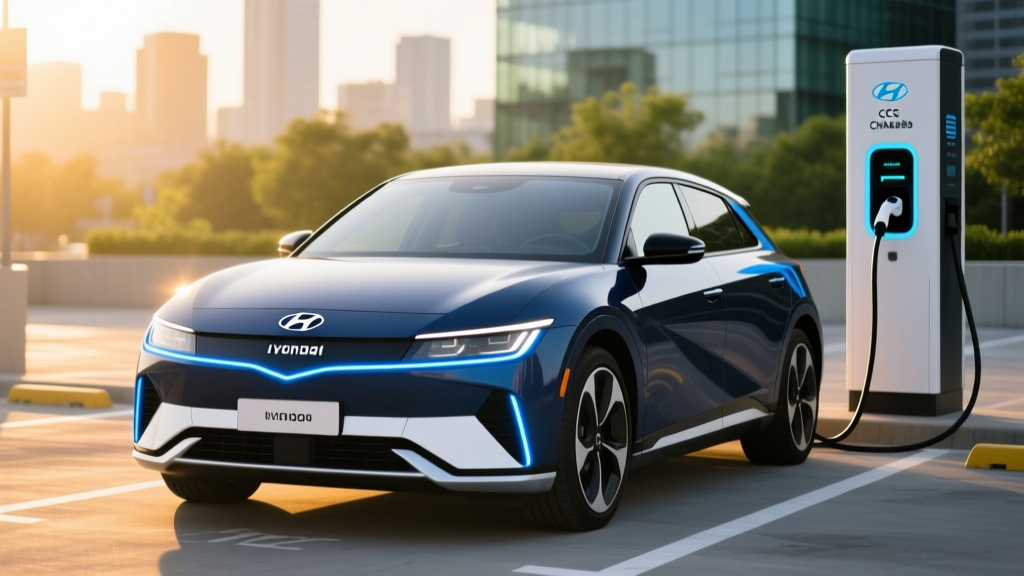
The Hyundai Ioniq 5 has been a staple of the mainstream EV market since its debut, but for 2026, the question on every buyer's mind isn't just about its retro-futuristic styling or 800-volt architecture — it's about the bottom line. With shifting federal incentive rules, understanding the Hyundai Ioniq 5 tax credit eligibility is essential before you sign a purchase agreement.
Built at Hyundai's Metaplant America in Georgia, the 2026 Ioniq 5 is now domestically assembled, which fundamentally changes its incentive profile compared to early import models. Below, we dissect the real-world range, charging speeds, and the precise IRS §30D requirements you need to meet to bring the price down.
2026 Ioniq 5 Specs: Range, Battery, and Performance
Hyundai offers the 2026 Ioniq 5 in both Standard Range and Long Range configurations, with rear-wheel drive (RWD) and dual-motor all-wheel drive (AWD) layouts. The shift to the North American Charging Standard (NACS) port is now fully integrated across the lineup.
| Spec | SE/SEL/Limited RWD (Long Range) | SE/SEL/Limited AWD (Long Range) |
|---|---|---|
| EPA Range | 318 miles | 290 miles |
| Battery Capacity | 84.0 kWh (usable) | 84.0 kWh (usable) |
| Chemistry | NMC (Nickel Manganese Cobalt) | NMC |
| Horsepower | 225 hp | 320 hp |
| 0-60 mph | 7.0 sec | 4.5 sec |
| Max DC Charge Rate | ~240 kW (peak) | ~240 kW (peak) |
| Efficiency | 132 MPGe (25 kWh/100mi) | 110 MPGe (30 kWh/100mi) |
Federal Tax Credit: Does the Ioniq 5 Qualify in 2026?
Because the 2026 Ioniq 5 is manufactured in Georgia, it clears the first major hurdle of the IRS §30D Clean Vehicle Credit. However, eligibility is not automatic — it depends on your income, the vehicle's MSRP, and battery-mineral sourcing.
§30D Eligibility Checklist
- MSRP Cap: Must be under $55,000 (SUV classification allows higher limit than sedans).
- Income Limits: Modified AGI must not exceed $150,000 (single), $225,000 (head of household), or $300,000 (joint).
- Assembly: Final assembly in North America (Metaplant America, GA qualifies).
- Battery Sourcing: The credit is split into two $3,750 halves based on critical minerals and battery component manufacturing requirements.
| Trim | Base MSRP | Est. Price w/ Max $7,500 Credit |
|---|---|---|
| SE Standard Range RWD | $42,600 | $35,100 |
| SEL Long Range RWD | $47,850 | $40,350 |
| Limited Long Range AWD | $54,600 | $47,100 |
Note: Point-of-sale transfer is available, allowing you to hand the credit to the dealer for an immediate price reduction. Always verify current battery-sourcing compliance on the DOE/FuelEconomy.gov portal before purchasing.
Charging Speed: 800V Architecture in Practice
The Ioniq 5's E-GMP platform remains one of the most capable in the industry for charging speed, utilizing an 800-volt architecture that allows it to accept higher power levels without overheating the battery.
| Level | Power | Speed (Approx.) |
|---|---|---|
| Level 1 (120V) | 1.4 kW | ~4 miles per hour |
| Level 2 (240V) | 10.9 kW | ~36 miles per hour |
| DC Fast (350 kW station) | 240 kW (peak) | 10–80% in 18 minutes |
The Charging Curve Caveat: Peak 240 kW is only sustained up to roughly 55–60% State of Charge (SoC). After that, the curve tapers significantly to protect the NMC cells. If you consistently charge to 100% on DC, your session will take closer to 35 minutes, not 18.
Interior, Cargo, and Daily Usability
The "Living Space" interior concept continues for 2026, featuring a flat floor and a sliding center console (Universal Island) that can move back 140mm. This allows front-seat passengers to exit through the opposite side in tight parking spots — a niche but useful party trick.
- Cargo Volume: 27.2 cu ft (rear seats up) / 59.3 cu ft (rear seats folded).
- Front Trunk (Frunk): 0.85 cu ft (AWD) / 2.0 cu ft (RWD) — enough for charging cables or a small bag.
- Rear Legroom: 39.4 inches, among the best in the compact crossover segment.
Tech highlights include dual 12.3-inch displays, wireless Apple CarPlay/Android Auto, and Hyundai's Digital Key 2 (using UWB for phone-as-key functionality). However, the lack of a rear wiper on earlier models has been addressed for 2026, a major pain point resolved.
Pros and Cons: The Ownership Verdict
Pros
- Class-leading 800V DC charging speeds.
- Spacious cabin with flat floor architecture.
- NACS port native (Supercharger access without adapter).
- Strong §30D tax credit eligibility (domestic assembly).
Cons
- Highway range falls short of EPA by ~15%.
- Ride quality can be firm on 20-inch Limited wheels.
- Frunk space is minimal on AWD models.
- Insurance premiums often 15–20% higher than gas Tucson.
Is the Ioniq 5 Right for You?
Choose the Ioniq 5 if: You prioritize charging speed above all else and want a vehicle that can add 200 miles of range in under 15 minutes on a functional 350 kW charger. It's ideal for tech-forward commuters who have access to reliable DC infrastructure.
Look at competitors (Tesla Model Y, Ford Mustang Mach-E) if: You need maximum cargo capacity (Model Y) or prefer a more traditional, sporty driving dynamic (Mach-E). Also consider the Ioniq 5 if you can secure the full $7,500 credit; if you don't meet the income/sourcing requirements, the value proposition weakens against the Tesla Model Y, which has its own credit advantages.
Frequently Asked Questions
How does the Ioniq 5 perform in cold weather?
Like all NMC-based EVs, the Ioniq 5 loses range in freezing temperatures. The standard heat pump helps, but you should budget for 20–30% loss. Preconditioning the battery while plugged in is essential for maintaining charge speeds in winter.
Can I use Tesla Superchargers with the 2026 Ioniq 5?
Yes. The 2026 model year features the native NACS port, granting access to Tesla's Supercharger network without the need for a CCS-to-NACS adapter.
What is the battery warranty?
Hyundai provides a 10-year/100,000-mile warranty on the high-voltage battery and powertrain components, covering defects and capacity loss below 70%.